Feb 27, 2024
Empowering communities in India
For almost 40 years, MSCs in India have provided practical, spiritual, medical, and educational aid to communities in real need of help and encouragement. Today, we continue in our ministry as we adapt to the specific needs of changing times.
MSCs in Therkukalidaikuruchi Village in the Tirunelveli District of Tamil Nadu are working to raise funds to establish a new environmentally sustainable agricultural programme that will preserve and encourage the local ecosystem, while also providing opportunities for employment in the rural population. With approximately 30 acres of land devoted to the fulfilment of the project, the MSC Indian Union is working to develop a model farm that cultivates crops and native trees, while also rearing cattle and poultry, with the aim of “contributing to both environmental conservation and economic empowerment”.
The project will see 1,000 trees planted on the farm, promoting biodiversity and combating deforestation. A variety of crops and fruit-bearing trees will be cultivated alongside the farming of cattle and poultry, while a dedicated MSC team will also provide an educational programme for the local community, covering modern agricultural techniques, marketing strategies, and sustainable practices. The land will also serve as a spiritual sanctuary, “inviting people to connect with nature and experience its transformative power”.
The MSC Indian Union are working to raise a total of €35,300 for the establishment and development of their agricultural programme in Therkukalidaikuruchi Village. This budget includes expenses for tree planting, agricultural infrastructure, livestock management, educational programmes, and the development of a spiritual sanctuary for the local community.
€11,765 will cover the cost of planting 1,000 native trees.
€11,765 will be spent on the cultivation of the land, including the installation of an irrigation system,
planting and caring for crops, developing the land, and paying for essential labour.
€10,594 will purchase cattle and poultry,
along with the necessary equipment, feed, and labour for rearing.
€588 will be spent on educational initiatives and workshops.
€588 will be spent on the development and promotion of a spiritual sanctuary on the land,
including workshops and development programmes.
CAN YOU HELP US TO CHANGE LIVES IN INDIA?
Sustainable living in rural India
In his encyclical, Laudato Si’, Pope Francis calls for a harmonious relationship between humankind and the world around us, highlighting the inevitable connectedness between environmental, social, and economic issues. The new agricultural programme proposed by the Indian Union of the Missionaries of the Sacred Heart will address the pressing needs of local communities in deeply impoverished villages, providing job opportunities, promoting sustainability, and enhancing education and quality of life for rural families.
With your help, MSCs in Tamil Nadu can work to encourage self-sufficiency and community empowerment, while also answering the global call for environmental stewardship.
“Our proposed project will contribute to both environmental conservation and economic empowerment… addressing the needs of the local community while fostering environmental stewardship. By supporting this project, the Irish Province of the Missionaries of the Sacred Heart will play a pivotal role in fostering environmental sustainability, rural development, and community empowerment in the MSC Indian Union. Thank you for your support – we look forward to working together to bring about positive change.”
~ Fr Thatheus Darwin MSC
Indian Union Superior
PLEASE SUPPORT OUR MINISTRY IN INDIA
Feb 27, 2024
Making a difference in South Sudan
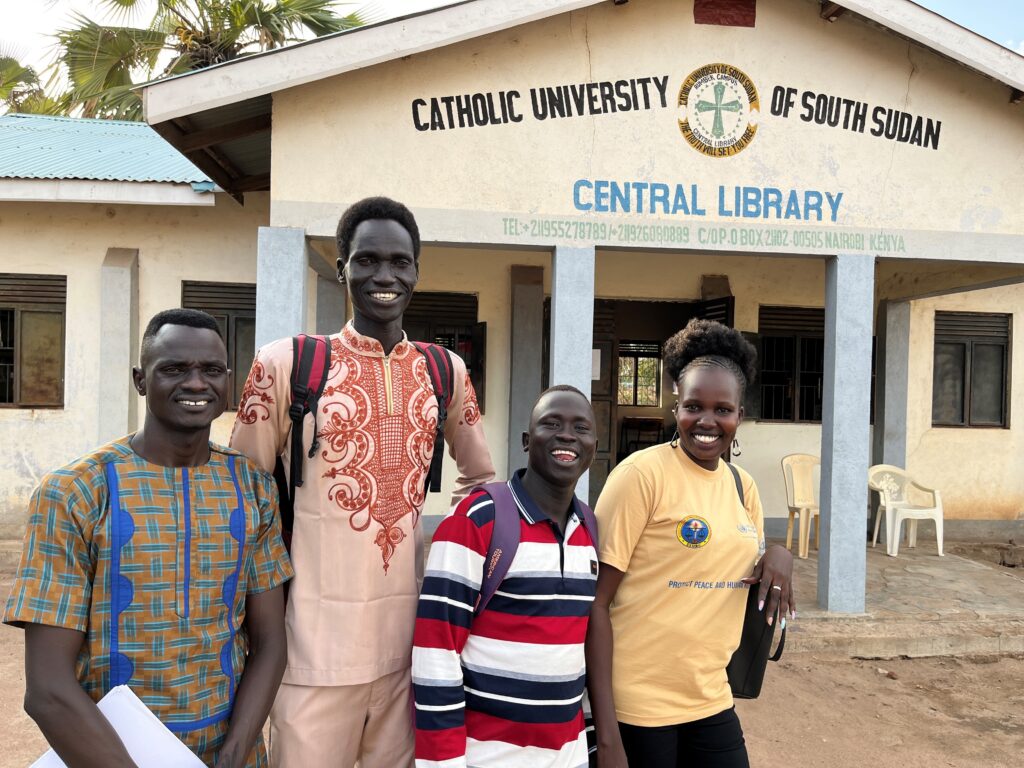
Irish MSC Fr Alan Neville has been ministering in South Sudan since 2020, where he now fills the role of principal at the Catholic University of Rumbek. At the heart of the mission of the University is transformation. Their work and the courses they deliver are designed to not only to educate the most marginalised in the community, most notably women, but also prepare to help build a South Sudan that is economically and socially more prosperous for those who follow in their footsteps. The journey, however, is a long one, and there have been plenty of challenges along the way.

The work of the Catholic University of Rumbek offers a real opportunity to support people. Research has consistently shown that the rate of return on education, especially third-level education, has helped people lift themselves, their families, and their communities out of poverty. The University began in 2019, working out of a local secondary school, before moving to its current location in an unfinished youth centre. It is an afternoon University, operating intensive classes, while also allowing students to earn wages for themselves and their families in the mornings.
The annual student fees are €140 for the entire year,
and are designed encourage meaningful commitment from the students.
Due to disruption caused by COVID, there are currently three year groups,
split across multiple qualifications with Bachelor courses in
Administration, Education in English and English Literature,
and Commerce, Religious Education and Citizenship.
These courses were chosen as best suited to meet the needs of the population. The University works to foster the local economy, generating opportunities for South Sudanese people for employment and growth. The business courses emphasise entrepreneurship and innovation, especially at the local level.
The current standard of teaching in primary and secondary schools is abysmally low, with most teachers working without even a basic qualification. Consequently, students can finish school with a limited grasp of maths and substandard literacy skills. This only serves to perpetuate a cycle of poverty. The University’s specific emphasis on education degrees aims to tackle this through high-quality lecturing by experienced educationalists, with placements in schools like La Salle and Loreto to model how things could be done differently.
“People really want to get ahead, and the only way for that to happen is through education. There is already significant interest in our next intake. Our students are great ambassadors in promoting our programmes, with several of our female students speaking about how it was possible to undertake a full degree programme with us despite the challenges they faced.”
CAN YOU HELP TO EMPOWER YOUNG PEOPLE
IN SOUTH SUDAN?
Altogether, there are seven large classrooms, a staff room, a storeroom, and two small offices that are unfinished. It is a substantial project, involving repairing the roof, installing ceilings, plastering the walls, fitting the floors, and installing an electrical system. Electricity for light and fans is essential.

During the heavy storms of rainy season, lecture halls become so dark that it is impossible for students to see their notes, let alone the blackboard. Driving winds cause dust storms in the classes, as there are window frames, but no windows. During the warmer times of the year, temperatures can reach 44ºC and above. Having only a corrugated metal roof turns the lecture halls into an oven and it quickly becomes unbearable. The development of the building to a proper standard, supported by ongoing maintenance, will ensure that it will serve the community in Rumbek for the foreseeable future. We are working to ensure that the lecture halls will be used to their full capacity, including facilitating events run by the Diocese, such as training and safeguarding workshops for teachers and staff, and a series of short, standalone courses designed to upskill the training of students and members of the wider Rumbek community.
With your help, we hope to raise a total of €208,693.
This includes…
€38,800 to repair the roof
€3,500 to fit new windows
€138,000 to carry out internal work
such as fitting ceilings and floors and plastering walls
€12,000 to carry out the electrical installation
€20,000 to complete the external finishes
€12,000 for services
“Your support will make a profound difference in raising entire communities out of poverty by empowering the South Sudanese to effect change themselves. You and your family and friends have a place in all my Masses and prayers.”
~ Fr Alan Neville MSC
Principal at the Catholic University of Rumbek
PLEASE SUPPORT OUR WORK IN SOUTH SUDAN
Feb 22, 2024
Schools are always busy in South Sudan in February. The academic year here runs differently from Ireland and England, with our long holidays based around Christmas. So the back to school trials and tribulations began earlier this month. Students have to register for their studies, including paying their fees. When you have a number of children, this can be a substantial amount of money. Usually, the Catholic schools charge the equivalent of two bags of charcoal or just one chicken for the entire year. The underlying ethos is education is for everyone, but everyone should contribute something, insofar as they can. For Loreto, the fee includes a daily meal, their school books, treatment in our clinic (malaria is still around, and never, ever underestimate the number of scrapes 1,300 children can get into), and of course their studies.
We had our opening Mass for the Upper Primary children last Friday and I spoke to them about the great gates of the world, such as the Gate of India in New Delhi, the Golden Gate in Jerusalem, and the Arc du Triomphe in Paris (technically not a gate I know, but the kids were most impressed with the photo). Then we talked about the gate to Loreto Primary School. While nowhere near as famous, elegant, or ancient, they are beautiful in their own way.
The fact that these young children can come through those gates every day, in a country that is largely at peace right now, is a gift. As we do the school runs in Ireland, stuck in traffic, with the rain beating relentlessly against the windscreen, we can easily take this for granted. Here, the peace we are enjoying is a blessing and not one easily forgotten. Just to our north, our immediate neighbours, Sudan, are in the grip of a savage civil war for the last ten months, from which will emerge only losers. The devastation will set back the country by a generation at least and the suffering has been immeasurable. In South Sudan, we are still building here after decades of conflict, and we are aware of how quickly it can all be taken away.
A sign of things to come
Thankfully, in the Catholic University, education continues to flourish too. This is in large part due to the generosity of our MSC benefactors, who have helped us fund the complete renovation of the library, as well as the purchase of blackboards and chairs for our lecture rooms. Just this morning I joined one of our students on his first visit to the school where he will have his teaching placement. It’s wonderful to see. Over the course of the next twelve weeks, he and his classmates will experience what teaching in secondary schools is really like. It will be a steep learning curve for them, as a classroom filled with fifty teenagers in the throes of teenage angst can be a tough crowd to please. Increasingly though, the youth are seeing the value in education and the depth of their commitment is impressive. When our students graduate, they will be among the first properly trained teachers who have qualified from Catholic University in Rumbek. It is a sign hopefully of things to come.
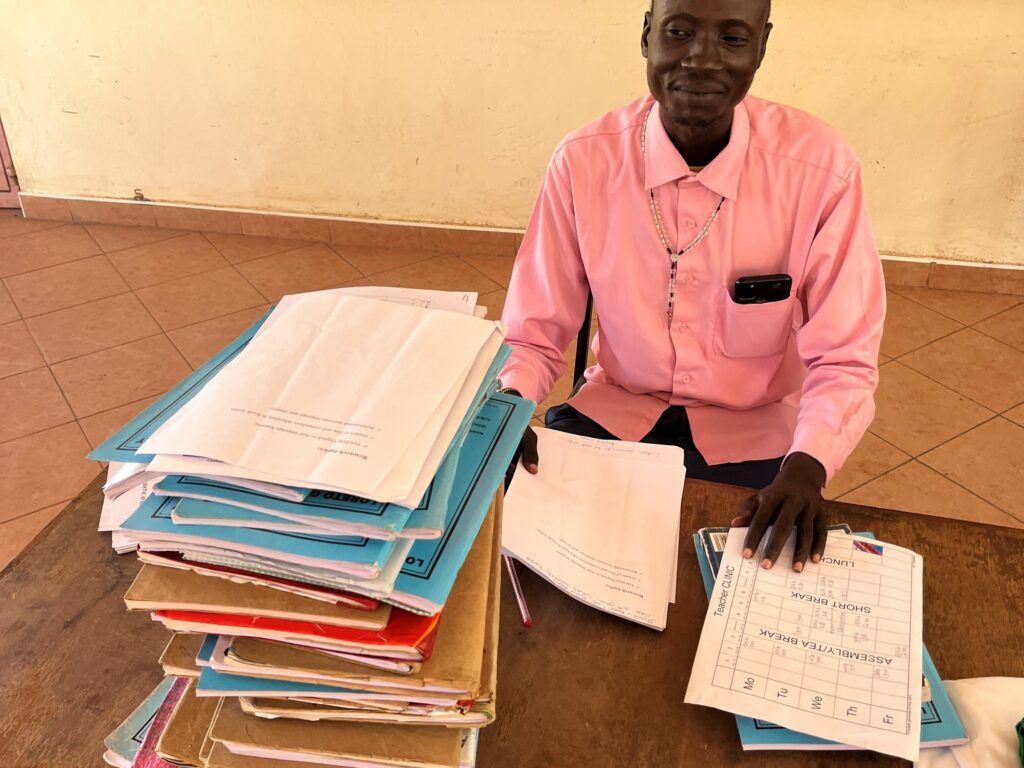
The rest of the University students are sitting midterm exams at the moment. There is no better incentive for them to commit themselves to their studies. Just outside my office window, a number of our final year business administration students are having a small group discussion. It’s something quite typical of any university, but the fact that four of the five participants are women is something that is decidedly atypical here. In total, just over a third of our students are women, up from just twenty percent two years ago. There’s a lot to be done still, but at least we’re moving in the right direction. As I write this, there does seem to be a lot of laughter coming from them. Perhaps I have underestimated the fun that is to be had from managerial economics.
Nhialic ke yin (or God bless you),
Fr Alan
Selected images courtesy of Paul Jeffries.
Read more from Fr Alan’s missionary journey in South Sudan:
Feb 15, 2024
Congratulations are in order for the MSC community and their superb team at the MSC Centre for the Poor in the Philippines. On December 15th, 2023, Fr Richie Gomez MSC, community leader at the Centre, attended an awards ceremony hosted by the Villar Foundation in Las Piñas City, where the MSC Centre for the Poor Agriculture Cooperative (MSC CEPAGCO) were honoured to accept an award for being one of the Outstanding Community Enterprises in the country.
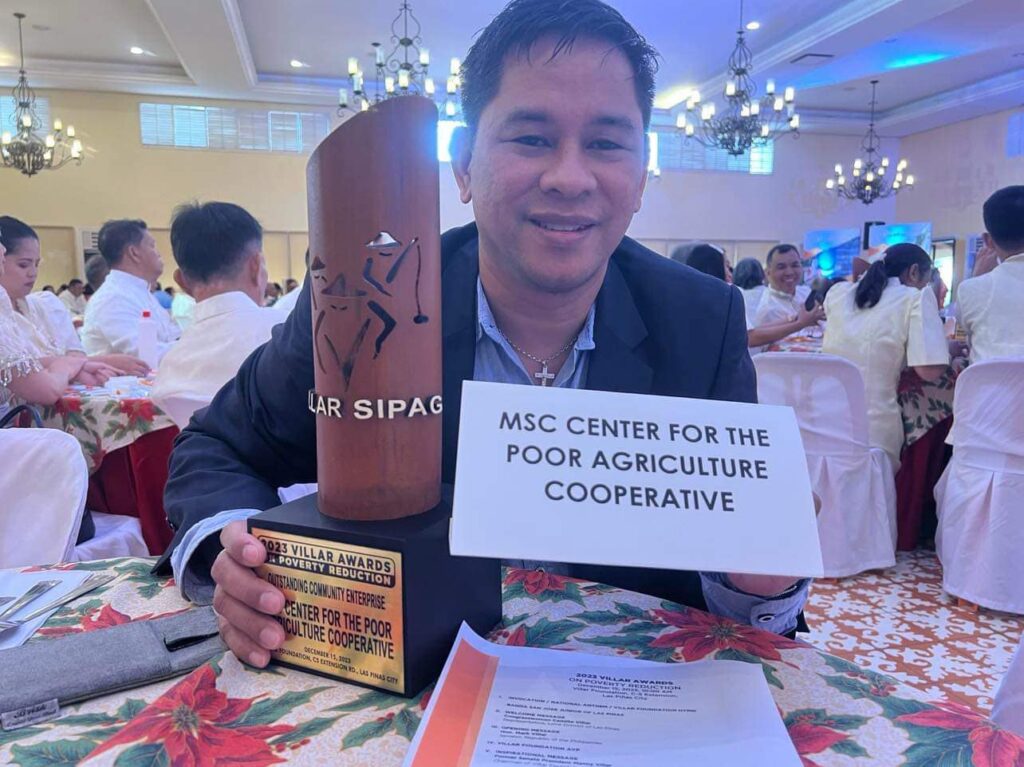
Since its establishment five years ago, the MSC Centre for the Poor has gone from strength to strength, with the MSC CEPAGCO providing invaluable assistance to local communities throughout the COVID pandemic and beyond. With a dedicated focus on food sustainability and care of our common home, the agricultural cooperative aims to educate and empower both rural and urban families and communities with the skills they need to create sustainable livelihoods, while nurturing and caring for the earth for future generations to come.
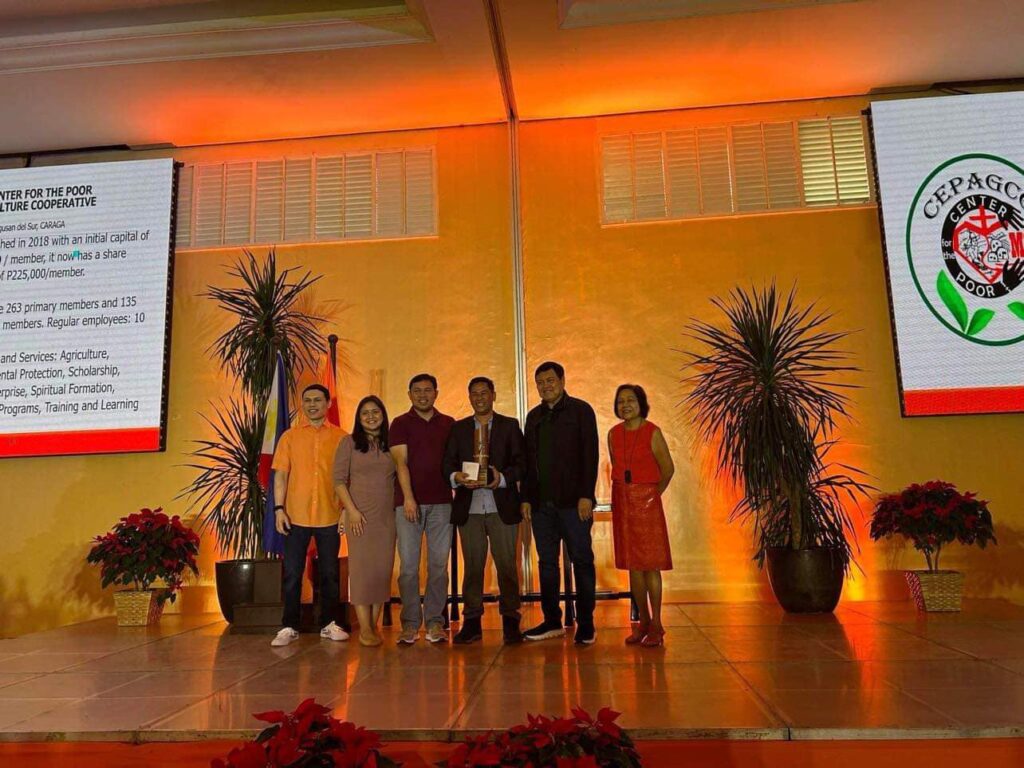
From addressing plastic waste to organising clean water programmes, the MSC Centre for the Poor Agricultural Cooperative are tireless in their work to improve the quality of life of the people in their programmes, while working in harmony with the natural world.
“Thank you Villar Foundation for recognizing our effort and advocacy on organic sustainable agriculture, environmental protection, food security and poverty reduction,” posted the Facebook page for the MSC Centre for the Poor as they shared the news of the 2023 Villar Sipag Award. “Congratulations to Fr. Richie and to all MSC CEPAGCO staff and volunteers who have been instrumental in winning such award!”
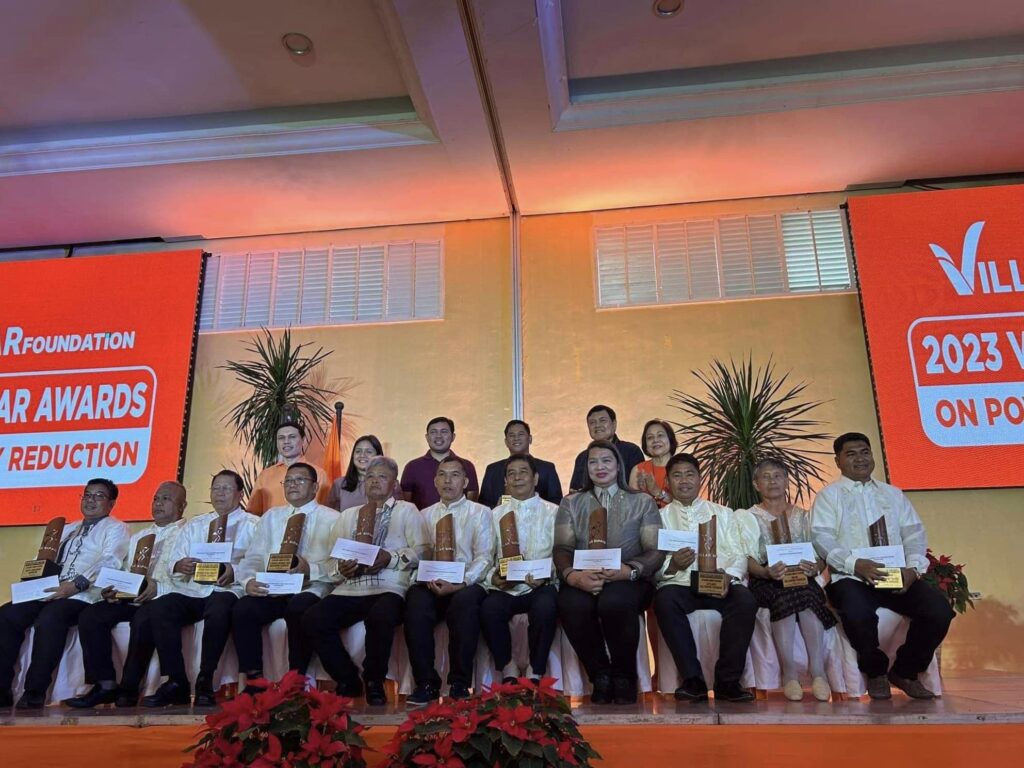
We add our congratulations to theirs, and we wish Fr Richie and all the MSC CEPAGCO community continued success in their phenomenal efforts to make an instrumental difference to the lives of disadvantaged families in the Philippines.
Images via the Facebook page for the MSC Centre for the Poor
IF YOU CAN, PLEASE SUPPORT MSC CENTRE FOR THE POOR
Feb 8, 2024
The MSC Mission Office in the Philippines have been working in rapid response with the MSC Centre for the Poor to issue essential emergency aid to several communities that have been critically affected by severe flooding in the Mindanao region.
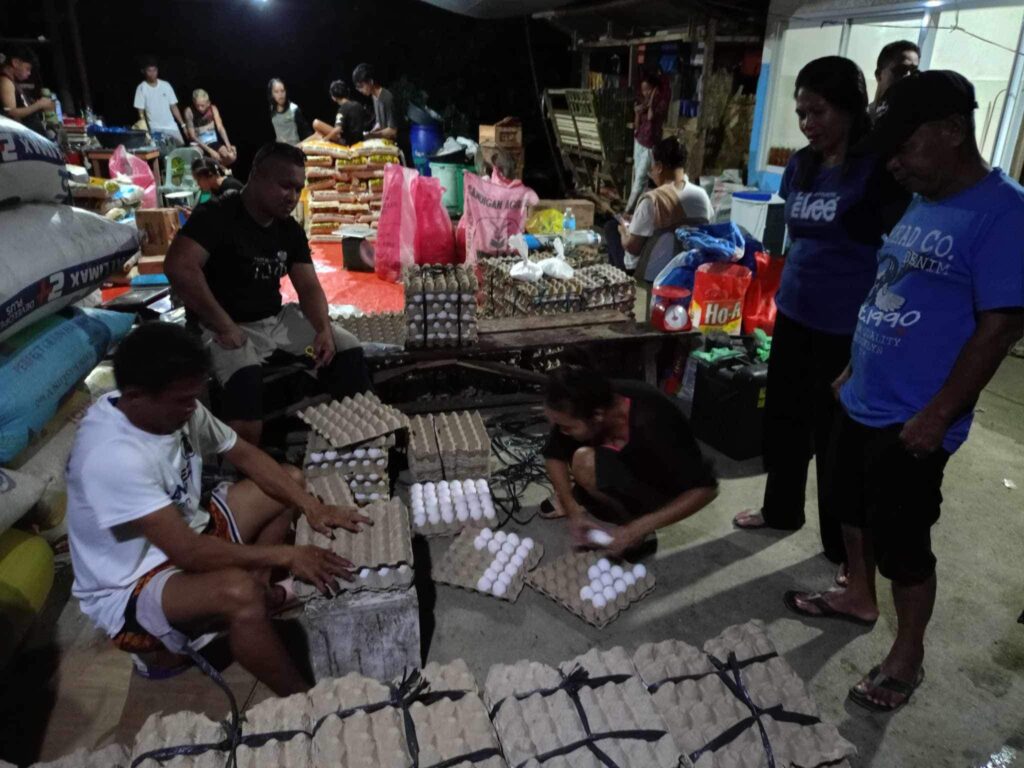
The relief project aims to help as many families as possible who have been displaced by catastrophic flooding across the Mindanao area in late January/early February. Flash flooding has caused landslides and as yet untold destruction in this region and beyond, with the death toll climbing to the high teens in the days following the disaster. Hundreds of thousands of people have been displaced, while homes and business premises alike have been destroyed, with power outages and interruptions to the water supply also reported.
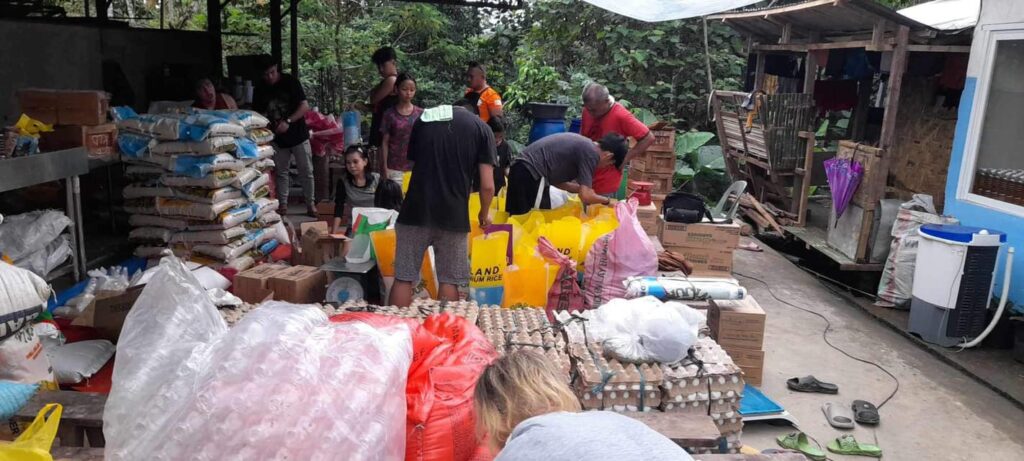
On February 5th, the MSC Centre for the Poor began distributing vital emergency relief aid to families impacted in Tagbina, in Surigao del Sur. With the emergency response team springing to immediate action, a total of 142 families have received urgent aid so far, as they attempt to recover from the devastation wreaked by the flood waters.
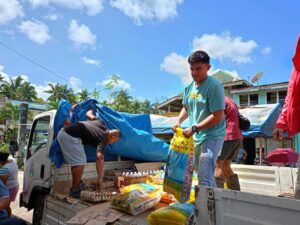
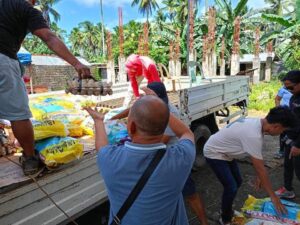
The relief project is ongoing as the outreach team continue in their efforts to help families to repair and rebuild across different areas of the Mindano region. Together, the MSC Centre for the Poor and the MSC Mission Office Philippines are organising the next phase of the mission response project, to support families who have been displaced by flood waters in the districts of Talacogon and San Luis, Agusan del Sur.
Together, we keep our MSC brothers in the Philippines Province, and the communities of Mindanao, in our prayers, as they work to rebuild lives and livelihoods in the face of this overwhelming ordeal.
Images via the Facebook page for the MSC Mission Office Philippines, Inc.
*