Dec 12, 2023
Please note that the MSC Missions Office will be closed over the Christmas period, from 3.30pm on Friday, December 22nd to 9.00am on Tuesday, January 2nd.
With warm wishes to our mission friends everywhere for a happy, healthy, and safe Christmas season.

Dear Friends,
It is that time of the year, where the days grow shorter, and we prepare for the Winter months ahead. It brings to mind cosy feelings of sitting with a nice cup of tea, warming chilly hands safe at home from winter weather. The season of Advent will give us a chance to reflect and prepare our weary souls and hearts for the great season of Christmas. A time to rejoice to love and show good will.
I wish to thank you sincerely for your continued support of our work throughout the year. In countries like Kenya, the Republic of the Congo, South Africa, Brazil, South Sudan, and Haiti to name a few of the places around the world where your help makes a difference to peoples lives. You have helped to bring a glimmer of the light of God’s love to others, helping to ease their burden.
This Winter in particular we remember all who need our prayers especially those displaced by the terrors of War.
At home as always, a little bit of kindness, a kind word and a smile can go a long way especially as Christmas approaches. I wish you and your loved ones the grace and blessing of this special season and throughout 2024.
Christmas blessings to you and your loved ones,
Wishing you a Happy and Holy Christmas,
Fr John Fitzgerald MSC
Director of the MSC Missions Office
Dec 6, 2023
Please note our MSC Provincial Office has moved:
Our new address is:
MSC Provincial Offices, Woodview House, Mt. Merrion Avenue, Blackrock,
Co. Dublin A94 DW95.
T: +353 (0) 1 490 6622
Nov 29, 2023
🌟Sat Dec 2nd🌟
Vigil 6.30pm
Concert in Aid of Simon 7.30pm
🌟Wed Dec 6th🌟
Redemptoris Mater Seminary 7.30pm
🌟Thursday 7th Dec🌟
Vigil 6.30pm
🌟Fri 8th Dec🌟
Immaculate Conception of the Blessed Virg
Mass 8.00am, 10am, 11:30am.
🌟Sunday 17th Dec🌟
2.30pm Christmas Nativity Play
🌟Tues 19th Dec🌟
Christmas Triduum 10am
🌟Wed 20th Dec🌟
Christmas Triduum 10am
🌟Thurs 21st Dec🌟
Christmas Triduum 10am
🌟Sun 24th Dec Christmas Eve🌟
Masses 8.30am, 10.am & 11.30am
Mass of the Nativity 9.00pm
🌟Monday Dec 25th Christmas Day🌟
Masses 8.30am, 10.am & 11.30am
🌟Tuesday 26th Dec, Wed 27th, Thurs 28th, Fri 29th🌟
One Mass only 10am
🌟Sat 30th Dec🌟
Mass 12 noon & 6.30pm
🌟Sunday 31st Dec🌟
The Holy Family of Jesus,
Masses 8.30am, 10am & 11.30am
🌟Mon 1st Jan🌟
One Mass only 10am
🌟🌟🌟🌟🌟🌟🌟
All masses are streamed live here
Nov 27, 2023
 Whistling Tunelessly
What is the meaning of happiness? Philosophers have speculated on the topic since the beginning of the human story. The answers provided to date are varied and many, but few would include driving along a dirt road, at night, in the rain, perched precariously on a half a driver’s seat (the rest has somehow mysteriously disappeared over time) in a pick-up truck that your average NCT technician would not only refuse to examine due to concerns for their personal safety, but would happy fire bomb with a Molotov cocktail from the comfort of their office. Yet, this is where I found myself a week ago on a Thursday night, whistling somewhat tunelessly as I drove alone. Happiness. It comes in the most surprising of places.
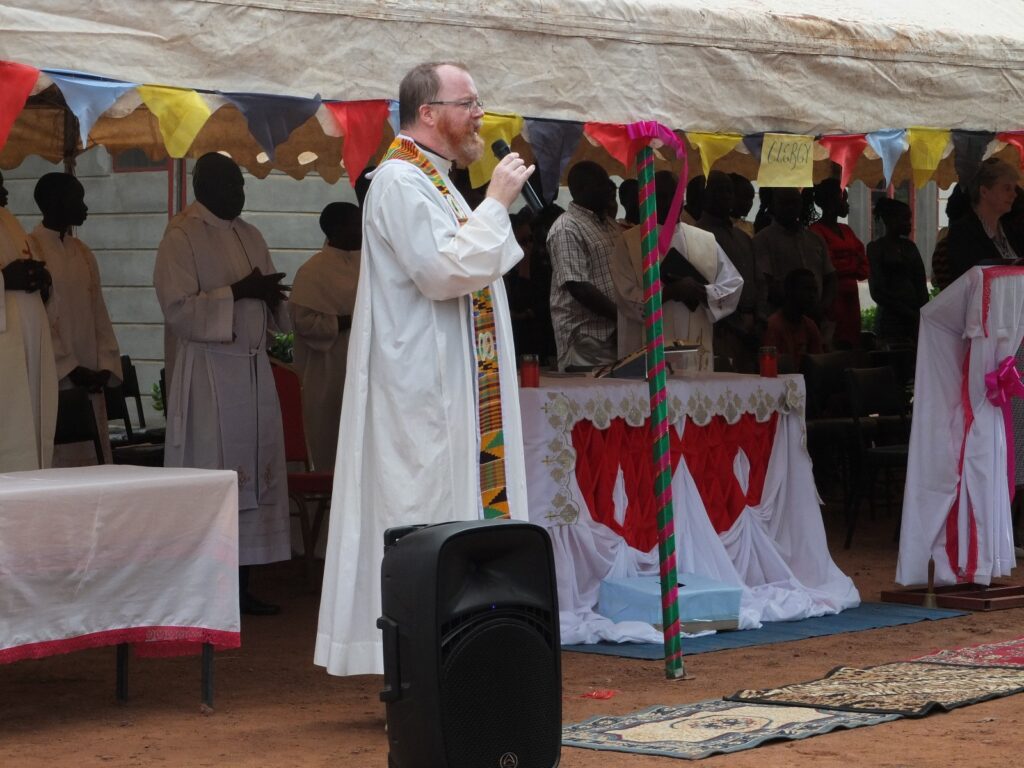
The destination for my rather battered pickup filled with tables was our clinic, which the following day, would the site of the Loreto Graduation. Over fifty young women marked the end of their formal studies with us and are now looking forward to their Senior Four national exams in just over a week. The day is not just a graduation though. It means much more, as it is a visible sign of how far these young women have come in the face of many challenges. The number of women successfully completing secondary school in South Sudan remains one of the lowest in the world according to the UN.
So, for these young women and their family who attended, it really is something to celebrate. It symbolises a continued new chapter in the history of the country, where slowly (in reality too slowly) women are making their own way in the world. The early mornings and late nights of study, along with their daily classes, have paid off. For their graduation their families all gathered to give thanks to God for what has been achieved in a Mass with Bishop Christian. After that, it was all singing, dancing, and sharing food with one another, but overall it was pure joy. Even the hardest of heart could not help to be happy there.
A Runaway Train
Only two days later, I had another interesting experience. On the Sunday evening I was getting ready for the week ahead, planning for the work in the University and the schools, when I began to feel unbearably cold. A quick check with one of our nurse practitioners confirmed my suspicions. I had my first bout of malaria. If you haven’t had it, it’s difficult to accurately describe. Your fever alternates between being roasting hot and then freezing cold. It’s bizarre to ever think you will end up shaking with the cold, in bed with two blankets, when the room temperature is well into the 30C, but there I was. Thankfully the Sisters moved me into the Convent to keep an eye on me. Hardly necessary in my opinion, as all the world knows how easy Irish men are as patients. You’d hardly think we were sick at all! I was thankful for their care by the time I finished.
Anyway, aside from fever, there are headaches, body aches, nausea, and lots of other things that are perhaps not fit to print. The vivid dreams were something of a shock. In one in particular I found myself at a Eucharistic Congress in a large stadium, when a runaway train barrelled through the proceedings. I hopped on for fun, managed to avoid hitting three trams, before eventually crashing the train just outside a Spar in Ireland. The manager came out to thank me, took my photo, gave me flowers and chocolate, and then charged me for both of them, which I thought was a bit much.
Whatsoever You Do
Now, rambling, nonsensical vivid dream aside, the harsh reality is that malaria is easily one of the main causes of child death in our area. It always bothered me that at the end of the first year pandemic we had six or seven viable vaccines available. Malaria kills over 600,000 people a year, but still we are waiting on a vaccine. Simply put, rich people don’t get malaria, so there is not impetus to find a cure in the same way we came together to tackle Covid. The part of malaria that is most responsible for deaths is the fever. Young children often don’t have the strength to deal with the high temperatures, but all that is needed to reduce their temperature is a simple paracetamol.
Today is the feast of Christ the King and our Gospel from Matthew is one of Jesus’ most challenging and pointed lessons. It’s the story of the final judgement and the separation of the sheep from the lambs. Those who cared for the poor, the naked, the imprisoned, and the sick are welcomed into the Kingdom of God as the Father’s own. Those who don’t, aren’t. But I think there is more to the story. When the people question Jesus, he replies, “Whenever you did this for the least of your brothers and sisters, you did it for me.” We are not just called to serve those in need. Jesus wants more. He wants us to recognise the presence of the divine in them. To see the image of God in everyone, especially those typically most despised. We are all one family. When one suffers, we all do.
It took five days for me to get over my first experience of malaria. I was lucky to have a clinic nearby, access to medication, and a caring community. Not everyone is. That is why the work of not just the school, but the clinic here is indispensable. Life has its highs and lows, and as we give thanks for one, we must remind ourselves to work to help those in the other. That is what Christ demands of us. Nothing less will do.
PLEASE HELP US TO TRANSFORM LIVES IN SOUTH SUDAN
Read more from Fr Alan’s missionary journey in South Sudan:
Nov 21, 2023
Welcome to this year’s Winter edition of the MSC Message!
• Read a special greeting from Fr John Fitzgerald MSC, Director of the MSC Missions Office.
• We welcome Fr Joe McGee MSC as the new Provincial Superior along with our new Provincial team, Fr Dave Nixon MSC and Fr Manus Ferry MSC, Fr John Bennett MSC, Fr Alan Whelan MSC.
• More updates from Fr Alan Neville MSC in South Sudan, where a Peace walk was in progress and new members were welcomed to the diocese.
• Fr Remigius reaches out to us to help rebuild his parish Church which had been damaged by high winds in Keelakarai, in South India.
• An update from some of the work we have done in the Phillipines after Typhoon Odette Appeal in 2021.
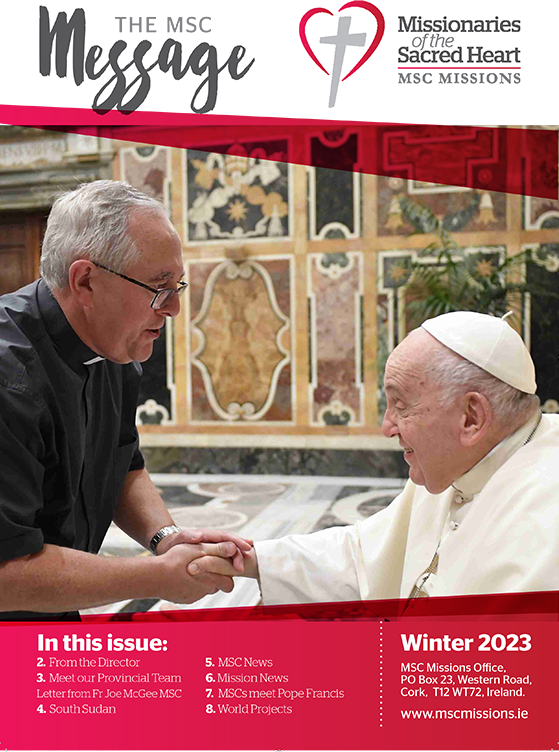
Read the Winter 2023 edition of the MSC Message
*
Nov 15, 2023
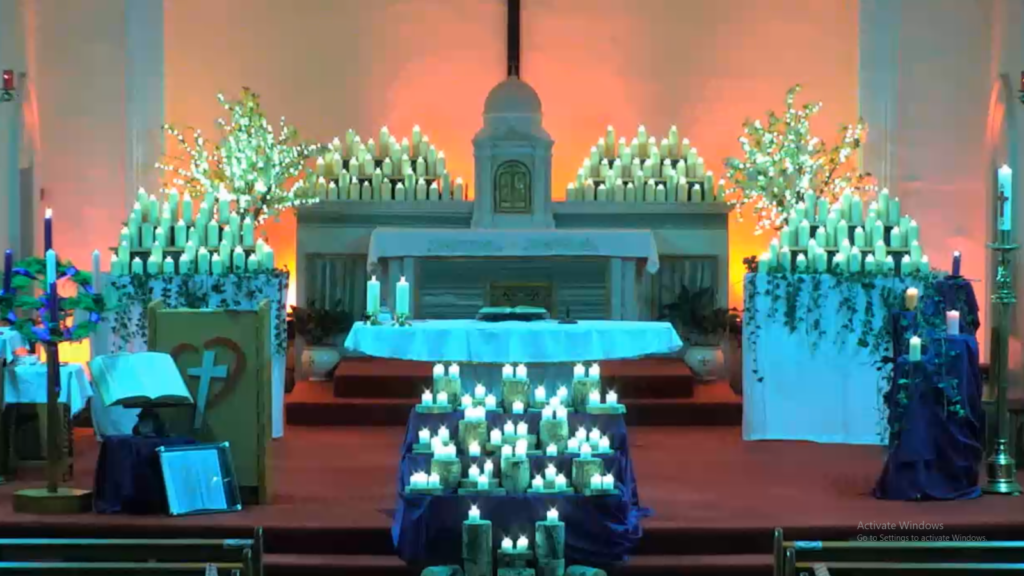
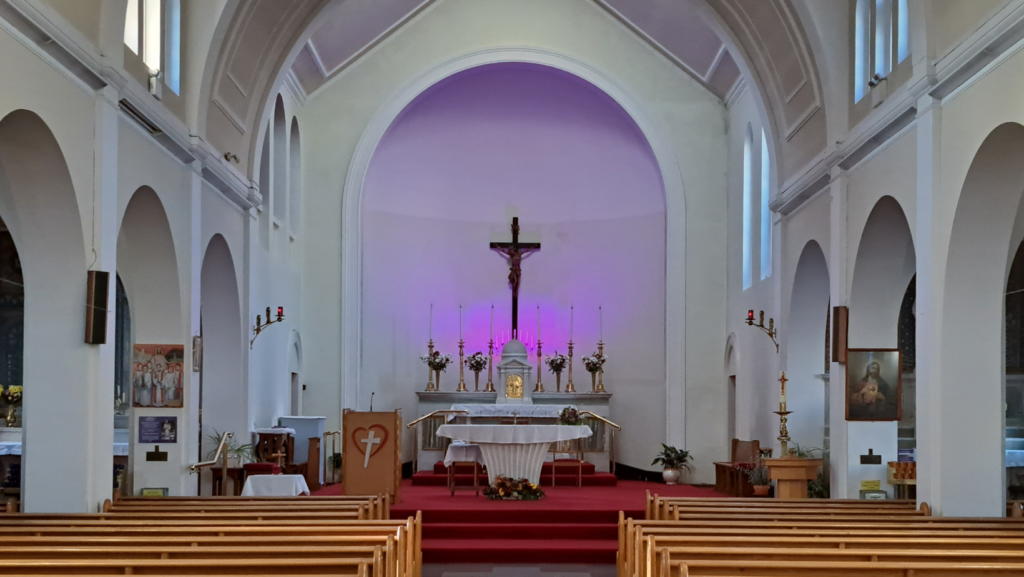
We warmly invite you to join us for an evening of contemplation and tribute, dedicated to the cherished memory of our loved ones who reside eternally in our thoughts and prayers, especially during the month of November. Our annual Light Up A Memory Mass to honour and cherish our dearly departed will take part on Saturday, November 25th at the Sacred Heart Church here in Cork. We invite you all to join us here in Cork in person and of course you can also take part and watch it streamed live from the comfort of your home.
Bereavement and grief are experiences that affect everyone. The Month of the Holy Souls provides a unique opportunity to cherish memories and offer prayers for friends and family who have peacefully departed into the embrace of the Lord. Let us unite to commemorate the lives of those no longer with us, and together, we’ll light candles as a heartfelt tribute to those whose memory remains close to our hearts.
Now in its tenth year, our yearly MSC Light Up a Memory Mass has evolved into a cherished tradition, eagerly awaited to conclude the Month of the Holy Souls. Annually, we extend an invitation to our mission friends to submit the names of their departed loved ones for commemoration. The compiled list graces the altar throughout the month, becoming the focal point of our prayers for their eternal peace.
We warmly welcome you all to join us in reflection on this special night, and to submit the names of departed family, friends, and loved ones for remembrance. We would greatly appreciate your support for our ongoing mission projects, and in gratitude for your contribution, we will be glad to remember your intentions at our annual Mass. You can then submit the names of your departed loved ones online, and our MSC priests will remember them specially during our Light Up a Memory Mass.
Find out more about our annual MSC Light Up a Memory Mass.