Jan 5, 2023
“Growing up in Ireland, it was impossible to get through December without hearing Do They Know It’s Christmas? repeatedly. Like crackers with bad jokes, or recipes that try (in vain) to make brussels sprouts tasty, the song was an essential and important part of festive season. It electrified people and called them to act in solidarity with the people of East Africa who were suffering from famine in 1984. As I wandered around the Loreto convent in Rumbek almost forty years later, I could hear it again – repeatedly. One of the sisters in the community is a keen Christmas music aficionada – and when I say keen, I mean really keen!
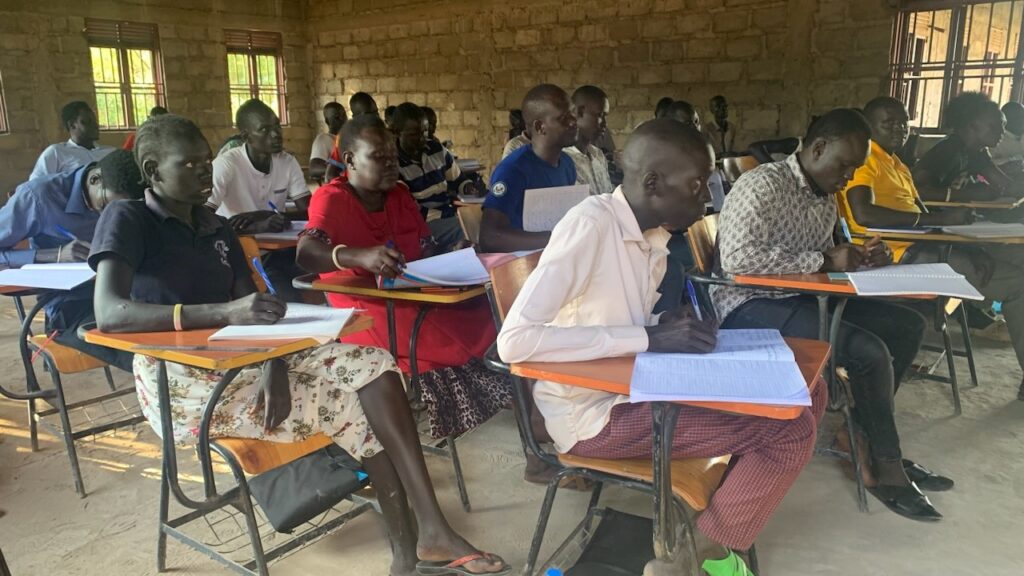
The run up to Christmas in Rumbek has certainly been busy. We finished up work in the Catholic University on the 16th, concluding the first half of our bridging course with our new students. Due to conflicts that eventually led to South Sudanese Independence and the civil war of 2013, levels of education remain stubbornly low. Consequently, everyone beginning our degree programmes must undertake six weeks of intensive maths and English to prepare them for third level studies. We are hoping to welcome almost forty new students who are planning to study a degree in either business administration or English and English literature. We have a record number of women joining our courses, which is a real gift. They benefit from a scholarship programme supported by the Mission Support Centre that reduces their fees and supports their studies. In our small way, we are looking to redress the gender imbalance in education that excludes that vast majority of women.
This last year has been one of the most peaceful in Lakes State, but it does not happen by chance. Initiatives on many levels in both Church and state work to create a safer, more secure environment. Just before Christmas, Sr Orla planned a peace walk with the young women from the Loreto internship programme. Over twenty of us began before dawn and walked towards Cueibet, a parish some 50km away. We got most of the way there, before the temperatures went up to the high thirties. Part of the reason for the walk was to model how young women from different ethnic groups all around the country journeyed together in solidarity and encouraged people they met, especially young girls, to pursue a brighter future.
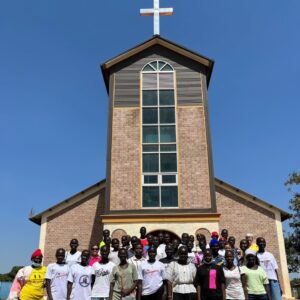
We all went to a local parish where I was celebrating Mass for Christmas Eve. It was to begin at 8:30pm, but, based on my experience from being there last year, I settled on a wall outside and welcomed people as they gradually arrived. In no time at all, the church was packed to the rafters, and we all welcomed the birth of Jesus with joy and song. Previously, it would not have been possible to have so many people out that late at night, but now the streets were busy with groups of people on their way to their churches. They absolutely know it’s Christmas time.
For Christmas Day, the girls who stayed with us for the holidays cooked the food, while I was off for another Mass. Each year a group remain in the school, either because they live far away from Rumbek or they cannot go home due to a forced marriage issue. Either way, we all sat down to a lunch of pork, sakumawiki (like cabbage, but not really), tamalaka (a peanut and greens like sauce), paper food (not sure how to describe that one), and Irish potatoes (which are just potatoes, but in the market that’s what they are called). We were joined by our Bishop and some guests, including boys from the La Salle school who also couldn’t make it home. The day ended with Sr Orla introducing the girls to Monopoly, which in retrospect, based on years of inevitable conflict in Irish homes, was not the best idea. Still, good fun was had by all, even if the Bishop’s team cheated.
So, we are looking forward to the New Year with a sense of anticipation. The new library renovation for the University supported by the MSC benefactors will be completed in January. I won’t have to worry about the bat droppings landing on my desk anymore through a ceiling that looks like Swiss cheese, and the students will have a place to study and do group work. The Pope is planning to come to South Sudan in February as part of an ecumenical peace initiative. The Loreto team and students will lead an eight-day walking pilgrimage to Juba for the event. It should be a wonderful occasion. Please do keep us in our prayers, as you are most assuredly in ours.”
Wishing you and your families every blessing for 2023,
Fr Alan
Read more from Fr Alan’s missionary journey in South Sudan:
PLEASE HELP US TO TRANSFORM LIVES IN SOUTH SUDAN
Dec 2, 2022
It’s Advent in South Sudan, which means that everybody is busy with endings and beginnings. It is a beautiful time here right now, as the rains ended in October and the land is still green. We have been enjoying a time of relative security for the last few months, which has allowed us to harvest the groundnut crop in peace.
This week in Loreto Secondary School is taken up with the end of term exams, so all of students are diligently going over their class notes, working in study groups, and preparing as best they can. I usually go for a walk around 6:00am, as the sun comes up and before the heat of the day sets in. Already, there are students sitting under trees or in classrooms getting ready. However, this is nothing unusual. It happens right throughout the year. The girls know that education is their best way of ensuring they and their family have a better future. School is serious business.
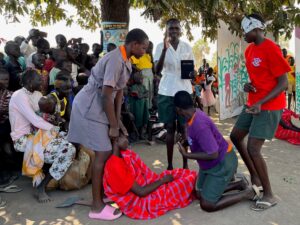
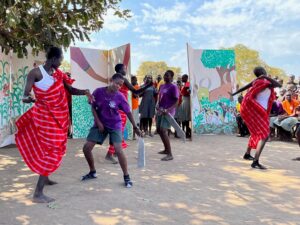
It’s not so serious though that they can’t take time to have fun or get involved in important extracurricular activities. Last Friday, a group participated in a local government project around the rights of women. On Saturday, our Peace Club staged a roadside play in the local village. Before a group of the chiefs, families, and school children, they debuted their new drama on the need for peace in South Sudan. There was also poetry, traditional dance, some speeches, and plenty of laughter. It was the first time that they, as a group of young women, addressed the chiefs about their hopes for the future. The Benydit, or head chief, was delighted with the work and encouraged them to continue.
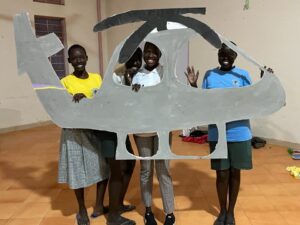
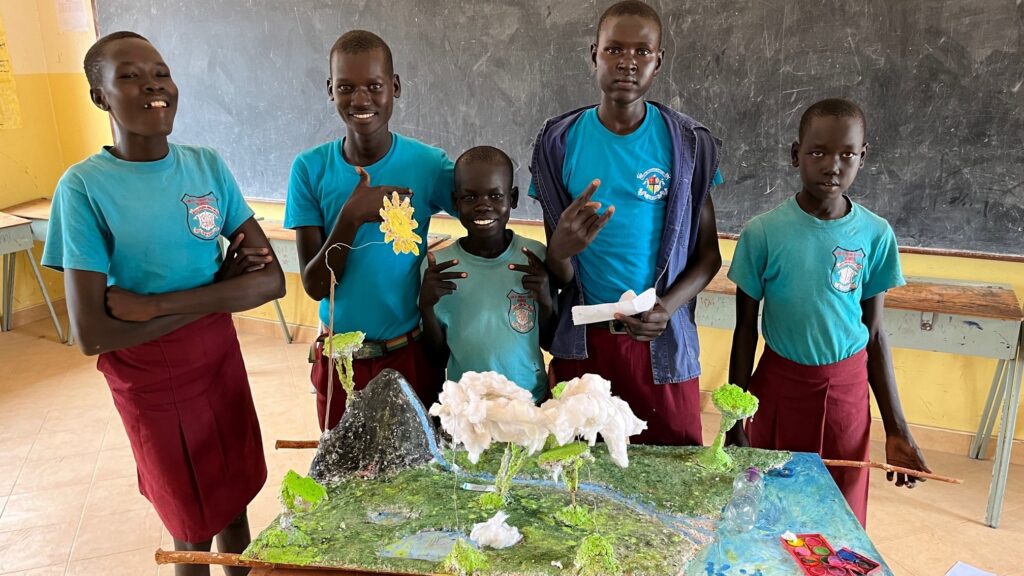
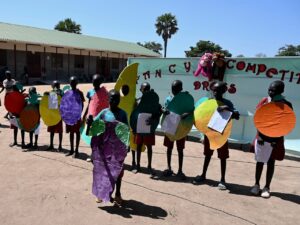
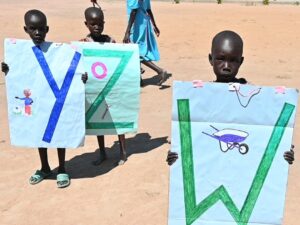
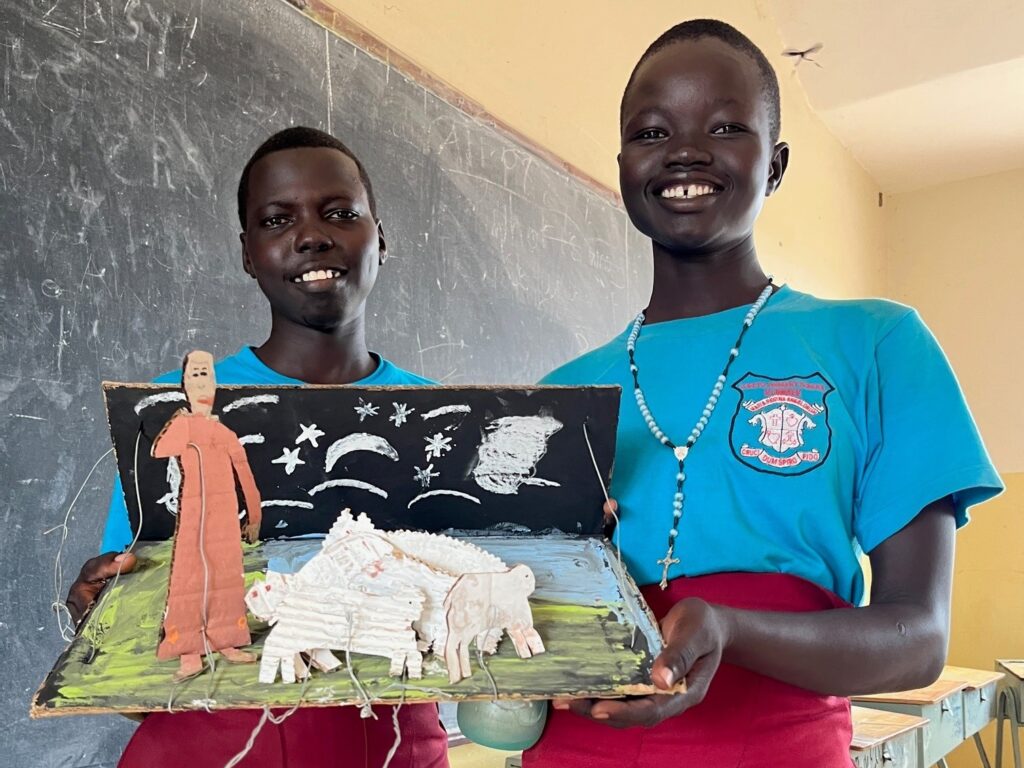
In the Primary School the kids have been busy too. Last week, we had a fancy dress competition, where kids created wonderful papier mâché lions and cows, along with weather conditions, mathematical symbols and shapes, fruits and vegetables, and traditional costumes. On Thursday, the focus was on arts and crafts, again related to their studies. They drew pictures of insects for biology, model villages and farms for citizenship, and the water cycle for general science. Everything was made from scrap paper and reused cardboard. Their creativity was extraordinary.
While things are winding down for Christmas in the schools, we are only getting started in the Rumbek Campus of the Catholic University of South Sudan. We have had a new intake of students for our degree programmes in English and English literature and in business administration. Right now, they are taking part in an intensive six-week course in English and maths to improve their basic standard and prepare them to begin their classes at the end of January.
It is an exciting time, because it is hoped that from this group we will have a new generation of well-trained secondary school teachers and business leaders. We are carrying on with our partial scholarship for women to encourage greater participation. We already have quite a few enrolled and a number of these are mothers who are returning to education, something that rarely happens here.
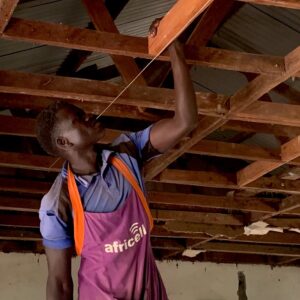
In addition, we are refurbishing our library and student centre. Previously, the building we used was dilapidated and bats were in the process of eating through the ceiling. The entire power supply came from an old solar unit and a couple of second-hand car batteries. The floor was cracked and pockmarked, although potholed might be a better description. As I write, the builders are putting in a new ceiling. Once that is finished, they will plaster the walls properly and we have sourced a durable, but inexpensive, tile for the floor.
Some may argue whether this is the most urgent need. However, education is the essential foundation of a country that, if done properly, will ensure development that is sustainable for everyone. It is about giving someone a rod, instead of offering them fish year after year. Our students make real sacrifices to be here, whether they are in primary, secondary, or third level, but with their energy, vision, and commitment the future is bright indeed.
Ben Nhialic areer kek a yin,
Fr Alan
Read more from Fr Alan’s missionary journey in South Sudan:
PLEASE HELP US TO TRANSFORM LIVES IN SOUTH SUDAN
Jul 21, 2022
Soon after arriving in South Sudan in November 2020 for my current appointment, I received a WhatsApp message from Fr Abzalón, the Superior General of the Missionaries of the Sacred Heart, wishing me the best with the new mission and saying that he would like to visit one day. In the height of the pandemic, travelling anywhere seemed unlikely, and the possibility of coming to Rumbek would test even the most credulous of believers.
Less than two years later, though, I was in Juba to welcome him early on a Wednesday morning. When I first arrived in 2017 on a research trip, the airport was a simple tent, with no chairs that worked, and a length of runway. Now we have graduated to a building with one carousel, a sort of Central African Knock International Airport if you will. After a brief prayer to St Jude, he successfully negotiated the labyrinthine entry visa process, and we were off.
Challenges and resilience
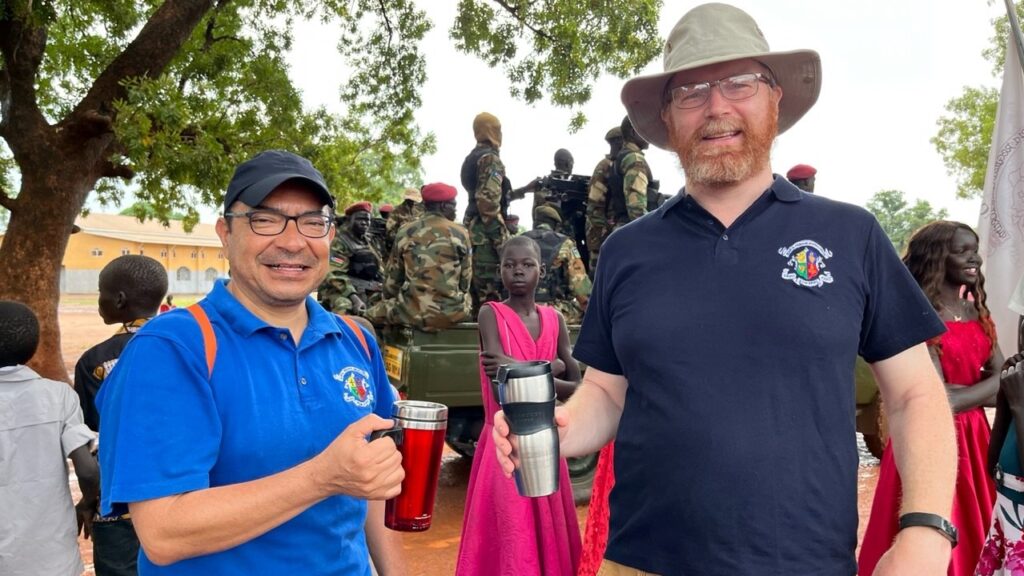
Part of the Superior General’s mission was to see what was happening in Diocese of Rumbek and to explore if there was a need for a greater MSC presence. To that end, we spent our first day meeting with the head of religious missionaries in the country and then the coordinator of the Jesuit Refugee Service (both coincidentally Irish) to get the lay of the land and a sense of the reality of the people. That evening, we had dinner with Christian Carlassare, the newly ordained Bishop of the Diocese of Rumbek. He returned to the country just last March to be ordained, following an attempt on his life in 2021. Over cremated nyama choma (a speciality of grilled meat), the Bishop told him of the many challenges the Diocese faced, but also about the resilience of the people who persevered through a long fight for Independence and the Civil War of 2013.
Before sunrise, we were back to the airport for our flight to Lakes State. The closest approximation to the domestic departures experience is if you imagine the chaos in Dublin Airport earlier this year, then squeeze it all into one-tenth of the space, occasionally switch off the power, raise the temperature about 20C, and then you’re about half-way there. However, our guardian angels were working time and a half, and by 8:10am we had arrived in Rumbek and were heading to Loreto, which would be Fr Abzalón’s base for the week.
Exploring Loreto and beyond
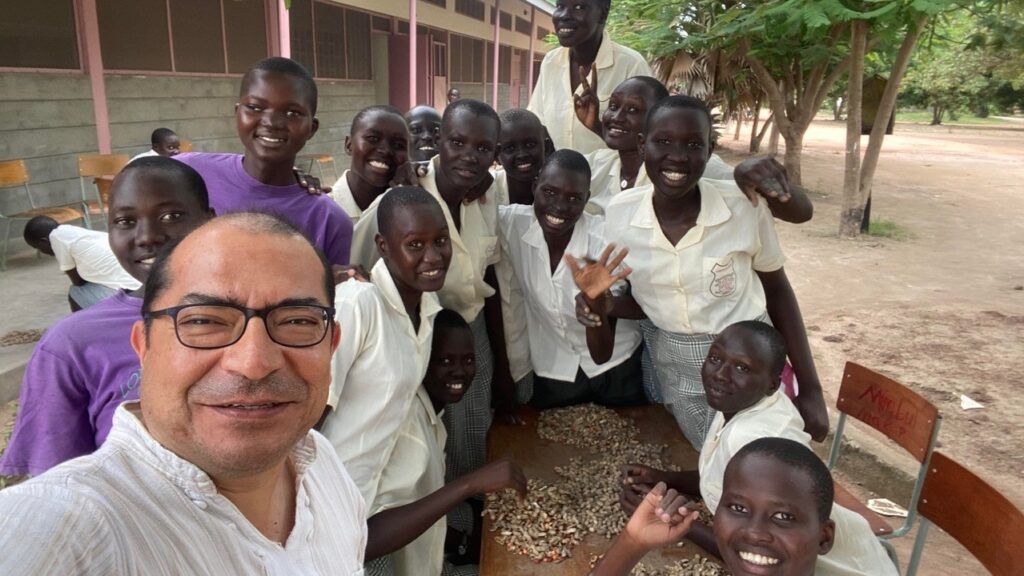
Fr Abzalón had the opportunity to explore the Loreto compound, beginning with the Mary Ward Primary Health Care Clinic. In addition to looking after all the students and staff, it has responsibility for nine local villages encompassing 27,000 people. Most come for vaccinations, nutritional support, and especially malaria treatment. In the primary school, there are 1,400 day pupils, with a further 340 boarding girls in the secondary school. We are coming to the end of the first semester, so everyone was intent on their revision for exams. That afternoon he came to the Catholic University of South Sudan, Rumbek, where I work as principal. There, he met the young men and women who are training to be the teachers and the business people of the future.
It’s hard to believe in recent years that to drive into the east of Rumbek would mean that you were taking your life in your hands. It would be highway robbery, except there was no highway and if you got away with just being robbed you would be doing well. With the arrival of the new governor last year there have been far fewer problems. On Friday, we joined the final-year students and some of the staff to be part in a peace walk to the Parish of the Good Shepherd in Thonaduiel. We started off like good pilgrims at dawn and arrived eight hours later and 45km away, finishing with a short time of prayer. It was a witness for the villages we walked through of the country that could be built together if peace were to flourish.
South Sudan celebrated its Independence on the 9th of July 2011, and every year since then it has been a day for processions, speeches, and sports in Freedom Square. They have an understandable sense of pride over the establishment of their nation, but are conscious too of the outstanding issues that remain, most notably peace building, the rights of women, and the first elections that are due to take place next year. The Loreto students were out in force for the day and their marching was featured on national TV, to the great excitement of all the girls.
Pioneering work
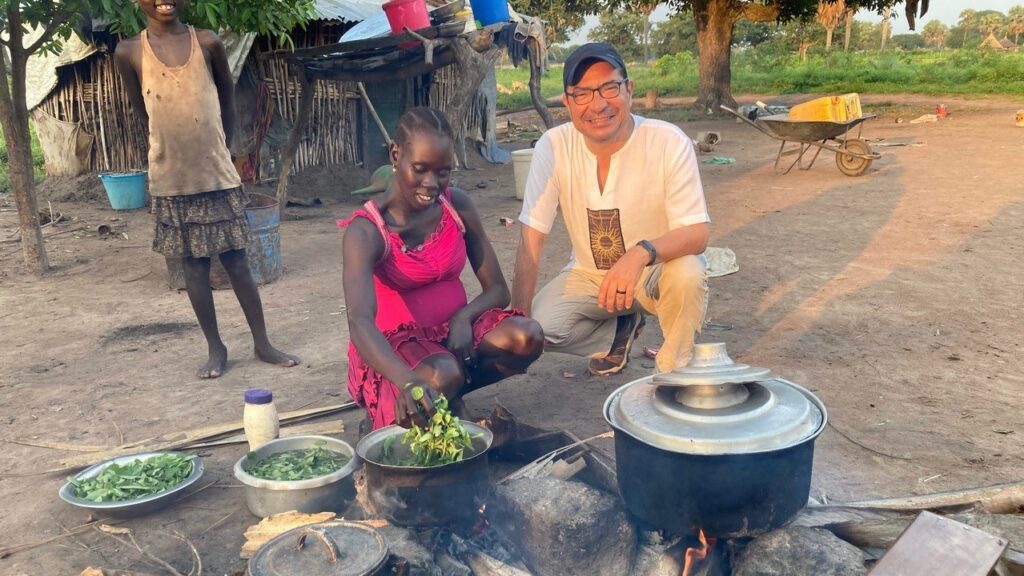
The next few days allowed Fr Abzalón the chance to visit some of the local villages in Maker Kuei, where we are based. People live in simple conditions with a quiet dignity and have a genuine warmth for visitors. He took a cooking class to learn how to make combo (a type of stew containing vegetables, peanuts, and meat) over a charcoal fire. He also attended some of my CRE classes in the secondary school and shared what life is like in Guatemala, his home country. It was a special blessing to have him celebrate our Sunday Mass for the students outdoors under the shade of the neem trees.
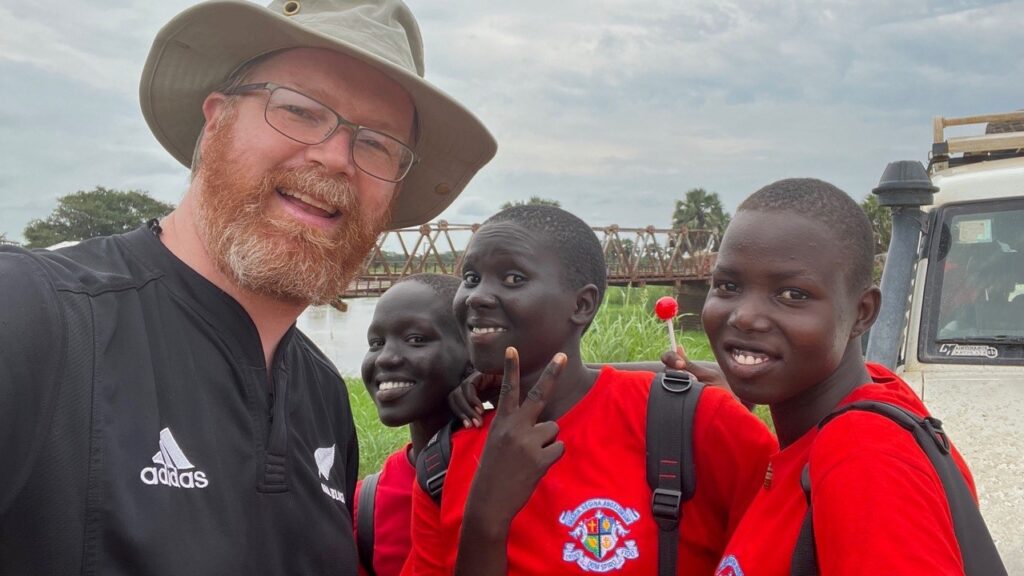
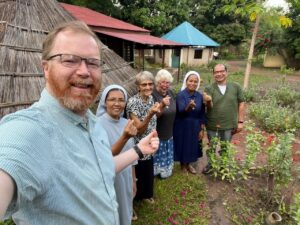
As his week came to a close, Fr Abzalón still had a lot to see. On Tuesday, we went to visit the Daughters of Our Lady of the Sacred Heart in Mapourdit. The Daughters are the trailblazers of the Chevalier Family in South Sudan. They have been here for over twenty-five years and they endured many hardships before the country won Independence. Today, they continue their pioneering work in education and healthcare under the most challenging of conditions.
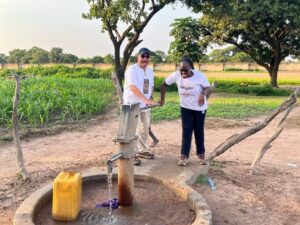
Thursday came around quicker than anticipated and Fr Abzalón headed back to Juba to get a COVID test and an onward flight to Rome. Looking back on his experiences he wrote to us that same week:
“The mission … is a wonderful and prophetic project of education and integral promotion, especially of young women. The community there struggle day by day to build and transform this challenging and complex, but at the same time, beautiful reality. The Chevalier Family is present in South Sudan.”
– Fr Abzalón Alvarado Tovar MSC
Superior General of the Missionaries of the Sacred Heart
Ben Nhialic areer kek a yin,
Fr Alan
Read more from Fr Alan’s missionary journey in South Sudan:
PLEASE HELP US TO TRANSFORM LIVES IN SOUTH SUDAN
Jun 14, 2022
“It’s time to sow seeds in South Sudan. The rains have finally arrived and the whole school is out in the afternoons cultivating. There is a celebratory feel to the whole affair, or at least there would be for me if it wasn’t so hot and humid. The students of Loreto Rumbek are utterly undeterred by such trivial matters like working in an environment where you could fry an egg on a stone. No matter the weather, they are out with their jembes (a sort of bent shovel that everyone uses here) and watering cans, tilling, weeding, and tending their crops. In a matter of weeks, land that had previously looked totally dry and lifeless will be green and thriving, with plants growing taller than me. Just this evening on a walk around the campus, a couple of them were sitting in their plot, tired but justifiably proud of their work.
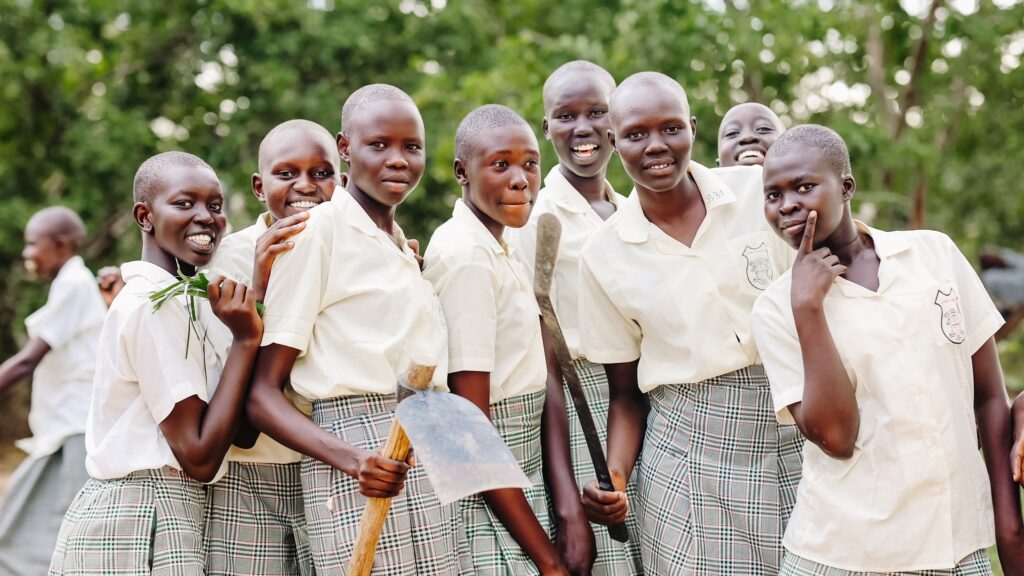
Food insecurity is a constant threat, and many people are just one bad rainy season away from serious malnutrition. The governor of the state has designated Friday as a day for cultivation and has mandated that all public offices are closed to facilitate the work. In the Catholic University where I am now working in the afternoons, lecturers will take advantage of the three-week break in between semesters to go back to their villages to farm their land. Farming here is more than a serious business; it is a way of life.”
“[We are sowing] a seed that will flourish in a future yet to come. That will be a harvest worth waiting for.”
“This time of year is the most challenging. By now, many families will have used their last food stores and it is a delicate balancing act deciding how long to wait before harvesting. The longer they wait, the greater the amount of food grown, but sometimes time is a luxury that families cannot afford. It is a situation that is very much part of the Irish story. While we are now a prosperous, developed country, with a thriving, modern agricultural sector, we have inherited memories of what it was like not to have enough to eat and to be forced to leave our country or starve. They are so powerful that they continue to shape our identity even today.
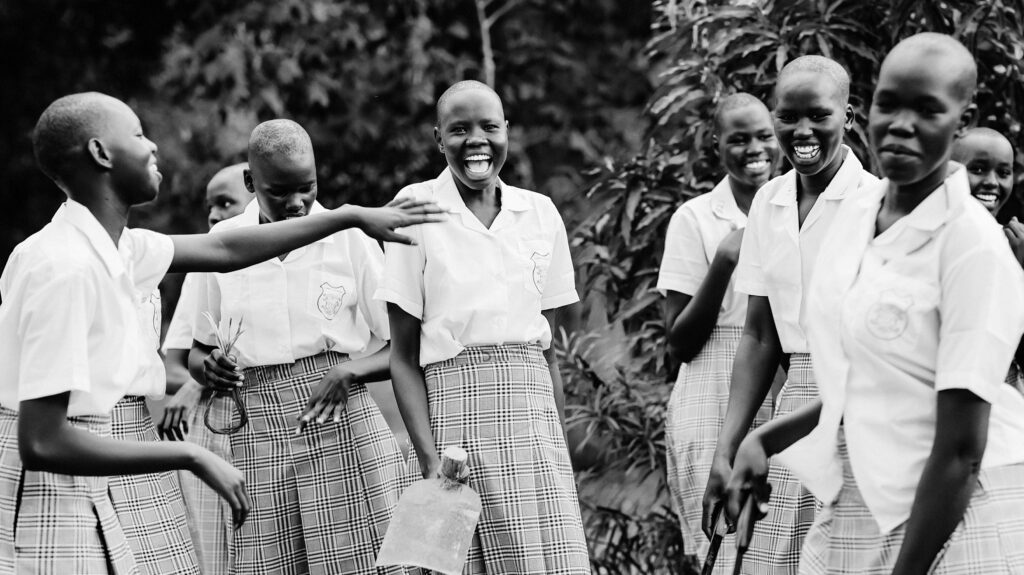
It’s not all work though in Loreto. Three afternoons a week, the students have sports, and they approach them with their typical boundless enthusiasm. By the time I venture out around 5:00pm, the temperature has dropped to a more reasonable 36C. While I wouldn’t manage five minutes (a wildly optimistic estimate) running up and down the pitch, the girls have already been busy for an hour playing volleyball, basketball, and soccer. We are in the process of setting up netball and already there is a growing list of names who want to sign up.
One of the first albums I ever bought myself was by a Cork band called The Sultans of Ping FC. Aside from having an off-beat, energetic sound, they espoused a philosophy of world peace through football. That’s a lesson we’re happy to practice here. Sports are about more than exercise and fun. They teach our young people the value of fair play, teamwork, and determination. Our school has adopted a policy for many years of including people from different ethnic groups to help promote unity and peace. A game of volleyball with students from all around South Sudan may not seem like much in the grander scheme of things, but it sows a seed that will flourish in a future yet to come. That will be a harvest worth waiting for.”
Ben Nhialic areer kek a yin,
Fr Alan

Read more from Fr Alan’s missionary journey in South Sudan:
PLEASE HELP US TO TRANSFORM LIVES IN SOUTH SUDAN
Jun 9, 2022
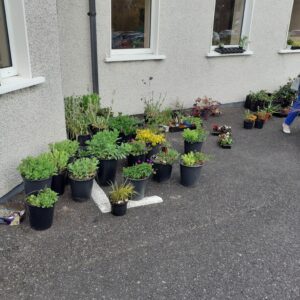
Sincere thanks to all who took part in our recent fundraising event for the children of the Holy Family Care Centre, a care facility run by the Daughters of Our Lady of the Sacred Heart, with the support of the MSC, in Ofcolaco, South Africa. The fundraising event took place at the Sacred Heart Church on the Western Road, Cork, across the last weekend of May, and raised a running total of €5,200 for the Holy Family community, with donations still coming in.
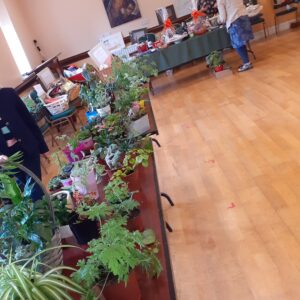
The plant and cake sale took place during the weekend Masses, where local treats such as home-made brown bread and fresh free-range eggs were also on sale. Teas and coffees were available for all to enjoy while they browsed, while John and Richie kept the atmosphere light and lively with marvellous music on the accordion and mandolin.
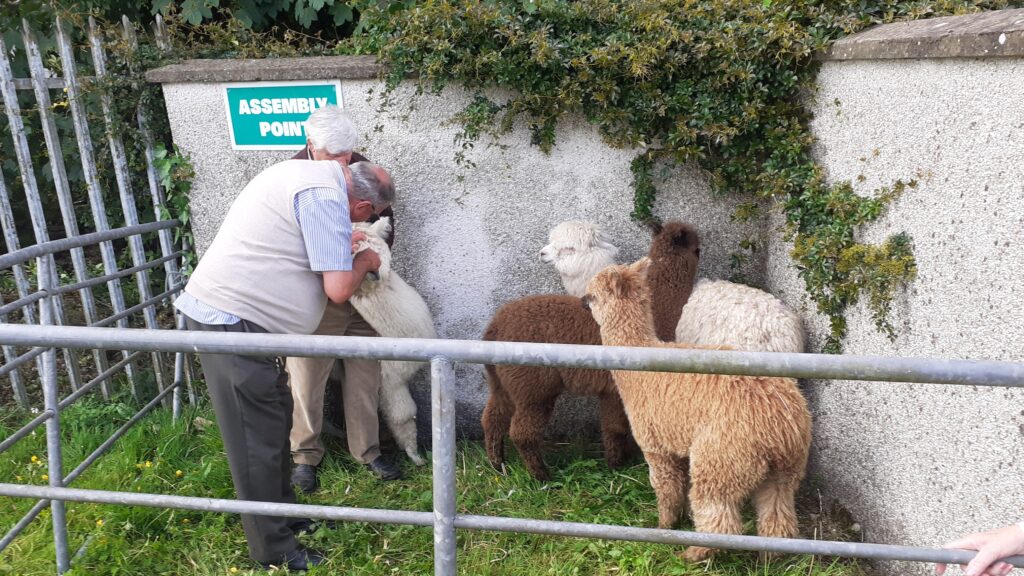
A group of five alpacas took a star turn over the weekend, as Pat and Nora Casey from Macroom were kind enough to bring them along to take part in our fundraiser. “A few of alpacas were due a grooming session,” reported Fr John Fitzgerald, our MSC Missions Office Director. “Luckily, Fr John Finn was at hand with his farming skills to shape their fringes and add to their overall good looks.”
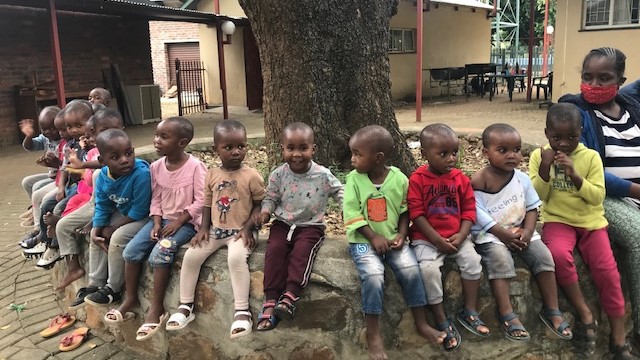
Founded in 2002, the Holy Family Care Centre in South Africa has been run by the Daughters of Our Lady of the Sacred Heart with the support of the MSC for 20 years, under the leadership of Sr Sally Duigan FDNSC. The Holy Family Care Centre is an invaluable facility for young children who are very ill and who, in many cases, have been orphaned or abandoned. These children are primarily HIV positive and are in need of specialised care. With the resources to accommodate 70 children, the Centre’s facilities are stretched to full capacity and beyond on a daily basis; Sr Sally admits that the team at the Centre does its best never to turn a child away, and the Sisters there sometimes find themselves with 80 children in their care.
“The reasons for admission to the Holy Family Centre vary, but many children have been abandoned, sexually abused, physically abused, orphaned, or made vulnerable because of HIV/AIDS,” says Sr Sally. “Some come from horrific backgrounds and arrive here very ill, malnourished, frightened, lacking social skills, and generally very bewildered.”
The Holy Family Care Centre is, above all, a place of family, unity, and love. “We love these children unconditionally,” says Sr Sally. “It doesn’t take long for them to feel at home and to change once they feel loved and cared for.”
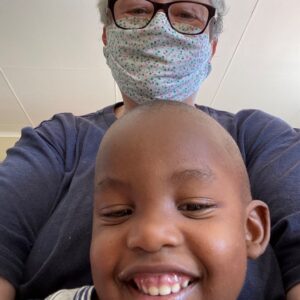
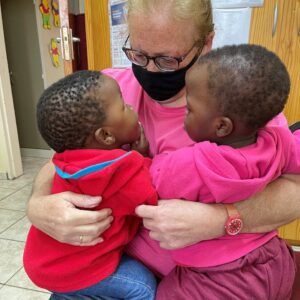
A sanctuary for children in need, the team at the Holy Family Care Centre care for the children on a 24/7 basis, and the Centre feels more like a home to one big happy family. The availability of funding is an ongoing concern, as the Centre relies on donations and the generosity of MSC mission friends and the local community for the upkeep of buildings and equipment, and to be able to continue doing the work that they do – “[giving] our children love, security, and care, in the hope they will thrive,” in the words of Sr Sally.
“Since our parishioners here in Cork cannot visit Holy Family, or help them directly, the plant and cake sale is a wonderful way of supporting Sr Sally and her team in keeping the Centre going, without having to worry about the immediate future,” said Fr John. “In addition, it was great fun for all involved!”
IF YOU CAN, PLEASE SUPPORT THE HOLY FAMILY COMMUNITY