Apr 11, 2025
Back to School for Exams
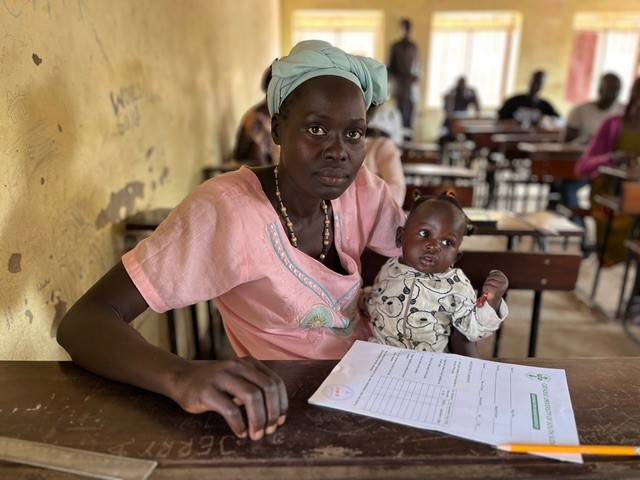
The Catholic University of South Sudan, Rumbek Campus experienced a good, but challenging semester. For fourteen weeks, lectures were held in a local Catholic secondary school. This return to familiar surroundings was a nostalgic experience for some students, allowing them to reconnect with former teachers and cherished memories. While the hospitality was appreciated, the school’s simple facilities and limited resources presented some challenges. Fitting adult students into the smaller desks required some adjustments, but everyone quickly adapted.
Late-Night Study
The students have done their best to make time to study, not easy in a country where less than 9% of the population has any access to electricity and the sun sets every night by 6:00pm. Up until recently, students would study at home with only the light of the mobile phone to read. We upped our Late-Night Study programme to three evenings a week, allowing students to work until 8:00pm in our library. Initially, only men attended, as in the culture it would be considered inappropriate for women to stay out late; however, over the last few weeks, more and more of our female students have been able to attend. Our University Librarian stayed with them and provided them with support when needed. It has been a real success, and we plan to continue the programme into next semester.
Exams in a Heatwave
Currently, we are dealing with an intense heatwave in South Sudan. For the past two weeks, all schools have been closed by government order, with daily temperatures ranging from 39°C to 42°C. Despite these conditions, we have had to conduct our end-of-semester exams. Even with a schedule pushed to late afternoon, the heat remains a significant factor. The students’ resilience has been truly commendable, as they have not voiced a single complaint! However, all good things come to an end and so too do exams. Tomorrow will be their last day before a two-week break and then we are back into Semester Two.
Step-Free Access for All
As you are probably aware, the source of our displacement is the ongoing renovation of our lecture halls. The work is progressing well, with ceilings already in place. Previously, the hall only had a corrugated metal roof, which made the room into a sauna during hot days, and when it rained you could hear nothing at all. We are only halfway through the project, and already the changes have made a huge difference. Now we are getting ready to install the pipes for the electrical system and plaster the walls. We are also using the opportunity to make the building step-free, getting rid of ramps and raising the floor to allow anyone with physical disabilities to study freely. As a Catholic university it is our goal that anyone who wants to study and has the academic ability should be able to undertake third-level studies.
Nhialic ke yin,
Fr. Alan
HELP SUPPORT OUR MSC MISSIONS PROJECTS
Read more from Fr Alan’s missionary journey in South Sudan:
Feb 5, 2025
The Catholic Church in South Sudan is at the forefront of pastoral ministry in both education and health. Our impact is easily quantifiable by the number of students taught or patients treated. However, one of its most important roles is perhaps the most difficult to measure, peacebuilding. Grounded in the teaching of Jesus, it is the call of Christians everywhere to be peacemakers, fostering reconciliation and healing in our communities, giving witness by our lives to a different way that is grounded in justice and mercy.
This ministry in South Sudan is complex, to say the least. Following five decades of fighting for freedom from Sudan, 2011’s independence was a time of optimism for a wounded society. However, the ensuing civil war in 2013 saw over 400,000 people being killed, millions become displaced, and countless men, women, and children left traumatised. According to the UN, over a million people have fled here from war-torn Sudan since April of last year. It is, in many ways, the making of a perfect storm. But violence is like that, destructive, loud, and indiscriminate. How could you possibly respond to something so big that it is almost an act of God, although it is definitely not! Well, you could go for a walk.
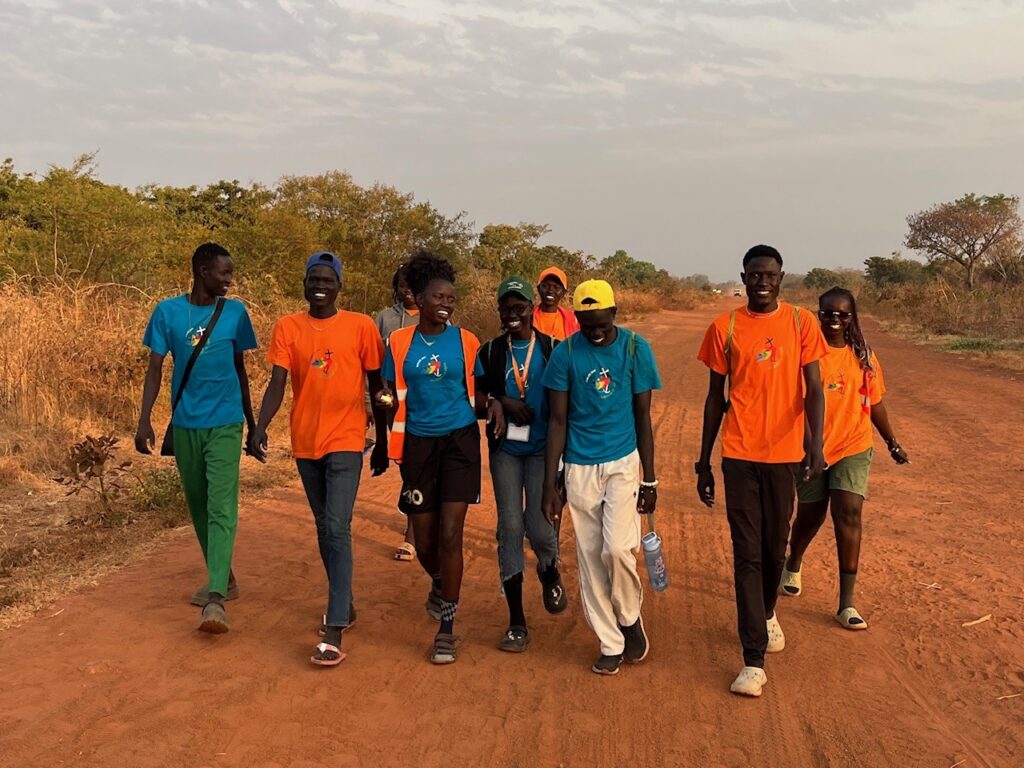
The Diocese of Rumbek Pilgrimage of Peace first started in February 2023. The idea came from Sr. Orla Treacy, a Loreto sister, who thought it would be a good idea for young people to walk from the centre of South Sudan to Juba to welcome Pope Francis during his first official visit to the country. Working with the youth team of the Diocese, it was an incredible success and captured the hearts of the people. The Pope even requested to meet the group personally when they arrived. Since, then it has continued to grow, with another pilgrimage in the west of the Diocese in 2024.
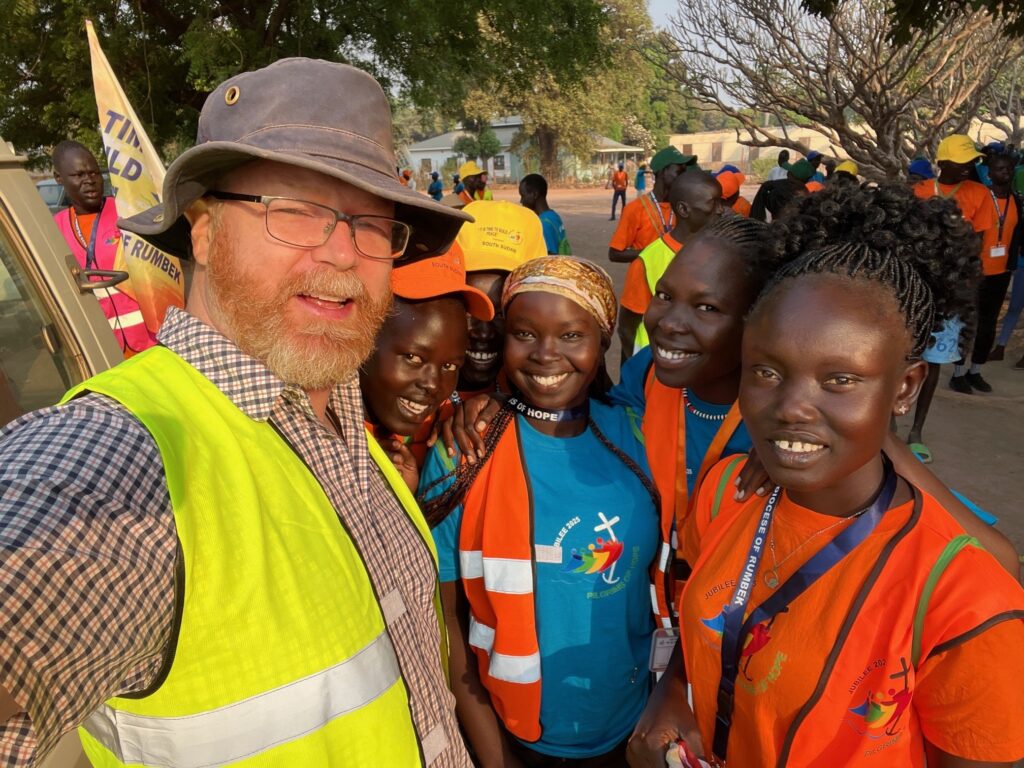
This year the pilgrimage was organised, not by the priests and religious of the Diocese, but by the youth themselves. Young men and women, veterans of last year’s pilgrimage, planned, organised, and implemented everything, from the beans we ate, to the route we took, to the places we slept. This gave us, as sisters, brothers, and priests, the opportunity to really journey with the youth, listening to their stories and sharing their hopes. On our first day we began with Mass in the Cathedral of Rumbek and were joined by the newly appointed Apostolic Nuncio to South Sudan, Archbishop Séamus Horgan (from Co. Clare), and our own Bishop Christian Carlassare.
Our route would take us through the south of Lakes State and into Western Equatoria, from Rumbek to Malou, Wulu, Mvolo, Mapourdit, and finally to Aluakluak, covering a distance of over 125km. We slept each night in the simple classrooms of local schools, although many of us opted to spend the night camped out under the stars. Possibly the one advantage to only 8% of the population of South Sudan having electricity at home is that the night skies are awesome in the truest sense of the word.
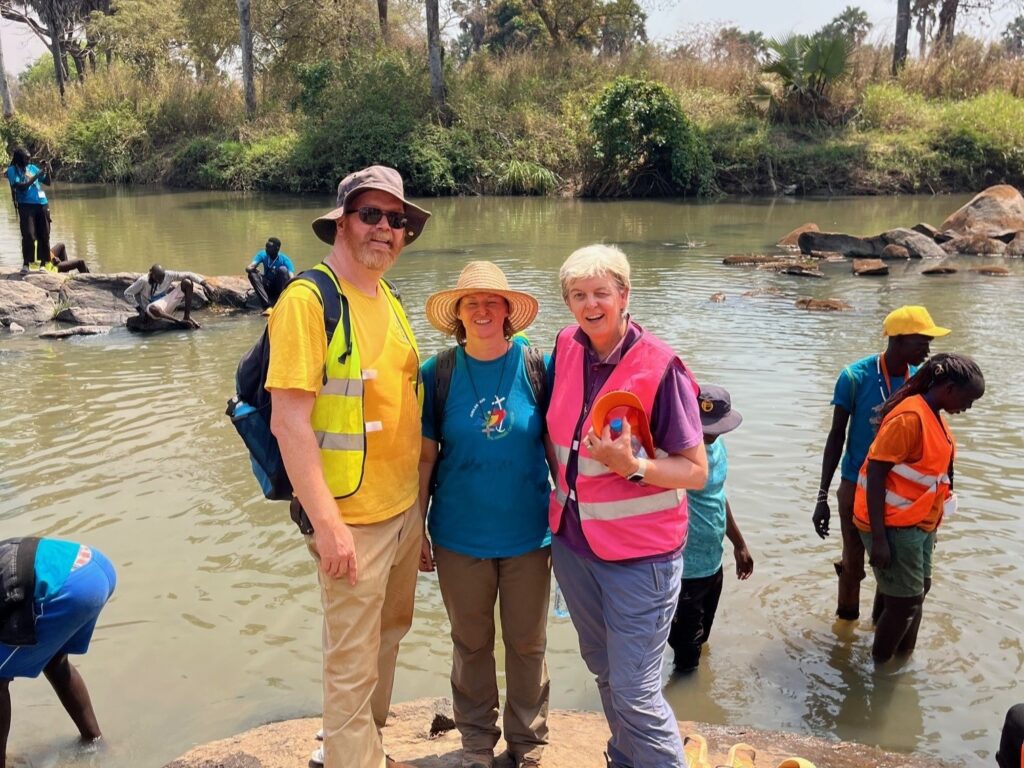
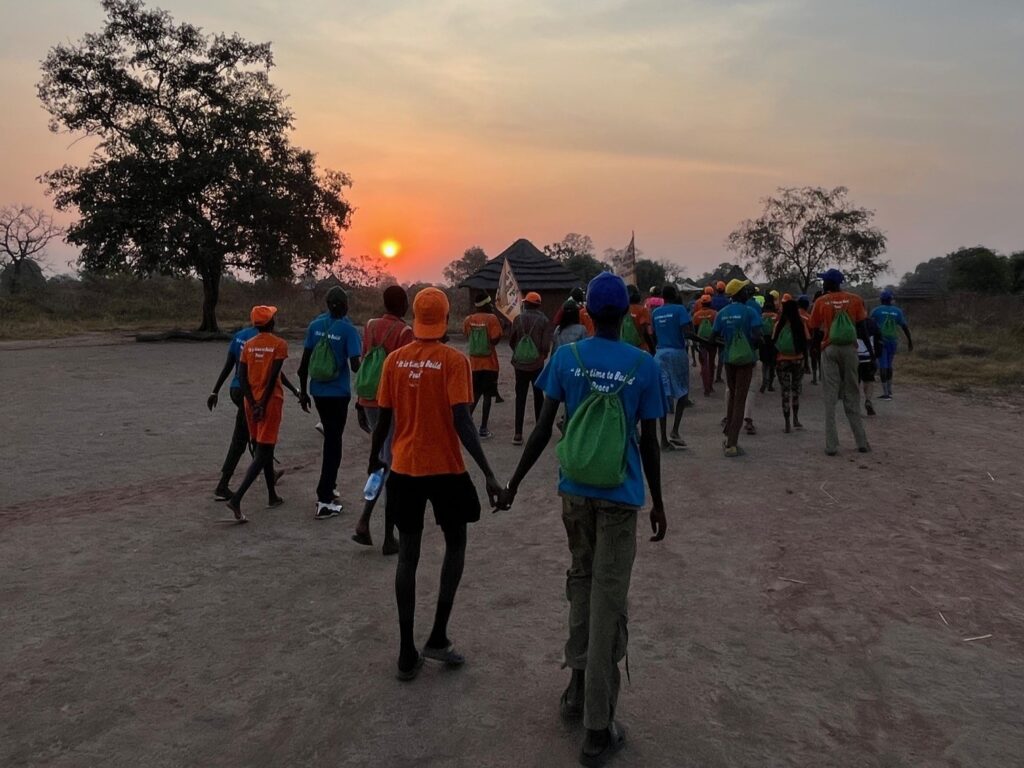
Each day we would rise at 5:30am, take a few minutes for warming up, and then hit the road. In the course of our pilgrimage, we would stop and speak with those we met along the way. Such a large and exuberant group caused a lot of comment. What were we doing? Why were we walking, when you could drive? How does a pilgrimage really help to promote peace?
The last question really touches into the heart of what we were trying to do. Not so long ago, many of the roads and paths we walked were impassable due to insecurity. Violence, theft and shootings were commonplace. To be able to walk now, without weapons, police, or security signalled loudly more than words could express that something different, something new was happening.
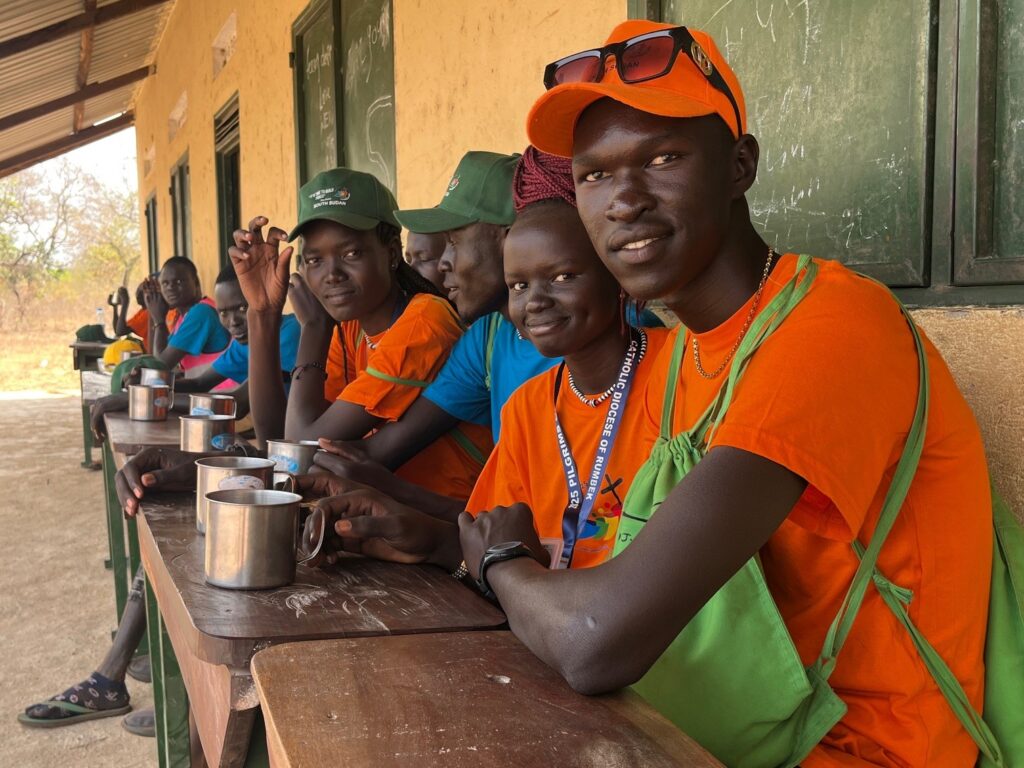
In addition, our group was made up of young people from around the Diocese, drawing from groups that have been traditionally hostile to one another. Their ability to walk together and work for peace re-enforced our message of hope. As the sun set, we were joined by the local people as we celebrated Mass and shared a simple meal of rice and beans together.
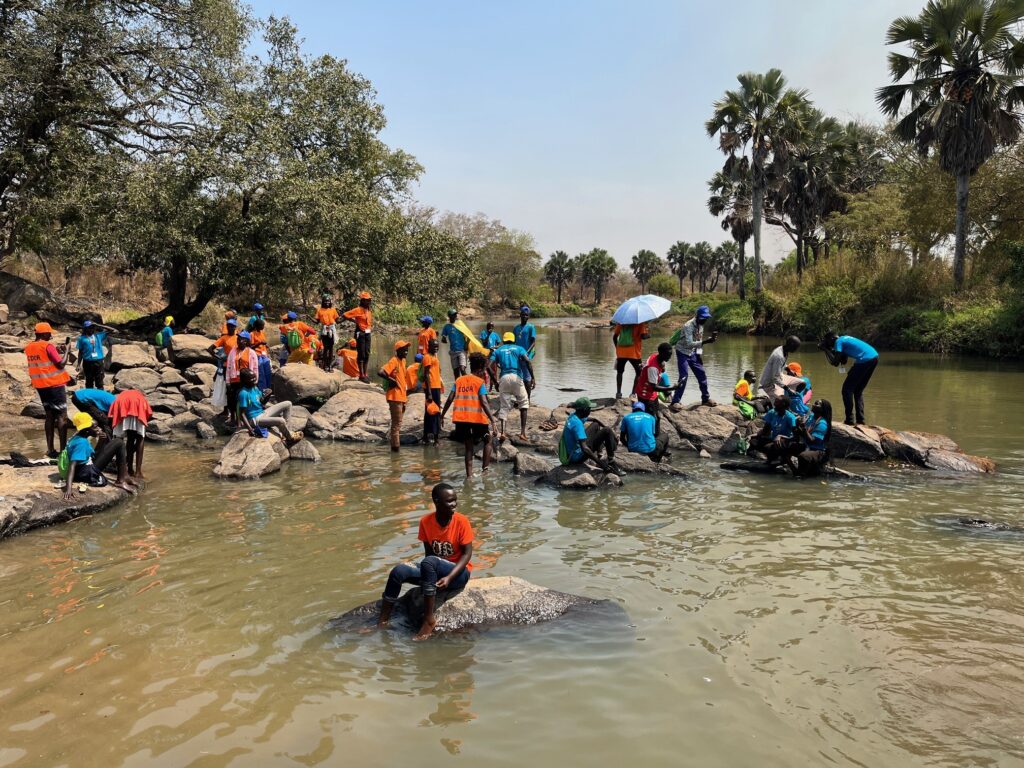
By the end of the week, we were blistered and, in my case, a little sunburnt, but happy. One of the group calculated that, between all of us, we had walked 27,000,000 million steps. New friendships had formed that would have been quite impossible before. We made our way home, with perhaps a renewed appreciation for running water and corrugated metal roofs. Above all, our time together and with the people we met was a quiet, but joyful witness of what could be, peace for a people weary of war and ready for a new beginning. It just takes a step.
Nhialic ke yin,
Fr. Alan
Read more from Fr Alan’s missionary journey in South Sudan:
Dec 17, 2024
It’s all excitement in the Catholic University of South Sudan for the start of 2025. We are moving! Thanks in large part to the generous support of the Mission Support Office’s benefactors, we will shift all our lecturers and students to a local Catholic secondary school for the next four months. This will allow for the complete renovation of our existing halls, including lights and fans. We will be able to develop a programme of evening classes and extend our popular late night study sessions.
The building we are currently using is a repurposed youth centre, lacking ceilings, windows, and any electricity. As we move into the dry season, dust becomes a real problem and on a windy day it can feel like a scene out of Lawrence of Arabia minus the camels and sweeping vistas. During the rest of the year, when it rains it pours and students had to move to the centre of the classroom to avoid getting drenched.
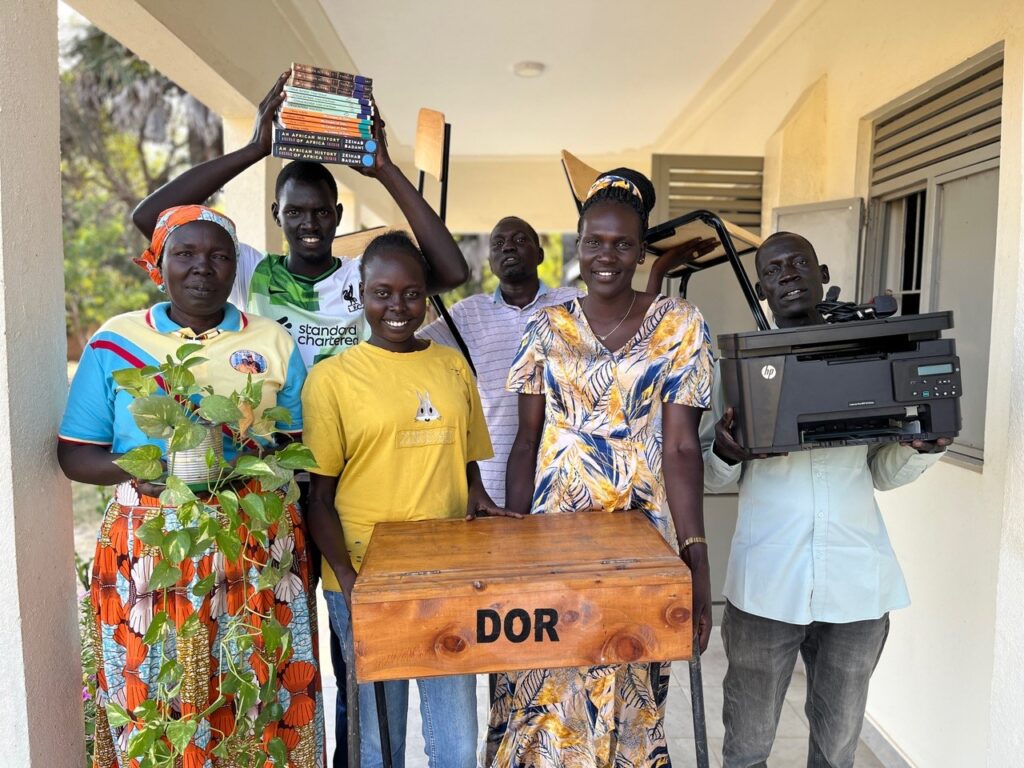
Many of our students actually came from that school, so it will be a chance to revisit the past and see if they can fit back into the small desks. It will take a considerable amount of effort, but it will be worth it. In future, we also want to use the new building as a training centre for existing teachers to upgrade their skills and support their work.
Thanks in a special way to all of you who have supported our ministry here and on behalf of everyone in the University we wish you a joyful Christmas and a peaceful New Year.
Nhialic abi thiei,
Fr. Alan
Our Students: Meet Helena and Isabella (Our newest student – just 2 months old)
Helena is 25 years old and is in her second year of a four-year Bachelor of Business Administration Degree. She has three other children along with Isabella. Only 4% of the population of South Sudan has access to electricity, so being able to study at night is a real challenge.
“I like to study in the Catholic University because there is availability of internet, to allow us to access new information. We have a little library and we have five computers. We now have night-time study twice a week and when my baby is old enough I can take part in it. During the day it is hot. Our temperatures can go up to 42C, so it is difficult to study. Our lecturers are very committed and we don’t miss a single class.
The University’s partial scholarship for women is encouraging us, as the full fee would be too much for us to pay, as many of us are not working. When you are pregnant in other universities you are suspended as a student, but here we are allowed to bring our babies with us and this is really helping us.
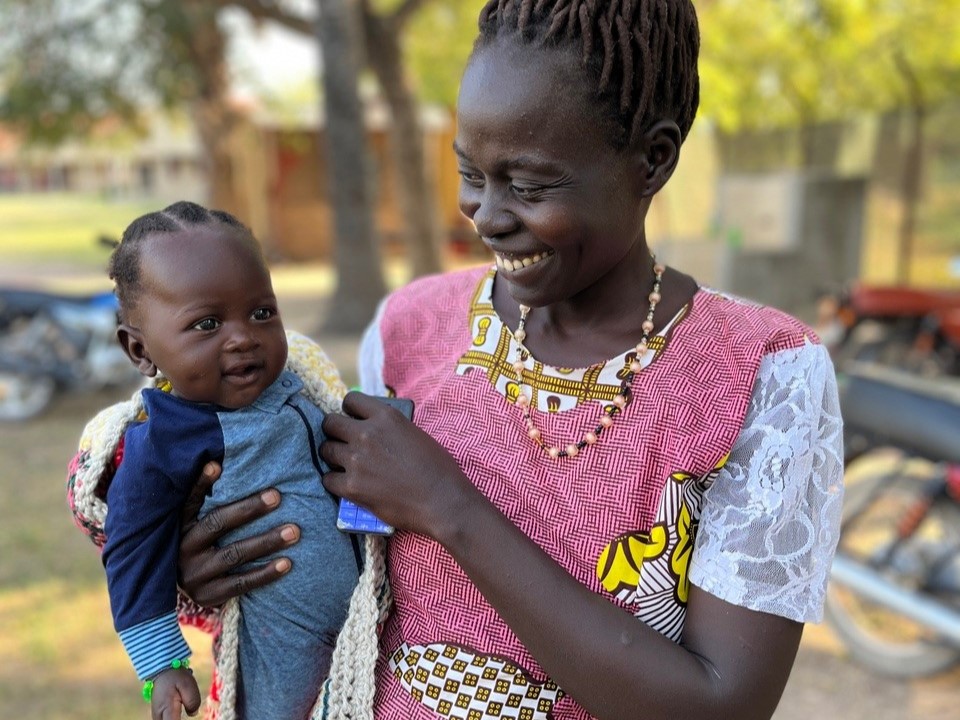
I study at night when the baby is asleep. When Isabella is awake she wants to know about everything I am doing. I have to get up at 2:00am and study until 4:00am using a torch. Then I start preparing for my other children to go to school, lighting the fire, and making the porridge.
My hope for the future is to open up my own school, to ensure that education reaches more children in South Sudan. In our primary schools we have a lot of students, up to 150 children in a class with one teacher and those teachers often are not well trained.
With everything that is going on here the number of students will increase next year. Our sisters are admiring how we going and they hope to join us.”
Read more from Fr Alan’s missionary journey in South Sudan:
Nov 28, 2024
November is a busy month in Rumbek. We are coming to the end of the year and students are preparing for their final exams. Before all that can happen, we had our graduation with our Senior 4 students. It is a time of sincere gratitude for all that has been achieved, for the sacrifices that were made, the work that was done. This year, 78 students graduated from Loreto, our largest number yet, and their families came from all over to celebrate their daughters’ success. It was day of speeches, prayer, and dancing.
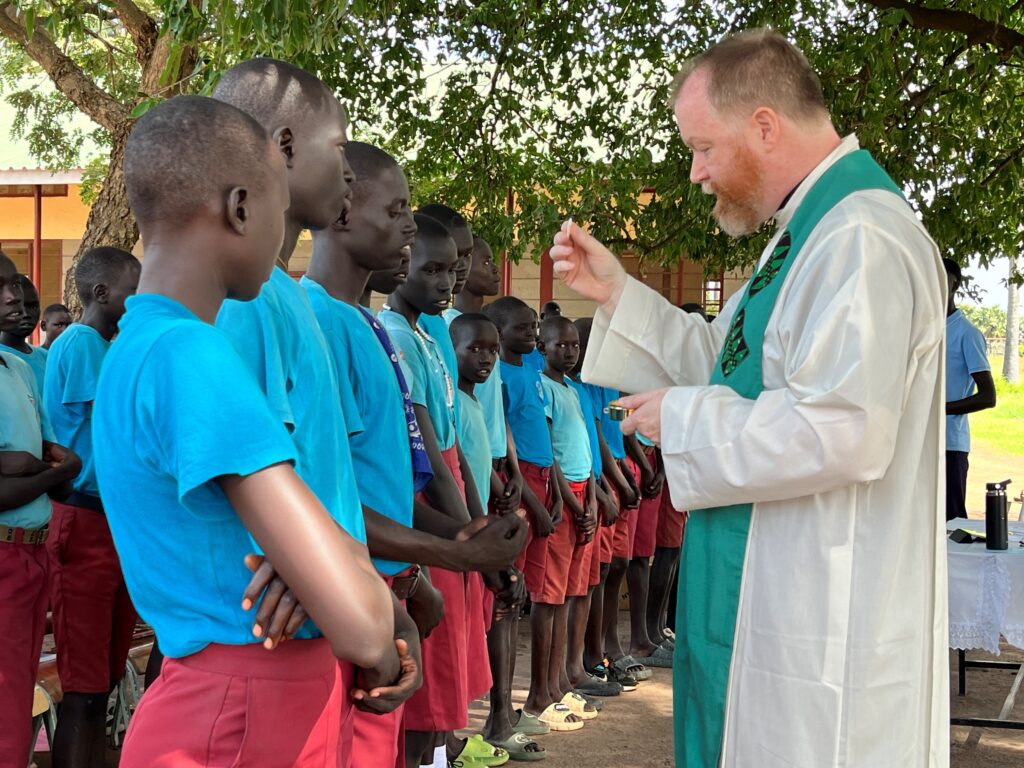
No sooner had we tidied away the marquees and cleaned up the bunting, then it was down to the Primary School for our First Holy Communion Mass. Over the course of the year, these boys and girls attended special classes on Saturday mornings with Sr. Priyanka to prepare. They learned about the life of Jesus and his followers, the gift of the Eucharist given by God to all his people, and they practised their prayers in both Dinka and English. This First Holy Communion Day was a low-key affair by Irish standards, but was both joyful and heartfelt.
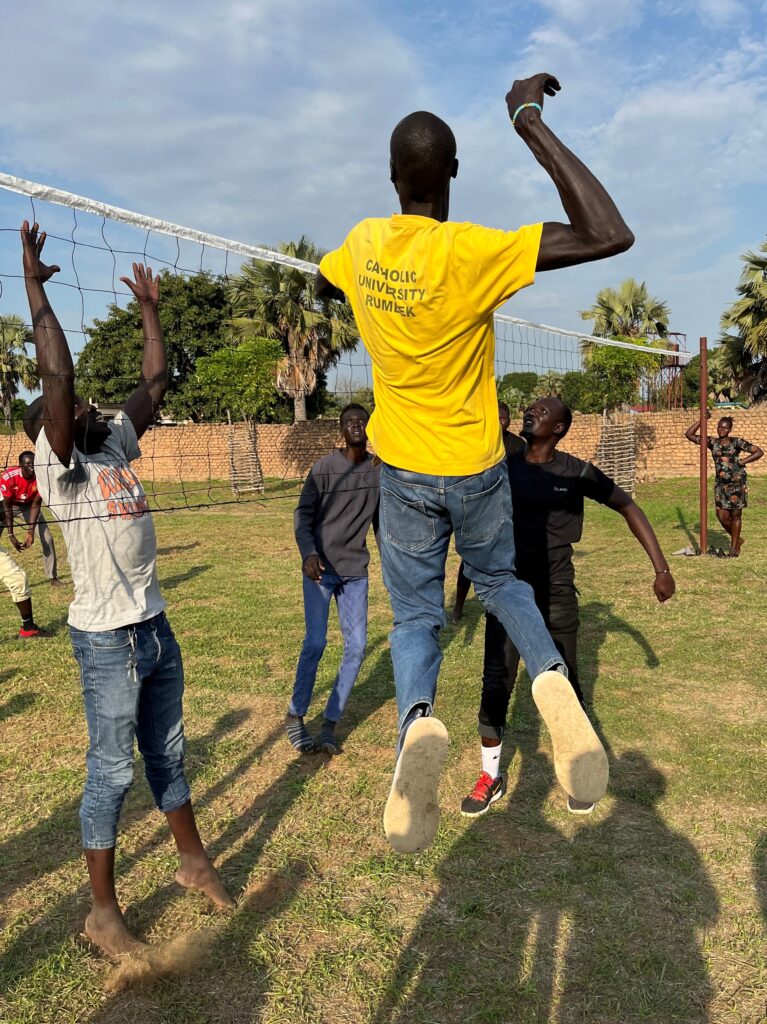
While the schools are winding down, the Catholic University is only getting started on our academic year. We are welcoming our largest cohort of students yet. It’s a real gift to have so many young women and men committed to further education and to raising up their country as future entrepreneurs and teachers. We now have well over a hundred students spread across three degree courses. In the midst of studies covering economics, African literature, and Catholic social ethics, there’s always time for fun, such as a friendly volleyball match between our old and new students. The lecturing staff also tried their luck and showed that our experience does not just begin and end at the lecture hall door. We still lost though – badly.
Only 4% of South Sudan has access to electricity, and this means that at nighttime there is little access to light in towns and almost nothing at all in the villages. To this end, we are starting our late-night study programme, opening our Catholic University library until 8:00pm two nights a week, with a view to expanding the programme. It will provide an essential opportunity to allow students to carry out course work, catch up on their reading, and progress their studies.
Over the weekend, we had our Secondary School Confirmations, with 44 Confirmandi. Since Bishop Christian has been appointed to the newly erected Diocese of Bentiu, I celebrated the sacrament with them. Over the past year, we have journeyed together as they explored their faith, grew in their relationship with God, and had ample time to ask as many challenging and insightful questions as possible, as teenagers are wont to do. It was also good to keep me on my theological toes.
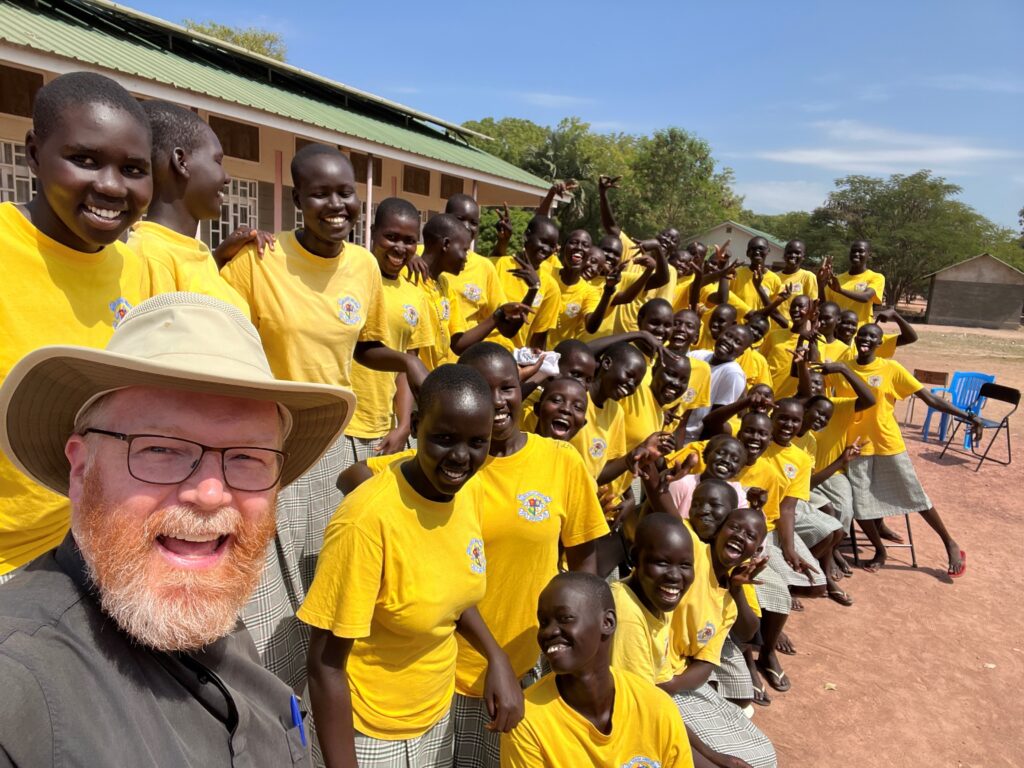
Looking forward to the next month, we have the Senior 4 exams (our equivalent of the Leaving Cert), a road trip to Juba to buy supplies for the year, and a seven-day Diocesan youth walking pilgrimage for peace through the bush, not to mention of course the celebration of Christmas. Life in Rumbek is many things, but never, ever boring.
Nhialic ke yin (God bless you),
Fr. Alan
Read more from Fr Alan’s missionary journey in South Sudan:
Aug 29, 2024
A New Academic Year
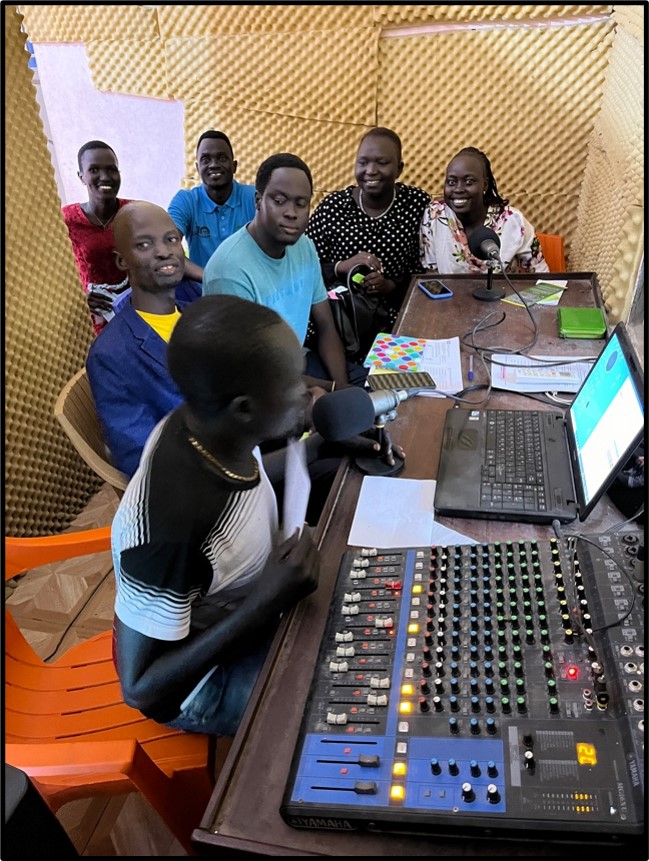
It’s all go as usual in the Catholic University of South Sudan, Rumbek Campus. As we are approaching the end of one year, we are already in full swing getting organised for the next. The University is small but growing, and we are committed to seeing it flourish. Earlier this month, we launched a promotion programme for our new intake. We arranged a series of Facebook ads, printed flyers, put posters up around town, made Church announcements, and hosted two radio talk shows with our students.
Without a doubt, our students are our best adverts and promotors. Many of our new applicants have come through their personal recommendation. Their collaboration is essential and invaluable. However, we are faced with two significant challenges right now. The first is that the basic educational attainment level remains low. There is still a great deal of investment needed in primary and secondary education. According to the UN, South Sudan has the lowest expected school attendance in the world at just 5.6 years on average. This is why the work of the University in training professional, qualified teachers is so imperative. In addition, there has been significant inflation since the beginning of the year, reaching 320% since January. This means that finding money for University fees is especially difficult. To this end, we have worked to make them as low as possible and continue to offer a partial scholarship to women. For many, it is still not enough.
Fostering Body and Mind
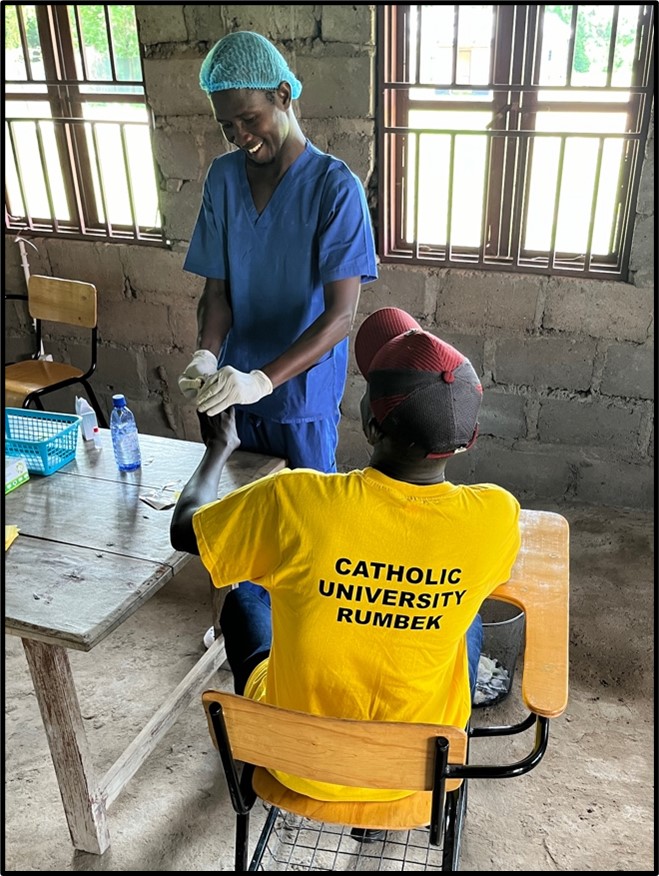
It is not enough to just educate our students, we also need to attend to their complete wellbeing. Here, that means addressing issues like Hepatitis B. Seventy percent of all new global infections of viral hepatitis B and C occur in sub-Saharan Africa due to insufficient interventions, and the rate in South Sudan is a real problem. Hepatitis mortality remains high due to low treatment coverage. To this end, we have been working with the Mary Ward Primary Health Care Centre to test and vaccinate all of our students and staff who wish to take part. Those who are found to be Hep. B carriers are referred onwards for further treatment. Three out of four students and staff have already received their first dose, with second due later this month, and the third in September.
Get that Job!
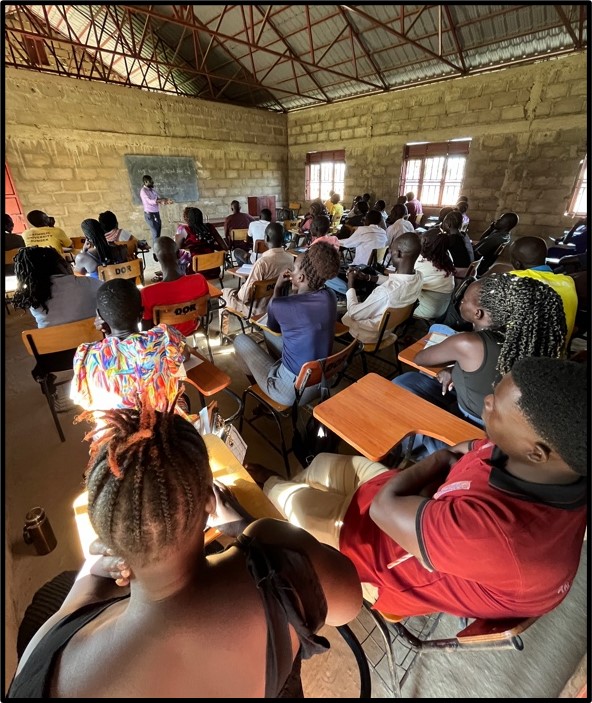
As mentioned already, the South Sudanese economy is struggling and opportunities for employment are few and far between. Any time there is a job posting, the response is immediate and overwhelming, with many not even being shortlisted, let alone interviewed! To support our students, we arranged a workshop on interview technique with a member of Caritas, one of the largest organisations working in South Sudan. He worked with them on the essentials of best practice, good preparation, effective communication, and strong presentation. The attendance by students was enthusiastic, with standing room only for late comers. If given half the chance, they have the drive and creativity to really shape and change the economy and their community for the better. Such sustainable economic development by South Sudanese themselves is at the heart of our vision for the University.
Full House
This week our end-of-year exams began and will continue until the end of the month. Around the campus, student study groups are running as they prepare for tests in managerial accounting, African literature, computer literacy, entrepreneurship and innovation, economics, and ethics. All our first and second years sat my Church history exam yesterday and the stack of their uncorrected scripts are staring at me balefully from across the office. It’s perhaps the only aspect of lecturing I do not enjoy… to put it mildly!
While the exams continue, we are also welcoming our new first-year students. They will begin their bridging course tomorrow, which is comprised of eight weeks of intensive maths and English to help them as they start their third-level studies. All going well, they will be ready to begin their first courses by the middle of October.
Nhialic ke yin (God bless you as they say here),
Fr Alan
Director,
CUSS Rumbek
Read more from Fr Alan’s missionary journey in South Sudan: