Aug 29, 2024
A New Academic Year
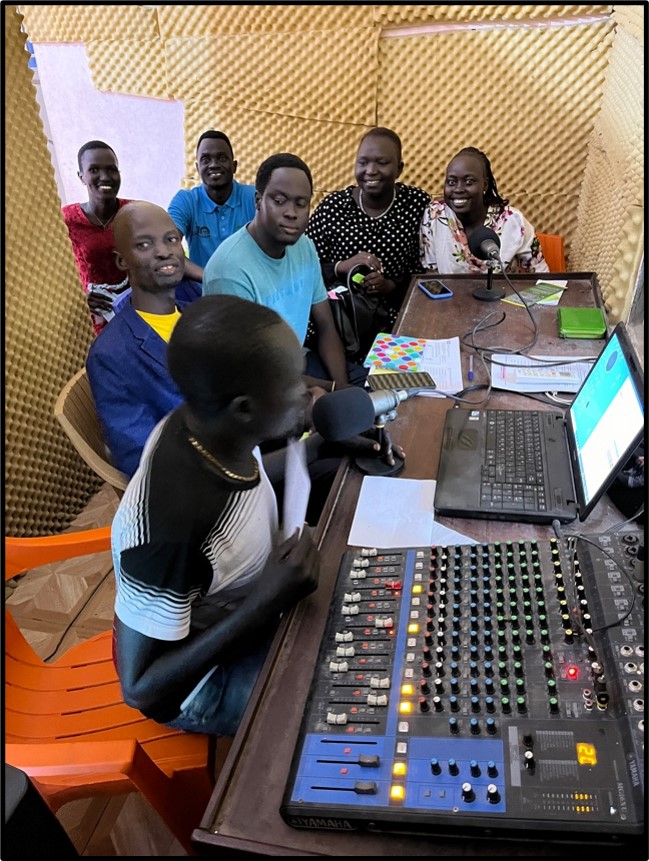
It’s all go as usual in the Catholic University of South Sudan, Rumbek Campus. As we are approaching the end of one year, we are already in full swing getting organised for the next. The University is small but growing, and we are committed to seeing it flourish. Earlier this month, we launched a promotion programme for our new intake. We arranged a series of Facebook ads, printed flyers, put posters up around town, made Church announcements, and hosted two radio talk shows with our students.
Without a doubt, our students are our best adverts and promotors. Many of our new applicants have come through their personal recommendation. Their collaboration is essential and invaluable. However, we are faced with two significant challenges right now. The first is that the basic educational attainment level remains low. There is still a great deal of investment needed in primary and secondary education. According to the UN, South Sudan has the lowest expected school attendance in the world at just 5.6 years on average. This is why the work of the University in training professional, qualified teachers is so imperative. In addition, there has been significant inflation since the beginning of the year, reaching 320% since January. This means that finding money for University fees is especially difficult. To this end, we have worked to make them as low as possible and continue to offer a partial scholarship to women. For many, it is still not enough.
Fostering Body and Mind
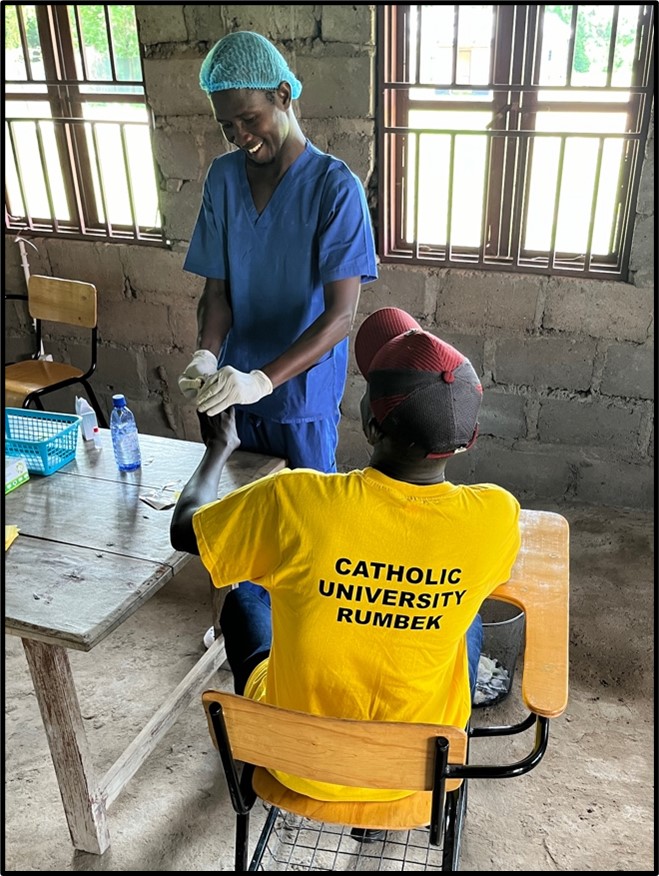
It is not enough to just educate our students, we also need to attend to their complete wellbeing. Here, that means addressing issues like Hepatitis B. Seventy percent of all new global infections of viral hepatitis B and C occur in sub-Saharan Africa due to insufficient interventions, and the rate in South Sudan is a real problem. Hepatitis mortality remains high due to low treatment coverage. To this end, we have been working with the Mary Ward Primary Health Care Centre to test and vaccinate all of our students and staff who wish to take part. Those who are found to be Hep. B carriers are referred onwards for further treatment. Three out of four students and staff have already received their first dose, with second due later this month, and the third in September.
Get that Job!
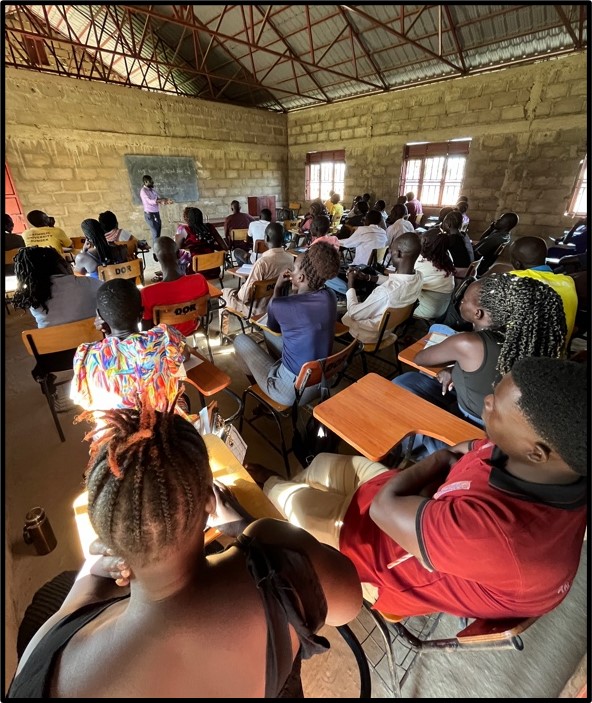
As mentioned already, the South Sudanese economy is struggling and opportunities for employment are few and far between. Any time there is a job posting, the response is immediate and overwhelming, with many not even being shortlisted, let alone interviewed! To support our students, we arranged a workshop on interview technique with a member of Caritas, one of the largest organisations working in South Sudan. He worked with them on the essentials of best practice, good preparation, effective communication, and strong presentation. The attendance by students was enthusiastic, with standing room only for late comers. If given half the chance, they have the drive and creativity to really shape and change the economy and their community for the better. Such sustainable economic development by South Sudanese themselves is at the heart of our vision for the University.
Full House
This week our end-of-year exams began and will continue until the end of the month. Around the campus, student study groups are running as they prepare for tests in managerial accounting, African literature, computer literacy, entrepreneurship and innovation, economics, and ethics. All our first and second years sat my Church history exam yesterday and the stack of their uncorrected scripts are staring at me balefully from across the office. It’s perhaps the only aspect of lecturing I do not enjoy… to put it mildly!
While the exams continue, we are also welcoming our new first-year students. They will begin their bridging course tomorrow, which is comprised of eight weeks of intensive maths and English to help them as they start their third-level studies. All going well, they will be ready to begin their first courses by the middle of October.
Nhialic ke yin (God bless you as they say here),
Fr Alan
Director,
CUSS Rumbek
Read more from Fr Alan’s missionary journey in South Sudan:
Jul 18, 2024
It has been a busy few months in the Catholic University of South Sudan, Rumbek and, as always, life is filled with activity. The economic crisis has deepened, due to the war in Sudan and runaway inflation here. Teachers, nurses, policemen, and civil servants have now not been paid since last October. How people manage to survive at all is one of the enduring mysteries. However, the South Sudanese are a courageous and resilient people and life has to go on.
Joyful Graduations
We are a new Catholic third-level institution, so this year marked the graduations of our first class. Our four Diploma in Business Administration and two Diploma in Accounting and Finance students joined us in our mother campus of Catholic University in Juba. In addition to our Diploma class, thirteen more Bachelor of Business Administration and Bachelor of Education students will graduate later this year.
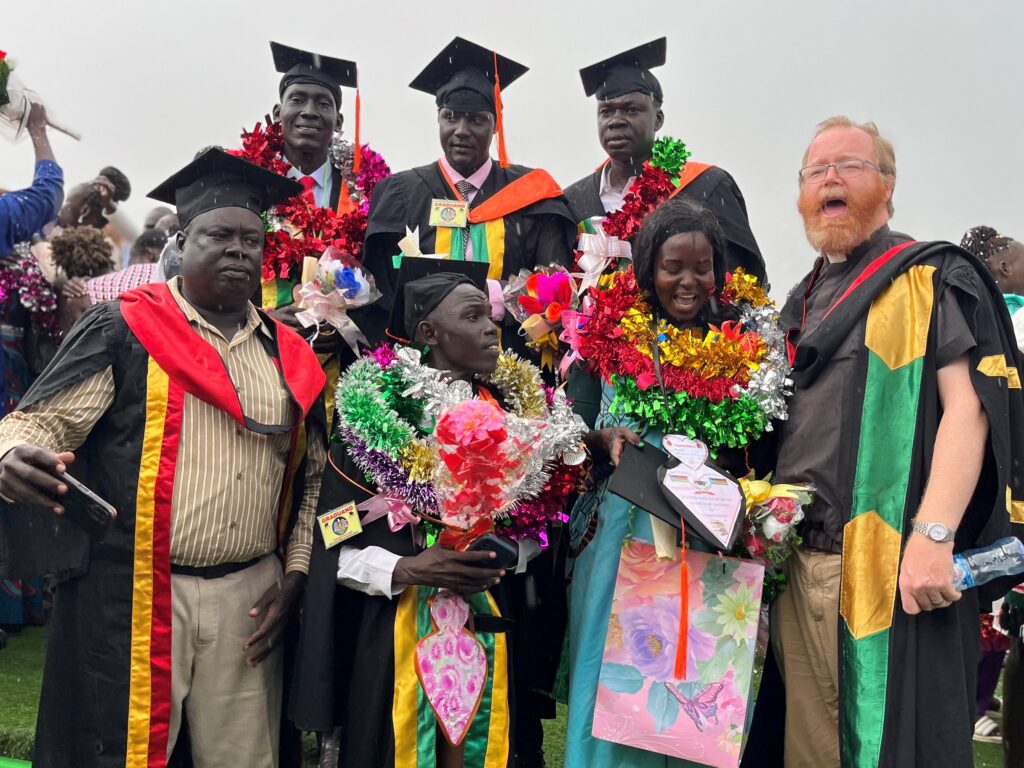
For many of them, they will be the first member of their family to have earned a third level qualification. It is a source of tremendous excitement for all involved. More importantly, after decades of deliberate underinvestment in the south before independence by the Sudanese government, these men and women are among the first groups of South Sudanese men and women to be graduate as local teachers and business people. Our Bishop, Christian Carlassare, was the guest of honour on the day, and spoke with pride about the difference the graduates would make in creating a stronger, most sustainable future for South Sudan.
We have also established a group for these new alumni, so that they can continue to avail of the resources of the University as they begin their careers. Access to the internet here is among some of the most expensive globally due to our isolated location. However, with the support of the MSC Mission Office Australia, all of our computers are online, allowing them to search for employment, carry out research, and prepare CVs and applications. For our current students, it has opened up an entirely new dimension, giving them access to textbooks, videos and online software that previously they could only have wished for.
Creative Collaboration
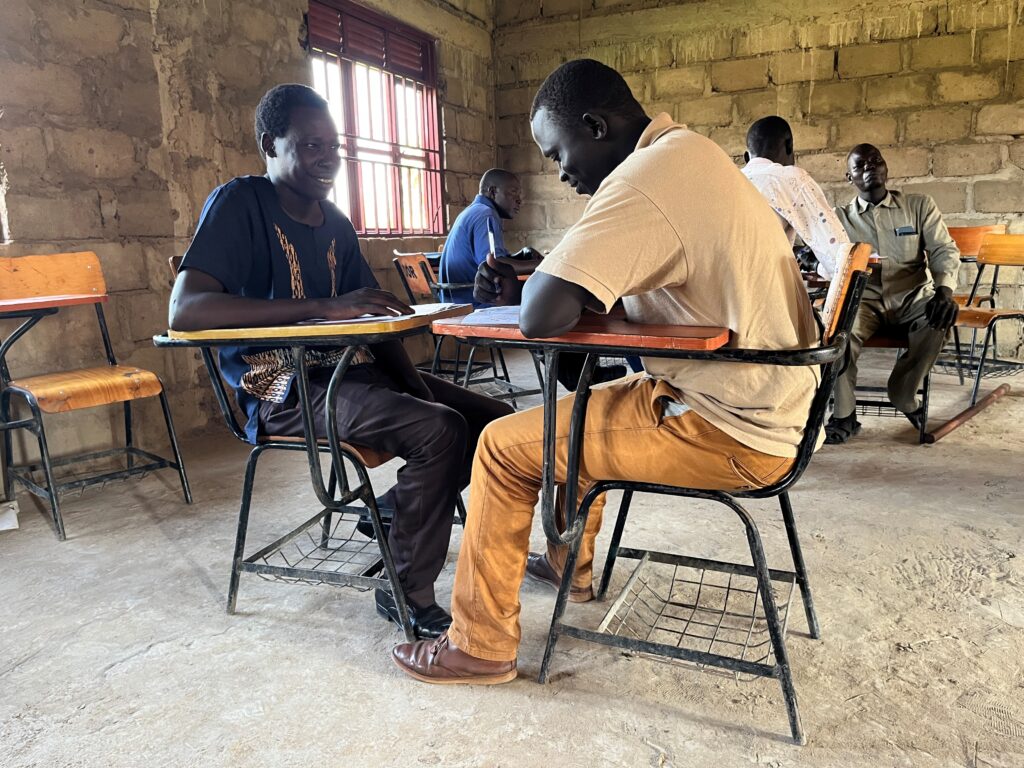
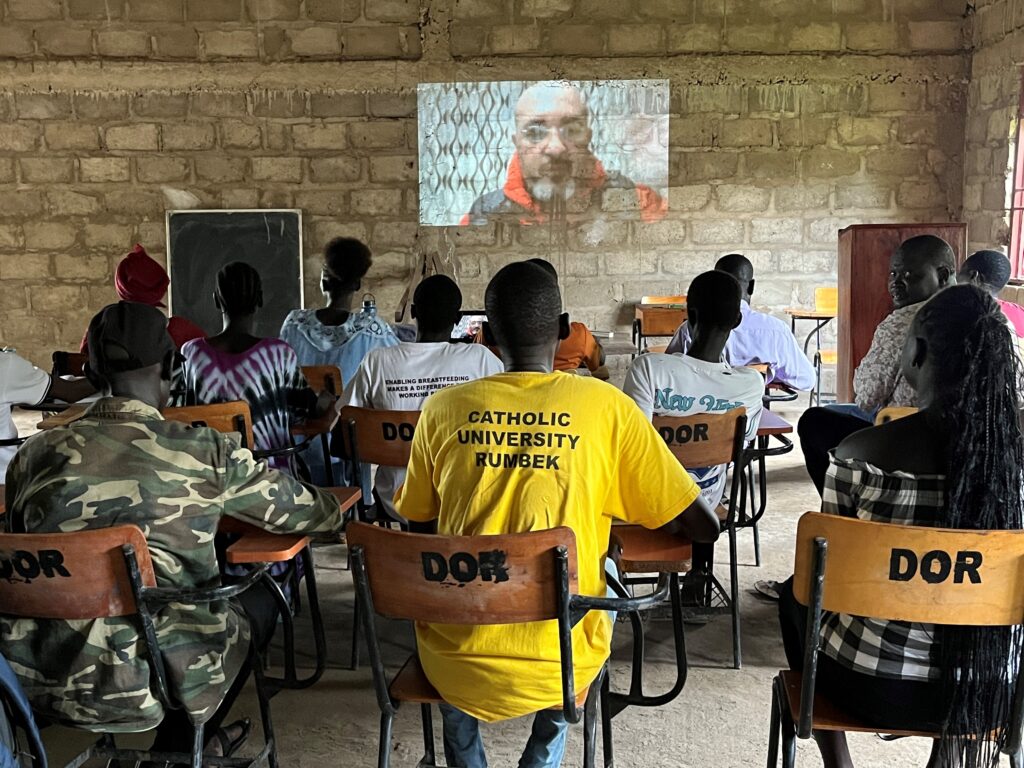
Resources here are few and we are always looking for innovative ways to support the professional development of our students. To this end we are collaborating closely with the Department of Human Sciences in the University of Salerno. Every three weeks, our Bachelor of Education students have a special input delivered online by a senior member of the faculty. They focus on some of the latest techniques and methodologies that will help develop their teaching practice. To date we have studied cognitive difficulties in youth, the design of classrooms to facilitate greater participation, and Universal Design for Learning.
All of our students speak English as a second, sometimes third language and the demands of academia can present a significant challenge. To tackle this issue, we currently offer advanced English classes for our first and second years. In an exciting new partnership with the Loreto Education Centre, we are also setting up small group classes for students who need extra support, along with classes in English for business professionals.
New Beginnings
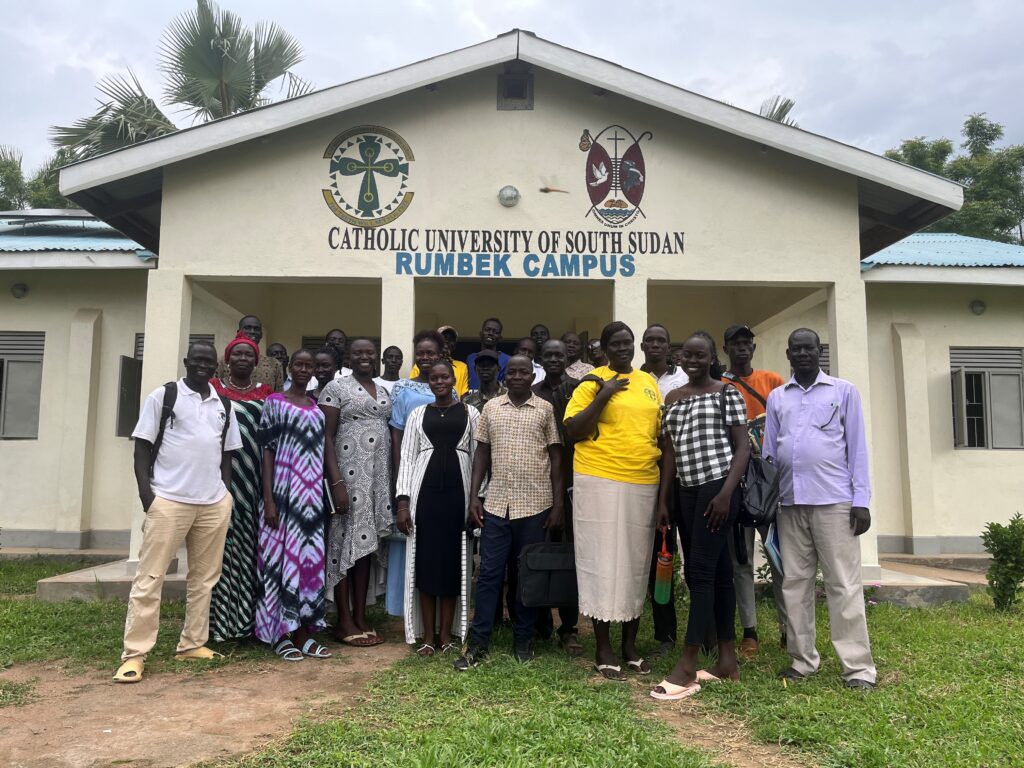
While these last months have been a time of saying goodbye to some, we are getting ready to welcome others. Earlier this week we launched our admissions programme for new students. While our Bachelor of Business Administration remains popular, the two Bachelor of Education degrees are our main focus. The development of well-trained local secondary school teachers is our central goal, and we see it as an essential component in the continued development of South Sudan.
As part our admissions drive, we will have students involved in talk shows on two different local radio stations, use social media advertising, put up posters around town, make announcements after Masses, distribute flyers, and most importantly encouraging our students to spread the news by word of mouth. As ambassadors for the University, their recommendation is the most effective way of engaging new students and they have been enthusiastic in their mission. As always, we endeavour to encourage as many women as possible to study with the help of our partial scholarship programme and along with our measures to facilitate mothers with young children. We are also one of the few institutions nationally that have a wheelchair toilet and a fully accessible campus. Here, education is for everyone.
Nhialic ke yin (or God bless you),
Fr Alan
Read more from Fr Alan’s missionary journey in South Sudan:
Apr 11, 2024
Phone calls from home have bemoaned the state of the weather with a familiar regularity. Ireland, they say, is a great country, if only you could roof it. While a strong argument could be made for such a national feat of engineering, I believe that the constant rain, drizzle, mist, and downpours have shaped our psyche in a way that has left an optimistic, if somewhat damp mark on the people. It has to stop sometime, surely, or so we hope. In spite of only hazy memories of sun as a child, such as the time it was so hot the butter melted on a primary school trip to Bere Island (certainly a shock to all of us), rain certainly predominates my image of growing up in the seventies and the eighties.
So it was something of a challenge to find myself in South Sudan, with six months of heavy, if sporadic rain, followed by six months of absolute roasting aridity. After over three years here I thought I was coming to terms with the worst my new home could offer, but this year it really outdid itself. You know something is up when at the end of March the National Ministry of Education and General Instruction decided to close schools for two weeks because of an especially acute heatwave.
On the surface this could be welcomed, as many children walk more than five kilometres a day to get to school, and while the morning can be cooler, the return journey in 43ºC is a problem. The issue for us is that our primary school offers children food during the day, along with access to our clinic, and the closure meant the former was no longer available and the latter was seriously curtailed. The school made an effort with a mobile outreach by our nursing team into the community to help support those in most urgent need.
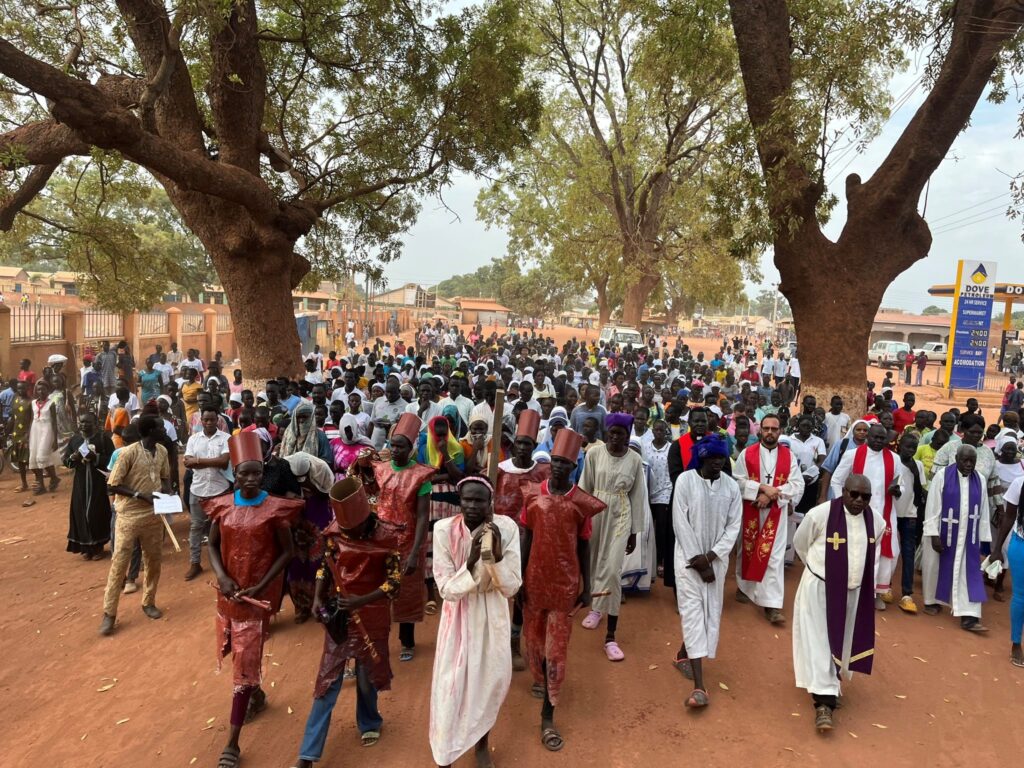
Our secondary school, despite being a boarding school, was ordered to close too and most students had to head home. A small group of about forty remained, as they lived far enough away that it would have been almost impossible to make it home and return again. So, our community for Easter this year was greatly diminished, but still full of life. Our Palm Sunday procession from the convent to the secondary school was solemn and prayerful. I had considered getting a donkey, but after an unfortunate incident during an outdoor Nativity production in a barrio in Caracas that had Mary and Joseph walking most of the way to Bethlehem (a story for another day), I swore I’d never work with animals again!
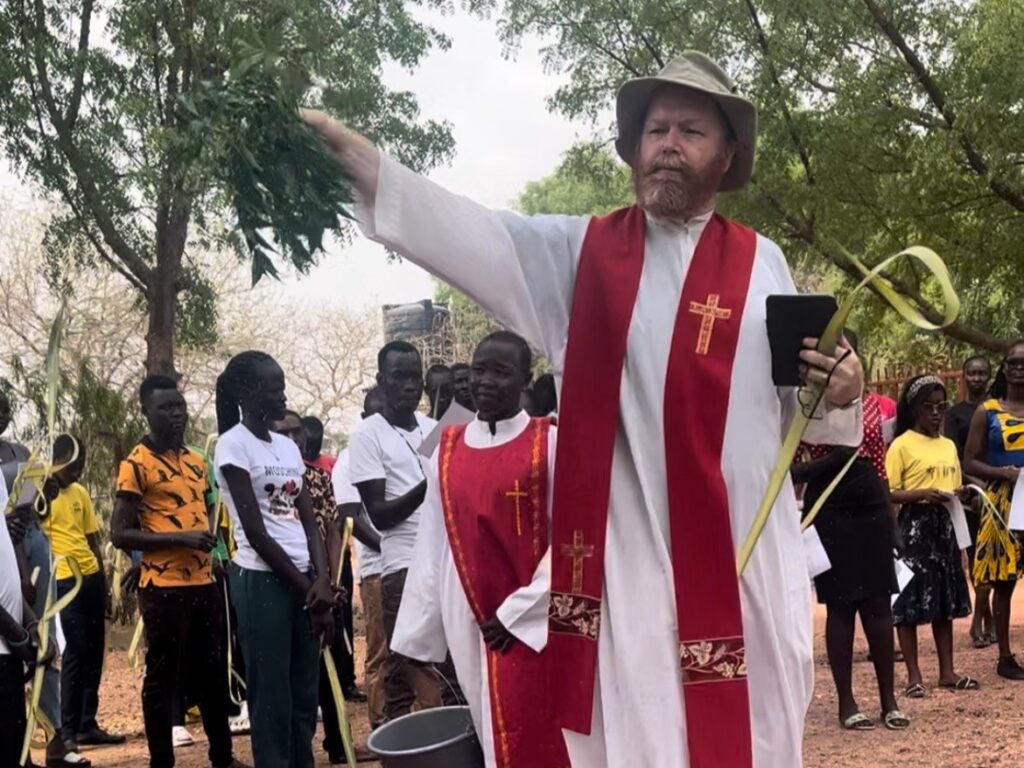
During Holy Week the University continued, heatwave or no. The lecture halls have a corrugated metal roof, but no ceiling, turning them in to a large-scale oven by the early afternoon. In fairness to the students, they did not complain, especially as exams are beginning this coming Monday. We bought extra water pots and placed the around the campus to help alleviate the problem. This year we’re hoping to fix up the building completely, installing windows, a proper floor, ceilings, and (God willing) some fans.
“No matter how overwhelming the darkness, the light of one Easter candle is enough to set the world on fire.”
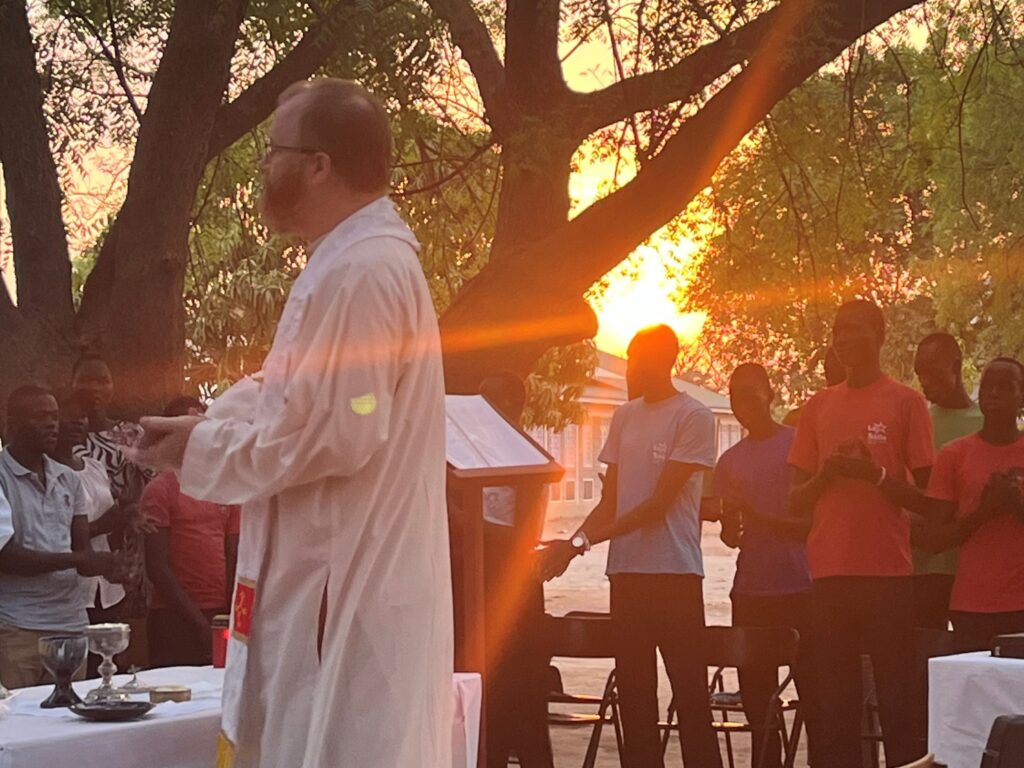
Maundy Thursday’s Mass of the Last Supper was beautiful. It began in the cool of the later afternoon, just before the sunset. Our twelve Apostles were drawn from students, interns, teachers, members of the clinic team, and people from the local community. The washing of the feet by Jesus in John’s Gospel was a powerful reminder for all of us of the need to see the ministry we offer as an act of humble service. Like Pope Francis washing the feet of women in a prison in Rome this year, all that we do should try to echo the authenticity and humility of Jesus.
On Good Friday at 7:00am we ferried all our students to Sacred Heart Parish in Rumbek for the Stations of the Cross. The Loreto Interns had been practicing all week and getting costumes ready to lead the event. It was a live-action Stations and we made our way through the centre of the town towards Holy Family Cathedral. As we walked, sang, and prayed, you could see that those we passed were moved. There is something visceral about the suffering and humiliation Jesus endured for us that speaks to all hearts. On arrival at the Cathedral, Jesus and the two thieves were tied to their crosses and hoisted into position. After finding a bit of shade, I spent the rest of the liturgy praying fervently that the crosses wouldn’t collapse and our students wouldn’t be crushed. Thankfully, our Romans knew their jobs.
The highlight of Easter is of course the Vigil. The entire celebration from the lighting of the Paschal fire and blessing of the candle, to the readings from the Old and New Testaments, the renewal of our baptismal vows, and the Eucharist are liturgy at its best. The symbols of fire and water, light and darkness, hope and resurrection would move even the most stoic of hearts.
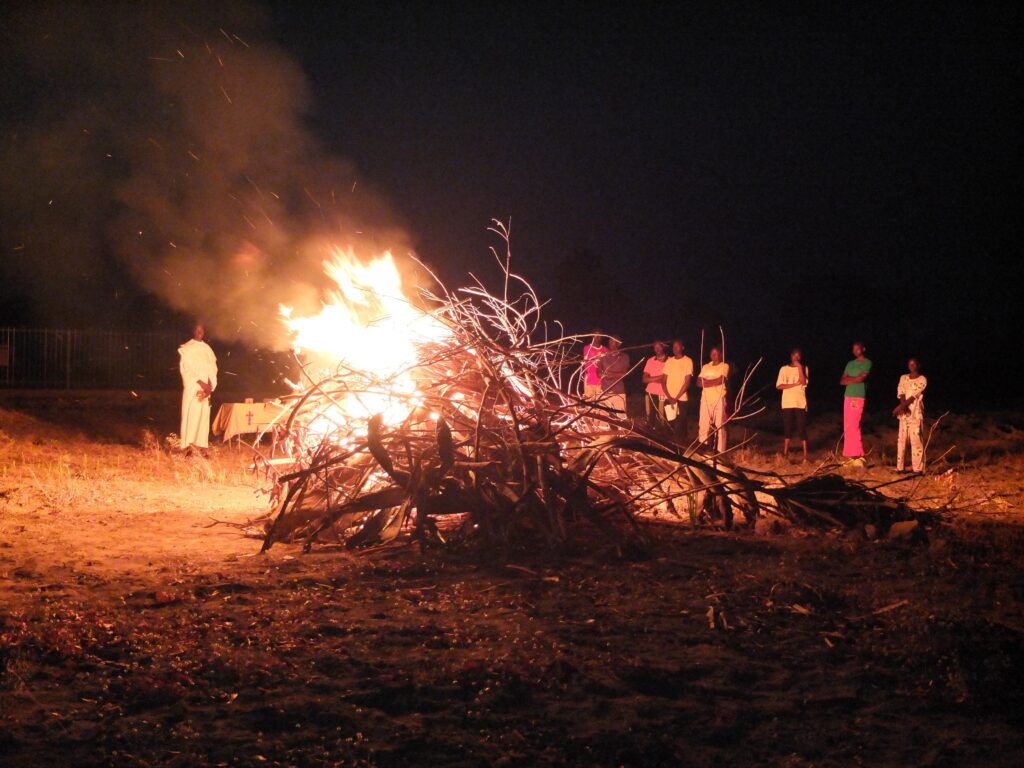
As you can see from the photos, our teachers in Loreto were all in for the preparation of the Paschal fire and the flames reached up to Heaven itself. As South Sudan continues to struggle in these early years of independence and persistent difficulties are everywhere, it is good to remember the promise of our Catholic faith, that no matter how overwhelming the darkness, the light of one Easter candle is enough to set the world on fire.
Happy Easter,
Fr Alan
Read more from Fr Alan’s missionary journey in South Sudan:
Feb 27, 2024
Making a difference in South Sudan
Irish MSC Fr Alan Neville has been ministering in South Sudan since 2020, where he now fills the role of principal at the Catholic University of Rumbek. At the heart of the mission of the University is transformation. Their work and the courses they deliver are designed to not only to educate the most marginalised in the community, most notably women, but also prepare to help build a South Sudan that is economically and socially more prosperous for those who follow in their footsteps. The journey, however, is a long one, and there have been plenty of challenges along the way.

The work of the Catholic University of Rumbek offers a real opportunity to support people. Research has consistently shown that the rate of return on education, especially third-level education, has helped people lift themselves, their families, and their communities out of poverty. The University began in 2019, working out of a local secondary school, before moving to its current location in an unfinished youth centre. It is an afternoon University, operating intensive classes, while also allowing students to earn wages for themselves and their families in the mornings.
The annual student fees are €140 for the entire year,
and are designed encourage meaningful commitment from the students.
Due to disruption caused by COVID, there are currently three year groups,
split across multiple qualifications with Bachelor courses in
Administration, Education in English and English Literature,
and Commerce, Religious Education and Citizenship.
These courses were chosen as best suited to meet the needs of the population. The University works to foster the local economy, generating opportunities for South Sudanese people for employment and growth. The business courses emphasise entrepreneurship and innovation, especially at the local level.
The current standard of teaching in primary and secondary schools is abysmally low, with most teachers working without even a basic qualification. Consequently, students can finish school with a limited grasp of maths and substandard literacy skills. This only serves to perpetuate a cycle of poverty. The University’s specific emphasis on education degrees aims to tackle this through high-quality lecturing by experienced educationalists, with placements in schools like La Salle and Loreto to model how things could be done differently.
“People really want to get ahead, and the only way for that to happen is through education. There is already significant interest in our next intake. Our students are great ambassadors in promoting our programmes, with several of our female students speaking about how it was possible to undertake a full degree programme with us despite the challenges they faced.”
CAN YOU HELP TO EMPOWER YOUNG PEOPLE
IN SOUTH SUDAN?
Altogether, there are seven large classrooms, a staff room, a storeroom, and two small offices that are unfinished. It is a substantial project, involving repairing the roof, installing ceilings, plastering the walls, fitting the floors, and installing an electrical system. Electricity for light and fans is essential.

During the heavy storms of rainy season, lecture halls become so dark that it is impossible for students to see their notes, let alone the blackboard. Driving winds cause dust storms in the classes, as there are window frames, but no windows. During the warmer times of the year, temperatures can reach 44ºC and above. Having only a corrugated metal roof turns the lecture halls into an oven and it quickly becomes unbearable. The development of the building to a proper standard, supported by ongoing maintenance, will ensure that it will serve the community in Rumbek for the foreseeable future. We are working to ensure that the lecture halls will be used to their full capacity, including facilitating events run by the Diocese, such as training and safeguarding workshops for teachers and staff, and a series of short, standalone courses designed to upskill the training of students and members of the wider Rumbek community.
With your help, we hope to raise a total of €208,693.
This includes…
€38,800 to repair the roof
€3,500 to fit new windows
€138,000 to carry out internal work
such as fitting ceilings and floors and plastering walls
€12,000 to carry out the electrical installation
€20,000 to complete the external finishes
€12,000 for services
“Your support will make a profound difference in raising entire communities out of poverty by empowering the South Sudanese to effect change themselves. You and your family and friends have a place in all my Masses and prayers.”
~ Fr Alan Neville MSC
Principal at the Catholic University of Rumbek
PLEASE SUPPORT OUR WORK IN SOUTH SUDAN
Feb 22, 2024
Schools are always busy in South Sudan in February. The academic year here runs differently from Ireland and England, with our long holidays based around Christmas. So the back to school trials and tribulations began earlier this month. Students have to register for their studies, including paying their fees. When you have a number of children, this can be a substantial amount of money. Usually, the Catholic schools charge the equivalent of two bags of charcoal or just one chicken for the entire year. The underlying ethos is education is for everyone, but everyone should contribute something, insofar as they can. For Loreto, the fee includes a daily meal, their school books, treatment in our clinic (malaria is still around, and never, ever underestimate the number of scrapes 1,300 children can get into), and of course their studies.
We had our opening Mass for the Upper Primary children last Friday and I spoke to them about the great gates of the world, such as the Gate of India in New Delhi, the Golden Gate in Jerusalem, and the Arc du Triomphe in Paris (technically not a gate I know, but the kids were most impressed with the photo). Then we talked about the gate to Loreto Primary School. While nowhere near as famous, elegant, or ancient, they are beautiful in their own way.
The fact that these young children can come through those gates every day, in a country that is largely at peace right now, is a gift. As we do the school runs in Ireland, stuck in traffic, with the rain beating relentlessly against the windscreen, we can easily take this for granted. Here, the peace we are enjoying is a blessing and not one easily forgotten. Just to our north, our immediate neighbours, Sudan, are in the grip of a savage civil war for the last ten months, from which will emerge only losers. The devastation will set back the country by a generation at least and the suffering has been immeasurable. In South Sudan, we are still building here after decades of conflict, and we are aware of how quickly it can all be taken away.
A sign of things to come
Thankfully, in the Catholic University, education continues to flourish too. This is in large part due to the generosity of our MSC benefactors, who have helped us fund the complete renovation of the library, as well as the purchase of blackboards and chairs for our lecture rooms. Just this morning I joined one of our students on his first visit to the school where he will have his teaching placement. It’s wonderful to see. Over the course of the next twelve weeks, he and his classmates will experience what teaching in secondary schools is really like. It will be a steep learning curve for them, as a classroom filled with fifty teenagers in the throes of teenage angst can be a tough crowd to please. Increasingly though, the youth are seeing the value in education and the depth of their commitment is impressive. When our students graduate, they will be among the first properly trained teachers who have qualified from Catholic University in Rumbek. It is a sign hopefully of things to come.
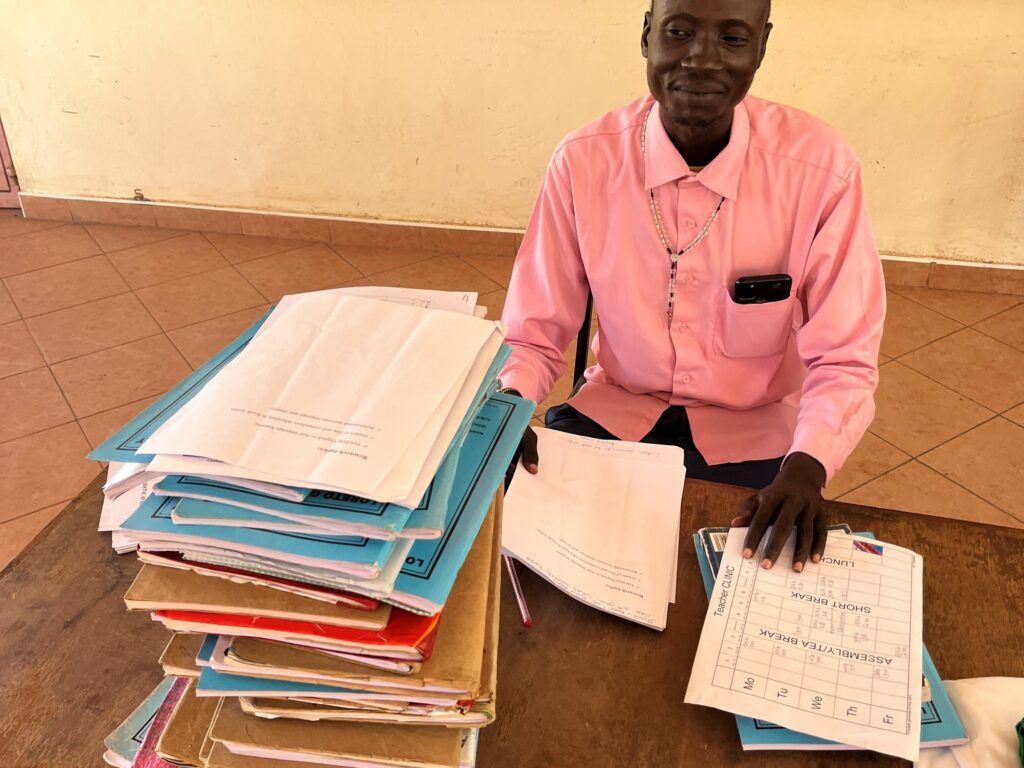
The rest of the University students are sitting midterm exams at the moment. There is no better incentive for them to commit themselves to their studies. Just outside my office window, a number of our final year business administration students are having a small group discussion. It’s something quite typical of any university, but the fact that four of the five participants are women is something that is decidedly atypical here. In total, just over a third of our students are women, up from just twenty percent two years ago. There’s a lot to be done still, but at least we’re moving in the right direction. As I write this, there does seem to be a lot of laughter coming from them. Perhaps I have underestimated the fun that is to be had from managerial economics.
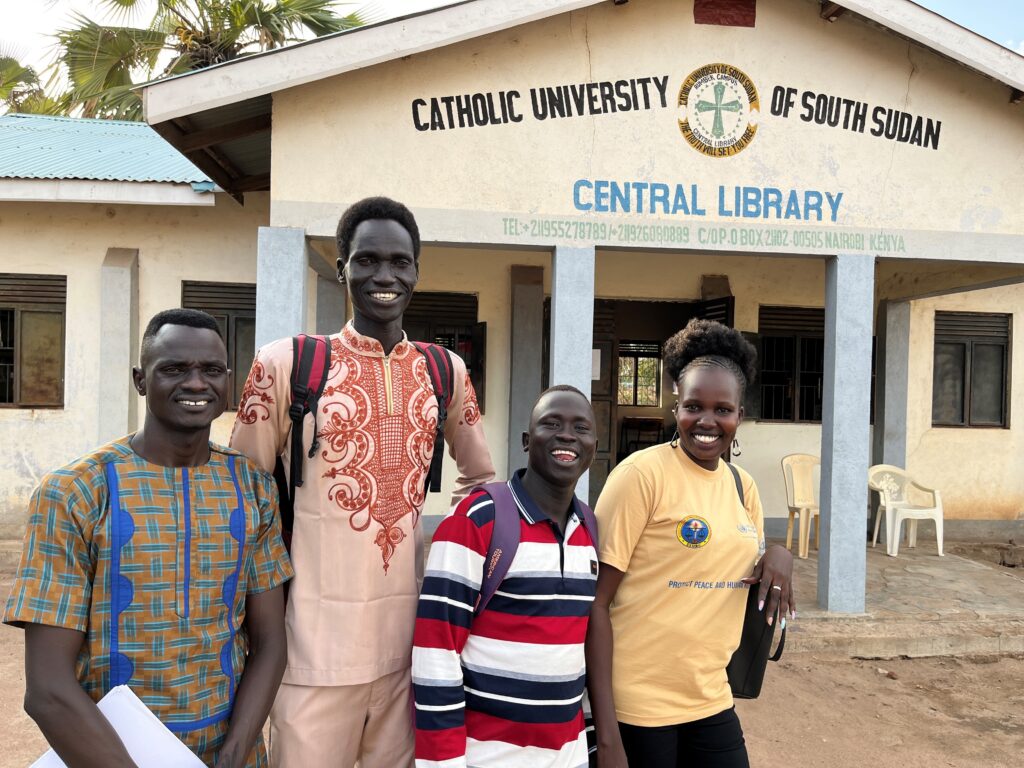
Nhialic ke yin (or God bless you),
Fr Alan
Selected images courtesy of Paul Jeffries.
Read more from Fr Alan’s missionary journey in South Sudan: