Sep 2, 2021
When you are asked what is the deadliest animal that you’ve come across in South Sudan, people are hoping for something dramatic. On my first weekend here, when I was mapping out a potential jogging route around the Loreto campus, I came across a snake thicker than my arm struggling with his evening meal. Now I walk and as I do so I keep my eyes firmly on the ground. My godson has been delighted to hear that I have found scorpions on four different occasions wandering around my bedroom. All were dispatched with a trusty badminton racket that was left behind by my room’s previous tenant. Considering how difficult it is to play badminton by yourself, especially with no shuttlecock, I suspect they may have used it for a similar purpose.
When it comes to dangerous animals, Hollywood with its big budgets and daring adventures has got it badly wrong. Sharks, the subject of several blockbusters, languish in 15th place killing about ten people a year. Lions are responsible for up to a hundred deaths. Hippos, or ‘Rou’ as they are known locally, are at 11th place, killing five hundred people annually. Snakes earn something of their fearsome reputation with fifty thousand deaths and clock in at 3rd place. Surprisingly our most fearsome enemy is also among the smallest. Each year an incredible two million deaths are caused by mosquitos. The toxic and highly evolved diseases that the female carries, make this tiny insect that weighs the same as a grape seed, our greatest predator.
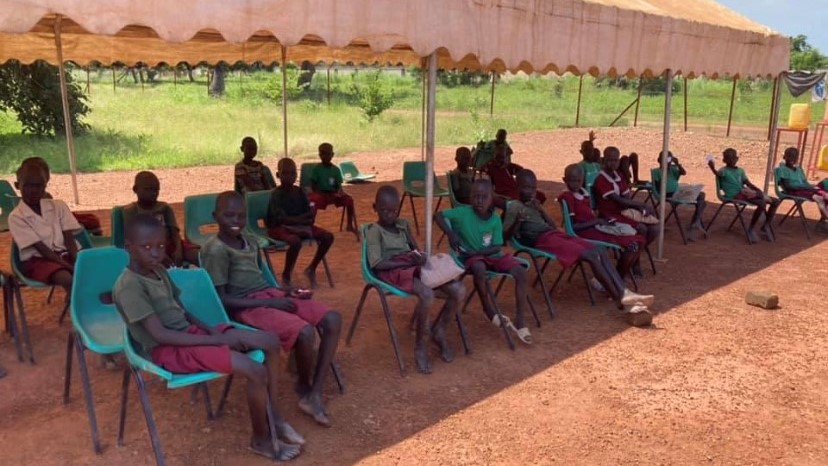
As I have mentioned before, we have been waiting for months for rain. Since the arrival of the rainy season, the community around the school have been working feverishly preparing the soil, sowing the seeds, and keeping an eye on the weeds. The rains were late this year and so far have been sporadic. We are waiting to see how good the crop will be. However, as sure as night follows day, the rains also meant the return of mosquitos. In the dry months, they are not much in evidence and those who fancy themselves thrill-seekers sleep without a net. Not now. They are back, and once again, the number of malaria cases are soaring.
The Primary Health Care Clinic was originally set up to look after the two thousand primary and secondary students, the local workers, and the staff on the ground in Loreto every day. This number does not even include the people our nursing teams looks after in our community outreach programme. Last week alone we had 302 cases of malaria just from the primary school.
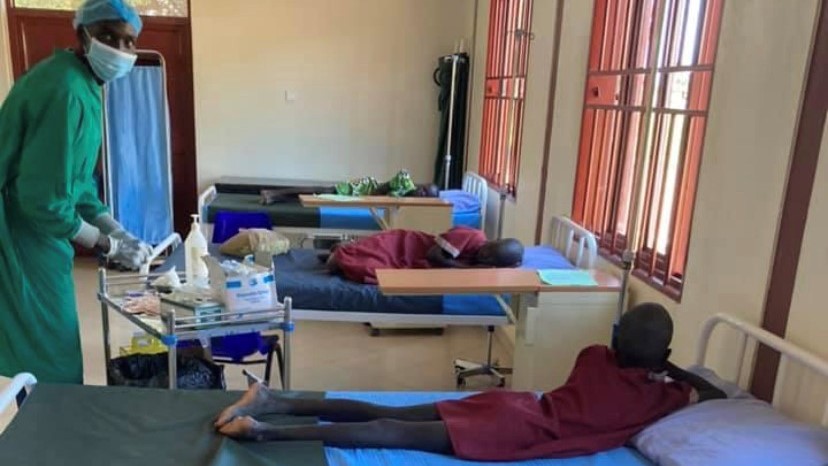
The problem is that in the evening families prepare and eat their meals around a fire in front of their homes. This is the time that the mosquito hunts. In addition, people’s houses or tukuls are often made with rough blocks and a grass roof, although some are fortunate to have corrugated metal. Anyone who has been on holidays in warmer climates know how good mosquitos are at exploiting even the smallest crack in a wall or hole in a net.
The situation this year has been complicated further by a lack of testing kits to determine if someone has malaria and if so, which type it is. Each requires different treatment. Insecurity on the roads mean that trucks from Nairobi stopped coming for a week, so deliveries are backlogged. We are fortunate to have a good working relationship with local NGOs and were able to make up a shortfall, before getting an emergency supply flown in from Juba.
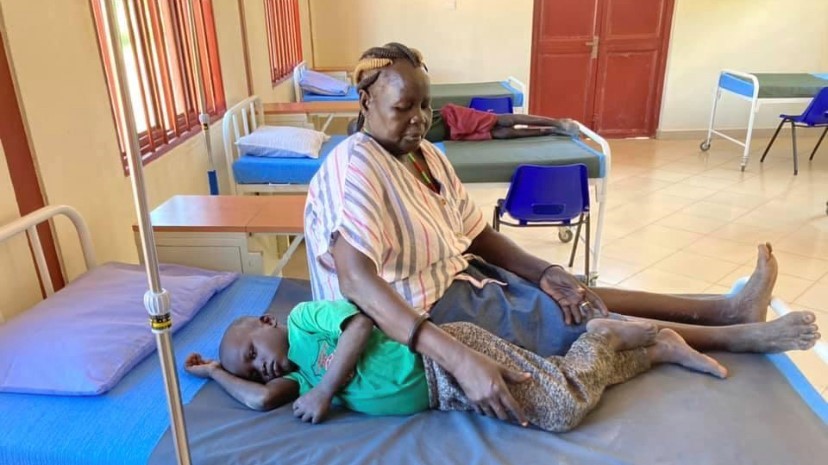
While COVID continues to dominate the headlines, the challenges of malaria have been largely overlooked by the international community. It is a forgotten epidemic by an almost invisible predator that is wreaking havoc on already vulnerable populations. It has been pointed out by more than one commentator that if malaria was as big an issue in Western society as it is here, we would already have developed several effective vaccines. If these past two years have taught us anything, it is that we have the ability if we really want to. Until the situation changes, our nursing team is working flat out and will continue to do so until the rainy season ends in November. It’s going to be a long three months. Please keep them in your prayers.
Bi Nhialic arrer kek yin,
Fr Alan
Read more from Fr Alan’s missionary journey in South Sudan:
PLEASE HELP US TO TRANSFORM LIVES IN SOUTH SUDAN
Aug 19, 2021
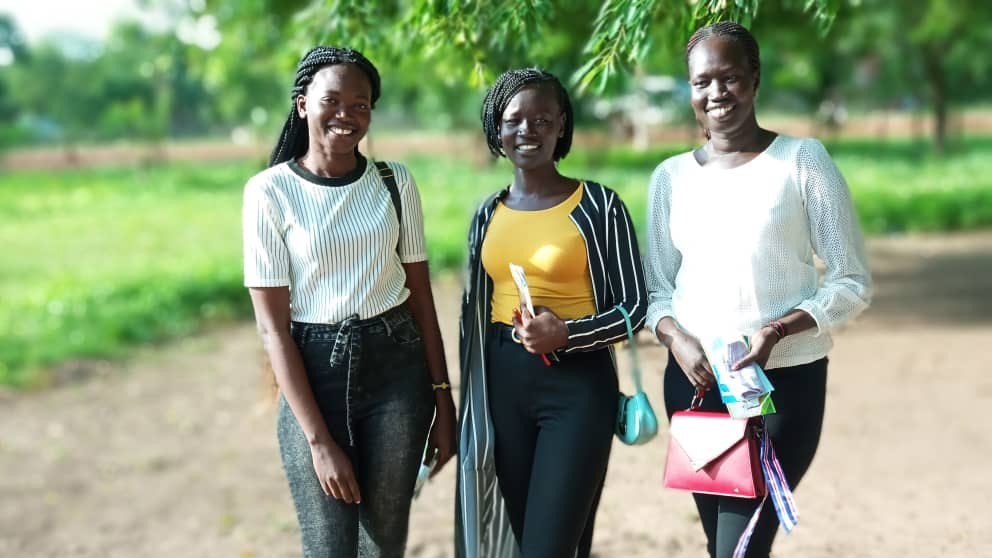
Every couple of months in Loreto Rumbek, we have a celebration. It’s something of a bittersweet gathering with pizza, Coke, a few tears, and plenty of good humour. We had one only last Wednesday. They mark the departure of the graduates from our intern programme as they go on to further education. This time, we had three go to university in Nairobi, where two will study business, and one brave soul will train to become a social worker. Where she will even begin when she returns here is a mystery to me, but it is a welcome start. They will be welcomed in Nairobi by twenty other Loreto graduates who have gone before them and have, in fact, paved the way for them. Among our alumni we have women studying nursing, teaching, logistics, child protection, commerce, and medicine.
As I have mentioned before, decent education is a rare and precious commodity in South Sudan. Anytime I’m driving to a nearby school or going into the local town, I’m struck by the number of children who are out tending cattle, instead of being in class. Boy and girls, who are younger than my own niece of seven spend their entire day bringing the goats, sheep, and cows to the watering hole and back again. Many are dwarfed by the size of the animals they look after. Their education will be sporadic at best, but more likely non-existent.
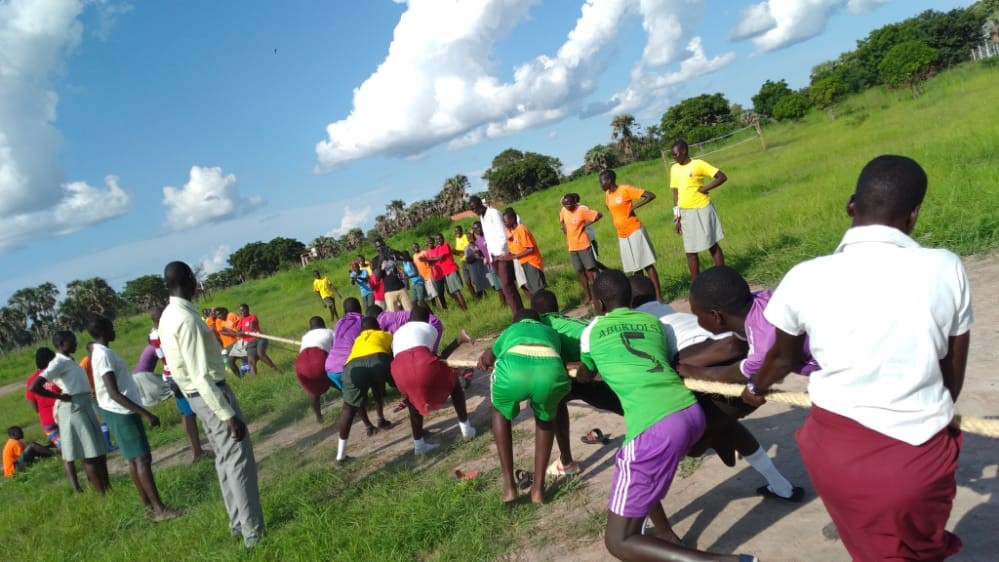
Last week, we had our entrance of our Loreto Primary and take up was brisk. Families contribute the equivalent of the cost of a chicken for a year’s education, a daily meal, and free healthcare in our clinic. When we had the entrance exam for our secondary school last month, demand was once again far in excess of what we had available. The secondary girls have just finished their end of term exams and started their holidays, but we are looking forward to welcoming them back, along with our new first years at the beginning of September.
The children who get into primary school are fortunate to have access to basic education denied to many of their peers. Girls who manage to get into secondary school even more so, but where do they go to from there? One of Loreto’s most successful programmes is the internship programme. Each year, secondary school graduates apply to return to the school to become an intern. This means they work across a wide variety of roles, such as teaching assistants, translators in the clinic, administrators in the school office, or team leaders in the agricultural project.
Interns who work for one year will have their third-level course funded anywhere within South Sudan. However, if they successfully complete two years, we fund their university education in Kenya, where the standard is significantly higher, and the options afterwards are far greater. At €5,000 per university student for studies, accommodation, health, and food, it is a significant investment, but one that is ultimately worth it.
Coming back to the three women from last week’s celebration, they took off from Rumbek on Saturday with their tickets firmly in hand. They will have only a week to prepare their documentation, arrange passports, and sort out COVID tests before flying to Kenya. It is undoubtedly an exciting time. To reach as far as they have demonstrates their extraordinary commitment to education in the face of nearly overwhelming odds. Each one has a story of determination and sacrifice that is simultaneously unbelievable and inspiring. This latest step is only one more in a journey which will hopefully lead them home, and they can help in the building up of their community, especially opportunities for girls and women in South Sudan.
Read more from Fr Alan’s missionary journey in South Sudan:
PLEASE HELP US TO TRANSFORM LIVES IN SOUTH SUDAN
Jul 1, 2021
There seemed to be a dreadful inevitability to it, but no one was surprised last week when Uganda joined the list of East African countries that have gone into lockdown in response to a surge of coronavirus infections. Along with Sudan, Egypt, Ethiopia, Kenya, and Tanzania, Uganda has seen an increase in community transmissions and hospital admissions. All these countries roughly surround South Sudan, but to date our numbers have remained exceptionally low. How long that stays that way remains to be seen.
“When these young women commit to something, there are no half measures.”
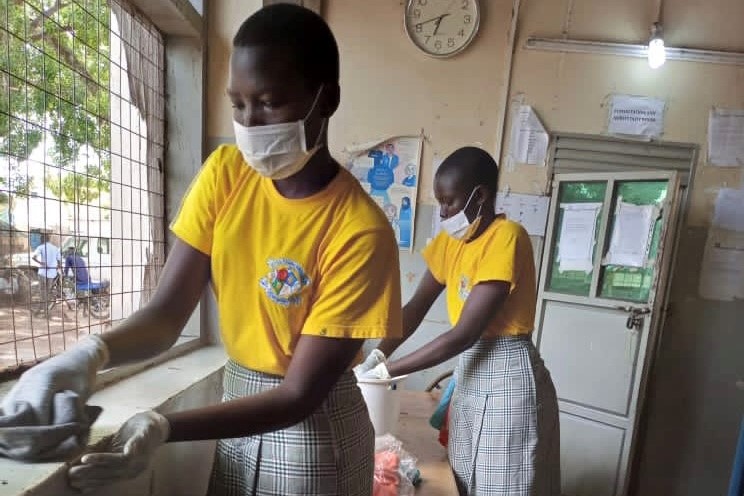
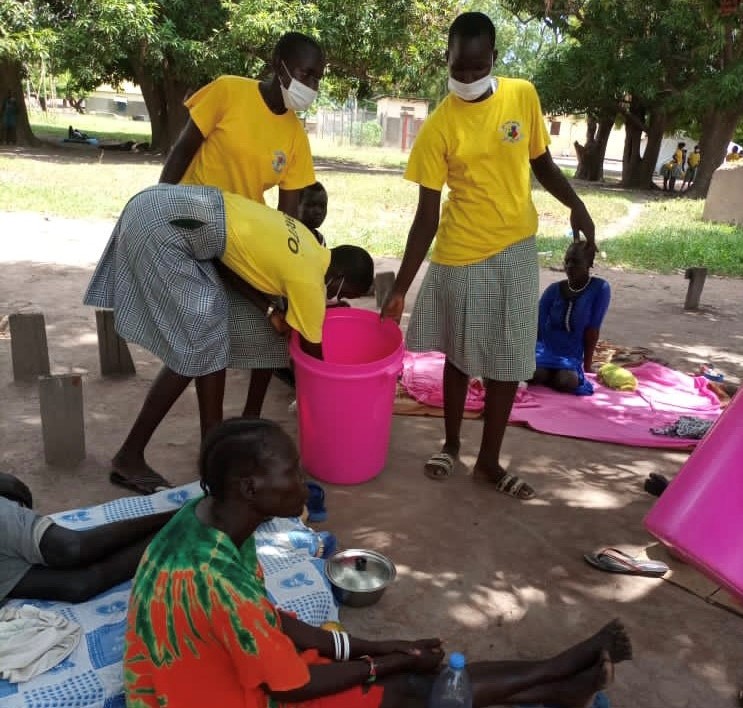
In the meantime, we are not sitting idly by in the face of the crisis. In fact, the students of Loreto Rumbek Secondary School decided themselves to take a more proactive, hands-on approach. So it was, on Fr Alan’s day off, that we loaded up three minibuses with students, mops, buckets, sponges, disinfectant, a few dedicated teachers, and a decidedly rumpled, certainly sleepy Fr Alan, and headed off to Rumbek Hospital. The hospital is our main health centre for the entire Lakes State area and is run by an Italian Catholic charity.
The students spent the morning washing down the walls, brushing floors, and cleaning windows. Shortly after my arrival I was dispatched to go into town and buy more mops. Apparently, my cleaning skills were not up to scratch. When these young women commit to something, there are no half measures. They blitzed both surgical wards and the paediatric ward from top to bottom. They also brought along mandazis, a local pastry, for patients and staff alike. They went down especially well in the maternity ward.
“When the pandemic makes its way to Rumbek, we will be as ready for it as we can be.”
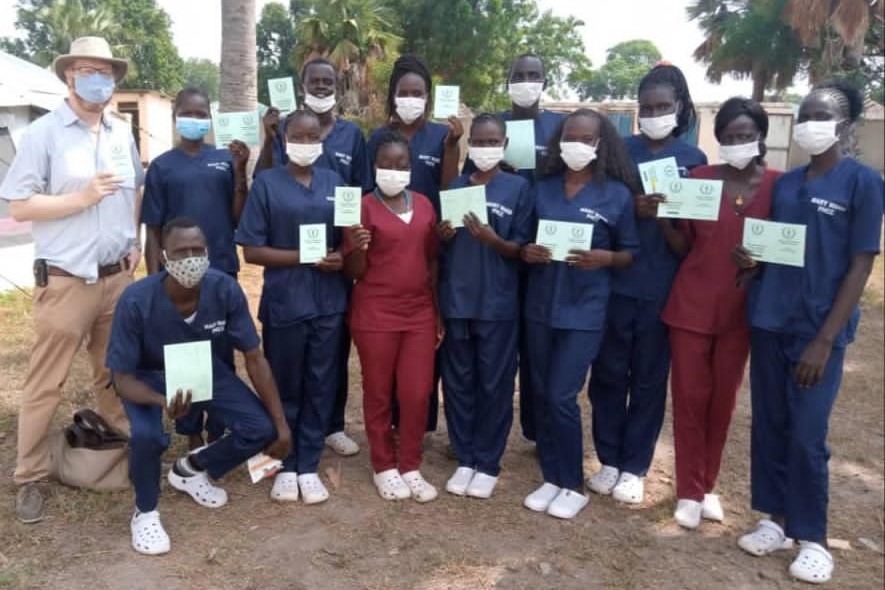
It was only a week later when we were back in Rumbek Hospital again. This time we were on the receiving end of their care. A couple of thousand doses of the AstraZeneca vaccine had been delivered and the hospital were on a drive to get as many people vaccinated as possible. In fact, the vaccine rollout took place in one of the large tents that our students had just cleaned. The process was quick and efficient, and we were registered, injected, and sat down for our own mandazis in no time at all.
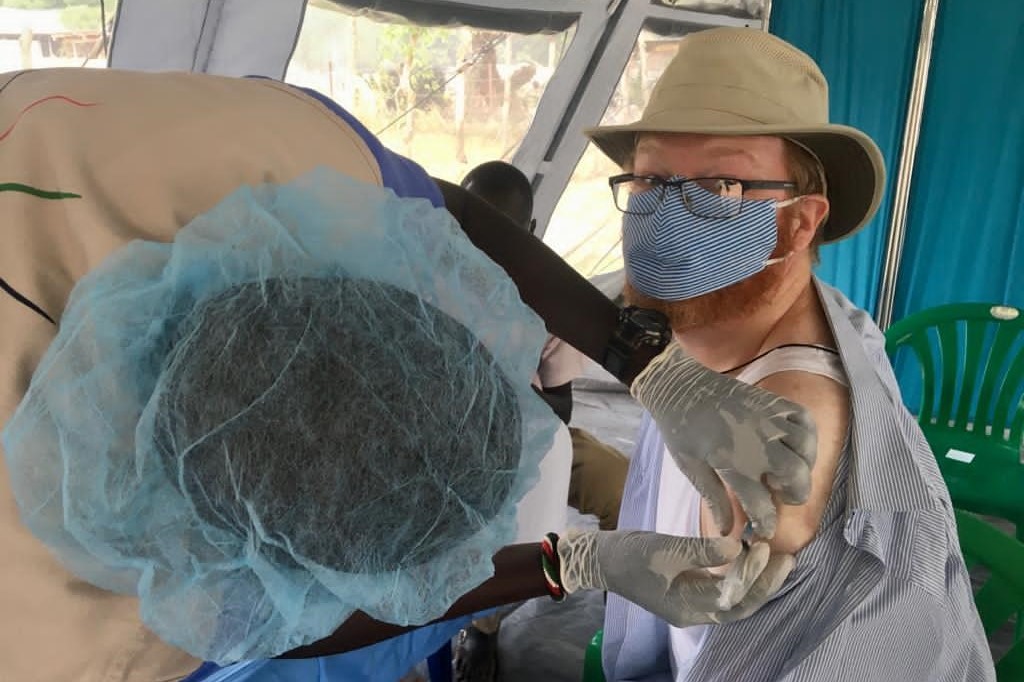
The programme for COVID vaccines here will take time due to challenges around cold chain storage availability, as well as a large, geographically dispersed population. Still, there is a determination among the people involved that when the pandemic makes its way to Rumbek, we will be as ready for it as we can be. There will be many people who will be at risk due to underlying health issues, poor nutrition, and lack of access to even basic medication. Please do keep us in your prayers.
Ben Nhialic areer keg a way,
Fr Alan
Read more from Fr Alan’s missionary journey in South Sudan:
PLEASE HELP US TO TRANSFORM LIVES IN SOUTH SUDAN
Jun 10, 2021
Like Ireland, South Sudan has a rich tradition of farming. Whether it is the cattle they tend or the small vegetable gardens they plant, the people here survive on the land. We have just begun rainy season and when it rains in Rumbek it pours. So far, I have experienced only a few storms and while they are short lived, they are Biblical in scale. It is not uncommon to have an hour of high winds and heavy rain, with thunder and lightning, before the blue skies and gentle breezes return like nothing happened. A decent pair of wellingtons is a must!
Self-sufficiency and valuable life lessons
This year, though, the rain has been sporadic. The people are not worried just yet, but they are certainly concerned. A bad season can mean the difference between having one meal a day or having no food at all. Women with young families are most especially vulnerable, because they use the proceeds of what they can sell in the market to support their families. With poor rains, they have to water their small fields by hand. Only last week on a drive back from town, we saw a family carrying water from a local well, including two preschool children each bringing a full two-litre container.
In the school, we are working away as we begin a new term, and we too are busy planting. The Loreto compound includes land that we can use for farming. Agriculture is one of the courses on the secondary curriculum and the girls enjoy the experience to get out from behind the desks every now and then. They have planted maize and ground nuts, which are staples that we will use in the school kitchen. This self-sufficiency allows us to reduce our expenditure, while teaching the students valuable life lessons.
Beginning to reap a great harvest
However, other types of seeds are now coming into fruition. At the moment, one of our graduates is back with us during a break in her studies in Kenya. She is working with the child protection team to help educate our students about children’s rights, as well as the importance of healthy and appropriate relationships. In the next week, another graduate will be here teaching English literature in the secondary school. After thirteen years of careful tending, we are seeing the first generation of our students return from further studies abroad. They are among the first, but they won’t be the last. These are bright, confident young women who are committed to their community. They are the pioneers of education for girls and they are determined to support those who follow after them.
This coming Sunday for our Gospel, we have the parable of the mustard seed, something tiny and unremarkable that can grow into a mighty tree, where people can shelter and birds can make a home. The same is true for what happens here in Loreto. Thanks to a team of gifted teachers who journey with the girls, to their parents who value education for the daughters, and to a student who commits herself whole heartedly to her studies, we are beginning to reap a great harvest. It is the fruit of tremendous work; it is a wonder to behold; and it is an absolute good to give thanks to God for.
Fr Alan
Read more from Fr Alan’s missionary journey in South Sudan:
PLEASE HELP US TO TRANSFORM LIVES IN SOUTH SUDAN
May 5, 2021
The motto of the Daughters of Our Lady of the Sacred Heart is the same as ourselves; after all, we are family. It is short and to the point, but also profound, rich, and as relevant today as it ever was. It is, “To be on earth the Heart of God.” You could spend a lifetime considering what this might mean or you could simply look at what it is like when it is put into action.
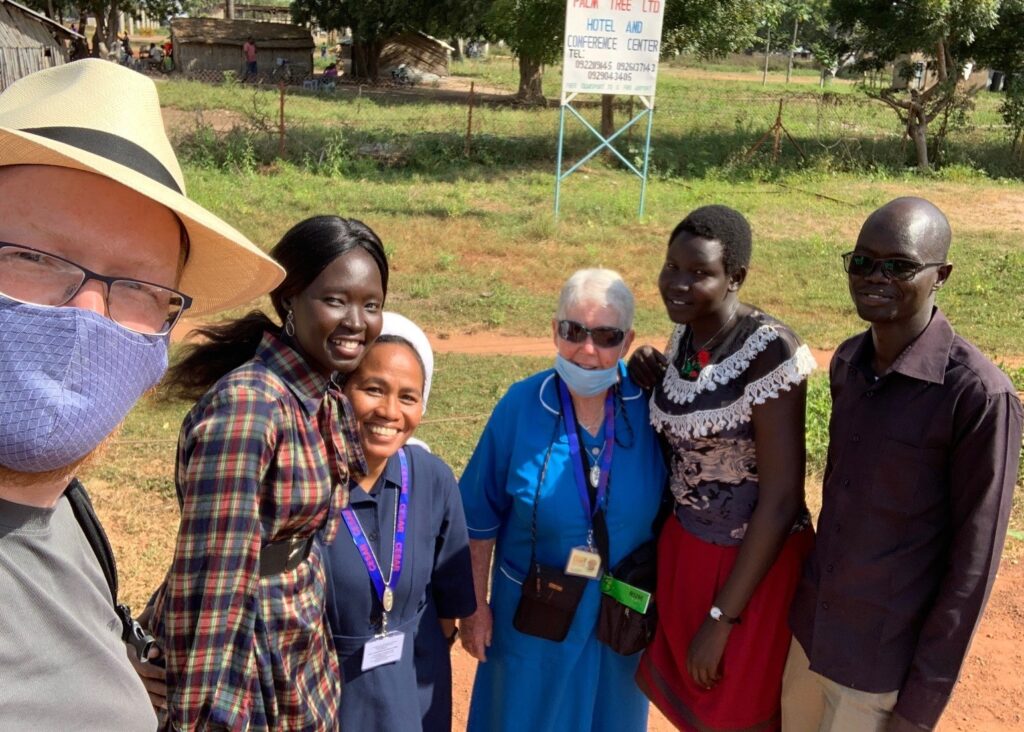
In my first piece on my mission to South Sudan, I spoke about two of our sisters that I met by coincidence in Juba. They were on the same flight as me, but on arrival in Rumbek they still had a long journey before they got back to their community in Mapourdit, a former refugee town that has grown up around the hospital and school the Church built. The trip would take them along flooded roads, where they would need to wade hundreds of yards across water up to their waist, and through insecure areas, where violence is still depressingly commonplace. It is only journey of 88km, but could easily take them up to half a day, if not more.
Deo gratias
Still, they didn’t complain. They were used to it. In fact, they were used to considerably worse as the Daughters have been here for over twenty-five years. In that time, they have had to contend with the struggle for the independence of South Sudan, the subsequent and tragic civil war, imprisonment, far too many snakes, plenty of rats, you name it really. In the booklet for the celebration of the Silver Jubilee of the mission the Daughters in South Sudan, they used two words to express what they felt after all that time: Deo gratias or thank God.
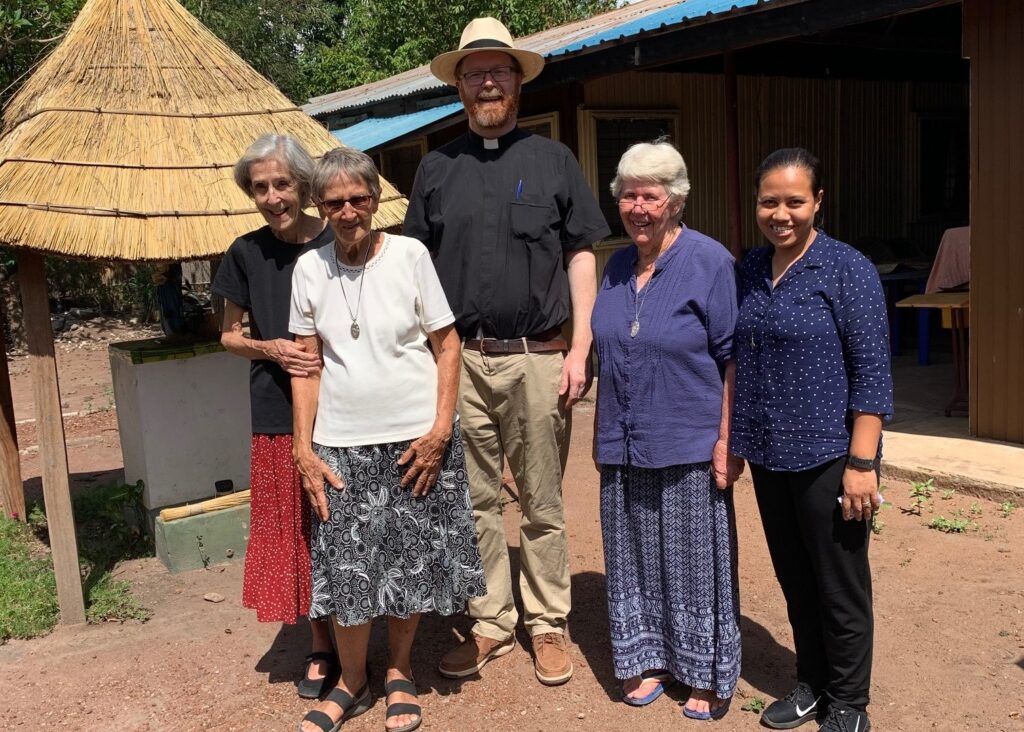
The reason I’m writing the article now is that last Saturday we travelled to Mapourdit to celebrate the 80th birthday of one of the community, Sr Rita Grunke. Sr Rita has been here since 2004 and has devoted herself to the community building, especially among the local women. She would spend extended periods of time travelling around the countryside, building up grassroots development, and sleeping out under the stars in a rough, but practical, tent.
Living out the Good News
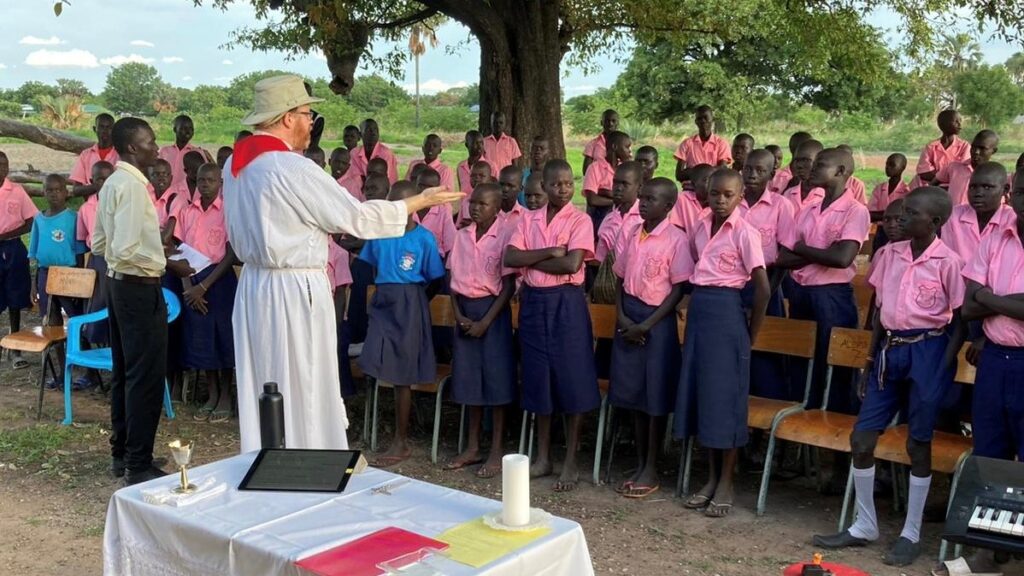
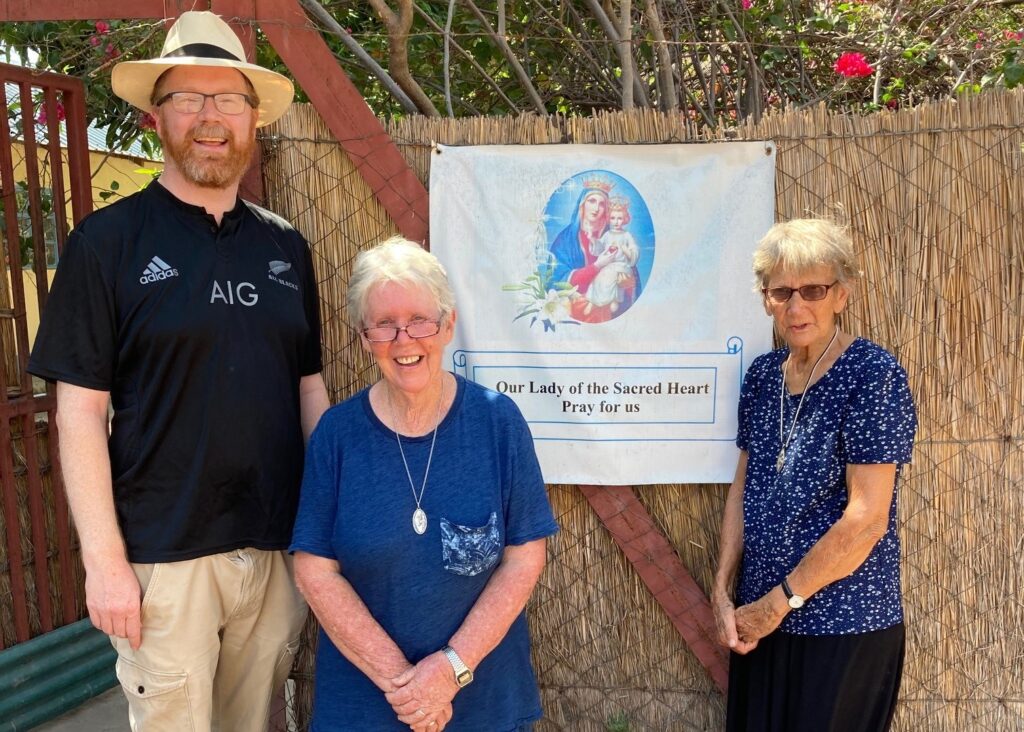
I was especially privileged to celebrate Mass for her that morning, with the other sisters, the members of the wonderful Comboni community next door who run the hospital, and the local people that have helped to build up the mission over the years. It was simple and beautiful as we broke the bread and shared the word of God together under a corrugated metal roof next to their kitchen. On the wall looking down on us was a painting of Our Lady of the Sacred Heart by a South Sudanese artist. In 1875, St Daniel Comboni, who was one of the pioneers of the Catholic mission in South Sudan, wrote to our founder, Fr Jules Chevalier, and consecrated the entire country to Our Lady of the Sacred Heart.
Almost 150 years later, we continue in that same gentle, but powerful spirituality. In many ways so much has changed and moved on, yet at the same time the needs remain the same. Religious sisters, brothers, and priests have set up schools and hospitals, working with local clergy and lay people to build a better future. Now with the arrival of the new bishop elect, we are looking towards a renewed sense of evangelisation that moves beyond just providing the necessities for survival. It is a living out of the Good News and the building up of the local Church. It is encountering the love of Jesus in the people that we serve and together building up the Kingdom of God. For that opportunity we can only say, Deo gratias.
Fr Alan
Read more from Fr Alan’s missionary journey in South Sudan:
PLEASE HELP US TO TRANSFORM LIVES IN SOUTH SUDAN