May 19, 2021
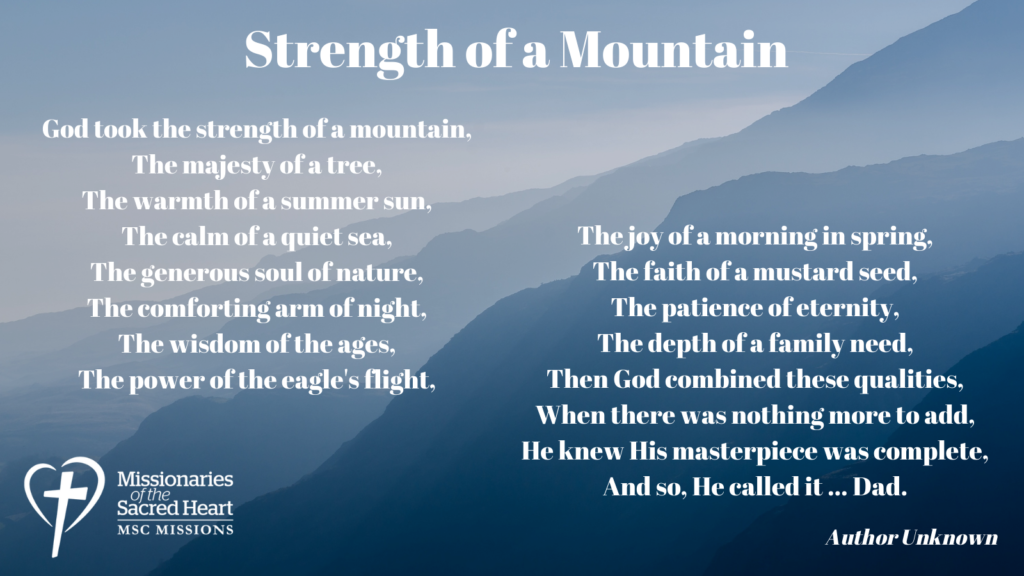
“Every family needs a father – a father who shares in his family’s joy and pain,
hands down wisdom to his children, and offers them firm guidance and love.”
Pope Francis
This year, we celebrate Father’s Day on Sunday, June 20th. Whether you chat with your father every day or treasure fond memories of your dad, Father’s Day is the perfect opportunity to take a moment to celebrate a very special bond, and a love that can’t be measured.
After such a long period of enforced separation, we are more grateful than ever for the love of family. On Father’s Day, we thank our personal heroes, who work so hard to make the family home a happy one, and we remember those fathers whose support and guidance taught us strength, resilience, and a solid foundation for our adult lives.
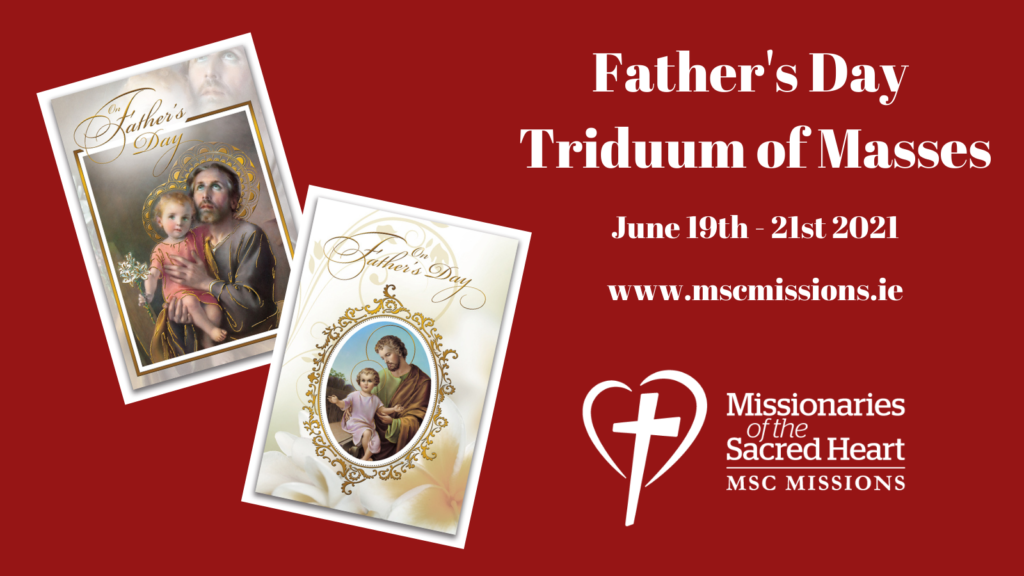
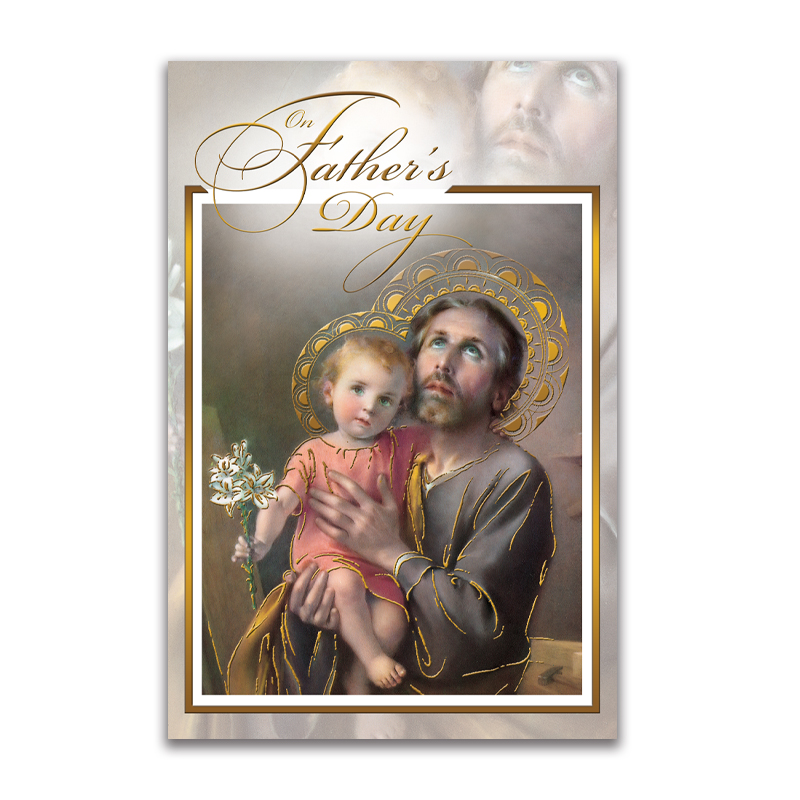
Our collection of Father’s Day cards is a truly special way to honour a beloved father, whether you will spend the day with your dad or carry his memory in your heart. Each card contains a lovely Prayer for my Father, and each one also contains remembrance in our Father’s Day Triduum of Masses, which will take place this year from Saturday, June 19th to Monday, June 21st. All are welcome to take part in this year’s Triduum, which will be streamed live from the Sacred Heart Church on the Western Road in Cork.
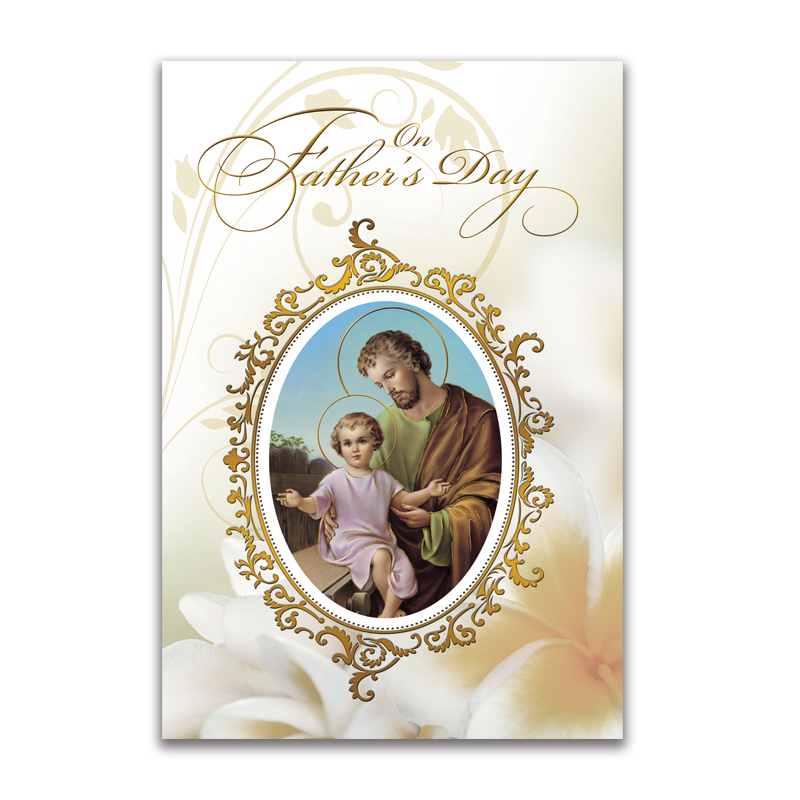
You are also very welcome to submit a prayer intention for your father, or light a candle in our online gallery to mark Father’s Day.
Remember, when you choose from our range of Father’s Day cards, you’re not just making a thoughtful gesture for your own father, but you’re also reaching out to help fathers and their families all over the world. Your support helps us to continue bringing the gifts of faith, hope, and love to parents, children, and communities in some of the world’s poorest countries. Our MSCs work in regions of extreme poverty and hardship, bringing vital aid to people who have nowhere else to turn, and every order we receive makes a real and valuable difference.
VIEW OUR FATHER’S DAY CARDS
May 18, 2021
We are delighted to be able to open our doors once again, and welcome old friends and new safely back to the Sacred Heart Church and the MSC Missions Office on the Western Road in Cork.
After a long period of restrictions and closures, it is with great joy that we see the return of familiar faces and greet new acquaintances here on the Western Road.
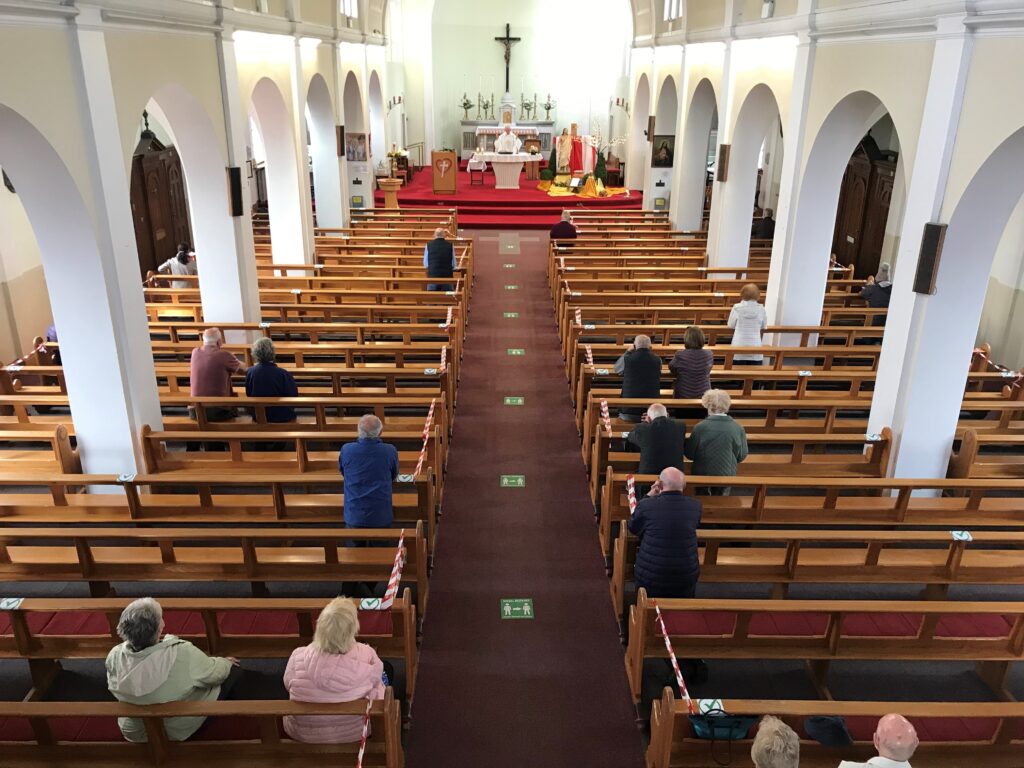
Last Monday, May 10th, saw a return to worship in the Sacred Heart Church and churches all over the country, while our MSC Missions Office was permitted to re-open a week later, on May 17th. Our first caller was at the door at 9.00am, to collect her Blue Book of Our Lady of the Sacred Heart, and Fr Michael and Anne were waiting with a warm welcome!
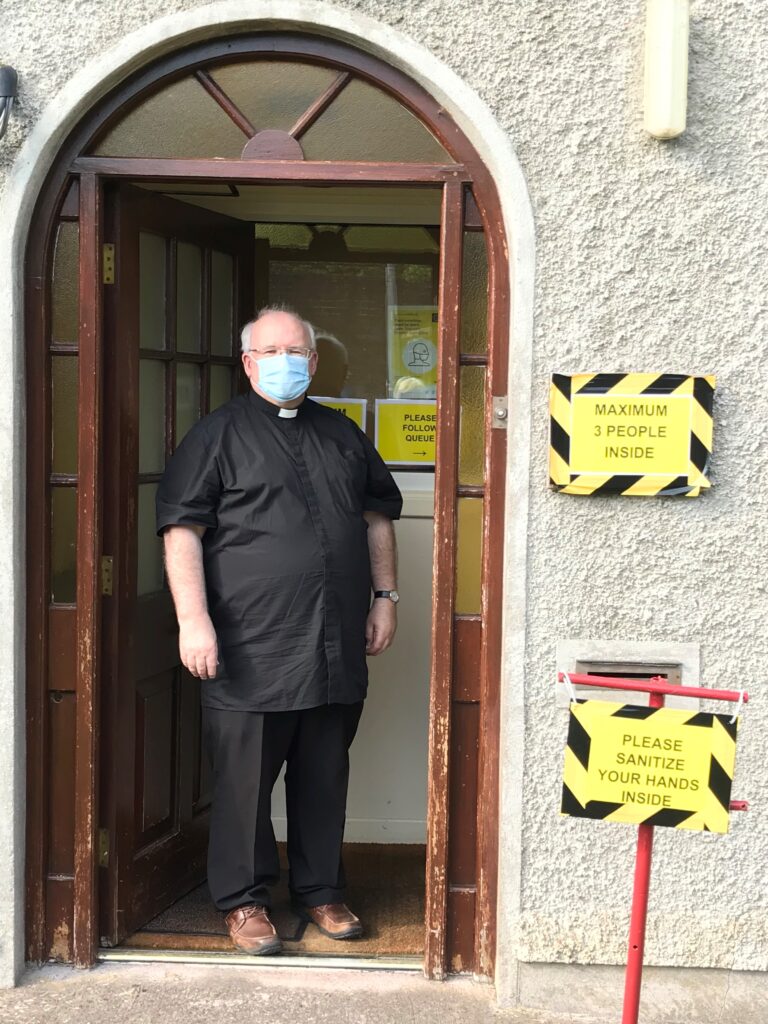
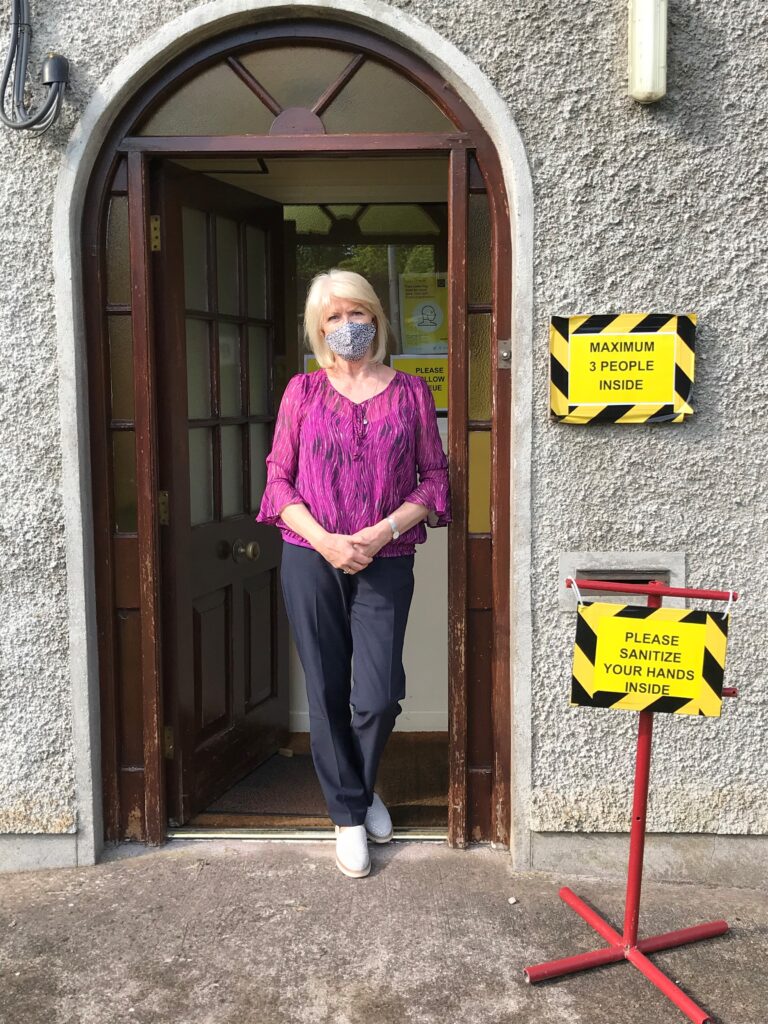
The Sacred Heart Church remains open for Masses and daily prayer, and the MSC Missions Office is open daily from 9.00am to 4.50pm.
We are also operating as usual online, where you can participate in our daily Masses, or choose from a selection of Mass cards, Mass enrolment books, and special gifts to be delivered straight to your door.
With every blessing and best wishes to shops, businesses, and services who are re-opening across the country. May this be the beginning of a time of new hope for us all. Take care and stay safe as we enjoy venturing out once again!
May 15, 2021
Early mornings, late nights, and pens, pencils, and textbooks on every available surface… Exam season has well and truly arrived!
Preparation for exams is always stressful time for students, and after a year of constant change and uncertainty, this year’s exams will be more testing than most. The pressure is on for students and their families alike, as they look to navigate an intense few weeks of timetables, questions, essays, and graphs.
As the starting dates for the state exams approach, why not show a little bit of extra support for the special student in your life? Our exam cards are the perfect way to send encouragement to a hard-working student. Each card contains a lovely prayer for students, and includes remembrance in our annual Triduum of Masses for students sitting exams.
This year’s exam Triduum will take place from Monday, May 31st to Wednesday, June 2nd, and will be streamed live from the Sacred Heart Church on the Western Road, Cork.
You are also very welcome to light a candle for exam success in our online gallery, or submit a prayer intention to be remembered by our MSC priests in the Sacred Heart parish on the Western Road in Cork. We will be glad to keep your intentions in our prayers.
During a time of heightened worries and anxieties, the gift of prayer offers peace, comfort, and a sense of support like no other. Let a special student know you’re thinking of them at this challenging time with the help of the Missionaries of the Sacred Heart.
BROWSE OUR RANGE OF EXAM TRIDUUM CARDS
May 13, 2021
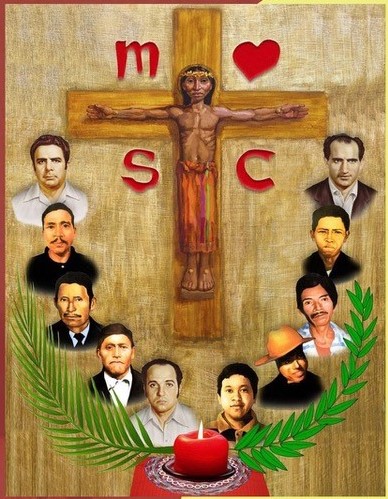
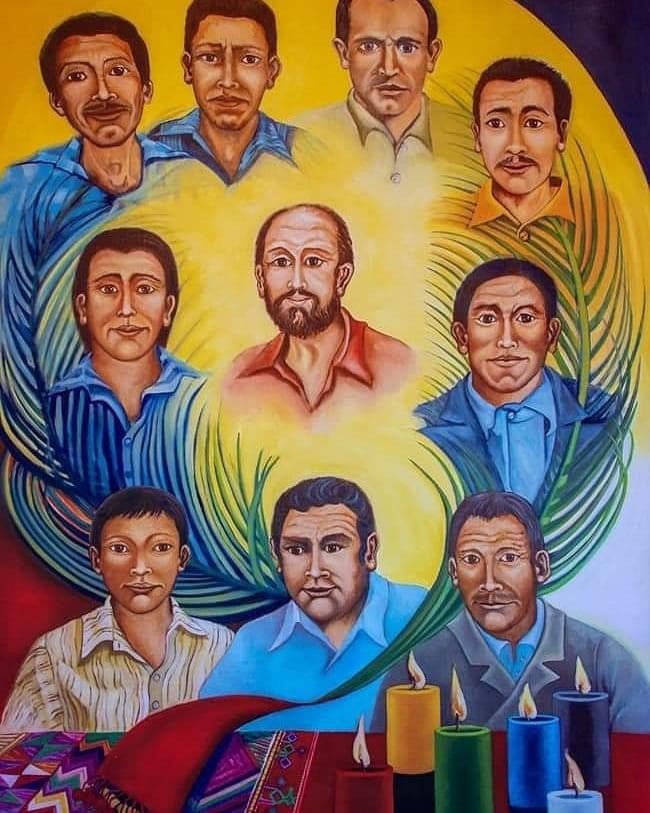
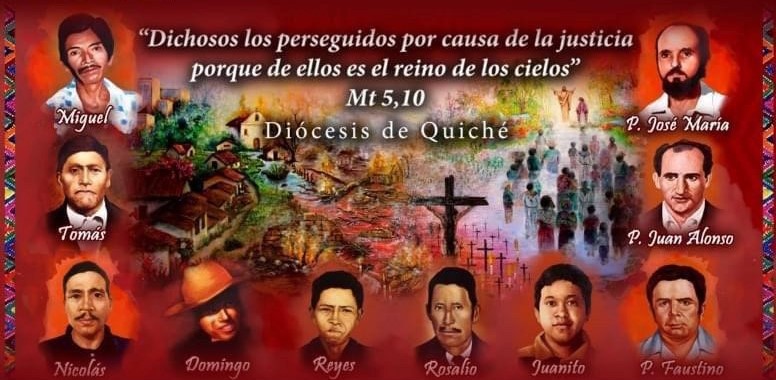
On April 23rd 2021, three Spanish-born MSC priests and seven lay catechists of the indigenous Maya people became “blessed” and were beatified in the Cathedral of Santa Cruz del Quiché, Guatemala.
Last year, Pope Francis signed a decree which recognised all ten as martyrs, and on April 23rd, Guatemalan Cardinal Álvaro Leonel Ramazzini celebrated the beatification Mass in El Quiché. Three priests of the Missionaries of the Sacred Heart, namely Jose Maria Gran Cirera, Juan Alonso Fernandez, and Faustino Villanueva, were beatified along with seven lay people: Rosalío Benito, Reyes Us, Domingo del Barrio, Nicolás Castro, Tomás Ramírez, Miguel Tiú, and Juan Barrera Méndez, who was just 12 years of age. All ten were killed in Guatemala at various stages between 1980 and 1991, in “hatred of the faith”.
Champions of the poor and vulnerable
It is estimated that 200,000 people, including Catholic missionaries, priests, and nuns, were killed in Guatemala between 1960 and 1996, when the country was by ravaged by conflict between its government military regime and a number of leftist groups. In the 1980s, a time when dictatorship was in full force in Central America, the Church found itself the victim of constant persecution for its role in championing the poor and defending human rights.
During this time, to stand for what was right in the name of peace was to stand against the military regime. The ten martyrs were unashamed and unafraid in their faith, assisting those in need in every way they could. From spiritual guidance and visiting the sick, to serving their communities and attempting to right the wrongs of an unjust regime on a local level, both the MSC priests and the lay people maintained the use of the Bible and the rosary despite the very real danger this posed. They eventually sacrificed their lives for their beliefs, and were killed by those in power who considered the teachings of the faith a threat to the system as it stood.
“I do nothing but preach the word of God.”
The three Spanish MSC priests died terrible deaths for their faith and for their friendship towards the country’s most marginalised people. Fr José María Gran Cirera was shot repeatedly alongside his friend and sacristan Dominic Batz while leaving Mass on horseback on June 4th 1980. Fr Faustino Villanueva was shot in his home, by two young men who visited the parish house, after celebrating evening Mass on July 10th 1980. Some months later, at the end of January 1981, Fr Juan Alonso Fernandes wrote to his brother, saying “I have the feeling that I am in danger. I don’t want to be killed in any way, but neither am I ready, out of fear, to abandon this people.” He was living and working in the north of the country, a particularly hazardous area. On February 13th 1981, he was forcibly detained by the military for questioning. Unbowed, he told them, “What we preach, anyone can hear. If you want to know what I say, just go to church. I do nothing but preach the word of God.” Fr Juan Alonso was released that night, but was intercepted on his way to visit a community the following day. He was tortured in a ravine, and then shot in the head three times.
Twelve-year-old Juan Barrera Méndez, known as Juanito, is particularly noted for his dedication to his faith. He received the sacrament of Confirmation himself, and acted as a spiritual guide for children preparing to receive their First Holy Communion. He was captured in a military raid on his community, and was tortured cruelly before his death; his passion was indestructible, and his name and his testimony are still well-recognised amongst Guatemalan children today.
“Missionaries on the move”
In an interview with Vatican News, Bishop Rosolino Bianchetti of Quiché reflects, “Our martyrs were truly missionaries on the move… They went from house to house, keeping the faith alive, praying with their brothers, evangelizing, imploring the God of life. They were men of great faith, of great trust in God, but at the same time of great dedication to bring about a change, a different Guatemala.”
MSC Superior General, Fr Mario Abzalón Alvarado Tovar, gave sincere thanks to all involved with the beatification at the recent Mass. “The three religious Missionaries of the Sacred Heart and the seven laymen today beatified as Martyrs are the prophetic voice that continues to resonate and call us to recognize the situation that was experienced in El Quiché and in Guatemala in the 1980s,” he said. “Thousands of brothers and sisters who were killed for the sake of justice and their faith committed to building the Kingdom of God. It was a whole system of death – genocide – that destroyed the lives of these ten new Blesseds. They are the sign that this unjust barbarism that bled an entire nation should never be repeated in Guatemala again – never again! Unfortunately, situations like this continue to happen in different parts of the world.”
“Wounds that continue to bleed”
Fr Abzalón continued, “We are encouraging our MSC brothers to be convinced that the best way to honour the memory of those who gave their life is to remain committed to eradicating the causes that led these three Missionaries of the Sacred Heart and seven laity and so many others to shed their blood. Causes that remain open, wounds that continue to bleed in Guatemala and throughout the world, through violence, exploitation, poverty, injustice and corruption. Our mother earth continues to be violated and destroyed. The Common Home needs us so that, inspired by the new Blessed Martyrs of Quiché, we raise our voices and give prophetic, living and coherent witness, as the three Missionaries of the Sacred Heart and the seven laity, today Blessed Martyrs, did.”
As many communities in Guatemala continue to face extreme challenges and severe hardship, including poverty, exploitation, and forced migration, we remember the sacrifice of the El Quiché martyrs, and we pray for all who continue to struggle in their home country, and in similar situations around the world.
“We are united with MSCs and the wider Chevalier Family around the world in celebrating this day and praying for the local church in El Quiché and Guatemala as it continues the work of evangelisation, service and worship, justice and peace, and the dignity of all its peoples, especially the indigenous communities.”
– Fr Carl Tranter MSC, Irish Provincial Leader
Read more about the beatification of the martyrs of El Quiché
May 5, 2021
The motto of the Daughters of Our Lady of the Sacred Heart is the same as ourselves; after all, we are family. It is short and to the point, but also profound, rich, and as relevant today as it ever was. It is, “To be on earth the Heart of God.” You could spend a lifetime considering what this might mean or you could simply look at what it is like when it is put into action.
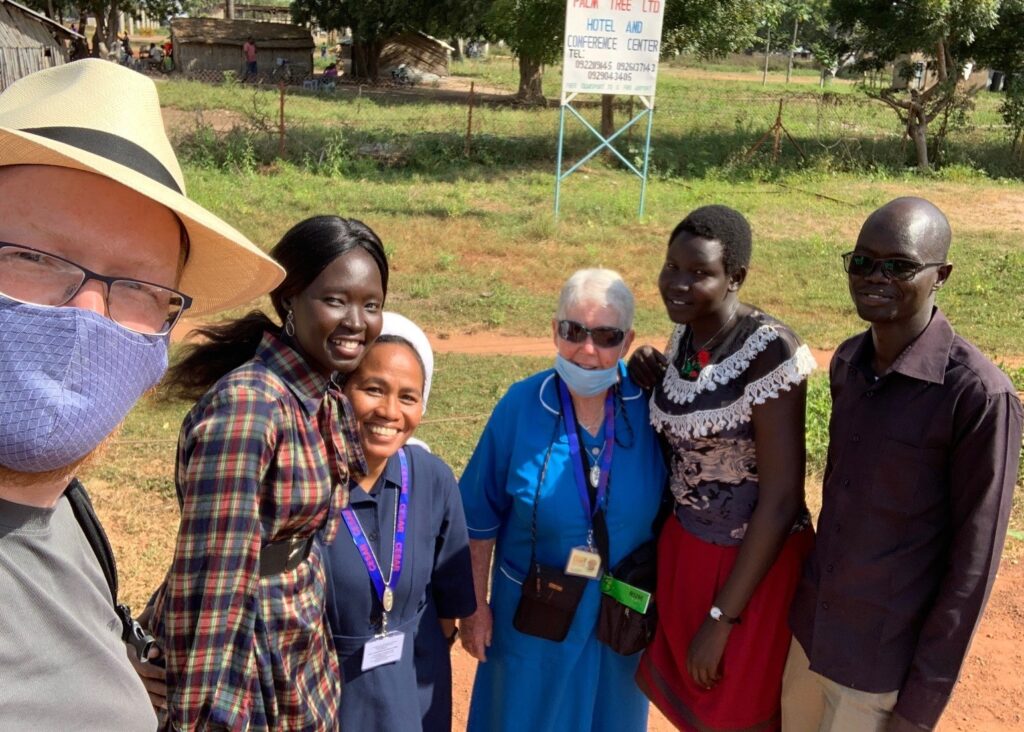
In my first piece on my mission to South Sudan, I spoke about two of our sisters that I met by coincidence in Juba. They were on the same flight as me, but on arrival in Rumbek they still had a long journey before they got back to their community in Mapourdit, a former refugee town that has grown up around the hospital and school the Church built. The trip would take them along flooded roads, where they would need to wade hundreds of yards across water up to their waist, and through insecure areas, where violence is still depressingly commonplace. It is only journey of 88km, but could easily take them up to half a day, if not more.
Deo gratias
Still, they didn’t complain. They were used to it. In fact, they were used to considerably worse as the Daughters have been here for over twenty-five years. In that time, they have had to contend with the struggle for the independence of South Sudan, the subsequent and tragic civil war, imprisonment, far too many snakes, plenty of rats, you name it really. In the booklet for the celebration of the Silver Jubilee of the mission the Daughters in South Sudan, they used two words to express what they felt after all that time: Deo gratias or thank God.
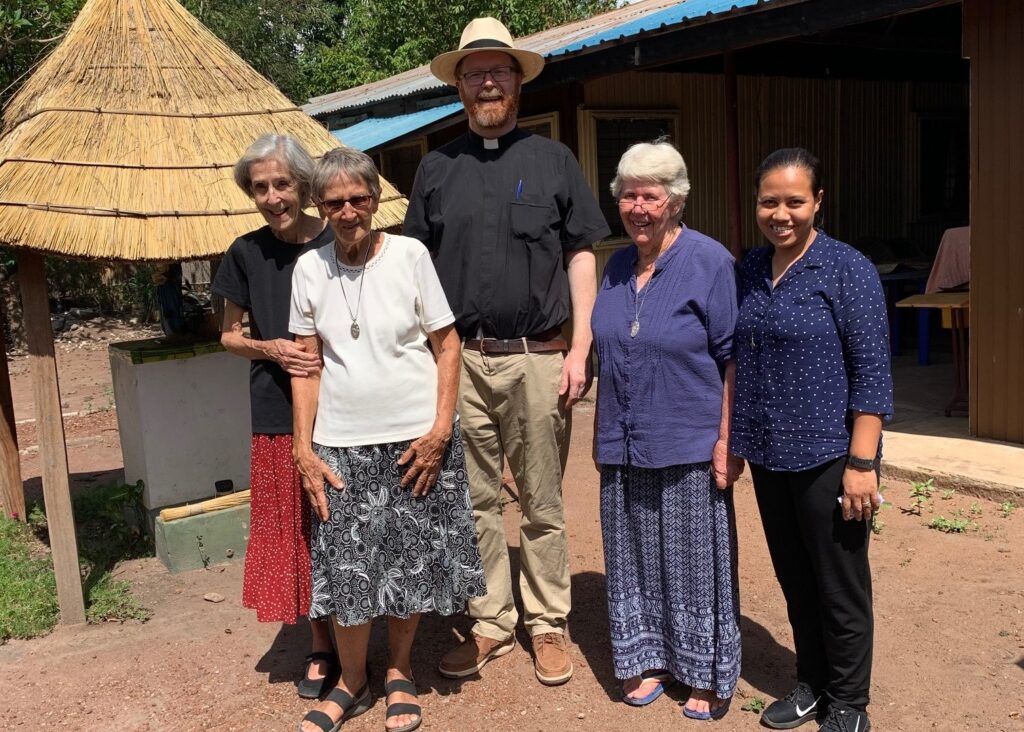
The reason I’m writing the article now is that last Saturday we travelled to Mapourdit to celebrate the 80th birthday of one of the community, Sr Rita Grunke. Sr Rita has been here since 2004 and has devoted herself to the community building, especially among the local women. She would spend extended periods of time travelling around the countryside, building up grassroots development, and sleeping out under the stars in a rough, but practical, tent.
Living out the Good News
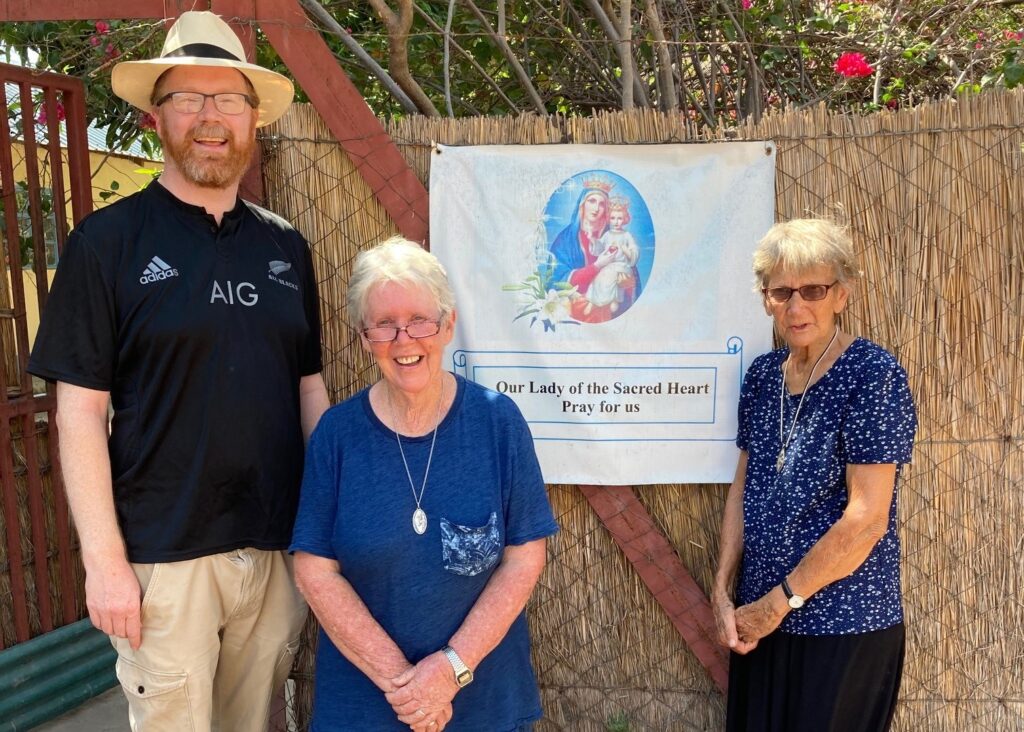
I was especially privileged to celebrate Mass for her that morning, with the other sisters, the members of the wonderful Comboni community next door who run the hospital, and the local people that have helped to build up the mission over the years. It was simple and beautiful as we broke the bread and shared the word of God together under a corrugated metal roof next to their kitchen. On the wall looking down on us was a painting of Our Lady of the Sacred Heart by a South Sudanese artist. In 1875, St Daniel Comboni, who was one of the pioneers of the Catholic mission in South Sudan, wrote to our founder, Fr Jules Chevalier, and consecrated the entire country to Our Lady of the Sacred Heart.
Almost 150 years later, we continue in that same gentle, but powerful spirituality. In many ways so much has changed and moved on, yet at the same time the needs remain the same. Religious sisters, brothers, and priests have set up schools and hospitals, working with local clergy and lay people to build a better future. Now with the arrival of the new bishop elect, we are looking towards a renewed sense of evangelisation that moves beyond just providing the necessities for survival. It is a living out of the Good News and the building up of the local Church. It is encountering the love of Jesus in the people that we serve and together building up the Kingdom of God. For that opportunity we can only say, Deo gratias.
Fr Alan
Read more from Fr Alan’s missionary journey in South Sudan:
PLEASE HELP US TO TRANSFORM LIVES IN SOUTH SUDAN
Apr 29, 2021
The advent of May, the month dedicated to Mary, brings us longer evenings, warm sunshine, blossom in abundance – and above all, a sense of hope and quiet joy in the certainty of brighter days to come.
This May, we remain restricted in our movements as we take tentative steps towards emerging from national lockdown. In keeping with the time-honoured tradition of honouring Mary throughout the month of May, we invite you to create your own May altar in your home, a daily opportunity for reflection, thanksgiving, and peaceful prayer to Our Lady.
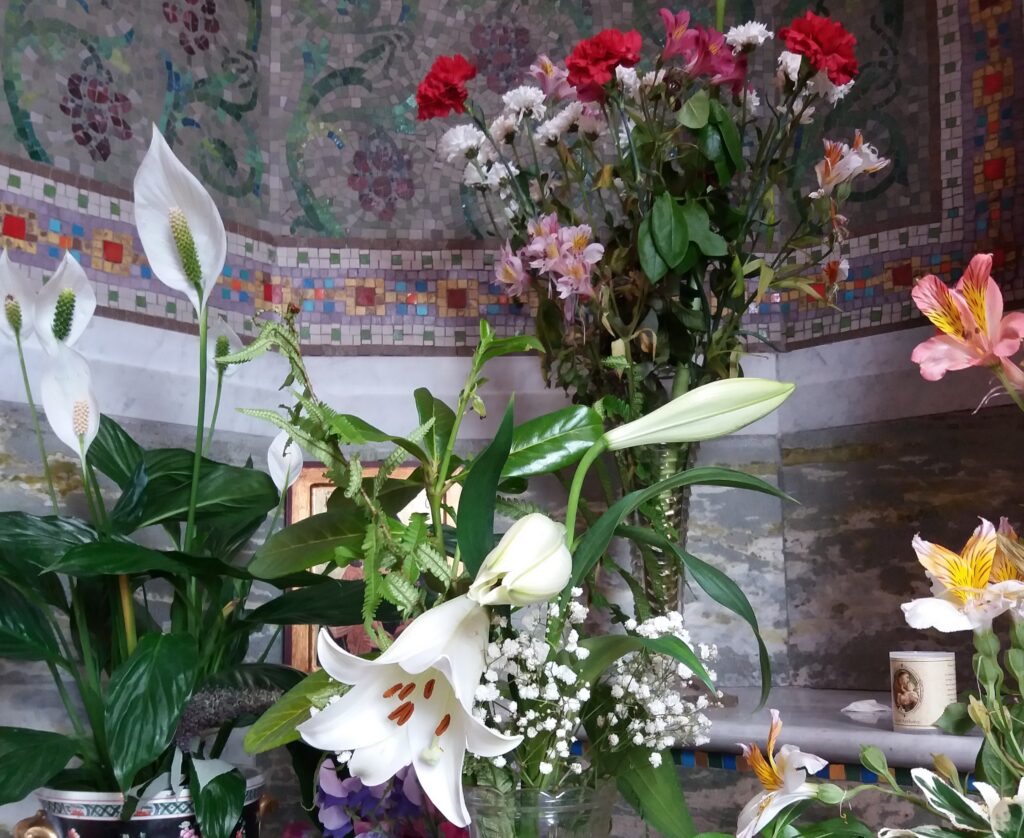
You can prepare your altar on any small, flat space, such as a table, a shelf, a windowsill, a bookshelf, or a mantelpiece. A statue or picture of Our Lady is placed in the centre of the space, on a white or blue piece of cloth, and the altar is then adorned with flowers of all types. Many people choose to use wild flowers, which are in plentiful supply at this time of year, while others prefer to use flowers traditionally dedicated to the Blessed Virgin, such as white lilies (symbolic of her purity) or roses (a symbol of her love of God).
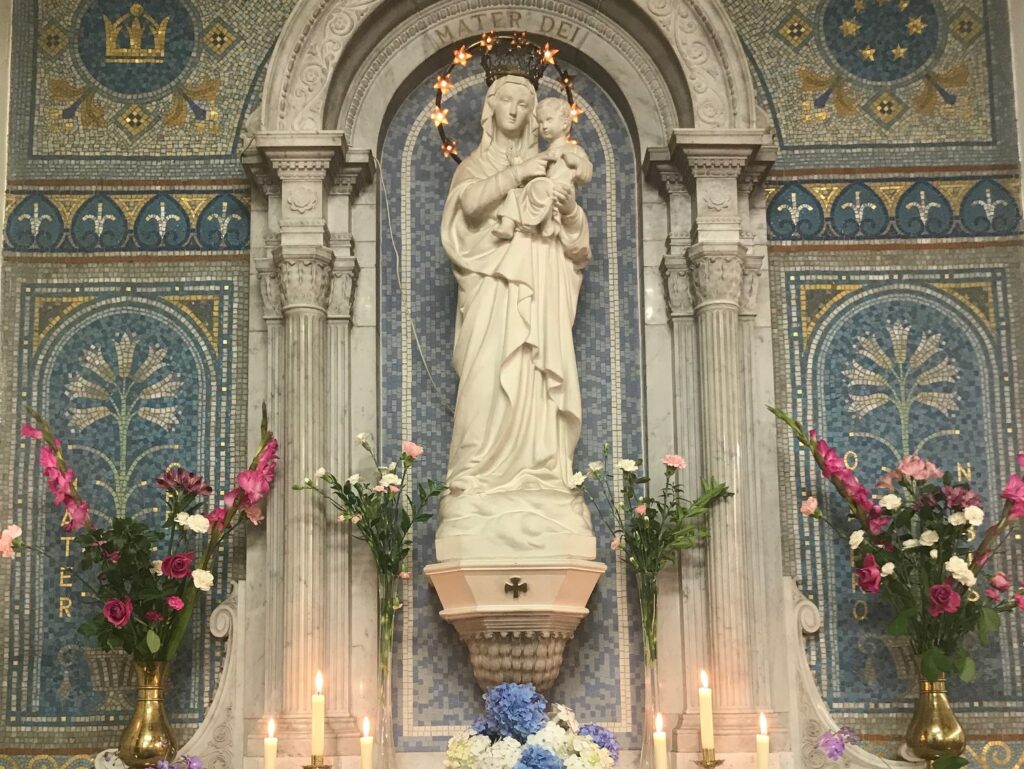
Complete your altar with a candle. Take some time each day to light this and pause in quiet prayer, on your own or with family, in a moment of rest and reflection amid the hustle and bustle of our daily lives.
Many people pray the rosary daily at their May altar, asking for Our Lady’s intercession. Below, you’ll also find Pope Francis’ Prayer to Mary during the coronavirus pandemic.
You can browse a selection of Our Lady statues and candles in our Cards & Gifts section, if you would like to find something special for your May altar at home.
With every grace and blessing of Our Lady of the Sacred Heart for a peaceful, prayerful, and healthy month of May.
Pope Francis’ Prayer to Mary
O Mary,
you always shine on our path
as a sign of salvation and of hope.
We entrust ourselves to you, Health of the Sick,
who at the cross took part in Jesus’ pain, keeping your faith firm.
You, Salvation of the Roman People,
know what we need,
and we are sure you will provide
so that, as in Cana of Galilee,
we may return to joy and to feasting
after this time of trial.
Help us, Mother of Divine Love,
to conform to the will of the Father
and to do as we are told by Jesus,
who has taken upon himself our sufferings
and carried our sorrows
to lead us, through the cross,
to the joy of the resurrection. Amen.
Under your protection, we seek refuge, Holy Mother of God. Do not disdain the entreaties of we who are in trial, but deliver us from every danger, O glorious and blessed Virgin.