Dec 17, 2021
Please note that the MSC Missions Office will be closed over the Christmas period,
from 4.00pm on December 23rd to 9.00am on January 4th.
With warm wishes to our mission friends everywhere for a happy, healthy, and safe Christmas season.
MSC CHRISTMAS RAFFLE 2021
🌟🎄 Christmas Raffle Prize Winners:🎄 🌟
1st Prize: Shopping voucher to the value of €1,000
A Harney
Kilmacthomas, Co Waterford.
2nd Prize: Jingle Bells & Whistles Luxury Hamper value €500
P Murtagh
Ballymote, Co Sligo.
3rd Prize: All I want for Christmas Hamper value €400
J Mulcahy
Artane, Dublin 5.
4th Prize: Festive Feast Christmas Hamper value €300
B Cox
Charlestown, Co Mayo.
5th Prize: Christmas Eve Luxury Hamper value €200
C Meehan
Askeaton, Co Limerick.
6th Prize: Christmas Eve Luxury Hamper value €200
J McMahon
Walsh Island, Co Offaly.
7th Prize: Christmas Eve Luxury Hamper value €200
O Gallagher
Mullingar, Co Westmeath.
8th Prize: Christmas Eve Luxury Hamper value €200
C Kelly
Loughrea, Co Galway.
9th Prize: Christmas Eve Luxury Hamper value €200
N Irish
Ferrybank, Co Waterford.
10th Prize: Christmas Eve Luxury Hamper value €200
P Cronin
Ballydehob, Co Cork.
Special Seller’s Prize: Christmas Eve Luxury Hamper value €200
P Moloney
Ennis, Co Clare.
🌟🌟🌟🌟🌟🌟🌟🌟
Dec 16, 2021
At the beginning of this year, the community of Daughters of Our Lady of the Sacred Heart in Port Moresby, Papua New Guinea, appealed for our help in funding a laundry for their aged-care ministry as part of our annual MSC World Projects Appeal.
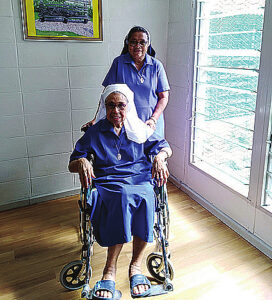
The Hartzer Centre is an aged-care centre attached to the main convent in Port Moresby, the country’s capital, where the Sisters care for elderly OLSH Sisters and MSC missionary priests who have devoted their lives to serving the people of Papua New Guinea. With eight rooms for elderly residents, it was an ongoing concern that the centre did not have a dedicated laundry area of its own, creating difficulties surrounding hygiene as the centre’s nurses would have to bring all dirty laundry through the convent dining room to reach the communal washing area.
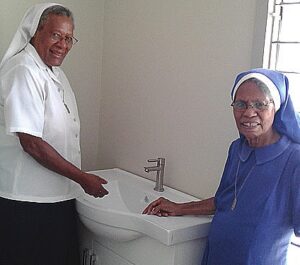
Our mission friends in Ireland and the UK have already helped the OLSH Sisters in Papua New Guinea to provide extra safety measures in the Hartzer Centre, including extra sinks for improved safety in the continuing battle against COVID-19. Now, thanks to the funding sent through our 2021 MSC World Projects Appeal, the new laundry is well underway, despite limitations brought about by the pandemic.
This week, we were delighted to hear from Sr Rosaleen, who sent us an update on their current progress:
“Due to COVID restrictions, the laundry is not yet finished, but progress is being made! The maintenance man has been working hard and has built a store room at the level of the corridor into the care centre, so we can store wheelchairs and equipment without having them blocking the corridors.”
“When it is finished, the laundry will be downstairs, with another small store room for things like garden tools, which the centre residents use when they are able to potter in the garden.”
“We are most grateful for the funding and support we have received from friends and benefactors in the Irish Province of the Missionaries of the Sacred Heart, and we thank you very much for your kindness and generosity towards us.”
Dec 9, 2021
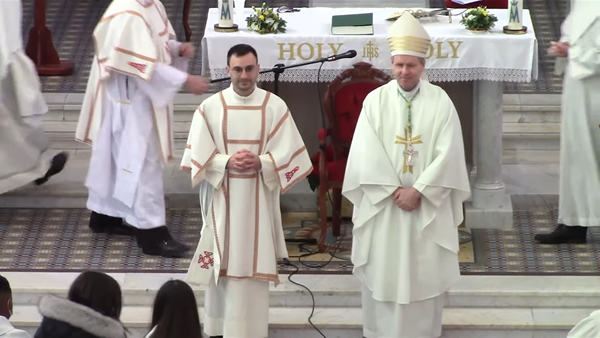
Wednesday, December 8th marked a day of double celebrations for the Irish Province of the Missionaries of the Sacred Heart, and for our extended MSC family around the world, as we celebrated the ordination of Giacomo Gelardi MSC to the Diaconate on the 167th anniversary of the foundation of the Society of the Missionaries of the Sacred Heart.
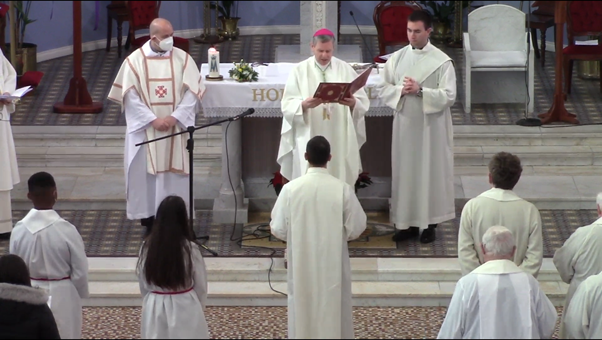
Having made his Perpetual Profession to the Missionaries of the Sacred Heart in September of this year, Giacomo was ordained to the Diaconate by Bishop Fintan Gavin, at the Church of Our Lady and St John in Carrigaline, Co. Cork, on the morning of December 8th, 2021. In the immediate wake of Storm Barra, which had put Co. Cork on a red alert status just the day before, Bishop Fintan Gavin began the ceremony by thanking everyone who had travelled to celebrate this very special day with Giacomo, despite all the challenges the weather had thrown in the way.
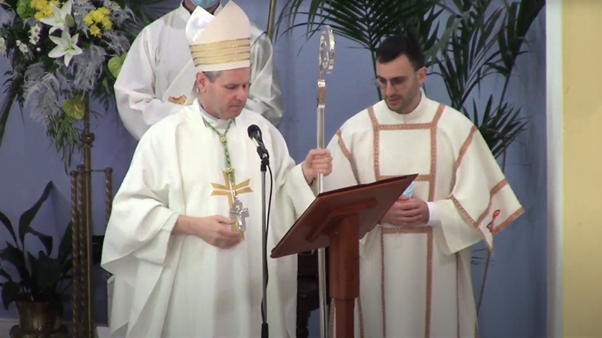
“I feel particularly honoured to be here today ordaining Giacomo,” said Bishop Fintan. “My own connection to the MSCs goes back to the mid-90s, with Fr Pat Duffy and Jim McCormack, when I worked with them in Killinarden. I was always made to feel part of the community, very much welcome. I came to know Giacomo while teaching in Maynooth, and then, through the Italian Chaplaincy in Dublin, where Giacomo not only participated, but he worked with me on the Confirmation programme and the preparation for marriage over one of the years. Today we pray that the Holy Spirit will be with Giacomo, giving him strength and comfort, and that the spirit will accompany him in his witness and service as a Deacon, on his path to priestly ordination.”
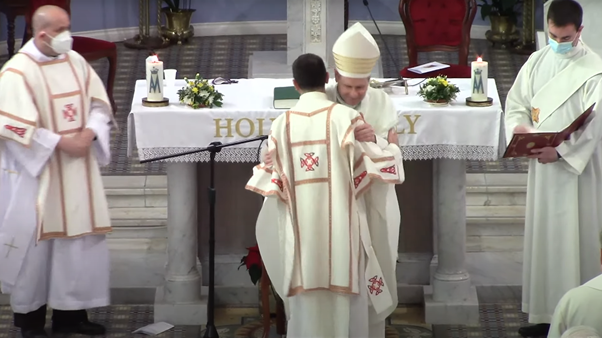
“Giacomo, today we celebrate another very significant moment on your journey to saying yes to God’s plan for your life,” continued Bishop Fintan. “This is a journey that began in your own home with the faith shared by your family and your family community in Urbino; a journey that would take you to World Youth Day in Cologne, that would deepen and mature over the years, through time spent in Verona and York, and discerning eventually a particular call to missionary religious life with the Missionaries of the Sacred Heart, which led to your final profession. Today, we celebrate a further deepening of that ‘yes’, as you respond to the invitation to become a Deacon in the Church.”
Irish Provincial Superior Fr Carl Tranter MSC also added his own congratulations to Giacomo on his ordination. “For us Missionaries of the Sacred Heart, this is our foundation day,” he reflected. “It’s a very special feast day for us, and no better or more fitting day to celebrate your ordination to the Diaconate, Giacomo, so we’re particularly delighted. I know all who are gather here today, and all that are joining us over the internet, are with you in spirit, and wholeheartedly congratulate you and wish you well. We wish you well for your ministry of service as Deacon, a ministry that will continue for the rest of your life. Your Diaconate may be transitional, but the ministry to which you’ve been ordained today is a ministry for life; and so our prayers, our support, our love, and our accompaniment are with you for the rest of your journey, for the rest of your life.”
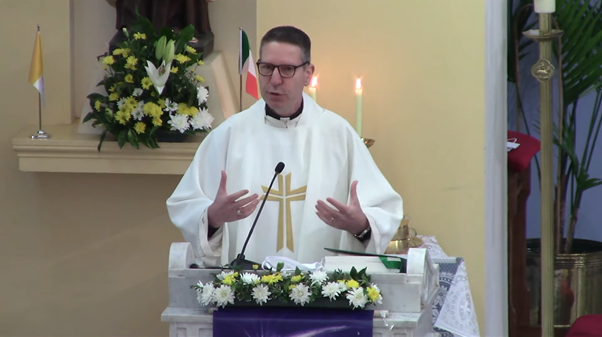
“Today, we are here to celebrate with Giacomo,” Fr Carl continued. “We are here to share his day of joy, but Giacomo, over the days, months, and years ahead, we will continue to be with you, to pray for you, to journey with you and to support you with all of our hearts.”
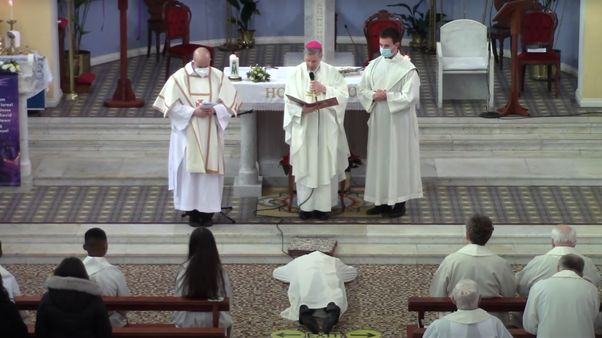
We join Bishop Fintan and Fr Carl in sending our heartfelt congratulations to the newly ordained Deacon Giacomo Gelardi MSC, and our prayers and blessings are with him as he continues on the path of his missionary journey.
Click here to watch the ordination to the Diaconate of Giacomo Gelardi MSC.
Dec 2, 2021
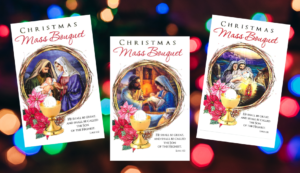
Remind family, friends, and loved ones that they’re always in your thoughts this Christmas with a beautifully designed Mass card from the Missionaries of the Sacred Heart.
In an age of email, text, and social media, it’s something special to find a surprise popping through the letterbox, and never more so than at Christmas time. Whether you’re sending festive greetings to friends and family nearby, or reaching out to loved ones around the world, our Christmas Mass Bouquet cards are a wonderful way to let those you hold dear know that you’re thinking of them at this special time of year.
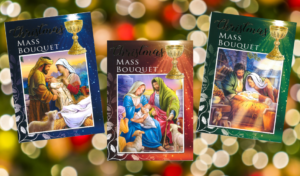
Each card is designed with care and brought to life with stunning gold highlights and embellishments. Cards can be ordered individually, or in sets of five, with a selection of different designs to choose from. Every card contains a thoughtful blessing and is signed by MSC Missions Office Director Fr John Fitzgerald MSC for inclusion in our annual Christmas Triduum of Masses, which will take place this year from December 17th to 19th 2025 at the Sacred Heart Church on the Western Road, Cork.
Don’t forget, by choosing to send one of our Christmas Mass Bouquet cards, you’re supporting the life-saving work our missionaries are doing across the world. Over the past two years, our ongoing mission projects have come under tremendous strain as a result of the challenges introduced by the pandemic, and our missionaries are working tirelessly to combat the effects of COVID-19 in areas where even basic resources like clean water are sorely lacking, while also maintaining ongoing ministry in the provision of education, healthcare, and community support in vulnerable and disadvantaged regions. By choosing to send one of our Christmas cards this year, you’re giving families and communities in need a real reason to celebrate this festive season.
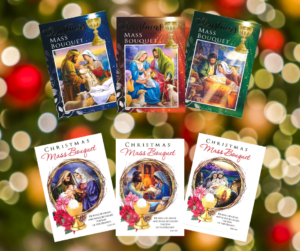
The best Christmas gifts can’t be wrapped in a bow – capture the true spirit of Christmas and give the gift of prayer to your loved ones this year.
MSC Christmas Mass Bouquet Cards are available to order online, and from our MSC Missions Office on the Western Road in Cork.
A lovely range of Christmas gifts is also available.
BROWSE OUR RANGE OF CHRISTMAS MASS BOUQUET CARDS
Dec 2, 2021
Our Light Up a Memory Mass has become a much-loved annual tradition to close the Month of the Holy Souls since our first ceremony in 2014, and this year’s candlelight memorial Mass, which took place on the evening of Saturday, November 27th, was another beautiful commemoration of the memory of treasured loved ones who are now with the Lord.
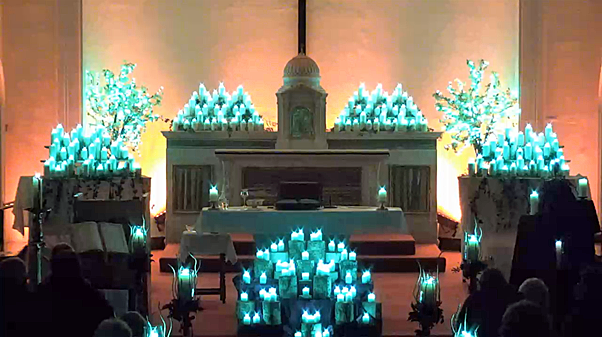
As we come to the end of another year of uncertainty and anxiety, with all the challenges presented to us by living with the COVID pandemic, it was a truly wonderful thing to be able to safely welcome mission friends and parishioners, old and new, to the Sacred Heart Church on the Western Road in Cork. We were also delighted to welcome many, many more friends who joined us via our live stream on the night, with almost 900 viewers joining us in prayer from across Ireland, the UK, the US, Germany, Australia, Indonesia, Italy, Canada, France, Bulgaria, Romania, and Malta.
At 6.30pm on Saturday evening, the Sacred Heart Church was filled with the light of hundreds of candles, a beacon of light and of hope on a dark November night. The Mass was celebrated by Fr John Fitzgerald and Fr Michael O’Connell, and was a particularly special evening for both MSCs, as Fr Michael celebrated the Light Up a Memory ceremony for the final time as Director of the MSC Missions Office, before handing over the reins to Fr John in the new year. With a beautiful musical accompaniment led by Gerry and Deirdre Tuohy, this was a very special evening of reflection and prayer to mark the ending of the month of remembrance.
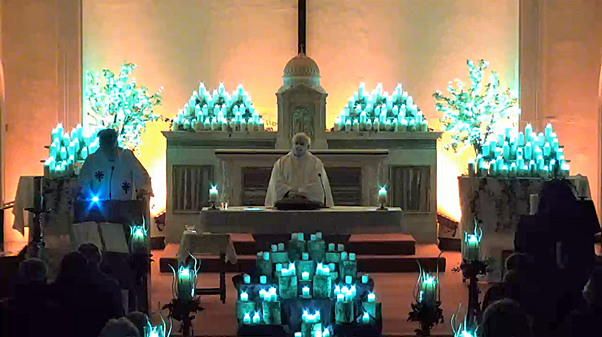
“We’re here to give thanks to God for the gift of those who loved us, to give thanks to God for the gift of those who shared our lives.”
Fr Michael began the ceremony with a special reflection on the purpose of the evening, of a “very special” Mass. “We’re here to remember those who have shared their lives with us,” he said. “We’re here to remember those who have gifted us their love, their presence, to remember those who have given us so much. We’re here to acknowledge the loss, the grief that might still be present in us. We’re here to give thanks to God for the gift of those who loved us, to give thanks to God for the gift of those who shared our lives, for those who gave birth to us, who brought us into this world, for those who told us they loved us, those who maybe brought us for Christening. And so we pray with those who are in Heaven, who we join in that great family of God, everyone at home and here in the church, in the name of the Father, and of the Son, and of the Holy Spirit.”
Fr John’s homily incorporated a selection of poems and prayers, from W.H. Auden to Cardinal Newman, each one a fitting reminder of the power of grief, of faith, and of love everlasting. As Fr Michael lit candles on the altar, Fr John reminded us, “The symbol of light is the symbol that Jesus picked himself: ‘I am the light of the world’.”
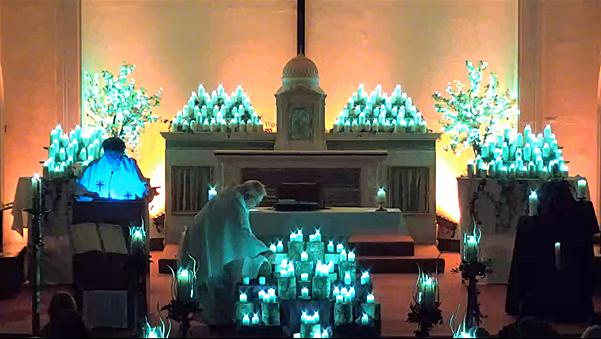
“Light is the symbol of Christ because light leads us in the dark,” he continued. “There is something about light that makes distance seem that bit closer… I would love tonight to go all over the country, or wherever you are, and give each one of you a candle, and ask you to hold that candle in your hand, and look into that candle, and say, ‘Give me time and space and peace to see the light of Christ here as I remember my loved one.’ The symbol of light is the light of Christ.”
Remembering the recently bereaved and those struggling with grief, Fr John prayed: “We pray for the light of Christ to light up the emptiness of your soul, the place they have left there in your soul, and the rawness of your soul, that you might get warmth there now in the frostiness of grieving. For you tonight, who are lately bereaved, may the blessing of light be upon you, light without and light within.”
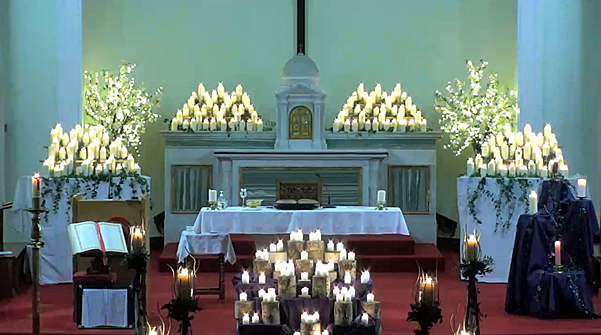
A ceremony of faith, love, and hope.
The Mass ended on a note of hope, as Fr John reflected, “this is a ceremony of faith and love, and it is a ceremony of hope,” while Fr Michael finished the Mass with the lighting of the Advent wreath, reminding us to look to its light as we begin our Advent journey towards the birth of Christ.
We would like to extend our sincere and heartfelt thanks to all who took part in this year’s Light Up a Memory celebrations, in the Sacred Heart Church and beyond. At a time when so many of us are separated, the Light Up a Memory Mass is a lovely opportunity for families to come together in prayer and remembrance of their dearly departed, no matter where they are in the world. It was a beautifully poignant and truly special evening of prayer, reflection, and fond remembrance for all involved.
Click here to watch a recording of our 2021 Light Up a Memory Mass
*
Dec 1, 2021
Please note that the MSC Missions Office will be closed over the Christmas period,
from 4.00pm on December 23rd to 9.00am on January 4th.
With warm wishes to our mission friends everywhere for a happy, healthy, and safe Christmas season.

Dear Friends,
Christmas greetings to you and your loved ones! While we have all endured another year of uncertainty, it is a great blessing to be able to look to the festive season and the coming year with hopeful hearts.
This will be a particularly special Christmas for me, as it will be the last that I celebrate as Director of the MSC Missions Office. As such, this is the last time that I will have the opportunity to send you my Christmas wishes as Director, ahead of Fr John Fitzgerald MSC taking over the role in the new year. The ending of one year and the beginning of the next strikes me as an especially fitting time for change, and it is with fondest regards that I thank you for your friendship throughout the years. It has been a gift beyond measure, and I’m sure that you will welcome Fr John with the same generosity and kindness that I have been so privileged to receive in my time as Director.
Over the past two years, our ongoing mission projects have come under tremendous strain as a result of the challenges introduced by the pandemic, and our missionaries are working tirelessly to combat the effects of COVID-19 in areas where even basic resources like clean water are sorely lacking, while also maintaining ongoing ministry in the provision of education, healthcare, and community support in vulnerable and disadvantaged regions. With each year that passes, we are trying to do more with less, and the past two years have proved particularly challenging, in ways that none of us could have imagined. Thanks to you, our dear mission friends, we can continue to face those challenges head-on; your support provides a real and vital lifeline to countless families who would otherwise be without hope. Together, we are a powerful and wonderful force, a force that can continue to combat the fear, sorrow, and anxiety that plagues our world in current times.
Christmas can be a difficult time for many, and that has, of course, been exacerbated by the pandemic in its second year. Whether you are fortunate enough to be surrounded by the warmth of family this festive season, or whether you may be struggling with your own personal challenges, please know that you are in my prayers this Christmas, and in the prayers of our MSCs everywhere.
As we approach a new year and a new chapter for the MSC Missions Office, my prayers are with you and those you hold dear. May the light of the Lord’s love shine in your heart and in your home this Christmas season, and guide your path throughout the new year and always. May you be blessed with the spirit of Advent, and may God grant you and your loved ones a peaceful, prayerful Christmas and a safe, happy, and healthy New Year.
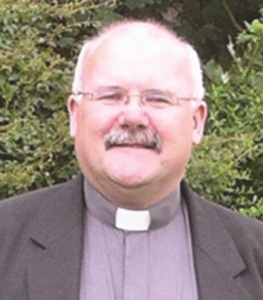 Wishing you and yours a happy and holy Christmas,

Fr Michael O’Connell MSC
Please click here to read letters from Fr Michael, Fr John, and Irish Provincial Superior Fr Carl Tranter MSC, as we begin a new chapter for the MSC Missions Office in 2022.