Sep 29, 2022
Over the summer months, the Irish Province of the Missionaries of the Sacred Heart has been working to support our MSC brothers in Guatemala, strengthening our long-standing friendship with the community at Centro Faustino Villanueva. A vocational centre dedicated to helping disadvantaged youths, Centro Faustino Villanueva was founded by the Missionaries of the Sacred Heart in 1984, in the rural region of San Agustín, Alta Verapaz.
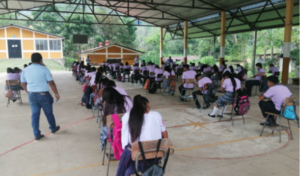
The Centre was the first of its kind in the region, bringing opportunities for education and progression to poor people with no other hope. The facility initially worked with adults who had previously lacked access to any form of education or professional development, and has since become a large school for children that come from impoverished backgrounds or vulnerable family circumstances.
The school is situated more than eight hours’ drive from Guatemala City, in an extremely remote area that makes travel difficult for students of severely limited means. Boarding facilities are available; however, the effect of the coronavirus pandemic has meant that the Centre has suffered greatly in terms of funding and resources, and so the facilities offered have had to be limited as a result.
Bringing dignity to the lives of vulnerable youths
Fr Jairo Uriel Sevilla Mendoza MSC, Director of Centro Faustino Villanueva, writes: “To our benefactors in the Irish Province, who always keep us in mind, in solidarity and support as we continue on the path to bring dignity to the lives of vulnerable youths. Once again, we send our gratitude for all you have done by supporting us in our ongoing mission. Thanks to you, we are continuing to improve our educational facilities, and accommodating more young people who need the help of our establishment.”
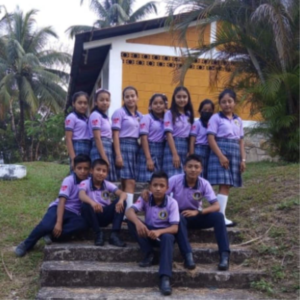
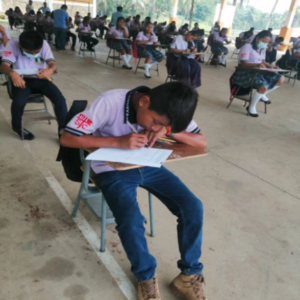
“The year 2022 has been a new learning experience for us all, for many different reasons. The COVID pandemic continues to affect our population, and new protocols have been put in place by the Ministry of Education here in Guatemala. The economic reality of this has meant that the basic necessities are all costing more, among other factors. Faced with this reality, we have found ourselves having to work with a smaller group of students; we are currently working with a group of 70 students every day, and have arranged our rooms in accordance with government protocol for the safety of everybody in our establishment. It has been very difficult to turn away some students, as we always have waiting lists, even at the best of times, but all we can do is help as many young people as we safely can now.”
“At the moment, we have First, Second, and Third Basic years, and two specialised programmes in Business Administration and Intercultural Bilingual Education. Last year, in 2021, we took 200 students on a hybrid basis, where they came to school every fortnight. However, this proved to be extremely complicated, as in many of the students’ villages, there is no access to computers or the internet. In the end, most of the students graduated to the next level, as the Ministry of Education put in place an agreement whereby all students had to be promoted to the next grade; however, the issue is that these students do not necessarily have the required level of knowledge to graduate, due to all of the restrictions in place during the academic year. Therefore, we made the decision to take fewer students this year, in order to give each student more personalised attention in the space that we can use, and reinforce their level of learning.”
Generating positive prospects for disadvantaged students
The community at the Centre has been working on the establishment of an agricultural programme, which works on a dual level of benefits: students are learning new skills in the cultivation of vegetables and the care of livestock, which brings with it the potential for future job opportunities, while they are also contributing to the stock of food for the school, reducing costs there.
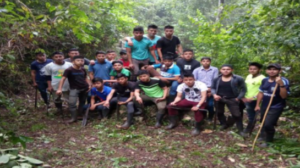
“We continue to move forward and feel happy and grateful for all that has been done,” writes Fr Jairo. The Irish Province of the Missionaries of the Sacred Heart are currently supporting Centro Faustino Villanueva in the development of several different projects, which will help the community at the Centre to continue in the fundamental work that they do in generating positive prospects for the young people of the region, including:
- The continued development of the school’s agricultural programme, incorporating poultry, pigs, cattle, and vegetables. MSCs at the school are continuing their work in the development of a programme that will provide students with invaluable life skills, while also contributing to school costs in the future.
- Development of the rubber and teak plantations that are currently located on the property. Due to a lack of resources, these facilities are currently not being utilised fully; however, if they are properly maintained, these plantations will be able to generate a good source of income for the school. MSCs are the Centre are currently working to clean and prune the plantations, and to buy the necessary equipment to utilise them to their full potential
- Repairs and maintenance of two cisterns that serve the Centre. Over the years, they have deteriorated and are now leaking water. A fundamental necessity, both cisterns need to be repaired to ensure the safe provision of water to the school and MSC house.
- A scholarship being put in place for students who come from particularly difficult backgrounds, where some have lost one or both parents, and others are coming from circumstances of severe poverty.
- The provision of improved bathrooms and showers at the Centro Faustino Villanueva. As well as accommodating students, the Centre often facilitates pastoral care workers from the parish of San Agustín, and the current bathroom and shower facilities are inadequate in terms of space and hygiene.
- The implementation of technical courses and workshops, in conjunction with INTECAP, a facilitator of different technical workshops, in order to teach students new skill sets that will equip them with the ability to qualify for a wider range of jobs in the future. As with the agricultural programme, this aims to provide students with training and key tools to bring new skills home to their own villages and communities.
Please keep the community at Centro Faustino Villanueva in your prayers as they continue in their mission to bring hope and dignity to disadvantaged youths and their families in rural Guatemala.
IF YOU CAN, PLEASE SUPPORT OUR GLOBAL MISSIONS
Sep 1, 2022
The latest update from the Typhoon Odette mission response team in the Philippines comes from Gilutongan Island, Cordova, where the MSC Typhoon Odette Housing Project is continuing in its work at full force.
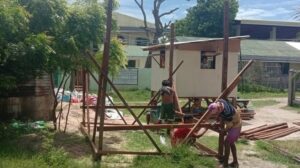
With the first batch of materials arriving at the end of July, work commenced speedily, and in early August, the Facebook page for the MSC Missions Office in the Philippines reported that construction of the first batch of homes had begun, with the local community “working together” to ensure successful and efficient progress. A real community affair, the people of Gilutongan Island are coming together to help in the construction of houses for themselves and for their neighbours in a great display of unity and generosity of spirit.
The MSC Typhoon Odette Housing Project aims to help more than 160 families on Gilutongan Island, following the initial phase of construction which took place in Bayagnan Island in Surigao City in March. With early reports in the aftermath of the typhoon stating that 90% of the houses in this community had been completely destroyed, the establishment of these new homes is an invaluable part of helping the people of Gilutongan Island regain a sense of security, self-sufficiency, and hope.
As local families slowly piece their lives and their communities back together, nine months after the initial devastation caused by the typhoon in December 2021, the construction of safe, secure homes is a great step in the right direction as they look towards a hopeful future.
Gilutongan Island images via the Facebook page for the MSC Mission Office Philippines, Inc.
PLEASE HELP OUR SACRED HEART FAMILY IN THE PHILIPPINES
Aug 25, 2022
Our most recent update from the Philippines comes from Fr Richie Gomez MSC, community leader at the MSC Centre for the Poor. The Provincial Conference for the Philippines took place in August, in person for the first time since the coronavirus pandemic struck, and Fr Richie writes with the highlights of a report on the latest progress of the MSC Centre for the Poor.
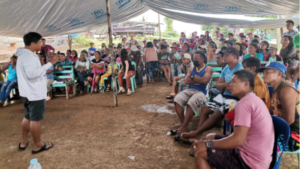
“What has happened at the Centre for the Poor since it was established four years ago, up to this moment, is beyond expectation!” writes Fr Richie. “It has given birth to an agricultural cooperative movement among farmers that expresses our concerns, especially regarding the poor and the marginalised in our society. Our Centre is a grass-roots, non-profit organisation dedicated to taking care of the environment and well-being of the people by providing services to the community in terms of spiritual, pastoral, and socio-economic needs.”
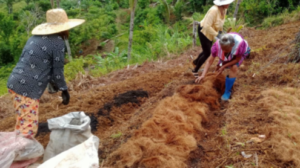
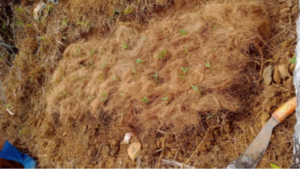
“A working arm of the Missionaries of the Sacred Heart.”
“The MSC Centre for the Poor Agricultural Cooperative (MSC-CEPAGCO) is a working arm of the Missionaries of the Sacred Heart, responding the many difficulties that arose during the COVID-19 pandemic and beyond, by organising the farmers’ sector to ensure food sustainability and care of our common home,” Fr Richie continues.
The Centre for the Poor Agricultural Cooperative has been recognised by the Cooperative Development Authority in the Philippines, and in June received an award from the Department of Agriculture naming them one of the most outstanding Civil Society Organisations (CSOs) in the country, and running one of the most successful agri-farms in the Caraga region. “This is a great honour for the Centre,” writes Fr Richie, “reinforcing our unique position as we help and better improve livelihoods and the quality of life of the community.”
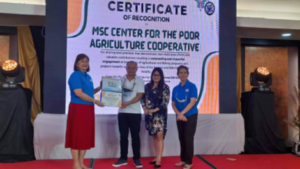
Empowering the disadvantaged and marginalised
The cooperative currently has 30 young college students, all from disadvantaged backgrounds, working with them in their shared mission to “produce affordable, healthy food for all”. Not only is the cooperative focused on taking care of our earth, and creating sustainable food sources for local communities, it also prioritises development opportunities for young people, or marginalised individuals, who struggle to go beyond backgrounds that may be rooted in severe poverty, hardship, and social issues. “We want to empower the small-scale farmers, youths who are out of school, indigenous cultural communities, those who are working to overcome addiction, and repatriated OFWs (people from the Philippines who have been living and working abroad),” Fr Richie explains. Teaching these young or marginalised people invaluable skills, the cooperative allows them to find a place for themselves, playing valuable roles and being an important part of a bigger picture, while also learning useful skills that will help them to find employment opportunities as they move forward in life.
In essence, “The Centre for the Poor aims to help rural and urban poor communities to develop sustainable livelihoods that will benefit them and will support their daily lives”. Two centres are currently in operation, one in Butuan City and the other in Del Monte, Talacogon, Agusan del Sur, which is also home to the cooperative’s demonstration farm.
From “me to we.”
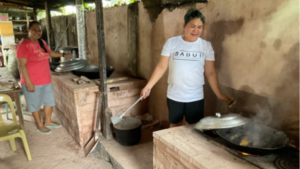
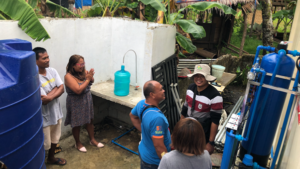
Responding to the “wake-up calls” that our earth is giving us, the MSC Centre for the Poor Agricultural Cooperative are promoting the shift from “me to we”, from “monoculture to diversity”, and from “competing with nature to partnering with nature”. From the construction of brick cooking stoves in several locations, to the installation of rainwater filtration systems, along with a host of further developments and partnerships, the Centre for the Poor Agricultural Cooperative has been going from strength to strength. We send our heartfelt congratulations to Fr Richie, his MSC brothers, and the MSC-CEPAGCO community on their tremendous achievements to date, with every blessing and good wish as they continue in their vital work.
IF YOU CAN, PLEASE SUPPORT OUR MISSIONARY WORK
Aug 18, 2022
At the end of July, our MSC Mozambique mission visited Ibo Island, an island situated just off northern Mozambique in the Indian Ocean. Situated over 70km from Pemba, where our mission is based, Ibo Island is also in the province of Cabo Delgado.
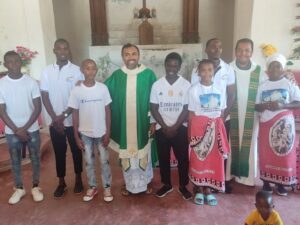
Fr Eduardo visited Ibo Island with Fr Girley, who travelled from Brazil to visit the mission, and spent three days on the island from July 29th to 31st.
“We were greeted with great joy and affection,” posted Fr Eduardo on the MSC Mozambique Facebook page.
“After almost two years I can say that it was a great joy for us, for Father Girley who came from Brazil to visit us, as well as for the Christians living on the island.”
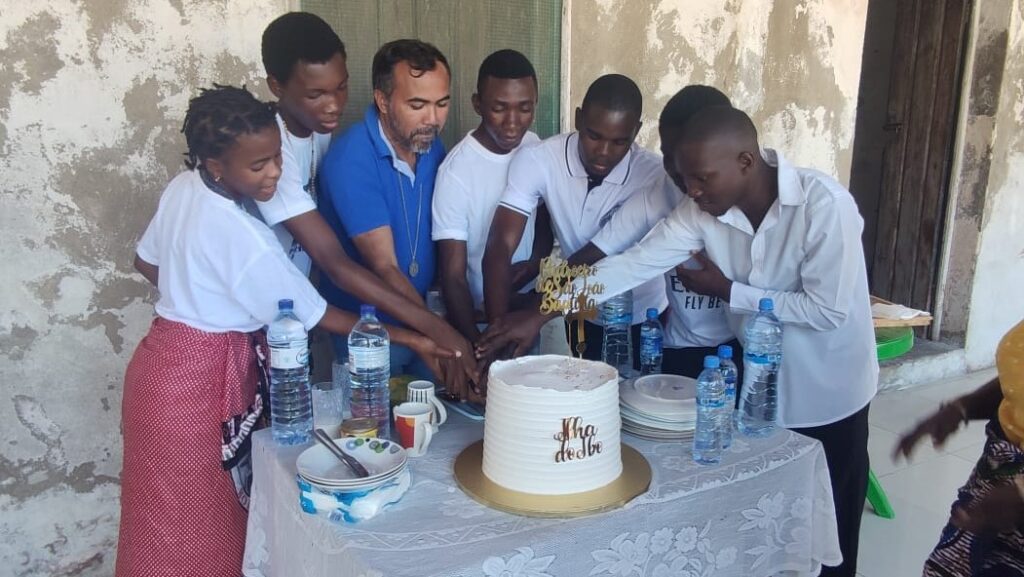
Upon their arrival, our MSC group met with the local community and celebrated Mass together. The second day of their visit incorporated a Confession service and a Sunday school programme, along with a celebration of the Liturgy of the Nativity of St John the Baptist, who is the patron saint of the Ibo Parish. The final day of their visit saw further celebrations, with a total of 18 baptisms and seven young people marking the First Holy Communion.
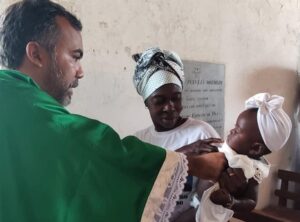
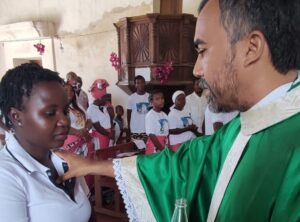
“It was indeed a weekend of great joy for us and the entire Catholic community of Ibo Island,” concluded Fr Eduardo.
As our Mozambique mission continues in its ongoing work to minister to local families, alongside those who have been displaced by war, we ask you to please join us in keeping our brothers in the Sacred Heart, and the communities they serve, in your prayers.
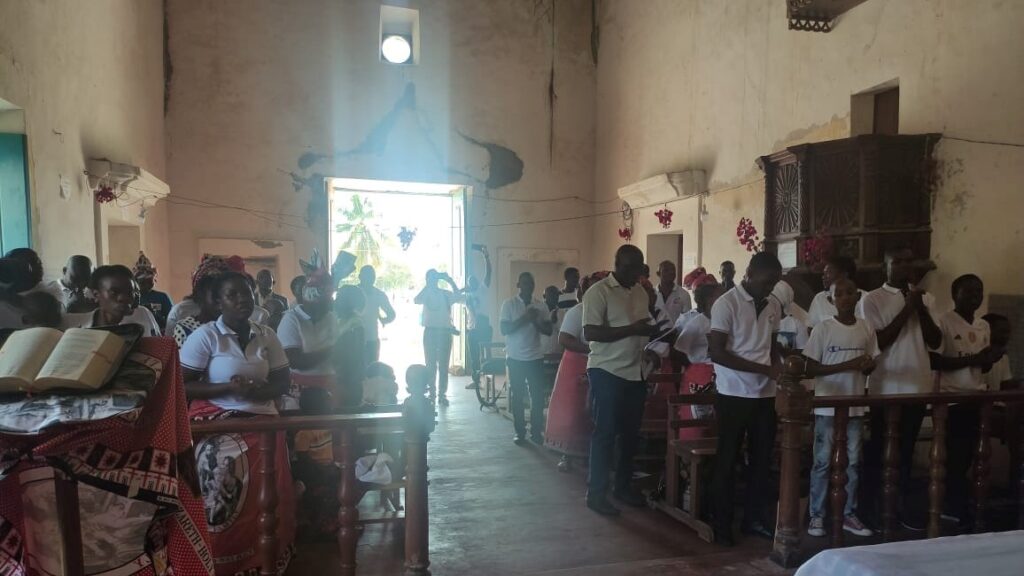
Images via the MSC Mozambique Facebook page.
*
Aug 11, 2022
Early in 2021, the Irish Province of the Missionaries of the Sacred Heart joined forces with the Daughters of Our Lady of the Sacred Heart in Papua New Guinea to raise funds for a laundry in their aged-care centre in Port Moresby, as part of our annual MSC World Projects Appeal.
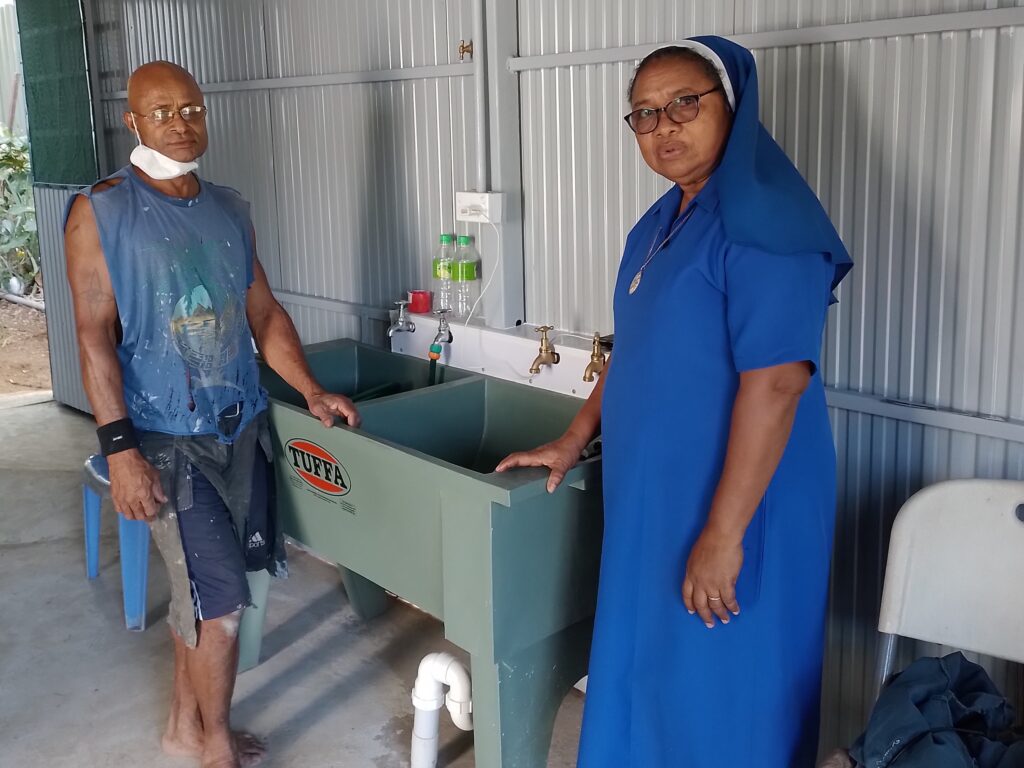
The Hartzer Centre is an aged-care facility attached to the main convent in Port Moresby, the country’s capital, where the Sisters care for elderly OLSH Sisters and MSC missionary priests who have devoted their lives to serving the people of Papua New Guinea. Eight rooms are dedicated to the care of elderly residents at the centre, and it was an ongoing worry that the facility did not have a dedicated laundry area of its own, with nurses carrying all dirty laundry through the convent dining room to reach the communal washing area. This has been a pressing hygiene concern, especially in the face of the ongoing coronavirus pandemic.
In December of last year, Sr Rosaleen O’Brien contacted us with an update on progress on the new laundry facilities being installed in the Hartzer Centre – progress that had been slowed considerably due to the effects of the COVID pandemic. We have been delighted to receive further updates in recent weeks, with thanks to our benefactors for their help in getting the project completed.
“Please convey our gratitude to all of the donors for their great contribution to the laundry project for our aged-care facility,” writes Sr Rosaleen. “We have at long last completed the work which has taken time because of COVID, and also a lack of materials when needed.”
“I do not know what to say, as it is such a help to us here – especially with our infirm patients, who, in this climate, need a lot of care each day,” Sr Rosaleen continues. “Sr Gabriella and her helpers are truly happy with this project.”
“We continue to pray for each person who has donated money for this important project, especially during the COVID pandemic, which is still affecting so many people around the world.”
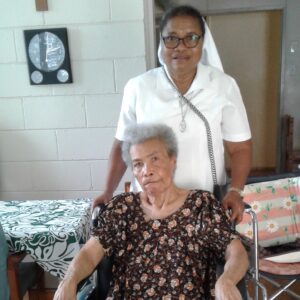
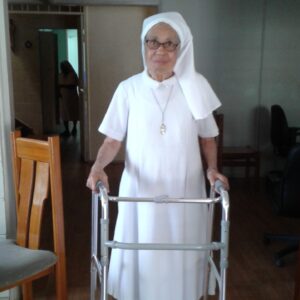
We add our thanks to those of our OLSH Sisters; the ongoing support of our mission friends and benefactors here in the Irish Province provides immeasurable encouragement to our Sacred Heart family around the world, especially in these particularly challenging times. Sincere thanks to all who helped to provide these essential facilities for the elderly residents of the Hartzer Centre, and to all who continue to offer their friendship and their prayers as we continue on our shared missionary journey to make God’s love known everywhere.
*
Aug 4, 2022
As the people of the Philippines continue to rebuild their homes, lives, and livelihoods following the devastation caused by Typhoon Odette in December 2021, the Missionaries of the Sacred Heart and the Daughters of Our Lady of the Sacred Heart are ongoing in efforts to help with repair and restoration.
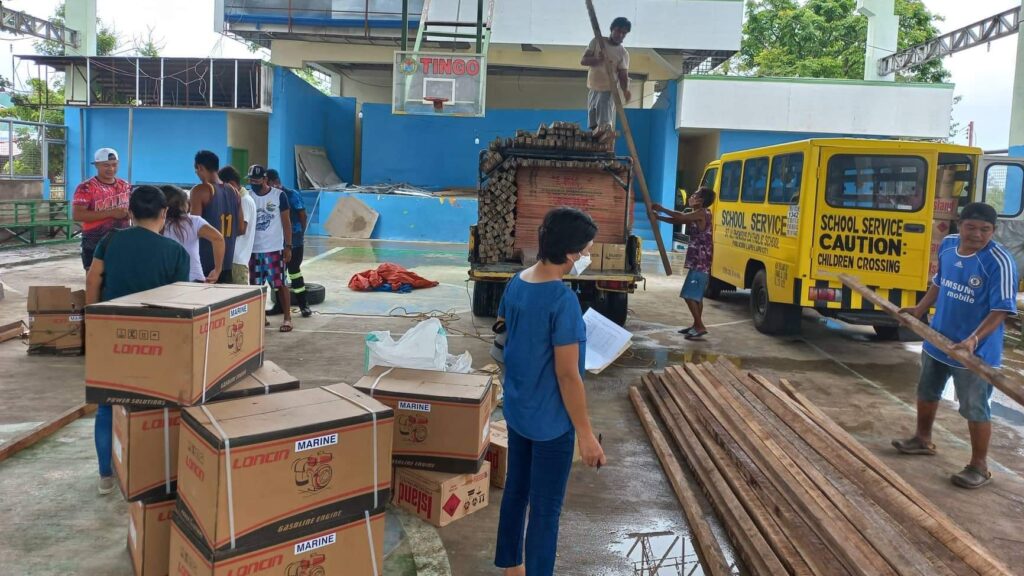
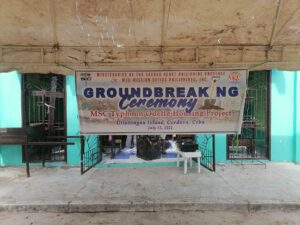
In the middle of July, the Facebook page for the MSC Mission Office in the Philippines reported that the MSC Task Force Odette had held a ground-breaking ceremony in Gilutongan Island, located in Cordova, Cebu, to mark the beginning of the housing project here.
The MSC Typhoon Odette Housing Project has been in force throughout the first half of this year, with construction beginning in Bayagnan Island in Surigao City in March, and now, with the next phase of the project underway, more than 160 families in Gilutongan Island will be able to live safely and comfortably once again in secure homes.
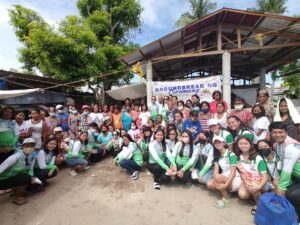
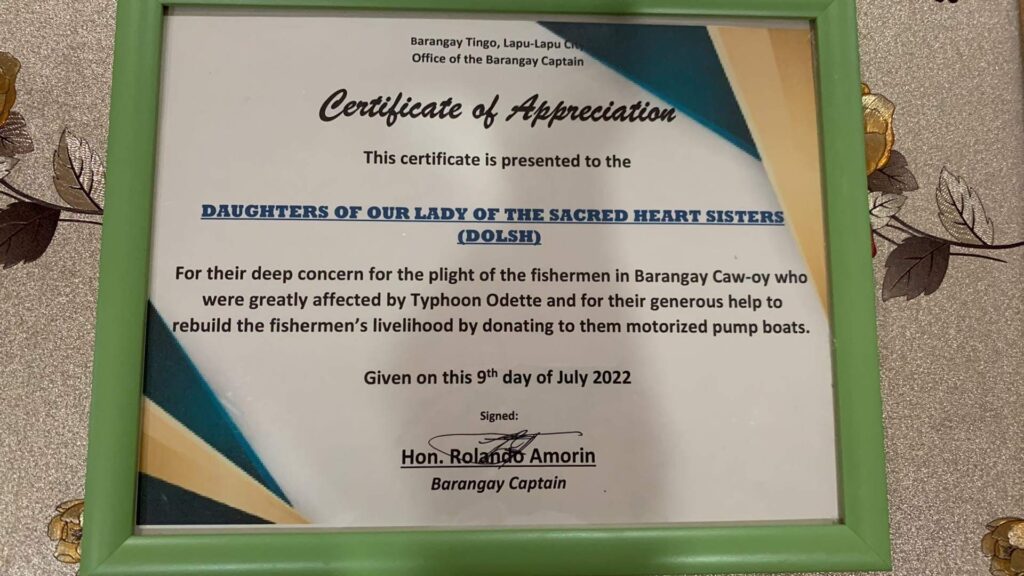
Our Sacred Heart Sisters, the Daughters of Our Lady of the Sacred Heart, are also facilitating the rebuilding of homes, and the restoration of livelihoods in the Philippines – most recently, for fishermen in Barangay. The OLSH community in the Philippines donated motorised fishing boats to the fishing community of Barangay Caw-oy, and these boats were named in honour of Our Lady of the Sacred Heart.
Together, we pray for the continued success of these relief programmes, for all of our MSC brothers and OLSH Sisters in the Philippines, and for the families and communities they serve.
Gilutongan Island images via the Facebook page for the MSC Mission Office Philippines, Inc.
PLEASE HELP OUR SACRED HEART FAMILY IN THE PHILIPPINES