Jun 24, 2021
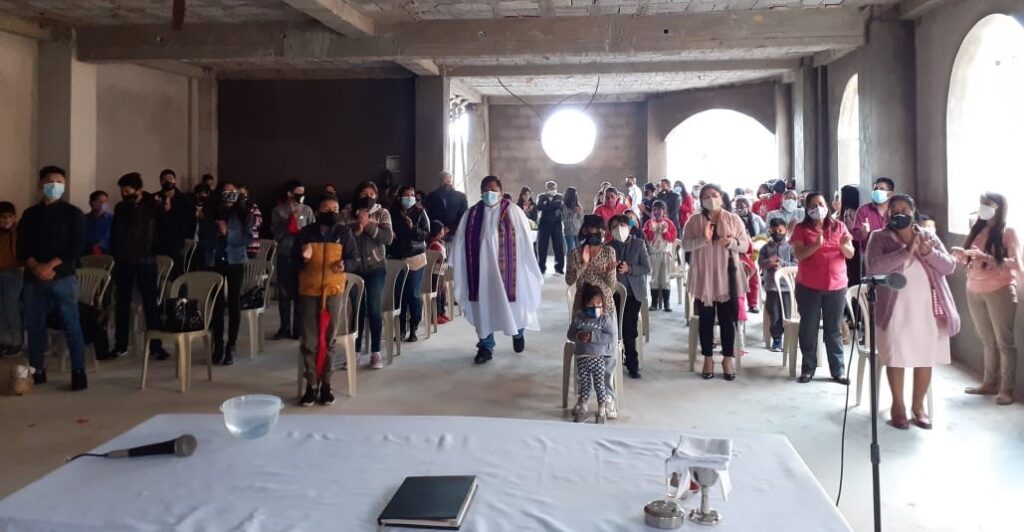 The MSC community in Ecuador del Sur have recently written with gratitude for funding received from the Irish Province, in support of the construction of a new multi-purpose church and community room for the parish.
In a video sent to Irish Provincial Leader Fr Carl Tranter MSC by the people of the parish of St Francis of Assisi, located in the neighbourhood of Ecuador del Futuro, the community introduce themselves: “We are a group of neighbours and friends who have been working for several years, motivated by our dream of having and building our church, to praise God and to listen and share his word.”
The community recently required assistance in completing the first floor of the church and community centre, and with the help of the Irish Province of the Missionaries of the Sacred Heart, our brothers and friends in Ecuador del Futuro were able to make great strides towards completing the necessary work over the past few months.
Coming a long way together
“The work has come a long way with your help,” writes Fr Moacir Goulart de Figueredo MSC, parish priest in the community of San Francisco de Asís, or St Francis of Assisi. “With the resources sent by the Irish Province, and some financial and material donations by the community, we have managed to finish the walls, install windows and glass, put in doors outside and in the bathrooms, begin construction leading to the second floor, complete work in the kitchen, finish the living room floor, and set up electricity, gas, and drinking water.”
“We still have a little left to finish on the first floor,” continues Fr Moacir. “We need bathroom dividers, plus internal kitchen doors and windows. We are going to use further donations for this and we are starting work on it now.”
“The pandemic caused the work to slow down,” he explains. “There was a lack of materials and so we had to wait. It also made it very difficult to manage our community work and it prevented fundraising events.”
St Francis Grotto
One of the main focal points of the centre is the San Francisco Grotto (or St Francis Grotto) window, with a special space underneath for people to visit for personal prayer. This space is dedicated to highlighting the principles of Laudato si’, Pope Francis’ encyclical devoted to the care of our common home.
“We are very happy,” writes Fr Moacir. “We have achieved what was most urgent, and the first floor is now fully operational. We are waiting for an end to the pandemic and the state of emergency so we can continue the work we have begun.”
Fr Moacir has been in contact with the project office for the archdiocese with regard to continuing work in developing the second floor, and has submitted a request for further support in the hope of being able to resume development in July. “If God allows, in July we want to receive the resources to continue the second floor, where we will locate the chapel,” he explains. “We have not received positive responses from other foundations in Ecuador, as many resources are directed to food and medicine because of the pandemic.”
“Thank God, you always remember the poor!”
“We have not yet opened the church and community centre officially, but we are already using it for Masses, catechesis, parent and child meetings, youth groups, altar server training, and music courses. Already, we hear people saying, ‘This is a miracle of St Francis of Assisi!’, ‘We are no longer on the street!’, ‘It is already our special space!’, and ‘Thank God, you always remember the poor!’.”
As they continue in their efforts to raise funds for the second floor of the church and community centre, the people of San Francisco de Asís remind us that “Life is good when you are happy, but life is so much better when others are happy because of you.” “Our plan is to carry out this dream for God,” they explain. “A hug from afar. May God bless you and protect you. You are always in our prayers.”
“The place is beautiful and the people are happy,” concludes Fr Moacir. “I thank you from the bottom of my heart for your generosity. Blessed be God who has given you this generous heart.”
PLEASE SUPPORT OUR GLOBAL MSC MISSIONS
Jan 26, 2021
In the middle of November 2020, the Philippines was hit by Typhoon Vamco (known locally as Typhoon Ulysses), which left in its wake loss of life, severe flooding and damage amounting to millions of euro.
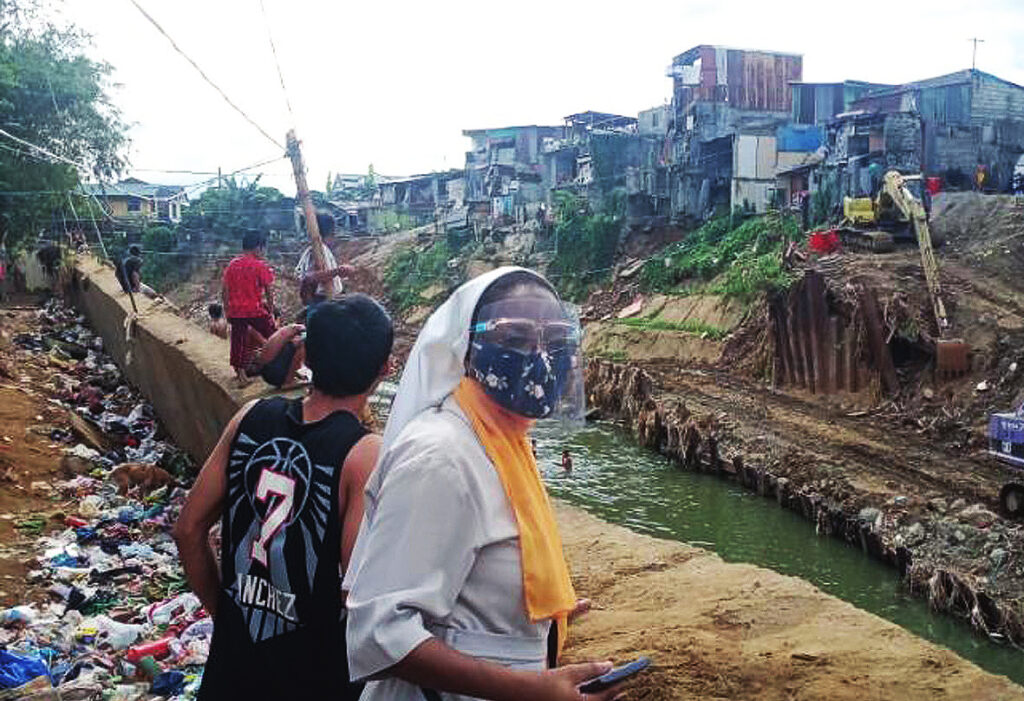
Typhoon Vamco was the most powerful typhoon to hit the country in seven years and the community of 25 OLSH Sisters have been ministering to badly affected families in two very poor areas of Manila.
“In the face of such damage, it is hard to know how to help and what to do,”
writes Sr Ruth S. Yburan FDNSC, Regional Leader of the Daughters of Our Lady
of the Sacred Heart in the Philippines.
The initial focus was on providing emergency aid such as food and water to families who have been left destitute and displaced by the typhoon, and now, the Sisters are helping people to rebuild their lives, starting with purchasing the necessary materials to help people to restore homes that were demolished by the storm.
“This is a long-term task, and we would be very grateful for any assistance you can give us.Please be assured of the prayers and gratitude of the Sisters and the people to whom we minister.”
– Sr Ruth S. Yburan FDNSC
PLEASE SUPPORT TYPHOON VICTIMS IN THE PHILIPPINES
Jan 25, 2021
Last year, our World Projects Appeal introduced you to the children of the Yetsi region in the Democratic Republic of Congo, where Bishop Toussaint Iluku MSC was raising funds to build a school in an area of extreme poverty and hardship.
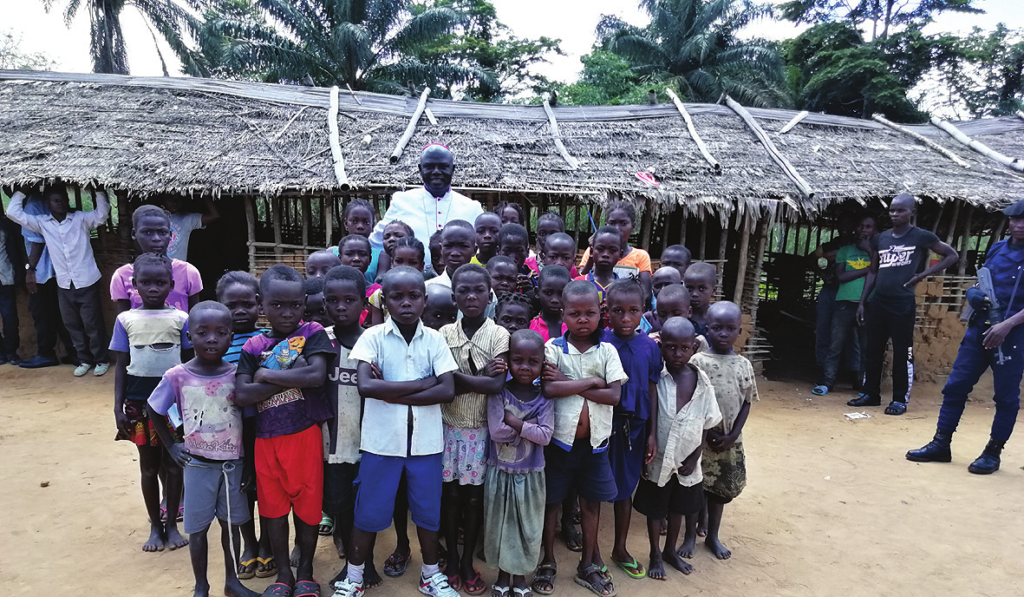
The Democratic Republic of Congo is ranked as one of the poorest countries in Africa. The diocese of Bokungu-Ikela, located in the north-west of the Democratic Republic of Congo, was founded by the Missionaries of the Sacred Heart in 1961 and is an area of real and pressing need.
The population depends on agriculture and livestock for their livelihoods, and on a day-to-day basis, they live hand-to-mouth in precarious conditions.With the diocese coming up to its 60th anniversary, Bishop Toussaint and MSCs in the region are shining the spotlight on the lack of educational facilities in the region.
The Catholic Church is one of the main sources of hope for struggling families in the area, particularly when it comes to education, and our MSCs are doing their best to lay the groundwork to give local children,and generations to come, hope for the future.
Thanks to the generosity of our mission friends here in the Irish Province following last year’s appeal,Bishop Toussaint and his team were able to fund the construction of a school building in Yetsi.
Work is ongoing on the project; however, the school is sorely lacking in equipment as essential as benches and tables. The children can often be seen studying on the floor due to the lack of the most basic facilities,creating additional challenges for students who already have very little, and who are desperately trying to make the best of what they have in order to build a more hopeful future.
Some of the pupils bring their own chairs from their homes. However, many of these children are from homes that have so little, they don’t even have a chair to bring to school.Those children who don’t have them, they have the
floor, where they sit down and follow the teacher.”
– Bishop Toussaint MSC
Even the smallest contribution will help Bishop Toussaint and MSCs in the diocese of Bokungu-Ikela to continue to educate needy children in the region, providing something as simple as a bench and chair where pupils can study and gain a fighting chance for a brighter tomorrow.
CAN YOU HELP OUR MISSIONS IN THE CONGO?
Jan 25, 2021
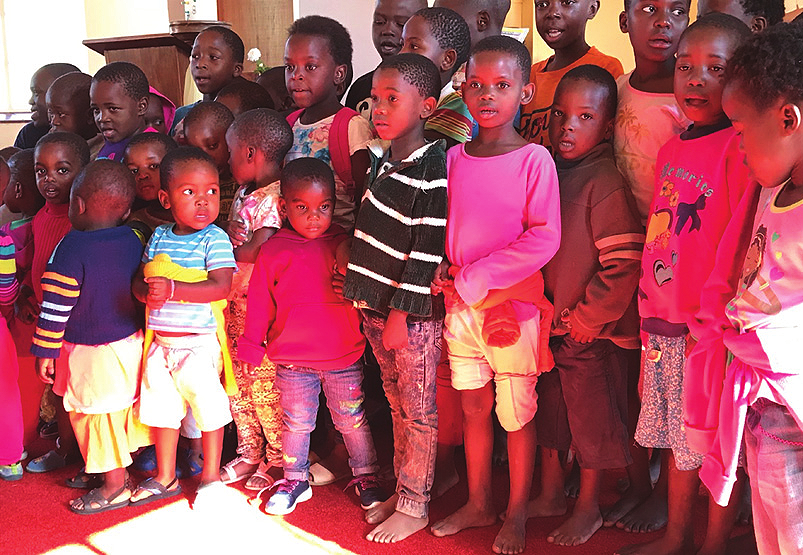
Founded in 2002, the Holy Family Care Centre in South Africa has been run by the Daughters of Our Lady of the Sacred Heart with the support of the MSC for almost 20 years, under the leadership of Sr Sally Duigan FDNSC.
The Holy Family facility provides invaluable care to young children who are seriously ill, and who, in the majority of cases, have been orphaned or abandoned. These children are primarily HIV positive and are in need of specialised care.
“The reasons for admission to the Holy Family Centre vary, but many children have been abandoned, sexually abused, physically abused, orphaned,or made vulnerable because of HIV/AIDS,” says Sr Sally. “Some come from horrific backgrounds and arrive here very ill, malnourished, frightened, lacking social skills, and generally very bewildered.”
The Holy Family Care Centre is, above all, a place of family, unity, and love.
“We love these children unconditionally,” says Sr Sally. “It doesn’t take long for them to feel at home and to change once they feel loved and cared for.”
With the resources to accommodate 70 children, the centre’s facilities are stretched to full capacity and beyond on a daily basis. Today, 76 children are resident at the centre, and of this number, 56 children attend the local primary school.
Last year, due to the challenges brought about by COVID-19, Sr Sally and the Holy Family team made the decision to home school the children for the year.This has proven to be very beneficial for the students, particularly those children with special needs who require extra care and attention.
Now that the school is returning for the new year, the Holy Family children are in need of help. The students need uniforms, shoes, books, pens, pencils,and bags, to prepare for their return to school and to be able to receive an education that will give them a solid foundation for a brighter, more hopeful future.
From pens and pencils to full school uniforms, even a small donation will make a big difference to Sr Sally and the Holy Family team.
Can you help to educate the Holy Family children?
“It is with deep appreciation that I say ‘Thank you!’ In the past year, you have helped our ministries very significantly, and in this time of uncertainty, you are helping us to help people affected by the coronavirus pandemic all over the world.”
“May you be blessed! Be assured of our continued prayers for your intentions, through the intercession of Our Lady of the Sacred Heart.”
Sr Marife Mendoza FDNSC
Congregational Leader of the Daughters of Our Lady of the Sacred Heart
CAN YOU HELP EDUCATE THE HOLY FAMILY CHILDREN?
Jan 25, 2021
The Daughters of Our Lady of the Sacred Heart (OLSH) first began their work in Brazil, in the city of Alfenas, 100 years ago. Today, they continue to help local communities all over the country, wherever and whenever they are needed most.
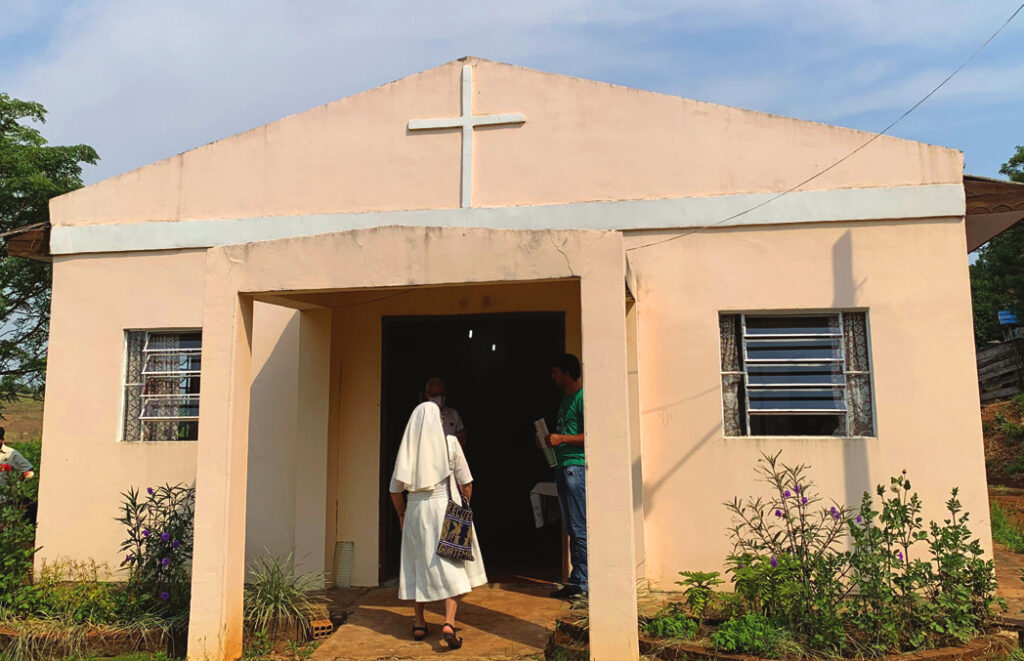
Community cars for pastoral work
OLSH communities in the cities of Barração and Campinas are both raising funds to buy a car each, which will prove invaluable to their pastoral work in local areas.
Sisters in Barração cover a total of 17 mission stations in the city and surrounding area. Some of these stations are located up to 40km away from the city, catering to local farmers and their families who are not able to travel into the city to hear Mass. Sisters in Campinas run a local kindergarten, caring for 296 children from the ages of two to six for eight hours a day. The Sisters here provide food, education, and spiritual care to these vulnerable children, and the school survives on donations and goodwill.
Each of these two communities needs a car at a cost of €5,000, to be able to continue their essential daily work.
Children’s choir in Mirinzal
In Mirinzal, the local children’s choir run by Sr Maria is a safe haven for youths who come from backgrounds of severe hardship. Last year, we helped Sr Maria to buy musical instruments for the choir, and this year, she is asking us to help her to raise funds to buy three wireless microphones for the choir to use during Masses.
€500 will buy all three microphones, allowing the choir to continue to play wonderful music at parish celebrations.
Mass for remote communities
OLSH Sisters in Mirinzal are asking for your help in buying essential liturgical items for Mass, such as missals, chalices, and lectionaries, for three of the 18 mission stations they cover in remote locations across the north of Brazil.
€813 will provide liturgical items for families and individuals across three mission stations to continue to join together in faith and celebrate Mass in their spiritual communities.
Empowering local women
In Alfenas, an OLSH-run social work centre helps 65 families from the region,providing them with essential food supplies once a month. The Sisters here also have a special purpose in empowering local women, enabling them to learn various practical skills, such as sewing, which will help them to earn money and provide desperately needed financial support for their families.
The OLSH Sisters at the social work centre are raising funds to replace a number of tools in their sewing and fabric painting workshops. They need two cabinets and two sewing machines, which will allow them to continue their work in helping local women to learn invaluable skills for self-sufficiency.
€700 will buy items facilitating practical skills that will provide a lifetime of benefits to women and their families in the area.
CAN YOU HELP THE OLSH SISTERS IN BRAZIL?
Jan 21, 2021
The Daughters of Our Lady of the Sacred Heart (OLSH) are a vital part of our Sacred Heart Family, working all over the world, often in partnership with MSCs, under our shared motto:
“May the Sacred Heart of Jesus be everywhere loved.”
CARING FOR THE ELDERLY IN PAPUA NEW GUINEA
In Papua New Guinea, a community of 86 OLSH Sisters provide dedicated hands-on care for vulnerable individuals and families, from young children to the elderly. In the height of the COVID-19 pandemic, financial assistance from the Irish Province allowed the OLSH Sisters in Papua New Guinea to provide extra safety measures in the Hartzer Centre, an aged-care centre attached to the main convent in Port Moresby, the country’s capital, where the Sisters care for elderly OLSH Sisters and MSC missionary priests who have devoted their lives to serving the people of Papua New Guinea.
As we all know, hygiene is one of the most vital defences against the coronavirus, and our mission friends in Ireland and the UK have already helped to provide extra sinks for improved safety measures. The Hartzer Centre has eight rooms for their elderly residents, but the centre does not have a dedicated laundry area of its own, and this creates significant difficulties surrounding hygiene as the centre’s nurses must bring all dirty laundry through the convent dining room to reach the communal washing area.
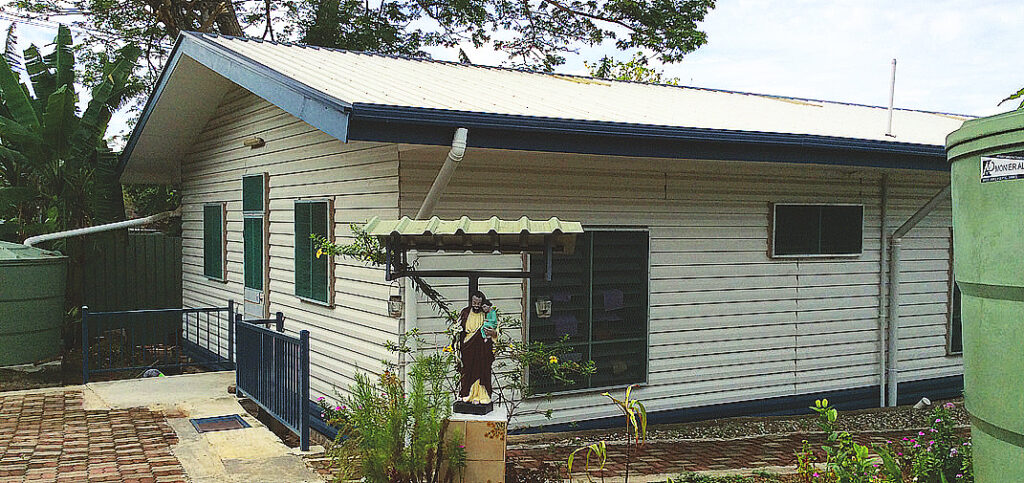
Sr Relida, Provincial of the OLSH Sisters in Papua New Guinea, has sent her “deep gratitude” for the changes we have already helped to make, and now asks if our mission friends in the Irish Province could please help the Sisters to build a small laundry area for the Hartzer Centre, to ensure the continued safety and care of vulnerable elderly residents.
In a time where good hygiene can quite literally save lives, especially in the case of the elderly and infirm, can you help us to help the Hartzer Centre?
A donation of €235 will buy a washing machine for the centre, while the new laundry room will cost €7,100 in total.
SOWING SEEDS FOR THE FUTURE IN SOUTH SUDAN
The Daughters of Our Lady of the Sacred Heart recently marked 25 years of service in South Sudan, where they have been involved in everything from education and nursing to general pastoral work.Most recently, the Sisters have been working to build gardens which will help to provide a stable and sustainable source of food and water to families in the region who have very little.
The gardens contain bores which are drilled and fitted with a pump, a tank, and a watering system.
These gardens are used to grow a variety of vegetables, and, when cultivated to their full potential, will be hugely beneficial in the long-term provision of nutritious food supplies to local families, who are up against a daily struggle to afford to feed their children.
The gardens are an investment which will provide years upon years of profit to local communities, from being a source of nutritious food to providing local students who tend to the crops with the physical and mental benefits of gardening.
CAN YOU HELP THE OLSH SISTERS TO MAKE A DIFFERENCE?