Feb 24, 2020
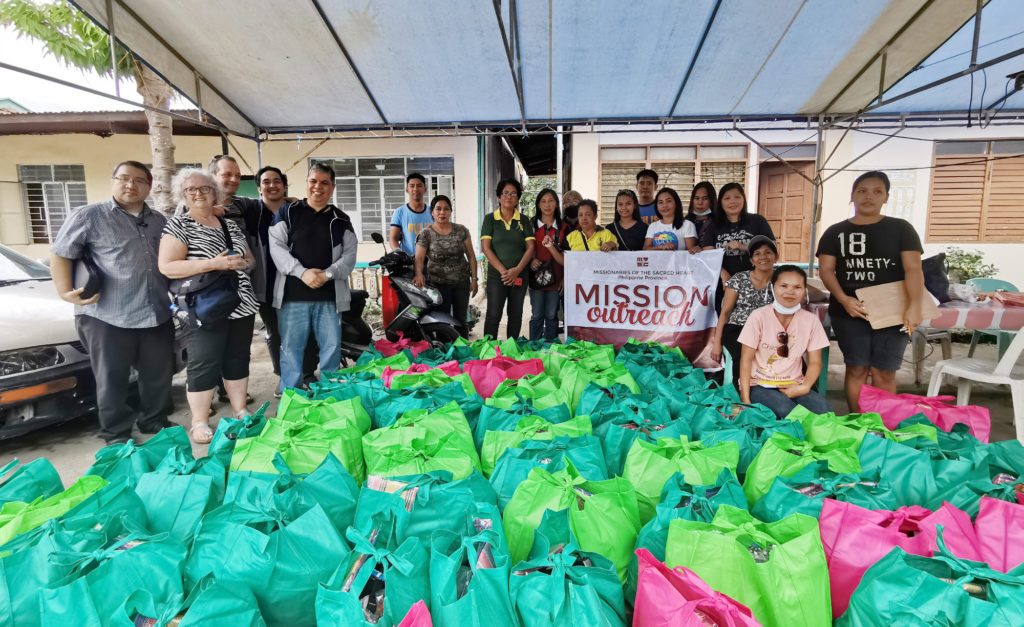
Msc Phillippines shares an appreciative message from their Outreach Programme for for the victims of the Taal volcano eruption earlier in the year where the community of Taal in Batangas were on permanent lockdown.
January 27, 2020 – The MSC Mission Office posted A Call for Donation campaign in various social media platform to gather funds for the project. “With the help of a company, organizations and generous individuals, we were able to collect amount of funds in just a span of few days. We also received handful of grocery items from a private organization who have been very supportive to our missions”. Having enough resources, the office decided to schedule a relief operation as soon as possible.
February 6, 2020 – The MSC Mission Office with the help of the MSC Scholastics & MSC staff started the repacking of relief items for Taal evacuees. A total of 200 families were expected to receive the relief packages which contain of rice, canned goods, noodles, monggo beans, biscuits, dried fish, bottled water, toiletries, bed mat, blanket, towels, pail and water dipper.
February 8, 2020 – The MSC Mission Office Philippines together with some volunteers from various organizations distributed relief items in Bgry, As-is, Laurel, Batangas. Through this project, a total of 200 families received relief packages. In addition, we were able to also give milk supplement and clothing for the children in the evacuation center.
“The evacuees were thankful as they received the relief packages. They had big smiles and were saying endless pasasalamat as they took their own relief goods. We appreciate the help of our volunteers and of course, a million thanks to you our donors for your generosity and support to this project. As we worked together for this Mission Outreach, we became witnesses of Christ’s heart here on earth.
Thank you and God bless us all.”
-Msc Mission Office Philippines.
PLEASE SUPPORT OUR MSC MISSIONS IN THE PHILIPPINES
Feb 20, 2020
The love of a mother is the veil of a softer light between the heart and the heavenly Father.
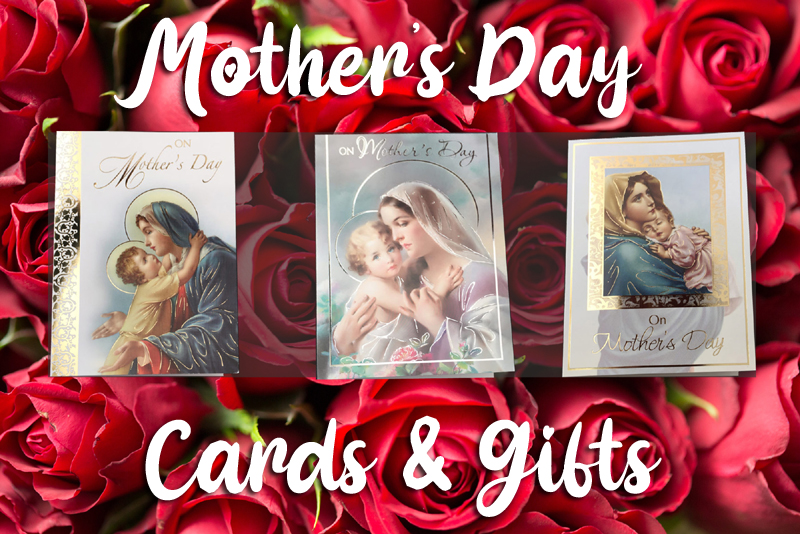
Mother’s day this year falls on the 22nd of March and it’s a great opportunity for us to show our mother some love and gratitude for all she has done for us through the years.
Our beautifully designed Mother’s Day cards all include a thoughtful Prayer for my Mother, and each one includes remembrance in a special Triduum of Masses, which will take place this year from Friday, March 20th to Sunday 22nd March at the Sacred Heart Church on the Western Road in Cork. This is an especially lovely way to remember mothers who are no longer with us, and who memories are carried in our hearts always.
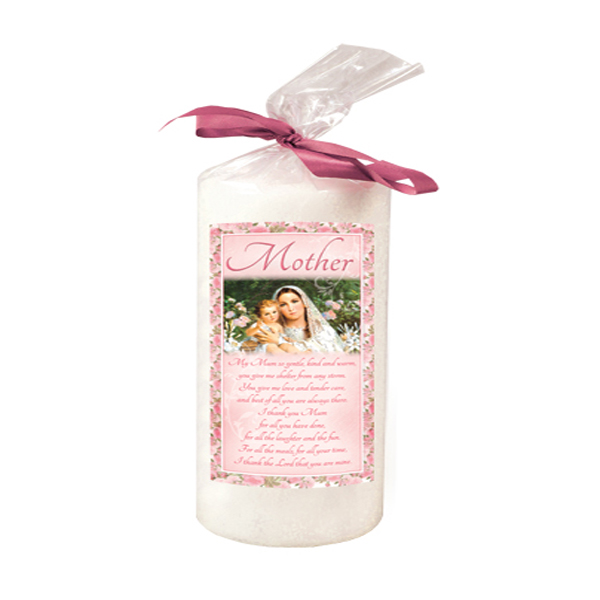
Our special Mother’s Day candle features a poem to celebrate a beloved mother, and is a gift to treasure throughout the year.
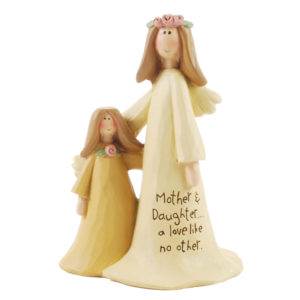
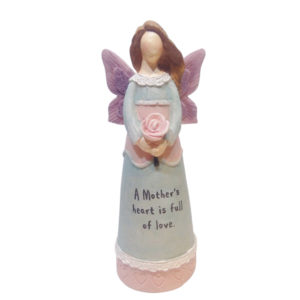
Elegant angel statues inscribed with affectionate messages are the perfect way to show you care.
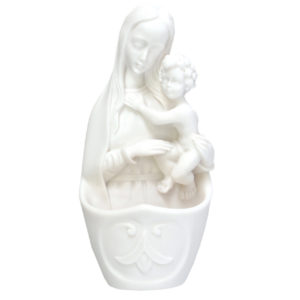
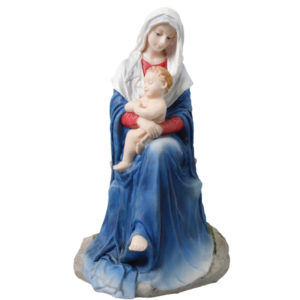
The traditional Madonna and Child image honours maternal love in its purest form. With a white resin holy water font and a hand-painted statue to choose from, these are timeless gifts to celebrate a mother’s love.
Of course, when you choose from our range of Mother’s Day cards and gifts, you’re not just making a special gesture for your mother, but you’re also reaching out to help mothers and their families all over the world. Your support helps us to continue bringing the gift of hope to families and communities in need across the globe. Our MSCs work in regions of extreme poverty and hardship, bringing vital aid to people who have nowhere else to turn, and every order we receive makes a real and valuable difference.
BROWSE OUR MOTHER’S DAY RANGE
Feb 15, 2020
Gospel Reflection
You have learned how it was said to our ancestors;
but I say this to you.
The Gospel (Matthew 5:17-37).

In this reading he gives a new understanding of the commandments believed to have been revealed to Moses on Sinai, and he does this with authority, implicitly placing himself above Moses. He brings out deeper implications of the commandments. To take some examples: With regard to the commandment “You shall not kill (murder)” – murder was a most serious sin, even blasphemy since it destroyed the image of God in a human person. Jesus goes beyond the negative “You shall not” to the positive, highlighting the regard and esteem in which the human person should be held, and the actions deriving from this: forgiveness and reconciliation, absence of anger and insulting nicknames, such as Raca (an obscure term of abuse), fool or renegade. (These terms of abuse must have been considered very insulting in the original Aramaic setting, given the severe punishment attached.) Jesus goes beyond adultery, to impure thoughts and desires. He goes beyond the permission to divorce to a complete ban on divorce; beyond the permission and practice of taking oaths to advice to avoid all oaths, and lead a simple life where one’s word should be sufficient guarantee. Jesus’ purpose in all this is made clear at the end of this comparison with “those of ancient times”, when he says:
“Be perfect, therefore, as your heavenly Father is perfect”
In Sirach’s (Ecclesiasticus’, from which first reading is taken) day the question was implicitly put: “Can we keep the commandments”, and answered categorically in the positive by that sage. Similar questions have been put with regard to the Sermon on the Mount, and indeed with regard to many tenets of Catholic moral teaching. Indeed many have complained that the teaching of part of today’s Gospel reading, from the passage “Do not kill” down to “Do not commit adultery. In this context the words of Dostoevsky’s Grand Inquisitor are recalled, to the effect that “Jesus judged humanity too highly”, for “it was created weaker and lower than Christ thought”. With regard to this we may note that this reading, apart from the ban on divorce, is not a law code. Rather is it a presentation of the nature of the kingdom of God, of Christ’s kingdom, and of the perfection to which those within it are called. The passage clearly states that with Jesus a new age has come, and his followers are called to be witnesses to this new age in their way of life. Another matter discussed today is whether we can live in keeping with the Gospel message, or with the morality as taught by the Church. Christ was once addressed a similar question, to which he replied:
“For God all things are possible”.
Fr Martin McNamara MSC
Feb 10, 2020
“A rich world and vibrant economy can and should end poverty”
Pope Francis calls on economists and Financial leaders during his impromptu conference in the Vatican last week. His holiness stated in his talk of “New Forms of Solidarity” that “modern resources make ending global poverty possible” an “outdated financial structure is endangering our planet and dividing our societies.”
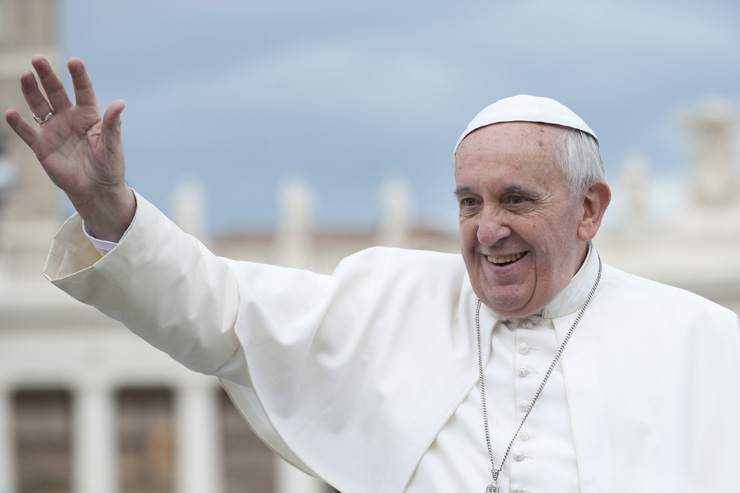
Presenting keynotes at the conference were- the Managing Director of the International Monetary Fund (IMF) Kristalina Georgieva, Nobel Laureate Economist Joseph Stiglitz, and Columbia University Professor Jeffrey Sachs. Off the record, Sachs delivered a speech on “Restoring the Ethical Foundations of Economics,” .
“You, who have kindly gathered here, are the financial leaders and economic specialists of the world, you know firsthand what are the injustices of our current global economy, or the injustices of each country. Let’s work together to end these injustices” Francis told them.
This solidarity conference has taken place ahead of the upcoming International summit “The Economy of Francesco” — named for the the pope’s patron, St. Francis of Assisi. This conference will bring 2,000 young economists and entrepreneurs together in Assisi March 26-28 to explore alternatives to the current global economic system that will be of more help to the poor and environment.
Amartya Sen and Muhammad Yunus ,Nobel laureate economists, will provide the opening statements of the International summit.
“The 50 richest people in the world have an equity equivalent to 2.2 trillion dollars. Those 50 people alone could finance the medical care and education of every poor child in the world, whether through taxes, philanthropic initiatives or both. Those 50 people could save millions of lives,” Francis told the conference. “If there is extreme poverty in the midst of wealth – also extreme wealth – it is because we have allowed the gap to widen to become the largest in history,” he added.
“If there is extreme poverty in the midst of wealth – also extreme wealth – it is because we have allowed the gap to widen to become the largest in history,” he said.
“A new ethic means being aware of the need for everyone to commit to work together to close the fiscal lairs, avoid evasions and money laundering that steal from society, as well as tell the nations the importance of defending the justice and the common good over the interests of the most powerful companies and multinationals – which end up suffocating and preventing local production,” he stated.
“Hundreds of millions of people are still mired in extreme poverty and lack food, housing, medical care, schools, electricity, drinking water and adequate and indispensable sanitation services. It is estimated that approximately 5 million children under 5 this year will die from poverty. Another 260 million children will lack education due to lack of resources, due to wars and migrations,” the pope said and “These realities should not be cause for despair, no, but for action.”
Referenced from www.catholicworldreport.com
Feb 4, 2020
Young boys and girls all over the country are getting ready for their First Holy Communions and Confirmations that are coming up soon and here at MSC missions we have a wide range of gifts for them to remember their special day.
From gold-foil embossed cards to a specially selected range of gifts, you’ll find the perfect keepsake to mark the big day.
Our beautifully designed Communion and Confirmation cards each contain a prayer for the child celebrating the sacrament, and those named in each card will be remembered in the Masses and prayers of our MSC priests at this special time.
From prayer books and missals to photo frames and albums, our collection of gifts and keepsakes has something for everyone.
Our First Holy Communion and Confirmation sets make a wonderful gift with all of the essentials to celebrate the day. Choose from a boy’s, girl’s, or classic white set, each one containing a prayer book, a set of Rosary beads, and a pendant or rosette.
Our classic Roman Missals are an ideal gift for a special Confirmation Day, with elegant gold highlights and gilt-edged pages. Choose from a pure white or dark blue cover, which is also made with Balacron for extra durability.
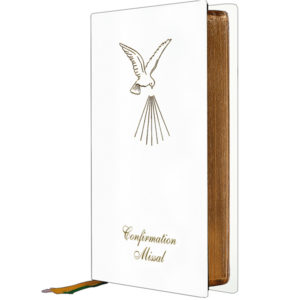
Of course, no Communion or Confirmation day would be complete without photographs to mark the occasion! From decorative resin to classic silver-toned photo frames, you’ll be sure to find a lovely way to display treasured memories of a very special day.
Remember, when you choose from our range of cards and gifts, you’re not just making a special gesture for a loved one, but you’re also reaching out to help vulnerable children across the globe. Your support helps us to continue bringing the gift of hope to families and communities in need all over the world. Our MSCs work in regions of extreme poverty and hardship, bringing vital aid to people who have nowhere else to turn, and every order we receive makes a real and valuable difference.
BROWSE OUR COMMUNION & CONFIRMATION RANGES
Feb 1, 2020
The MSC Center for the Poor in the Philippines initiates a project called “Beat the Plastic” in Butuan. “Small-scale activities in respond to global warming may not be the ultimate solution but surely will give a big impact to our environmental problem” says Fr Ritchie Gomez MSC community leader. The Center bought a Plastic Pulverizer & Densifier Machine that makes Plastic Trash into Bricks or Flower Pots .
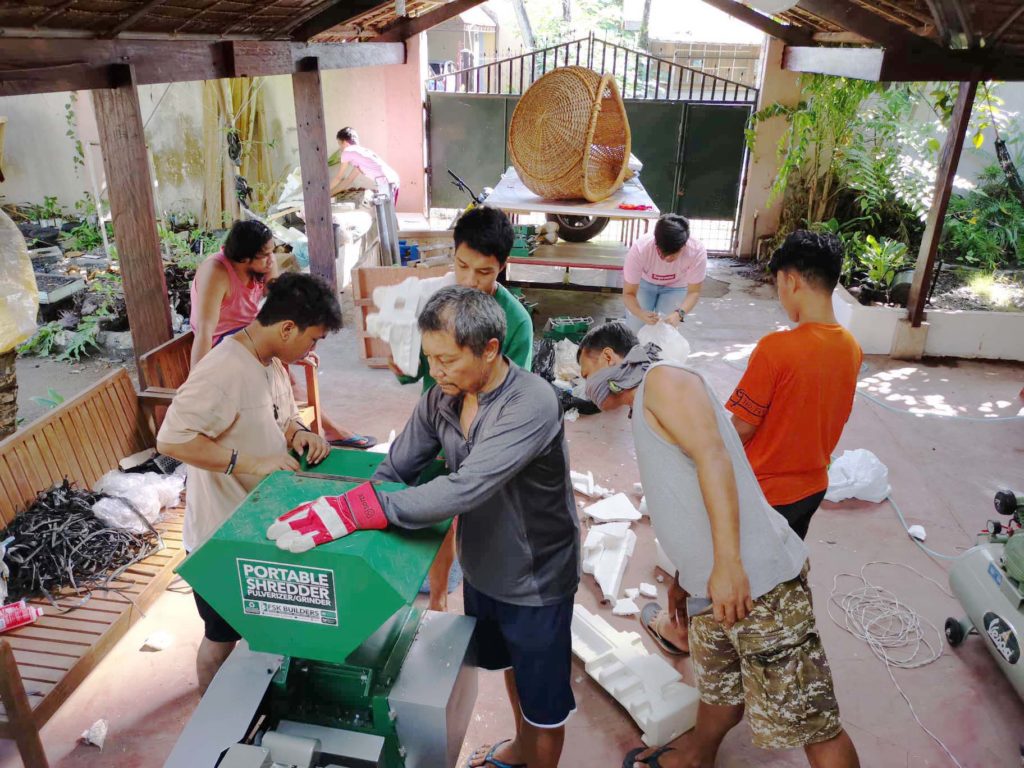
Butuan Beat the Plastic project in operation.
“During preparation, we have to properly collect used cooking oil from establishments or household kitchens, instead of throwing them away to the sink or canals that may cause cloggings. Garbage styro foams and plastics (washed/clean/dry) will also be needed. ”
“We hope for greater efforts and unity towards a sustainable environment that will also benefit human beings.”
A single resident in Butuan produces an average of .7 kilograms of waste a day. Hence, 8,400 to 8,600 tons of garbage is accumulated in every City across the country everyday. This is 25% of the country’s daily solid waste generation of 35,000 tons.
About half of the garbage is bio-degradable waste such as food scraps, leftovers, and animal carcasses. About 17% are paper and 16% are plastics. The rest are discarded metal, ceramics, rubber and leather.
The social costs of wastes are not managed wisely and are devastating. Ill effect of peoples’ health, socio economic condition, coastal aquamarine environment, and climate is observable. Slum communities generally emit smelly, disgusting, filthy, yucky and revolting putrid smells. Flies and rats abound and hence endless health problems. On the other hand, if managed wisely, these wastes can be turned positive. Indeed, somebody’s waste can be another’s treasure (concept of Zero Waste).
When God created the world, everything was good and has its own purpose and interconnected harmoniously. The concept of “waste” or “garbage” is human’s – a clear damage of the integrity of creation. The extent of the destruction has reached a level where human kind is threatened of its meaningful existence. All the streams and rivers within our cities are considered dead. Half a century ago, these waters were the source of life for the people. These days these rivers cannot sustain any life.
Ownership of land in the rural areas and in the urban centers is concentrated on few families pushing the majority in the margins such as riverbanks, under the bridge, on the beach front, and in the side streets. Slum living is the life condition of the majority in the urban centers in the Philippines.
“Beat the plastic” is hope for the Butuan community to organise their community and gather their collective efforts to carry out the following:
1. Education on the integrity of creation .Restoring the integrity of creation calls for a “new vision” and a “new heart.” Genesis 1:2 tells us that everything in the world that God made was good, beautiful and fruitful. And humankind was made as stewards of this beautiful creation. The need to respect all beings which constitute the world – humans, plants, animals, birds, air, water, etc. shall be promoted. This respect prevents humankind from using the elements in our environment indiscriminately, according to what we want. The delicate balance must not be disturbed. Otherwise, all forms of life are threatened.
2. Zero Waste and Segregation/Garbage Management
Garbage must be managed from its source. Industries need to ensure that when things go out from their sites, these are not poison to living things. Households need to manage wisely the kitchen refuse for greater value. But these facts remain to be campaigned vigorously and militantly. Consumerism has pushed the people into wanton buying and disposing. Overproduction of goods has flooded the earth with lots of junks.
Zero waste – Nature is designed as a zero-waste system. Every out- put is someone else’s input. There is no such thing as waste in nature. By contrast, the human economy is full of waste: waste that is produced while sourcing from nature. Only tiny fractions of our waste are being cycled back into a closed-loop system of reuse.
3. Ecological Balance
Caring for creation includes acceptance of the fact that natural resources are limited. Some are not renewable. Using them as if they are inexhaustible, with absolute dominion, seriously endangers their availability not only of the present generation but above all for generations to come. Care for the sustainability of the material environment is also caring for our fellow human beings who will come after us. A sense of solidarity with future generations should move us to care for our environment now.
PLEASE SUPPORT OUR MSC MISSIONS IN THE PHILIPPINES