Dec 16, 2024
MSC CHRISTMAS RAFFLE 2024
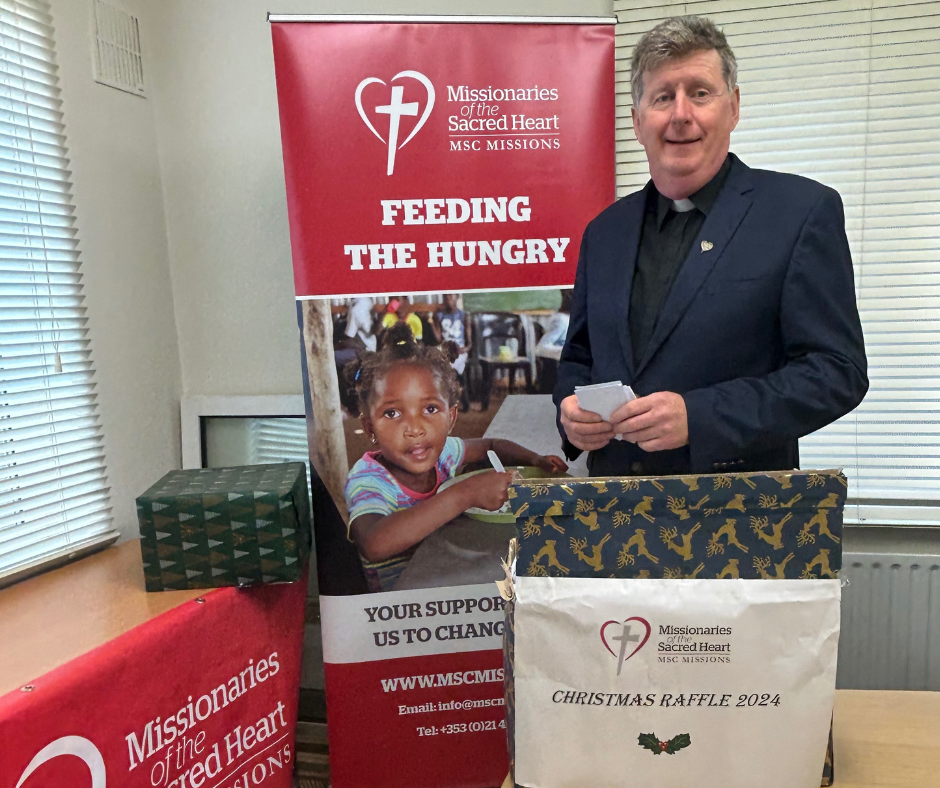
🌟🎄 Christmas Raffle Prize Winners:🎄 🌟
1st Prize: Shopping voucher to the value of €1,000
P Booth,
Portlaoise,
Co Laois.
2nd Prize: Jingle Bells & Whistles Luxury Hamper value €500
McSweeney,
Mallow,
Co Cork.
3rd Prize: All I want for Christmas Hamper value €400
M Cummins,
Clonsilla,
Dublin 15.
4th Prize: Festive Feast Christmas Hamper value €300
F Hendrick,
Enniscorthy,
Co. Wexford.
5th Prize: Christmas Eve Luxury Hamper value €200
K Lavin
Ballymote,
Co. Sligo.
6th Prize: Christmas Eve Luxury Hamper value €200
M Kenny,
Killarney,
Co. Kerry.
7th Prize: Christmas Eve Luxury Hamper value €200
M Dawson,
Letterkenny,
Co. Donegal.
8th Prize: Christmas Eve Luxury Hamper value €200
M Neary,
Kilkenny,
Co. Killkenny.
9th Prize: Christmas Eve Luxury Hamper value €200
P Delaney,
Dundrum,
Co. Tipperary.
10th Prize: Christmas Eve Luxury Hamper value €200
F Flannery,
Nenagh,
Co. Tipperary.
Special Seller’s Prize: Christmas Eve Luxury Hamper value €200
W Carroll,
Cobh,
Co Cork.
⭐
This year’s Christmas Draw took place on Monday, December 16th 2024.
We would like to extend a sincere thank you to everyone for taking part.
Please click here to read a special Christmas message from Fr John.
Please note that the MSC Missions Office will be closed over the Christmas period,
from 3.00pm on December 23rd to 9.00am on January 2nd.
With warm wishes to our mission friends everywhere for a happy, healthy, and safe Christmas season.
Dec 5, 2024
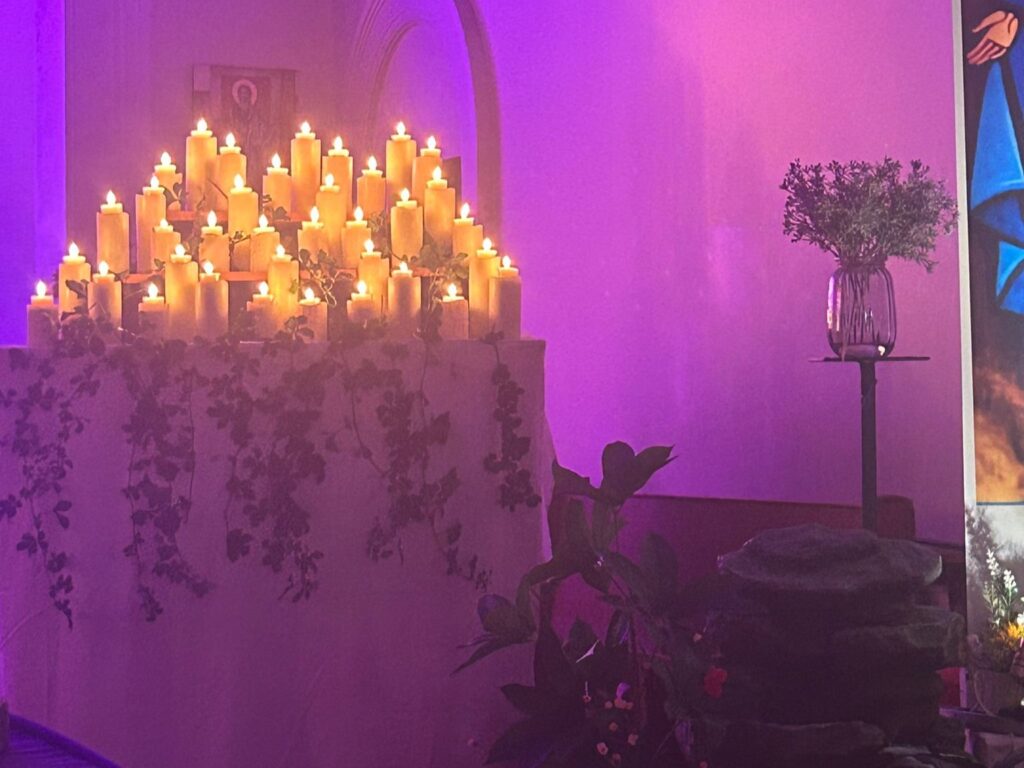
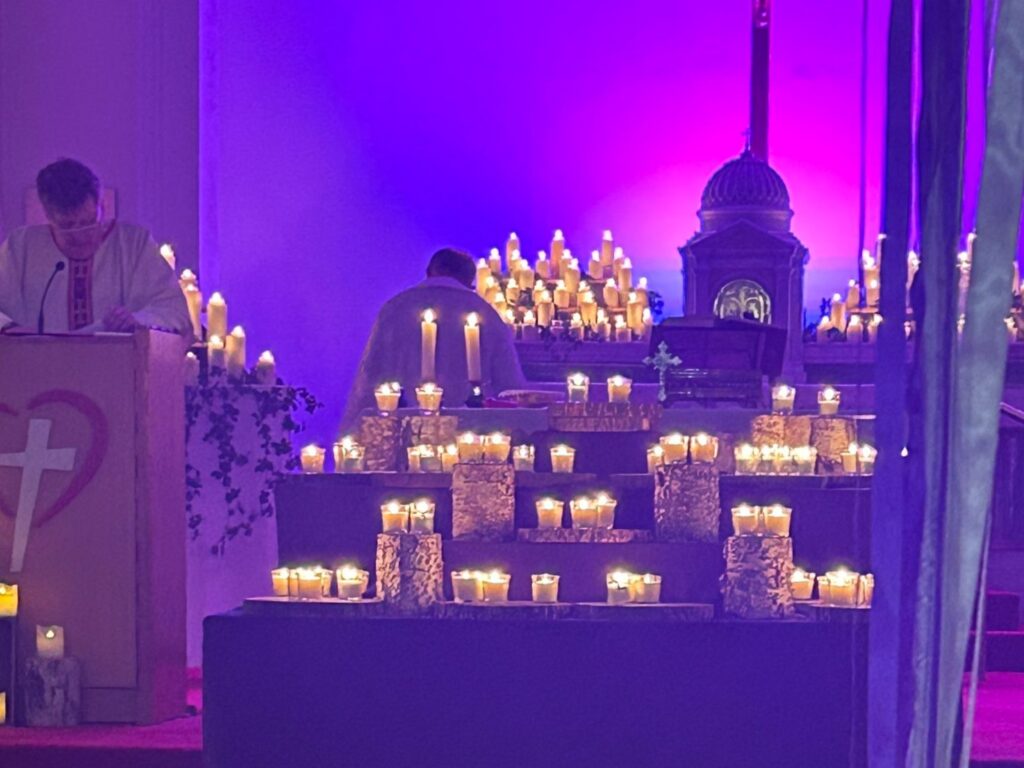
On Saturday, November 23rd, we brought the Month of the Holy Souls to a close with a beautiful candlelight memorial in tribute to loved ones who have gone before us at our annual Light Up a Memory Mass. This year marked the tenth anniversary of what has become a much-loved and highly anticipated tradition each year, and once again we lit up the Sacred Heart Church on the Western Road, Cork, with the flame of remembrance and the everlasting warmth of treasured memories.
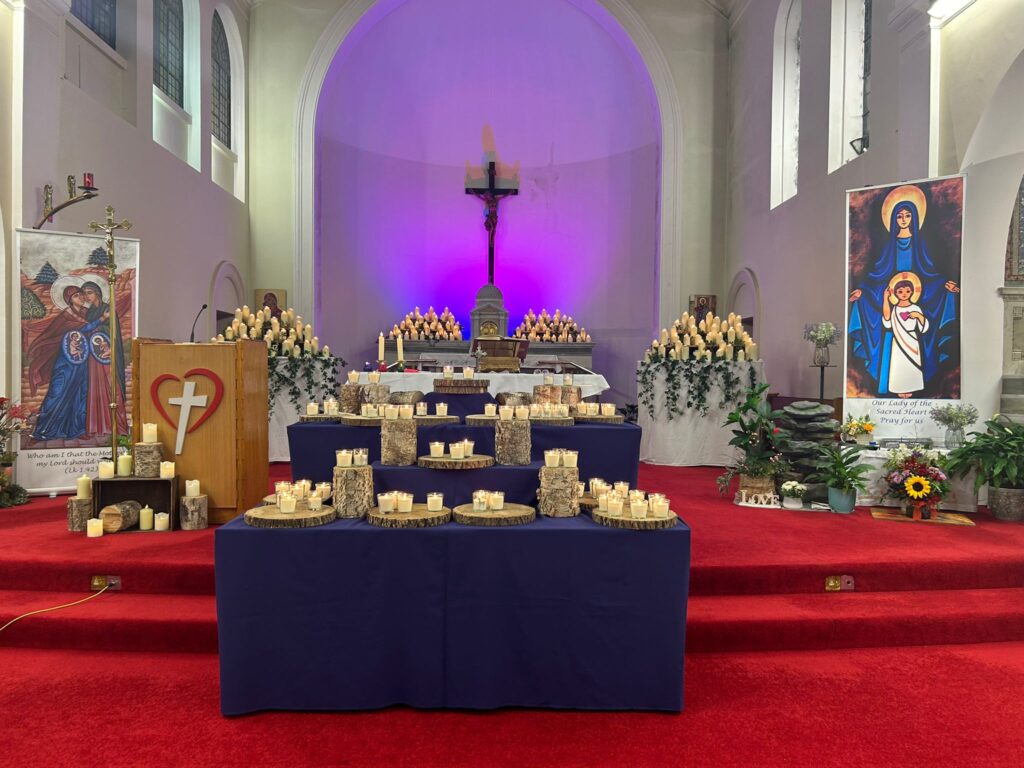
November weather was out in full force with stormy conditions all round, but that did not deter local mission friends and parishioners from joining us at the Sacred Heart Church for a truly special evening of music, reflection, and prayer in honour of loved ones who have gone before us in the Lord’s eternal embrace. Almost 900 people also joined us via our live stream to remember and pray with us, from Ireland, the UK, and Europe, to Canada, the United States, and the Philippines.
An evening of love and goodwill
Fr John Fitzgerald, director of the MSC Missions Office, celebrated this year’s Mass with Fr Con Doherty and Fr Seamus Kelly, and opened this year’s ceremony by speaking of what the annual Light Up a Memory ceremony means. “We in the Missions Office next door to this church, where we communicate with so many benefactors, so many helpers, so many people who keep our missions going… where we try to look after as many projects as we can in different places… we make a promise, every year, that apart from having the Novena to the Holy Souls, as you’d find in most churches, we promised that we would always have a ceremony towards the end of the November, a Light Up a Memory Mass for your dead, for my dead, and for the dead who have no-one to remember them at all.”
“When I looked here about 15 minutes ago, there was hardly anyone in the church really, a few stragglers getting to know each other,” said Fr John. “Then a nice crowd arrived, considering that here in Cork tonight, just to let the whole world know, that it is something like 15 degrees, so it is very warm, but we’re in the middle of a storm that’s going to finish tomorrow so it’s not a night really for the faint-hearted! I congratulate the people who have made their way here tonight, it is great, but I am also very aware of so many people tonight who are at home and listening to us, not only from Cork, but from all over the place.”
As the Mass progressed and the candles were brought to the altar, Fr John once again remembered those joining us in spirit from home, saying, “I am also very much aware of yourselves at home… I know you wish you could have brought your own candle tonight, but we have plenty of love to go around for you, we have plenty of goodwill, because we know what it is.”
A language of the heart
Reflecting on loss and grief, Fr John spoke of the language of the heart – the mourners who tell us they are heartbroken, the sympathisers who say that their heart goes out to the bereaved, those who come to a funeral with heavy hearts. “We should not take that sort of language for granted,” reflected Fr John. “It is a sort of an explanation of what has happened, or that description of a feeling. Heart language is a beautiful way of speaking to grief, to loss, to love, and to pay sympathy to somebody else… It is a language to do with a healing of the heart, the love of the heart and the heart of Christ, and it is a language of hope. Heart language is a language of hope. So here in the Sacred Heart Church tonight, on this big night for us who promised we would pray for the dead, we believe in the power of the risen Christ and the promise of the hereafter – we believe in that. And we believe in the language of the heart when we deal with loss, with grief, with healing, and with joy as well when we try to move on.”
“We are invited to be a people of hope.”
In a lovely personal moment, Fr John shared the importance of also being able to move on and look ahead in life, even as we carry the love and sorrow of loss that never fades away. “My father is dead for many years,” he explained, “and there was a family friend one time, I was giving her a drive, and when I had my hand up on the gear lever, she said to me – ‘Oh,’ she said, ‘you have freckles on your hand like your father.’ She said, ‘I remember his hands, he had freckles on his hands, and he had a scar on his finger’ – which he had. And I then kind of funnily said, ‘Well, I have a scar on my thumb.’ And she said, ‘Yes, well we all have to carry our own freckles and our own scars.’ So, there is this kind of a movement, that while I was thrilled that I had a scar like my father, she was saying, well you have to get on with your own troubles and your own freckled life – so, you know we have that little thought as we move out of here tonight.”
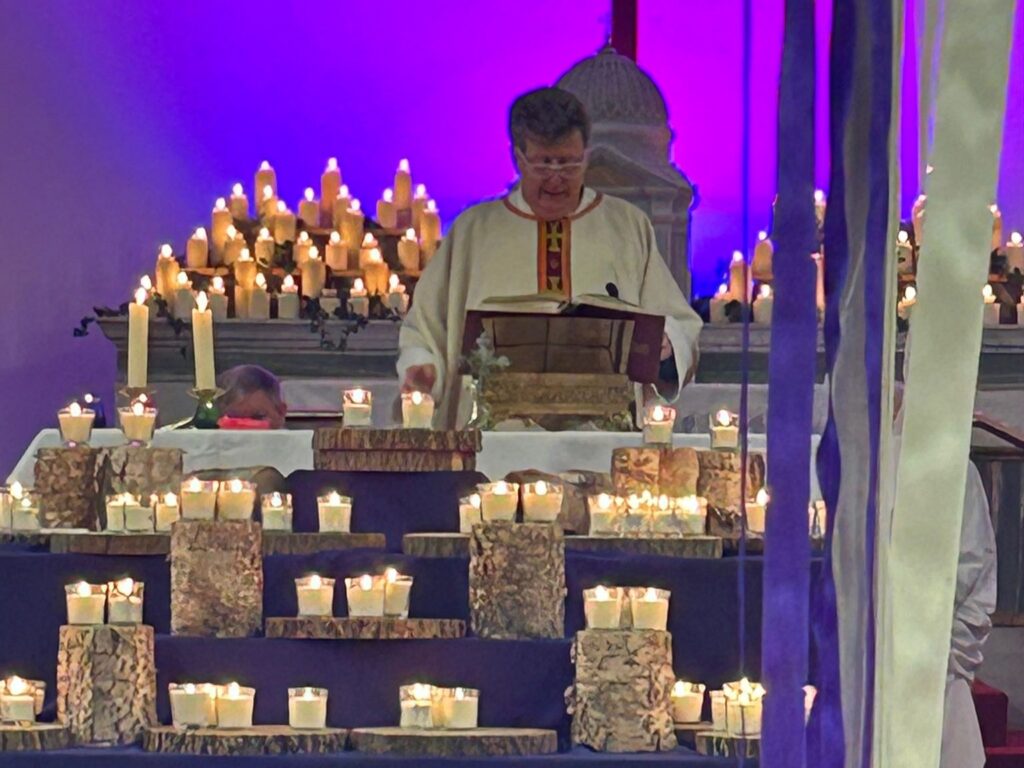
This year’s Mass once again featured a wonderful musical accompaniment from Gerry and Deirdre Tuohy, while Fr John’s homily incorporated a selection of poems and prayers, each one a fitting reminder of the power of grief, of faith, and of love everlasting as he prayed for those we have loved and lost, and for those who have nobody to remember them at all.
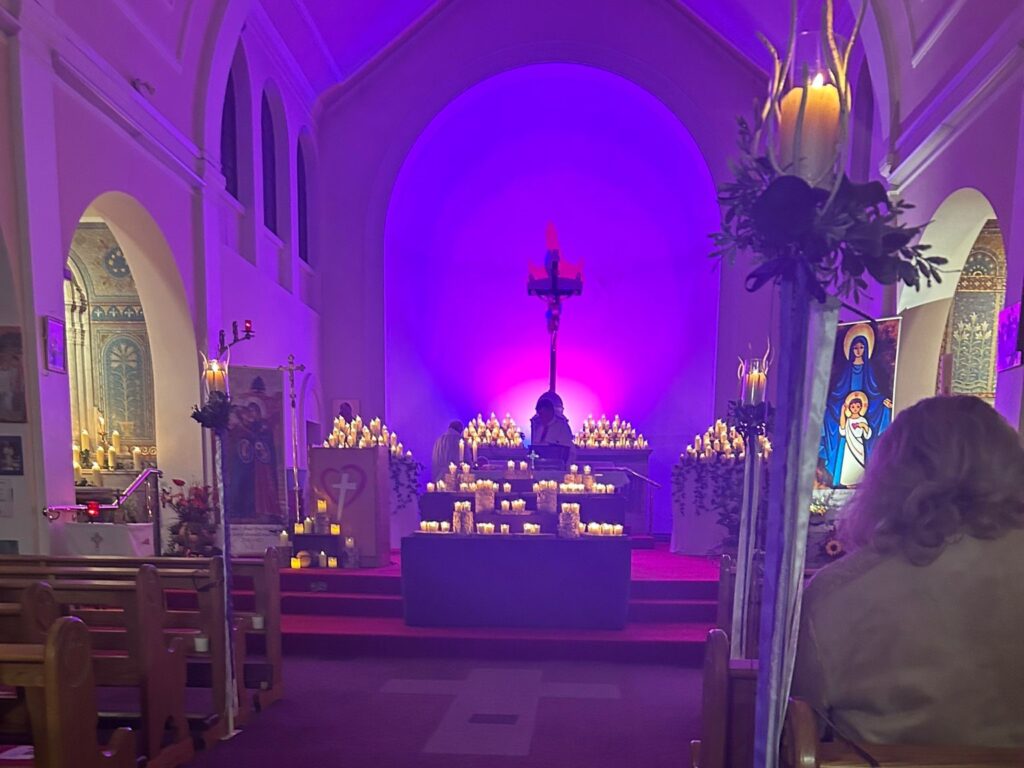
Bringing the ceremony to an end, Fr John prayed for protection, grace, and hope on this sacred night: “We are not far from the Kingdom of Heaven itself, and we are here very close to it in the kingdom of this world. So, we are invited to be a people of hope, a people who listen to the voice of God, and a people who can be assured that our dead are in the hands of God.”
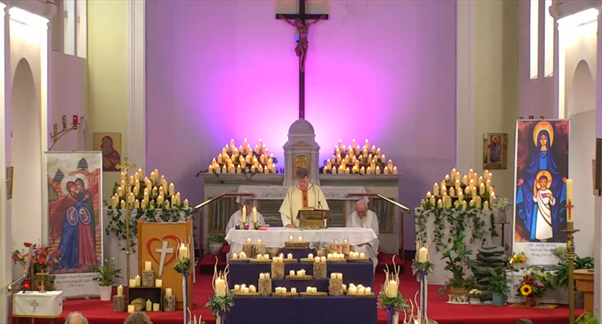
We would like to extend our heartfelt thanks to all who took part in this year’s Light Up a Memory celebrations, in the Sacred Heart Church and beyond. All of us, and one point or another, in one form or another, have been touched by grief, and our annual Light Up a Memory Mass is always a very poignant and moving way for us to commemorate treasured memories of those we hold dear, while praying for healing and hope in our hearts as we navigate life without them, carrying memories and generations of love and remembrance down throughout the years. Sincere thanks to all who took part in this truly special evening of prayer, reflection, and fond remembrance on the tenth anniversary of this very special ceremony – may God bless you all.
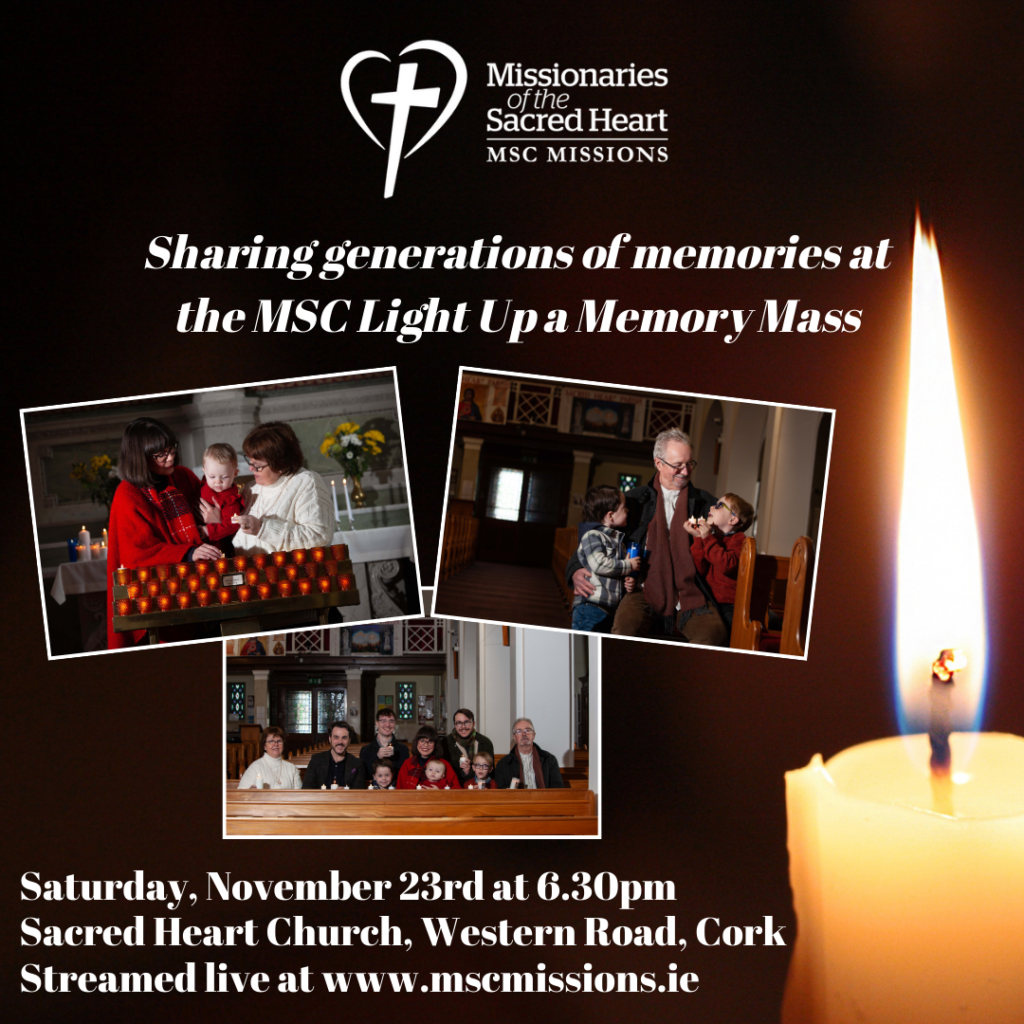
Please click here to watch a recording of our 2024 Light Up a Memory Mass.
Nov 28, 2024
“The invitation is open to all, so what’s keeping you?”
Do you sometimes feel that you’d like to do something different, something more?
What better way to embrace the spirit of faith, hope, and love than by joining us on our
2025 MSC pilgrimage to Lourdes in May?
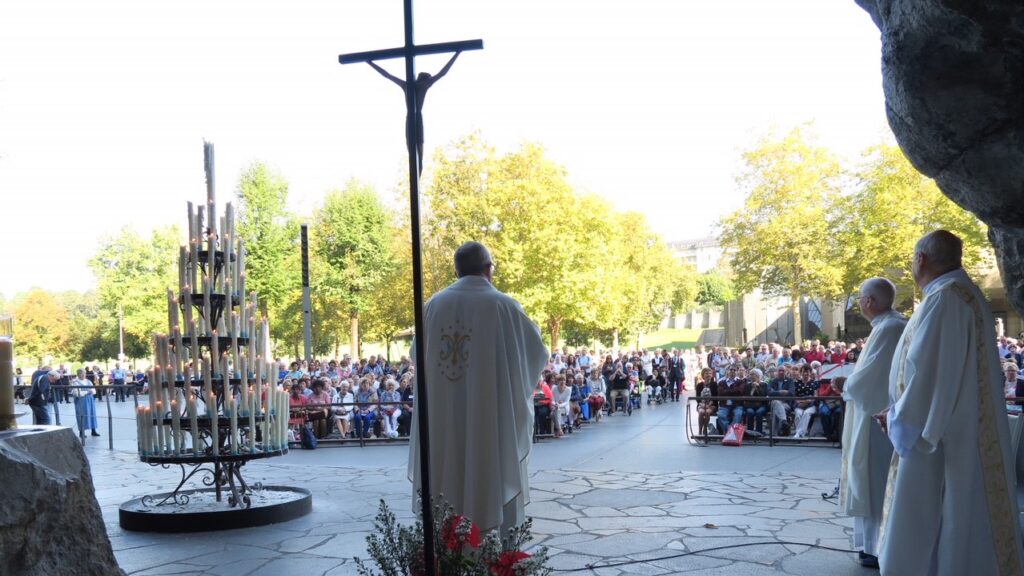
A Jubilee Year of Hope: MSC Pilgrimage to Lourdes 2025
2025 marks the Jubilee Year of Hope, and the Missionaries of the Sacred Heart invite you to celebrate this special year with us on our annual MSC pilgrimage to Lourdes. From May 25th to 30th, Provincial Leader and Spiritual Director Fr Joe McGee MSC will lead our pilgrims on a five-day journey of reflection, prayer, and thanksgiving, with accommodation and daily meals included (ex. Cork). To find out more about how you can take part, please contact mary.morrish@mscmissions.ie or call 021 4546691.
Please click here for full details of our 2025 pilgrimage to Lourdes
Every year, people travel with us on pilgrimage for different reasons. Some may be struggling with illness, grief, stress, or other personal challenges. Other wish to take part in a traditional pilgrimage journey with like-minded travellers, sharing stories, experiences, and reflections on life. Many wish to simply pray, reflect, and offer thanksgiving for their blessings.
The experience of pilgrimage is different for every individual; the major common denominator, however, is joy, and an awareness of something bigger, of something more. A sense of something special comes into being on a pilgrimage; the Holy Spirit moves amongst those making the journey, while strangers become friends and unite in the solidarity of faith. Community spirit comes out in force – no matter where you may find yourself in the world, the message of God’s love overcomes all cultural barriers in a true celebration of faith, togetherness, and intimacy with God.
Please click here for full details of our 2025 pilgrimage to Lourdes
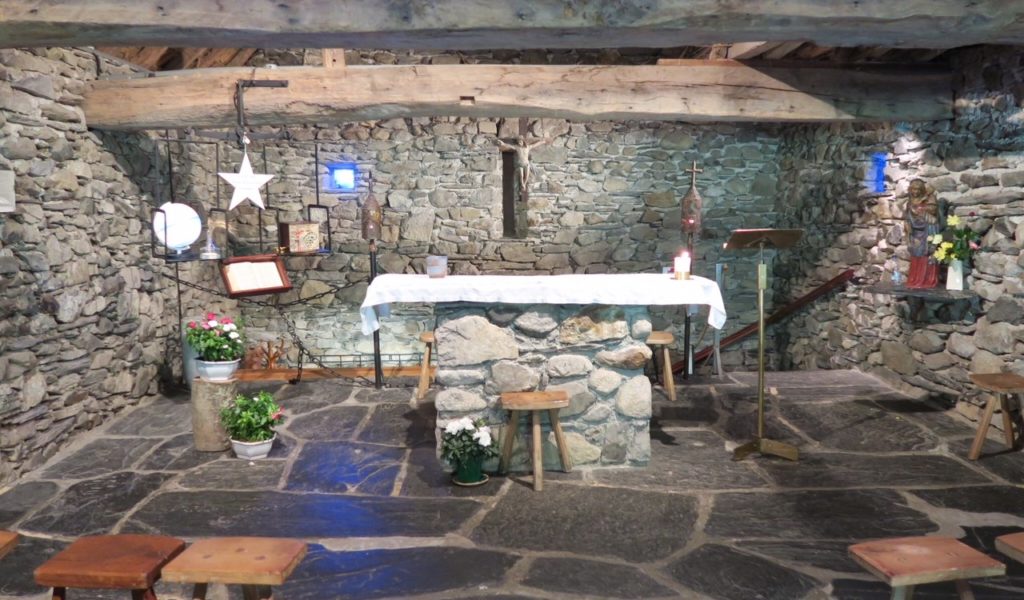
“A powerful, life-changing experience.”
Historically, pilgrims would leave their homes, their families, and all of their creature comforts, embarking on journeys that could stretch to hundreds of miles with nothing but what they could carry on their backs. Today, the circumstances of pilgrimage may be less extreme, but they are nonetheless powerful for it, and modern-day pilgrims continue to leave their homes and their daily comforts behind in the quest for spiritual fulfillment.
“Pilgrimage is about freedom,” says Fr Alan Neville MSC. “It’s about walking to the horizon – and when you get there, you keep on going. It’s about taking part in something that is at the same time enjoyable and profound. I’ve yet to meet one person who regretted making the trip. For every one of them it has been a powerful, even life-changing experience. The invitation is open to all, so what’s keeping you?”
If you’d like to find out more about the pilgrimage experience, you are welcome to read all about some of our previous pilgrimages to Lourdes. All are welcome to take the first steps towards another wonderful pilgrimage journey with us over the coming months, and make 2025 a year to remember for all the best reasons.
Read more about our MSC Pilgrimages
A Jubilee Year of Hope: MSC Pilgrimage to Lourdes 2025
2025 marks the Jubilee Year of Hope, and the Missionaries of the Sacred Heart invite you to celebrate this special year with us on our annual MSC pilgrimage to Lourdes. From May 25th to 30th, Provincial Leader and Spiritual Director Fr Joe McGee MSC will lead our pilgrims on a five-day journey of reflection, prayer, and thanksgiving, with accommodation and daily meals included (ex. Cork). To find out more about how you can take part, please contact mary.morrish@mscmissions.ie or call 021 4546691.
Please click here for full details of our 2025 pilgrimage to Lourdes
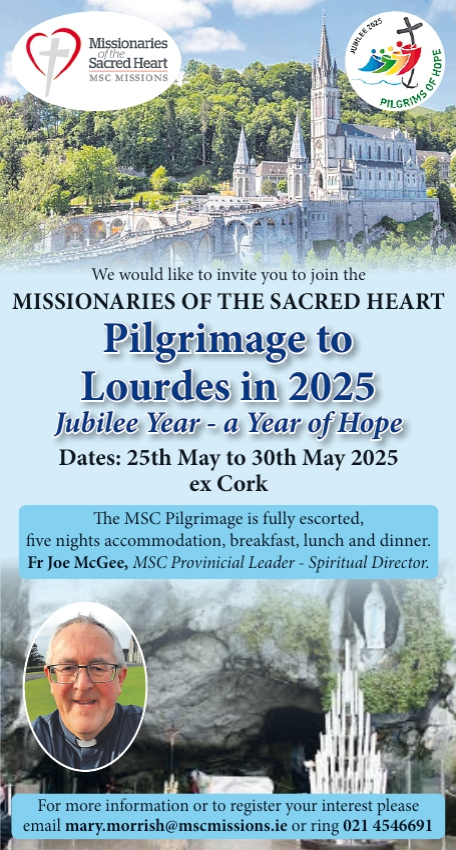
Please click here for full details of our 2025 pilgrimage to Lourdes
*
Nov 28, 2024
November is a busy month in Rumbek. We are coming to the end of the year and students are preparing for their final exams. Before all that can happen, we had our graduation with our Senior 4 students. It is a time of sincere gratitude for all that has been achieved, for the sacrifices that were made, the work that was done. This year, 78 students graduated from Loreto, our largest number yet, and their families came from all over to celebrate their daughters’ success. It was day of speeches, prayer, and dancing.
No sooner had we tidied away the marquees and cleaned up the bunting, then it was down to the Primary School for our First Holy Communion Mass. Over the course of the year, these boys and girls attended special classes on Saturday mornings with Sr. Priyanka to prepare. They learned about the life of Jesus and his followers, the gift of the Eucharist given by God to all his people, and they practised their prayers in both Dinka and English. This First Holy Communion Day was a low-key affair by Irish standards, but was both joyful and heartfelt.
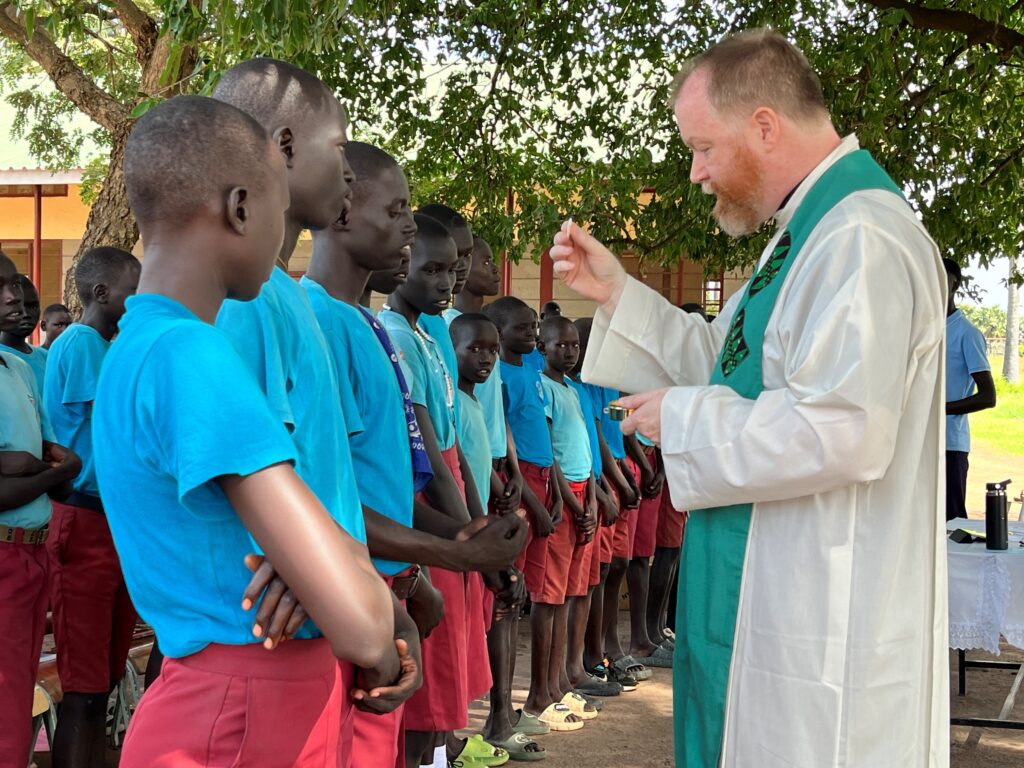
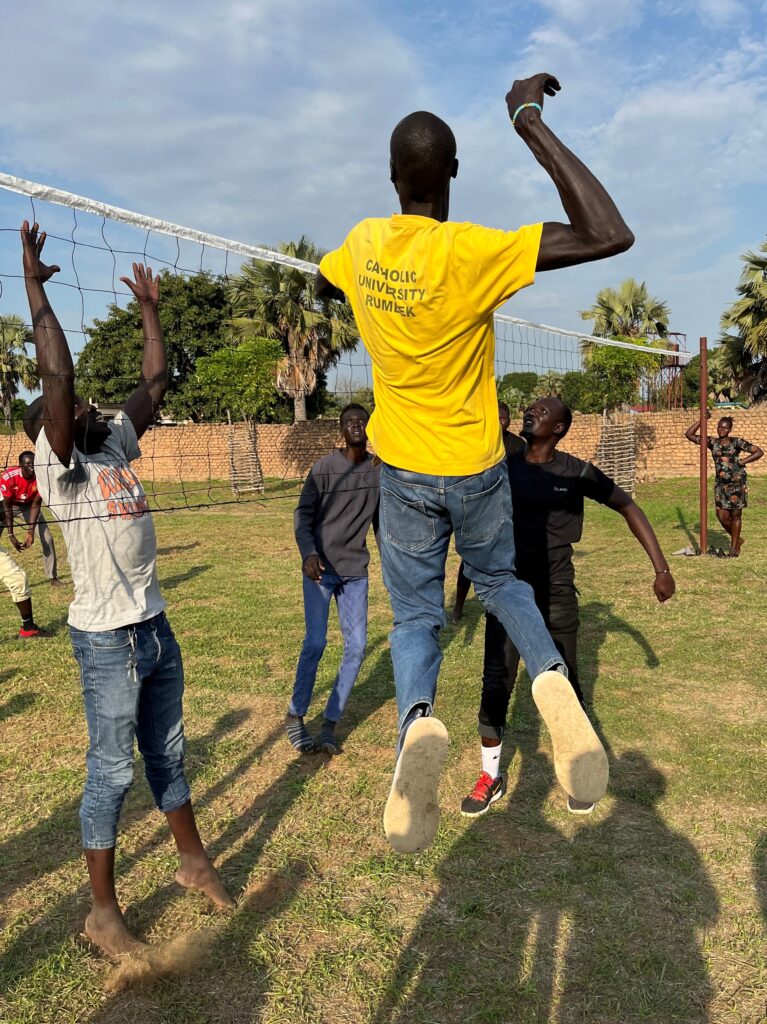
While the schools are winding down, the Catholic University is only getting started on our academic year. We are welcoming our largest cohort of students yet. It’s a real gift to have so many young women and men committed to further education and to raising up their country as future entrepreneurs and teachers. We now have well over a hundred students spread across three degree courses. In the midst of studies covering economics, African literature, and Catholic social ethics, there’s always time for fun, such as a friendly volleyball match between our old and new students. The lecturing staff also tried their luck and showed that our experience does not just begin and end at the lecture hall door. We still lost though – badly.
Only 4% of South Sudan has access to electricity, and this means that at nighttime there is little access to light in towns and almost nothing at all in the villages. To this end, we are starting our late-night study programme, opening our Catholic University library until 8:00pm two nights a week, with a view to expanding the programme. It will provide an essential opportunity to allow students to carry out course work, catch up on their reading, and progress their studies.
Over the weekend, we had our Secondary School Confirmations, with 44 Confirmandi. Since Bishop Christian has been appointed to the newly erected Diocese of Bentiu, I celebrated the sacrament with them. Over the past year, we have journeyed together as they explored their faith, grew in their relationship with God, and had ample time to ask as many challenging and insightful questions as possible, as teenagers are wont to do. It was also good to keep me on my theological toes.
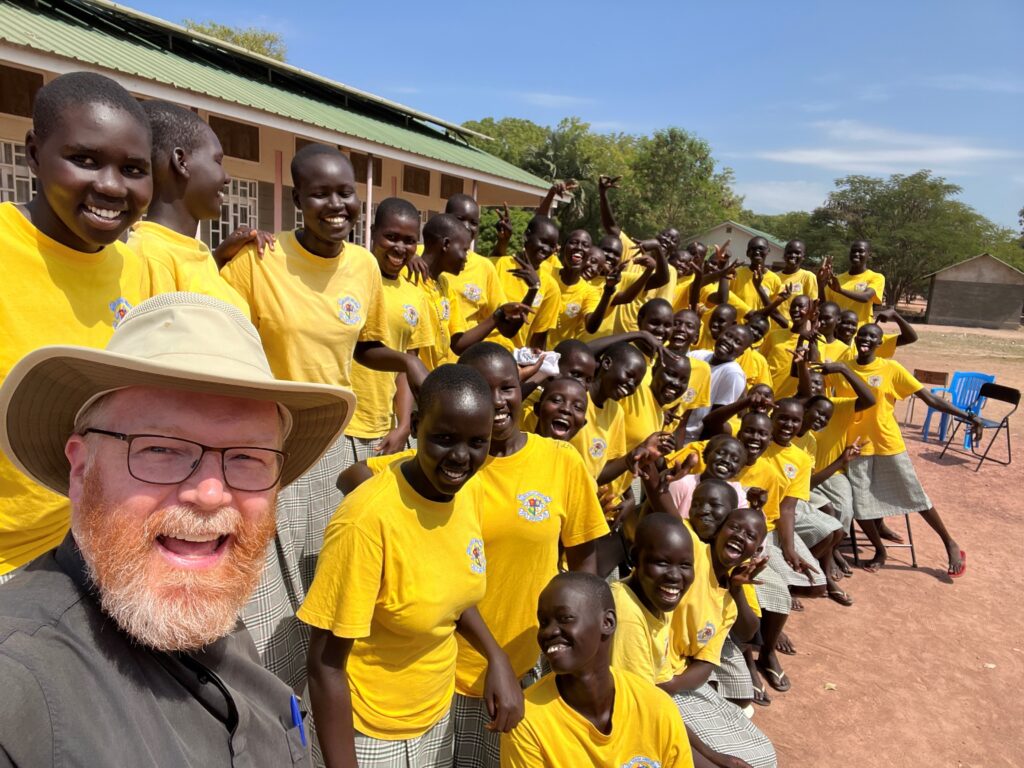
Looking forward to the next month, we have the Senior 4 exams (our equivalent of the Leaving Cert), a road trip to Juba to buy supplies for the year, and a seven-day Diocesan youth walking pilgrimage for peace through the bush, not to mention of course the celebration of Christmas. Life in Rumbek is many things, but never, ever boring.
Nhialic ke yin (God bless you),
Fr. Alan
Read more from Fr Alan’s missionary journey in South Sudan:
Nov 21, 2024
October was an especially busy month for the MSC Missions Office here in the Irish Province, as our MSCs hit the road to meet with some of our many friends and benefactors in different parts of Kerry, Waterford, and Cork. Fr John Fitzgerald, Director of the MSC Missions Office, was at the helm of a team of MSCs who ventured around Munster to meet with just some of our wonderful mission family here at home, in great gratitude for the invaluable support and friendship we see in action every day.
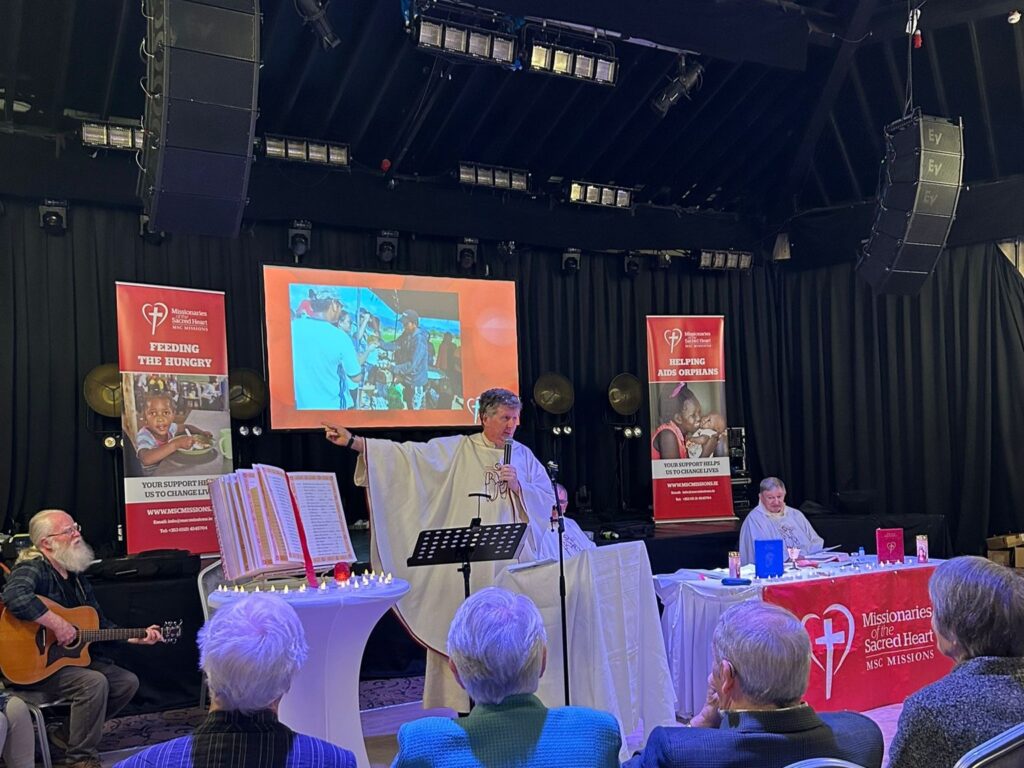
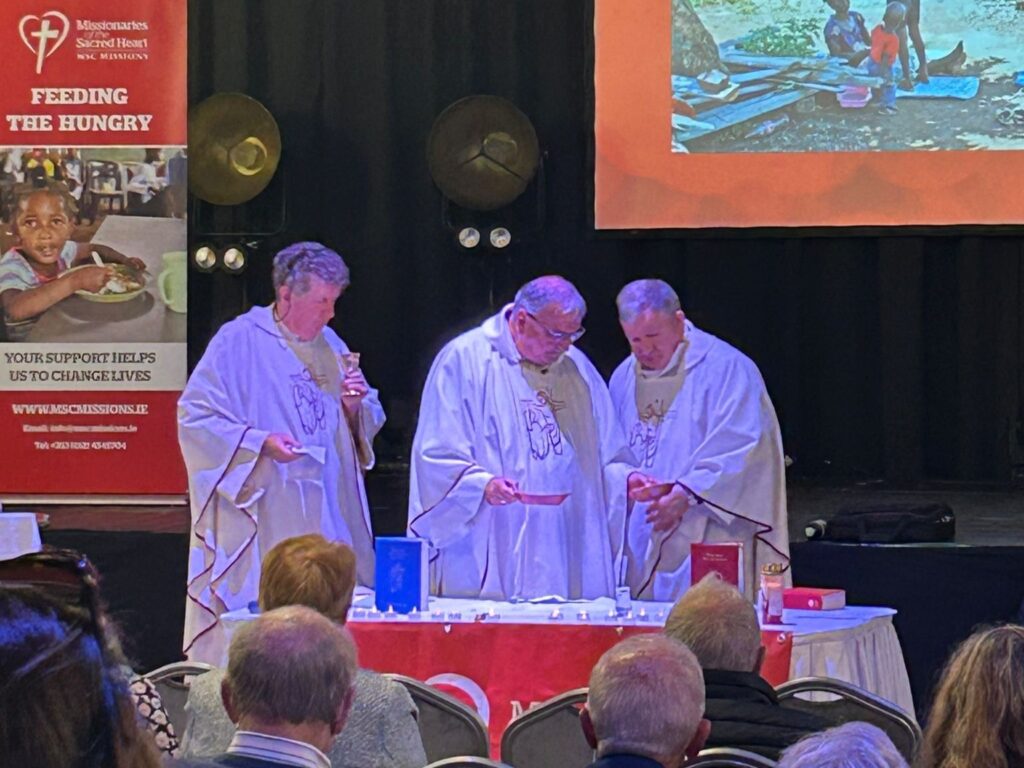
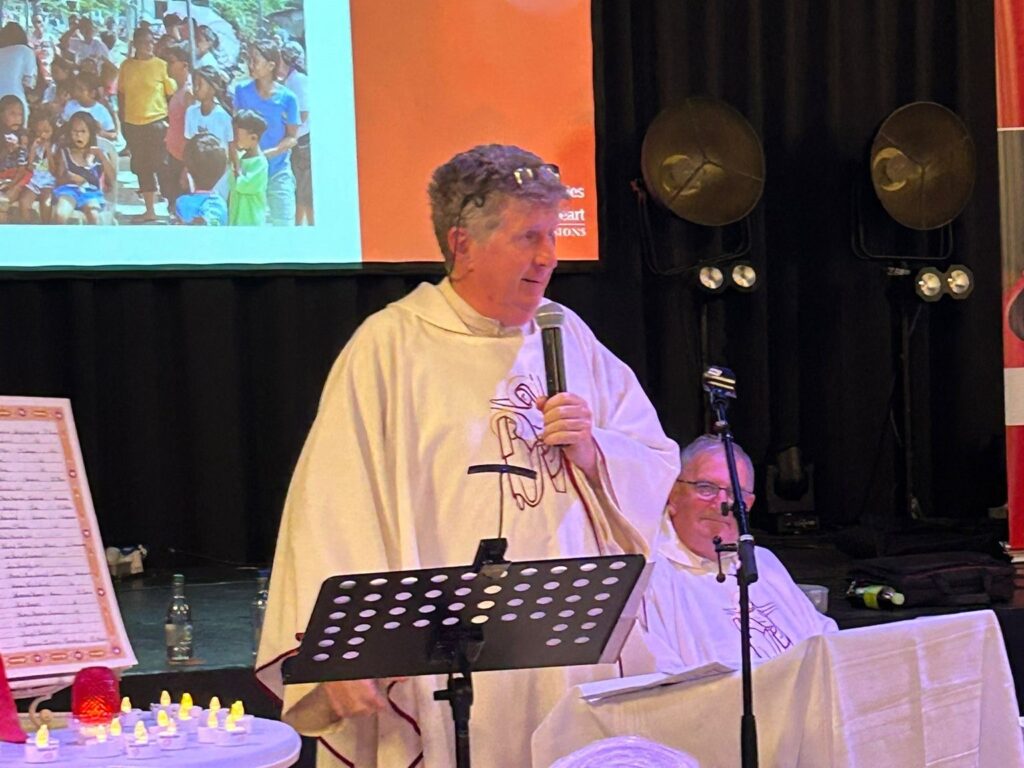
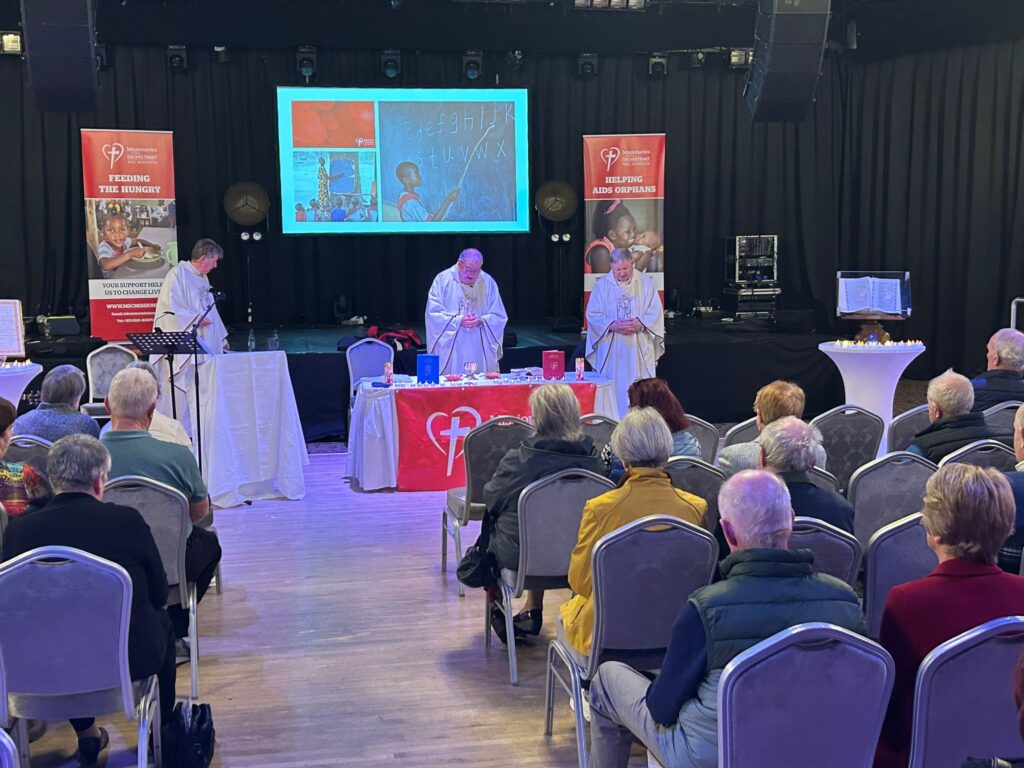
A series of four thanksgiving evenings took place throughout the month of October. Everybody in attendance was enrolled in our Golden Book of the Sacred Heart and our Blue Book of Our Lady of the Sacred Heart, while the books themselves were a special part of each evening’s celebrations. Those present each received a little flameless candle, all of which were placed around the Golden Book and the Blue Book display at the beginning of each evening, so that everybody’s intentions would be remembered throughout the night.
During our Thanksgiving Mass, a video played in the background, highlighting our mission projects around the world, and the life-changing work our MSCs undertake every day. Fr John Fitzgerald regaled the congregation with stories from the mission fields, explaining just how vital the help we receive from home is, and how the support of our mission friends makes an unimaginable difference in places many of us will never see in person. Gerry and Dee provided beautiful music throughout each Mass, and after each ceremony, there was an opportunity for our mission friends to chat with our MSCs over tea and coffee. Each evening was a special way for our MSCs to reconnect with just some of the benefactors who make our work possible every single day.
“An honour and a privilege”
The first event took place in the Killarney INEC at the beginning of October, where Fr John Fitzgerald, Fr John Finn, and Fr Seamus Kelly met with some of our Kerry friends. Then it was on to Waterford, where Fr John Fitzgerald and Fr Alan Neville met with some of our benefactors at the Tower Hotel in Waterford City. Finally, the month ended with two events at the Sacred Heart Church on the Western Road in Cork, where Fr John Fitzgerald was joined by Fr John Finn, Fr Alan Neville, Fr Seamus Kelly, Fr Tom Mulcahy, Fr Con Doherty, and Fr Tony Horgan. Our Head of Fundraising, Mary Morrish, also joined the team to thank just some of the mission family that make our work possible. Our MSCs met over 400 people over the course of four evenings, giving us a great chance to chat with people who are changing lives across the world, through the kindness and compassion that begin at home.
“It was our absolute honour and privilege to celebrate Mass with our mission friends and benefactors, and to meet with those who could come along to our evenings,” says Fr John Fitzgerald. “I am astounded at the knowledge they have, both of our projects and of our MSCs, and I have been equally amazed at the fact that so many of them have continued the tradition began by parents or loved ones who have now passed in supporting our missions. It is always humbling to have the opportunity to hear personal requests for prayer, for those who are sick or facing different challenges, and it really has been our privilege to be able to hear these intentions in person, and to pray with some of the people whose kindness is encouraging and motivating our MSC communities across the world.”
It really was a very special thing to be able to chat in person about our current projects, as MSCs and mission friends alike both heard stories and told their own. Indeed, it brought home to us all the fact that, despite distance and differences, we all have our own challenges and goals at heart, and we are all doing our best in our own situations. It is truly heartwarming to see the great generosity of mission friends and benefactors who are dealing with their own struggles in life, reaching across the miles to help beneficiaries on the mission fields who might be facing similar family problems, albeit in different circumstances. The generosity that begins in your own home, through our Missions Office here in Cork, quickly reaches our MSCs who are ministering in places like rural Guatemala, remote villages in the Amazon, and the barrios, or slums, of Venezuela, to name but a few. It just goes to show that the boundaries set in place by distance or language are nothing in the face of compassion, and that is the true missionary spirit and the love of Jesus in action in human form, here on earth.
While our team of MSCs were fortunate enough to meet with a great many of our mission friends and benefactors on this occasion, we are of course acutely aware of so many more people who all provide fundamental support to our ongoing missions. Constraints of time and space mean that we cannot meet with everybody in one swoop, but rest assured that every single donation we receive is put to the best possible use with heartfelt gratitude, and every one of our benefactors across the province is in the prayers of our MSCs priests daily. Having received such a warm welcome in Kerry, Waterford, and Cork, we hope to be able to meet even more of our extended mission family in the not-too-distant future, and in the meantime, we thank you sincerely for your continued friendship and support, which means so much to so many.
Nov 14, 2024
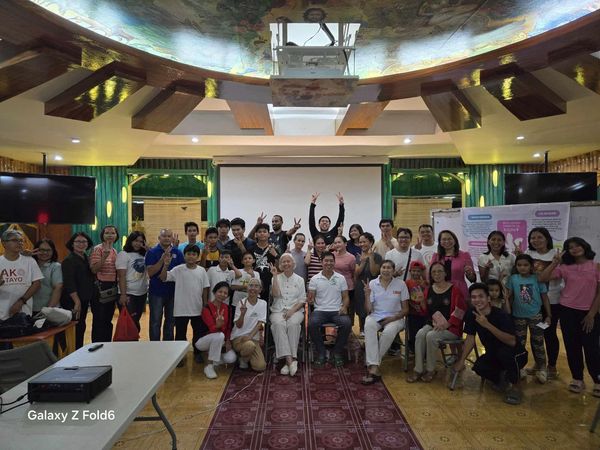
The team at the MSC Centre for the Poor in Butuan City were all on board to promote mental health and wellbeing at a recent mental wellness workshop, which took place at the beginning of November.
An evening centred on Self-Care for Mental Wellness and Well-Being took place at the centre on November 5th, with guest speaker BK Sister Ma. Lourdes L. Aseneta, chairperson of Brahman Kumaris – Phils, providing an educational insight into mental wellness and the importance of self-care.
The team at the MSC Centre for the Poor work daily to promote a harmonious relationship between local communities and the world in which we live – nurturing our natural environment, while reaping its benefits in creating a sustainable lifestyle that will help poor and struggling families to build the foundation for a brighter future. The team here are highly active in their ministry, developing and facilitating programmes that encourage disadvantaged and vulnerable individuals and families to learn the skills they need to build a better quality of life and a brighter future. Some of their outreach programmes include agricultural and clean water projects, plastic-free and zero-waste initiatives, and emergency response aid which provides urgent care to survivors of the typhoons and tropical storms that frequently hit the country.
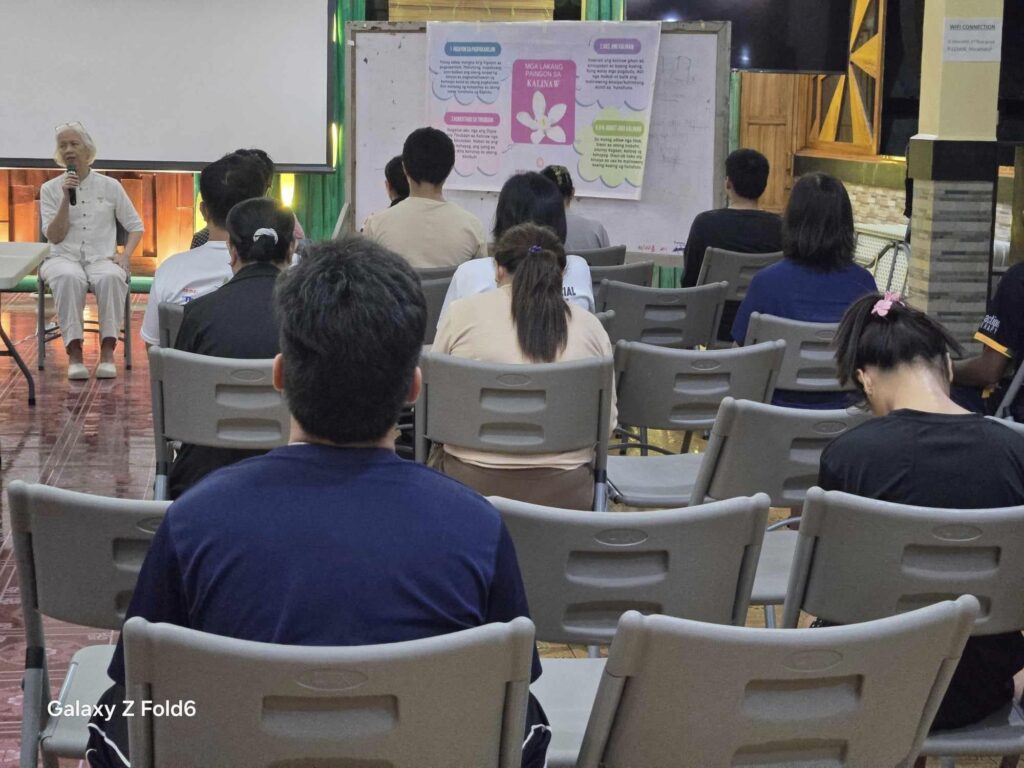
The community at the MSC Centre for the Poor are working tirelessly to build a better world and a better quality of life, and the focus on mental health and wellbeing is just one of the ways in which they are continuing on their journey to encourage a brighter, more positive future for all.

Images via the Facebook page for MSC Centre for the Poor.
IF YOU CAN, PLEASE SUPPORT OUR GLOBAL MISSIONS