Apr 18, 2019
In January 2019, MSC Missions Office Director Fr Michael O’Connell spent three weeks in Venezuela, visiting MSC parishes in the cities of Maracaibo and Caracas. Here, he shares his experiences and his thoughts on a country in crisis.
“Water is now becoming a problem, especially in Propatria, Caracas. They pump water into Caracas around three days a week. Fr John Jennings says that you know when water is coming, because there are leaks in the street – then you know that the municipality is directing water into the area. The locals are very proud; I saw people out sweeping the streets during my visit. Even though it was mucky and the sewage smelled terrible, they still wanted to keep it clean.
This year, more than ever, I noticed more blue tanks on the roofs of houses and buildings. These are containers to conserve water, and there are far more in place now because of the water shortages. People often come to the MSC house to shower and wash their clothes. People are bringing water to their houses, like bringing water to a home from a well in rural Ireland.”
“The current climate is taking its toll.”
“Venezuelan people are very clean; they shower and wash their clothes a lot. They are very proud, and very image conscious. You won’t see them out and about with rollers in their hair! Our MSCs know if water hasn’t been sent to the district for a while – people won’t come to the church, as they wouldn’t be clean. The lack of water affects their social life, and church is a social occasion where they meet up and chat together. I did notice that many people weren’t able to keep themselves as well this year – there was a lot more grey hair showing and people are a lot thinner. The current climate is taking its toll.
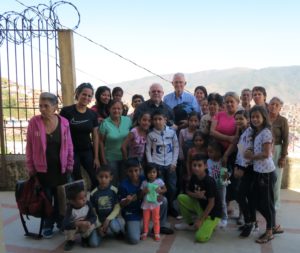
I brought with me a suitcase full of toiletries kindly donated by parishioners of the Sacred Heart Church in Cork, and they were given out after Mass, while some were kept back for people who called to the door. The poorest people call to the door of the MSC house for help. When we gave out toiletries after Mass, the smell of soap lingered around the church – and from the pictures, you can see the sheer joy it brought people. There was a queue for the toiletries, and they would have taken more if we had it.”
“Living spaces are small and cramped; there is no privacy.”
“Back in Maracaibo, I noticed that there are a lot of houses for sale – more houses than the last time I was here, certainly. Over three million people have now emigrated. They have left Venezuela for Panama, Chile, Peru, Columbia, Brazil… Nearby countries where people might be able to find work.
Once again, theft is a real problem. In the church, fans are chained to the wall because of theft, and speakers are kept in metal cages. There are railings on balconies, even when they are many storeys high – people will attempt to break in, no matter how high up you are.
Living spaces are small and cramped in the barrios (slums); there is no privacy. If you breathe in one room, somebody will hear you in the next room. Space is at a premium – one of my photographs shows a house extension in progress. There had been a landslide, which cleared the ground, so people then had room to extend.
We visited one house located up a hill so steep that Fr John wouldn’t bring his car up the final run, in case he couldn’t get it back down again. We took the last leg of the journey on foot, to give Holy Communion to a lady who was very ill. One of her family members who had come to Mass that day brought us to see her.”
“Our MSCs do their best to make life more tolerable for parishioners.”
“In Maracaibo, there are a lot of little markets popping up, selling bits and pieces. Houses are selling food, and little ice-creams called Coffey. People are now selling their clothes. Tyre repairs and replacements are on the go 24 hours a day. Tyres for a Ford Fiesta would cost about 20 million bolívars – around USD $76.
Fr Vincent Screene has given out water cooler boxes to parishioners in Maracaibo, so they can make and sell fruit juice using local fruits, particularly mangoes. These coolers have a tap on then, and they can hold about 44 litres of liquid. They cost around USD $30, but people can sell juice and make some money in the long term. Fr Vincent has also provided coffee grinders and vacuum flasks to parishioners, so they can make their own coffee and sell it. All of these things help people to gain back a little bit of independence and self-sufficiency, and help to make life more tolerable for families. Fr Vincent has also bought beds and mattresses where he could, especially for children.”
“Our parishioners are wonderful, warm people who are simply doing their best in the face of an impossible situation.”
“The Irish Department of Foreign Affairs recommends that you don’t go to Venezuela unless you have to, and if you do go, stay away from certain areas – such as Maracaibo. The people of Caracas seem to be treated better by the government. Caracas is the capital, and the government appear to be more keen to keep people there happy, for fear of rebellion. Caracas contains more barrios, and more people who live there immigrated from other countries when the standard of living was better. People who were not born in Caracas are living in severe poverty, and there’s a fear they might rebel, so the government keep the system rolling. In Maracaibo, I noticed far more issues with electricity outages and with problematic internet – and the food boxes that the government are supposed to issue to every household each month are very rarely, if ever, seen there.
Despite hardship, poverty, and hunger, our parishioners are very generous, and are a very patient people. They give what they can. We have had extremely poor people bringing gifts of food to one of our MSCs who was ill. They are also extremely enthusiastic in their faith. Our parishioners are wonderful, warm people who are simply doing their best in the face of an impossible situation.”
PLEASE SUPPORT OUR MSC MISSIONS
Find out more about our missionary outreach in Venezuela
Read more about Fr Michael’s visit to Venezuela:
Visiting Caracas
An Economy in Crisis
Food for Thought
On the Road
In the Classroom
Apr 11, 2019
In January 2019, MSC Missions Office Director Fr Michael O’Connell spent three weeks in Venezuela, visiting MSC parishes in the cities of Maracaibo and Caracas. Here, he shares his experiences and his thoughts on a country in crisis.
“The Our Lady of the Sacred Heart School in Maracaibo currently has approximately 850 to 900 students, from infants right up to teenagers. Of these students, only 300 are registered on the government official registration site at the moment, as the government only opens up registration every so often. Therefore, it’s a slow process, but the school are very confident that it will be done.
The government has introduced a day for teachers, but this year, they didn’t have a big celebration; in the current climate of hunger and poverty, there isn’t much to share. The municipality has asked every school to name a Teacher of the Year and to give them a present. The teachers here asked Fr Vincent Screene MSC for some money so they could buy a present for the Teacher of the Year.
The head teacher at the school is paid a total of 5,200 bolívars a fortnight. She is the head teacher at a school of over 850 children and approximately 45 staff. She has a university degree and a Masters, and her total pay is 10,400 bolívars per month. A kilogram of meat costs 2,400 bolívars, a kilogram of cheese costs 2,300 bolívars, and a kilogram of flour is 800 bolívars. Basic food for a week costs around 6,000 bolívars, and her weekly wages are 2,600 bolívars. She doesn’t have a car; she walks to school.
Similarly, one of the other department heads made it clear how much teachers struggle financially. At a meeting of the heads of department, one of our MSCs asked one of the teachers if she used WhatsApp, and she replied, ‘I don’t even have a piece of tin – I don’t have a mobile phone’.”
“Some schools have to run classes for just three days a week.”
“Teachers are leaving schools in many places. Some schools have to run classes for just three days a week. Despite their low wages, the teachers here are still doing their best, and are even trying to provide a feeding programme for the children.
As we travelled to the Sisters’ school in Maracaibo, we drove along the side of a lake, and there were things like rice, fish, flour, and vegetables for sale. It seems that a lot of food has come in from Columbia; this area is very near the border, so there is a lot of smuggling going on, or across-the-border buying and selling. People were standing at the side of the road selling anything and everything – diesel, petrol, oil, even bags of vegetables. These were long, thin plastic bags that would have enough vegetables for one meal, maybe two, and each bag cost half a dollar, or 1,500 bolívars.
In the Sisters’ parish, they had never seen one of the food boxes that the government is supposed to issue to every household each month. The government do support the school feeding programme, but the Sisters want to do more. The government are supplying a new kitchen, with cookers and facilities. The Sisters would like to set up a feeding programme to feed 150 children every Saturday, using the school kitchen facilities. They need USD $300 per month to feed 150 children a week – a total of 600 meals for the children per month. Parishioners would help with the cooking.
There are new bathrooms in the secondary school, and water filters on the site. They have converted the laboratories into classrooms to accommodate numbers. We donated money to the school for new classrooms, and the contribution meant that an outdoor corridor is now walled in, where before there was a steep drop.
The school are in real need of more computers, but they are struggling with leads, connections, and parts going missing. Theft is a real problem; they have to put cages around the light bulbs because people were able to get their hands in to steal them. The school received 32 laptop computers from the government, but today, there are only 18 there. 14 laptops have disappeared and are under investigation.”
“There is a great sense of community, faith, and care.”
The school hall is also used by local church parishes. There are three projects underway in the school at the moment. One is to collect toys for the play area in the preschool. The second is a shoe-making project, where they want to make shoes for the children manually, teaching the children how to do it so they will be equipped to make their own shoes and perhaps be able to sell them. The third project is to provide breakfast. The government do not supply food boxes here, so the Sisters are planning to try to give breakfast to the students. This would encourage more children to come to school; when they’re hungry, they don’t attend school, and so numbers are greatly reduced. Parents would be willing to help in this plan, buying food in Columbia and bringing it to the school. However, for this plan to be undertaken successfully, it would require a large investment – they would have to get cooking utensils, fridges, and security to prevent theft.
The school community is like a family – everybody supports each other and looks out for each other. While I was visiting the school, the US dollar was worth 3,300 bolívars. The parental contribution to the school is 100 bolívars – the equivalent of 3 cents. One of the teachers is sick at the moment, and the school is still supporting them, out of Christian charity, really. During my visit, I attended a school meeting of department heads, with the head teacher and seven other heads of department. The meeting began with two hymns, and the teachers sang. I’ve heard of meetings that begin with a prayer, but never with the singing of hymns – they sang together and they clapped. There is a great sense of community, faith, and care, despite the daily hardships the people here endure.”
PLEASE SUPPORT OUR MSC MISSIONS
Find out more about our missionary outreach in Venezuela
Read more about Fr Michael’s visit to Venezuela:
Visiting Caracas
An Economy in Crisis
Food for Thought
On the Road
Apr 4, 2019
In January 2019, MSC Missions Office Director Fr Michael O’Connell spent three weeks in Venezuela, visiting MSC parishes in the cities of Maracaibo and Caracas. Here, he shares his experiences and his thoughts on a country in crisis.
“When I arrived in Caracas Airport, I travelled into the city by car – and this is a very fitting introduction to Venezuelan life. The airport is located on the coast, with the city of Caracas situated about 1,000 metres above it. The drive from the airport to the city takes around 45 minutes, and it’s a continuous uphill drive, going through two tunnels. One of the tunnels is short, and the other is long, longer than the Dublin Port Tunnel.
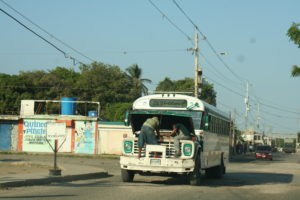
In that short 45-minute drive, we must have passed at least 15 cars and trucks that were broken down or overheated – and there were not all stopped at the side of the road, either! Three of them were in the long tunnel, and we just had to slow down and keep our fingers crossed that the traffic would keep moving.
Why are there so many breakdowns? Well, people are stretching out the time between cars services for as long as they can, because of the cost. There’s a severe shortage of parts to repair cars, and people can’t afford the cost of parts and repairs. If you can’t bend a wire to make it fit, you’re in trouble!
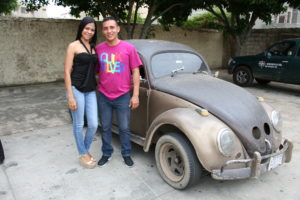
“At a meeting of 40 teachers, there was only one car in the car park.”
The mother of one of our students had to pay 400,000 bolívars to have her car serviced. She earns a relatively good wage of 240,000 bolívars per year, or 20,000 bolívars per month. One of our MSCs, Fr John Jennings, had work done to his car at a cost of 240,000 bolívars for the parts. That covered, oil, ball bearings, and getting the wheels fixed. Labour was an additional 40,000 bolívars. More work needs to be done, but if you converted the total of 280,000 bolívars to USD on the day the work was done, you would get $112 – $96 for parts and just $16 for labour.
Petrol is cheap here. Actually, the price of petrol is almost non-existent. Before devaluation came in last year, USD $1 would have filled 31,300 Ford Fiestas. Today, people get the petrol for free, and the only cost is tipping the petrol attendant. Engine oil, on the other hand, can be expensive, at a cost of almost USD $5 per litre.
There are fewer cars, taxis, and buses on the road now – it’s just too expensive to run a car. I attended a meeting of around 40 teachers in Maracaibo, and there was only one car in the car park. It was a 1957 Volkswagen, which was very impractical and far too low for the roads, but must have belonged to a real enthusiast! Can you imagine a teachers’ meeting in Ireland with one car in the car park? We would think that there was nobody there.
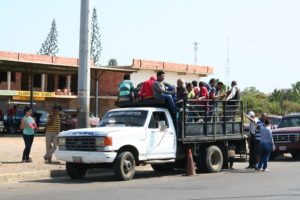
Trucks are used as buses, or big taxis, so people can get around. After the teachers’ meeting, we were driving home in Fr Vincent’s car, and a big truck passed. We realised that the people in the truck were waving at Fr Vincent’s car – and then we saw it was the teachers, all going home from the meeting together. They were travelling together in the truck, as they didn’t have their own cars.
Even the head teacher doesn’t have a car – she walks to school every day. Another one of the teachers has to pay 400 bolívars a day on transport, just to get to and from work. In a country where every cent counts, the cost of – and lack of – available transport is just another challenge for local people to struggle with on a daily basis.”
PLEASE SUPPORT OUR MSC MISSIONS
Read Fr Michael’s thoughts on the Venezuelan economy crisis
Find out more about the importance of food availability to Venezuelan families
Read more about Fr Michael’s visit to Caracas
Find out more about our missionary outreach in Venezuela
Mar 28, 2019
In January 2019, MSC Missions Office Director Fr Michael O’Connell spent three weeks in Venezuela, visiting MSC parishes in the cities of Maracaibo and Caracas. Here, he shares his experiences and his thoughts on a country in crisis.
“Food is a big thing in Venezuela. The government is supposed to issue CLAP food boxes to each household once a month. It doesn’t happen every month; that all depends on the local committee. In some areas, the food parcel is a bag, not a box, so it contains a smaller amount. It’s extremely inconsistent. Before Christmas 2018, there were protests with roads blocked in local areas, because the government promised every family a leg of pork to share for Christmas – but of course, it didn’t happen. Some got it, and others didn’t. Once again, the government had a great idea, but it just didn’t happen.
When it comes to the food parcels, it doesn’t matter how many people are in a household – it’s one box per household per month. There might be three people or there might be 10, but everybody gets the same box (if they get one at all). Each box contains a good selection of basic food: sugar, black beans, rice, two packets of spaghetti, lentils, two litres of cooking oil, six tins of tuna, and ketchup.
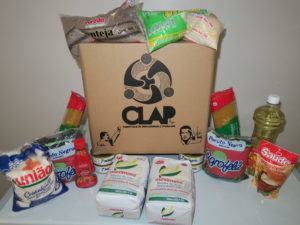
The food box doesn’t always arrive as it’s supposed to, but when it does come, it makes a huge difference as it contains quite an amount of food. Once again, this is in theory, and if the box contains what it’s supposed to – in some places, it’s just a plastic bag, and in other places, it’s nothing at all. The boxes tend to be distributed in Caracas, the capital, but not in Maracaibo. When I mentioned food parcels in one of our parishes in Maracaibo, they looked at me like I had two heads.
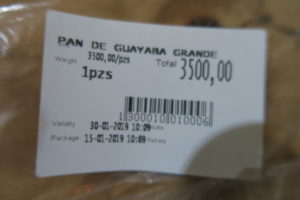
On occasion, it’s possible to buy a food parcel for 300 bolívars and legally sell it on for 1,800 bolívars. It can legally be sold for six times its purchase price – but what can locals buy with 1,800 bolívars? During my trip, I priced a small loaf of bread at 1,200 bolívars, a kilo of cheese at 3,000 bolívars, and 24 eggs at 6,000 bolívars. The price of the food parcel won’t go very far.”
“Often, food is a matter of impressing a visitor.”
“One of the staple foods in Venezuela is arepa – it’s a form of ground maize, and it’s eaten toasted, fried, hot, cold… Every which way! Our equivalent would be a toasted sandwich. It’s about the size of a bagel, but a lot thinner, maybe half the depth. They cut it in half and put fillers in it. They usually have something like a marmalade or a jam on top of it, and then they put ham or cheese on top of that. The ham is quite watery, while the cheese is cheap, with a lot of salt in it. My curiosity was piqued at the combination of cheese and marmalade, and when I asked about it, I was told that the marmalade keeps the cheese from falling off! It’s nothing to do with the taste, but is a matter of practicality.
Often, food is a matter of impressing a visitor. Nobody wants to be thought of as being mean. If you’re having a celebration, it’s important to provide food. One evening during my stay in Maracaibo, I attended the first night of a Novena to Our Lady of Peace. A local group visited different houses, praying the rosary and singing hymns. One family gave out arepa with juice and coffee. There were between 20 and 25 people there, and there was enough for everyone – but it was eaten in darkness as there was no electricity. The house was lit by candles and the light from mobile phones, if people had them.
I also attended a meeting of teachers in Maracaibo, where lasagne and cake were provided. The high point of the gathering was the food. The lasagne came in big slices, but it was very stodgy, with very little meat. The cake was interesting – it was a round cake, and was cut in circles, not triangles. The circles were then sliced up, and it was very effective. There were no saucers or plates like we would provide, just serviettes and plastic cups for people to put their slice of cake in. There was no tea or coffee provided either; people brought their own drinks.”
“He who divides gets the biggest portion.”
“Generally, people eat very poorly. I found that the food was better this year than when I visited last year, but I think that’s down to the designated forager, or shopper, doing a good job. There is food there if you have the money to buy it. In Maracaibo, there’s a supermarket called the Ritz! Here on our side of the world, we associate the Ritz with a luxurious afternoon tea or a glamorous place to stay – in Venezuela, a trip to the Ritz means being able to buy basic groceries for your family.
Having said that, the shelves in the supermarkets can often be empty. In one chemist I visited, packets of paper tissues were put out to fill the shelves – all they had left was half a packet of blood pressure tablets. There are runs of things, and then they disappear. During my stay, I came across a man selling things like rice, flour, and oil, using WhatsApp. He was offering so much at such a price, and I wondered how he had access to all of this food when he wasn’t a wholesaler. I was told he must have a connection to someone in the know. His prices changed every day, but people with money to spend have phones and have access to social media, so WhatsApp was a very effective means for him.
One Sunday, I came back from Mass to find the road outside the MSC house blocked. A pop-up stall had been set up by the government, selling potatoes, carrots, and onions, and people were queuing to buy vegetables. The agricultural department had set up the stall, selling limited amounts of each item – people could only buy a maximum of 2kg of each item, for 2,000 bolívars each.
Cash is in short supply, the debit card is a big thing, and this stall facilitated debit card purchases. The government sometimes gives gifts of money into peoples’ bank accounts, so many people use their debit cards to pay for most things. This stall was set up out of the blue on a Sunday morning, and they stayed all day – with people queuing to buy produce until they left.
There is a saying in Venezuela: ‘He who divides gets the biggest portion’. When it comes to food and survival, I think that says it all.”
PLEASE SUPPORT OUR MSC MISSIONS
Read Fr Michael’s thoughts on the Venezuelan economy crisis
Read more about Fr Michael’s visit to Caracas
Find out more about our missionary outreach in Venezuela
Mar 20, 2019
In January 2019, MSC Missions Office Director Fr Michael O’Connell spent three weeks in Venezuela, visiting MSC parishes in the cities of Maracaibo and Caracas. Here, he shares his experiences and his thoughts on a country in crisis.
“Having spent time with local families in Maracaibo and Caracas, it’s clear that the new measures put in place to help the economy in Venezuela have essentially done nothing; the government have great ideas, but they just don’t happen, and many aren’t realistic. For example, the president recently announced a new law stating that nobody could be made redundant for the next two years, and during my stay, he announced a new measure to end inflation – a wage rise from 5,000 bolívars per month to 18,000 bolívars per month. Sadly, this is something that many businesses just can’t accommodate, and these are unfortunately not economically viable solutions.
Similarly, during my stay, the government announced that they would solve the country’s milk shortage with 40 pure-bred cows that would form the basis of a new milking herd. They also recently said that they would be commencing a new scheme to make their cities beautiful. All of these fabulous plans are suggested, but at the end of the day, people are suffering terribly in reality.
The value of the bolívar changes daily and fluctuates wildly. When I arrived in Caracas on January 4th, the average monthly wage of 5,000 bolívars was worth USD $7. A week later, on January 11th, the same 5,000-bolívar wage was worth just USD $2. When you think that a loaf of bread costs around 1,200 bolívars, a kilo of cheese costs 3,000 bolívars, and 24 eggs cost 6,000 bolívars, it’s a mystery as to how people survive.
Most purchases are made by debit card. The money system changed last year, when the government took five zeros off their money and reprinted the notes as a measure to tackle inflation – now, nobody wants a 2-bolívar or a 5-bolívar note, when you think that one US dollar is worth thousands of bolívars. Everybody checks the rate of the bolívar daily – but it’s the black market rate, as the official rate means nothing to people trying their best to get by.
I might price an item one day, but the following day, the value of the bolívar has gone down and the price of the item has gone up. Because of this, many people and businesses have bank accounts abroad, particularly in the US. People depend hugely on charity from family members aboard, and money is deposited in US dollars in these accounts for them. Families are very linked up at home and abroad, and they help each other, depositing money in USD because the value of the bolívar changes so frequently.”
“Really, it’s a mystery as to how people survive from day to day.”
“People aren’t wheeling and dealing – they’re just surviving, and really, it’s a mystery as to how people survive from day to day. Families tend to live together, so they have multiple wages coming into the house. One of our students was telling me that he went home to visit his family for a few weeks last summer, but he was embarrassed to be there because he was an extra mouth to feed and he wasn’t contributing anything. He told me that his family were not poor, that they were a comfortable, middle-class family, but now, he said, ‘we are becoming poor middle-class’.
In terms of economic measures, it’s estimated that it will take Venezuela 20 years to recover from this crisis. Back in the 1990s, Venezuela was ranked around 29th in the world for its standard of living. Last year, they ranked in the mid-40s. It took them 20 years to get to that point, and now it will take another 20 years to get back to where they were. In the meantime, people are left with no real end in sight to their daily struggle for simple survival.”
PLEASE SUPPORT OUR MSC MISSIONS
Read more about Fr Michael’s visit to Caracas
Find out more about our missionary outreach in Venezuela
Mar 11, 2019
Sincere congratulations are in order as Sr Orla Treacy IBVM has received the International Woman of Courage Award 2019, having been nominated by the U.S. Embassy to the Holy See.
The awards ceremony took place in Washington D.C. on March 7th, with ten women in total being honoured. US Secretary of State Mike Pompeo hosted the ceremony, while First Lady Melania Trump addressed those in attendance.
According to the official website, the International Woman of Courage Award “recognizes women around the globe who have demonstrated exceptional courage and leadership in advocating for peace, justice, human rights, gender equality, and women’s empowerment, often at great personal risk and sacrifice”. Sr Orla’s work in education and healthcare in war-torn South Sudan has made her a truly worthy nominee.
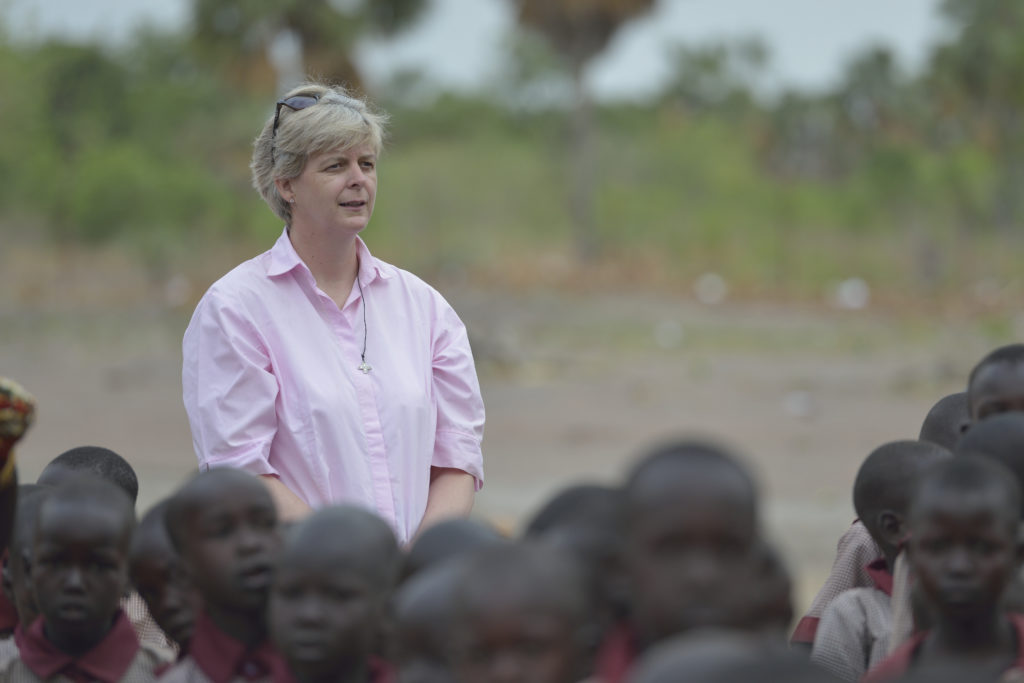
The official website gives a short biography highlighting Sr Orla’s work:
“Born in Ireland in 1973, Sister Orla Treacy was, at a young age, inspired by the lives of service and compassion of her teachers who were religious sisters. After studying to become a teacher of religion, she joined the congregation of the Institute of the Blessed Virgin Mary (IBVM), known as the Loreto Sisters. In 2006, while teaching and offering pastoral care in Ireland, Sister Orla joined other Loreto Sisters who were starting a new mission in Rumbek, South Sudan–an area besieged by civil war and violent inter-clan conflict. Touched by the plight of girls who were being forced into early marriage and denied the right to an education, she took action. Sister Orla and the Loreto Sisters started a girls-only boarding school with 35 students. Today, Sister Orla serves as the head administrator of the Loreto Rumbek Mission in Maker Kuei, overseeing a boarding secondary school for girls, a co-educational primary school, and a women and child-centric primary healthcare facility. Sister Orla is a part of a diverse multinational team of religious sisters, educators, nurses, and other support staff, who all share a vision for improving the lives of the most vulnerable in the community. Despite the devastating consequences of war in Rumbek, and the many barriers to women and girls in the community, Sister Orla remains filled with hope, and the Loreto Schools stand as a beacon of light for future South Sudanese generations. She continues to work in faith, striving for a world in which girls are not forced into marriage, are allowed to complete their education, and can pursue their dreams.”
“This award belongs to the young women of South Sudan with whom I have the privilege of working.”
In November 2017, Sr Orla was awarded the Hugh O’Flaherty International Humanitarian Award, and this year’s nomination for the International Woman of Courage Award is yet further recognition of her tireless work with vulnerable families in Maker Kuei.
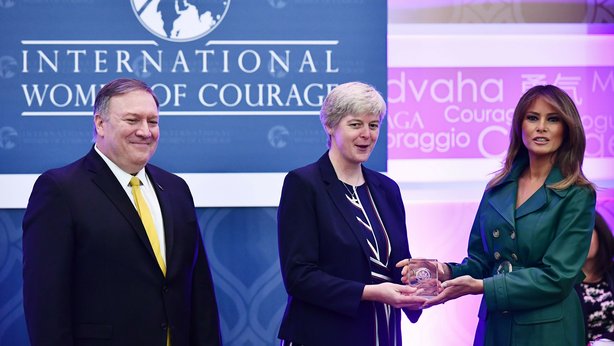
The Loreto Rumbek website recounts Sr Orla’s thoughts on receiving the International Women of Courage award: “This award belongs to the young women of South Sudan with whom I have the privilege of working. Our students embody all that is courageous – they are young women of vision, strength and hope. Young women who dream of a better country for themselves and their families, who are prepared to challenge old structures and work towards making South Sudan great. I am grateful to all who have made this possible.
Our work in South Sudan is not possible without the ongoing support of our partners, our wider Loreto family, past pupils, students, staff and our local community in Rumbek. Our Church leaders, community leaders and local government leaders have all played a significant role in supporting our mission.
Today, I was very aware of our girls as I was receiving the award. I pray that I am paving the way for them. My hope and dream is to see one of them with this award in the future.”
Working together for a brighter future
Since the summer of 2017, the Missionaries of the Sacred Heart have been working together with Sr Orla and the Loreto community of Rumbek, South Sudan, to provide financial support for the tremendous work being done in education and health care there.
On a visit to the MSC Missions Office in Cork, Sr Orla extended her gratitude to the MSC community for their support. “It is unique for one congregation to financially support another one, so this contribution to our work in Rumbek is extremely generous,” she said. “Sincere thanks for your generosity and for your willingness to collaborate in helping us with this challenging yet worthwhile mission.”
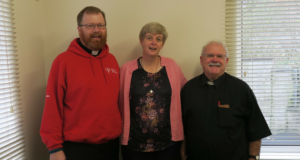
We are proud to support Sr Orla and the wonderful work of the Loreto Rumbek community, and we are sending our very best wishes on this great achievement!
Read RTE’s report on Sr Orla’s award.
The Missionaries of the Sacred Heart are proud to support the wonderful work done by the Loreto Sisters for the young women of South Sudan.
For more photographs and further information about Loreto Rumbek, visit their website or visit their Facebook page.
You can also find out more about how MSC Missions work with Loreto Rumbek – and how you can help to make a difference to the young women of South Sudan.
PLEASE HELP US TO SAVE LIVES IN SOUTH SUDAN