Jun 24, 2021
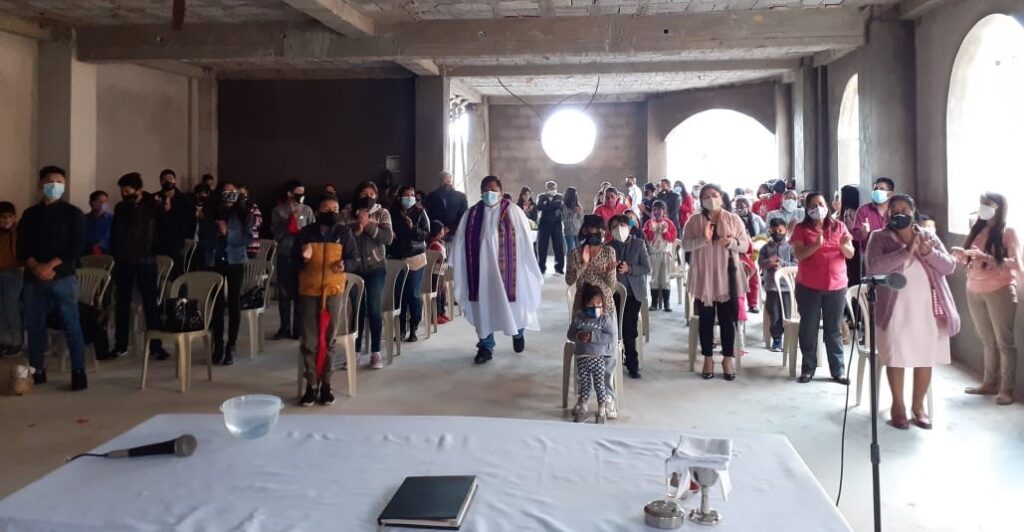 The MSC community in Ecuador del Sur have recently written with gratitude for funding received from the Irish Province, in support of the construction of a new multi-purpose church and community room for the parish.
In a video sent to Irish Provincial Leader Fr Carl Tranter MSC by the people of the parish of St Francis of Assisi, located in the neighbourhood of Ecuador del Futuro, the community introduce themselves: “We are a group of neighbours and friends who have been working for several years, motivated by our dream of having and building our church, to praise God and to listen and share his word.”
The community recently required assistance in completing the first floor of the church and community centre, and with the help of the Irish Province of the Missionaries of the Sacred Heart, our brothers and friends in Ecuador del Futuro were able to make great strides towards completing the necessary work over the past few months.
Coming a long way together
“The work has come a long way with your help,” writes Fr Moacir Goulart de Figueredo MSC, parish priest in the community of San Francisco de Asís, or St Francis of Assisi. “With the resources sent by the Irish Province, and some financial and material donations by the community, we have managed to finish the walls, install windows and glass, put in doors outside and in the bathrooms, begin construction leading to the second floor, complete work in the kitchen, finish the living room floor, and set up electricity, gas, and drinking water.”
“We still have a little left to finish on the first floor,” continues Fr Moacir. “We need bathroom dividers, plus internal kitchen doors and windows. We are going to use further donations for this and we are starting work on it now.”
“The pandemic caused the work to slow down,” he explains. “There was a lack of materials and so we had to wait. It also made it very difficult to manage our community work and it prevented fundraising events.”
St Francis Grotto
One of the main focal points of the centre is the San Francisco Grotto (or St Francis Grotto) window, with a special space underneath for people to visit for personal prayer. This space is dedicated to highlighting the principles of Laudato si’, Pope Francis’ encyclical devoted to the care of our common home.
“We are very happy,” writes Fr Moacir. “We have achieved what was most urgent, and the first floor is now fully operational. We are waiting for an end to the pandemic and the state of emergency so we can continue the work we have begun.”
Fr Moacir has been in contact with the project office for the archdiocese with regard to continuing work in developing the second floor, and has submitted a request for further support in the hope of being able to resume development in July. “If God allows, in July we want to receive the resources to continue the second floor, where we will locate the chapel,” he explains. “We have not received positive responses from other foundations in Ecuador, as many resources are directed to food and medicine because of the pandemic.”
“Thank God, you always remember the poor!”
“We have not yet opened the church and community centre officially, but we are already using it for Masses, catechesis, parent and child meetings, youth groups, altar server training, and music courses. Already, we hear people saying, ‘This is a miracle of St Francis of Assisi!’, ‘We are no longer on the street!’, ‘It is already our special space!’, and ‘Thank God, you always remember the poor!’.”
As they continue in their efforts to raise funds for the second floor of the church and community centre, the people of San Francisco de Asís remind us that “Life is good when you are happy, but life is so much better when others are happy because of you.” “Our plan is to carry out this dream for God,” they explain. “A hug from afar. May God bless you and protect you. You are always in our prayers.”
“The place is beautiful and the people are happy,” concludes Fr Moacir. “I thank you from the bottom of my heart for your generosity. Blessed be God who has given you this generous heart.”
PLEASE SUPPORT OUR GLOBAL MSC MISSIONS
Jun 17, 2021
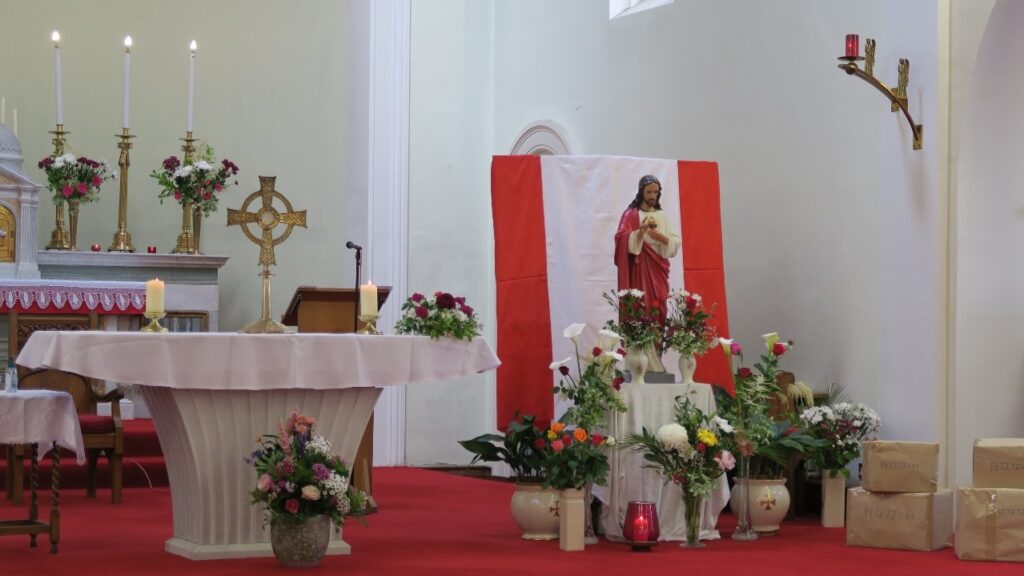
It is with grateful hearts that we thank everyone who participated in this year’s Novena to the Sacred Heart, which took place in the Sacred Heart Church on the Western Road, Cork, from June 3rd to June 11th 2021.
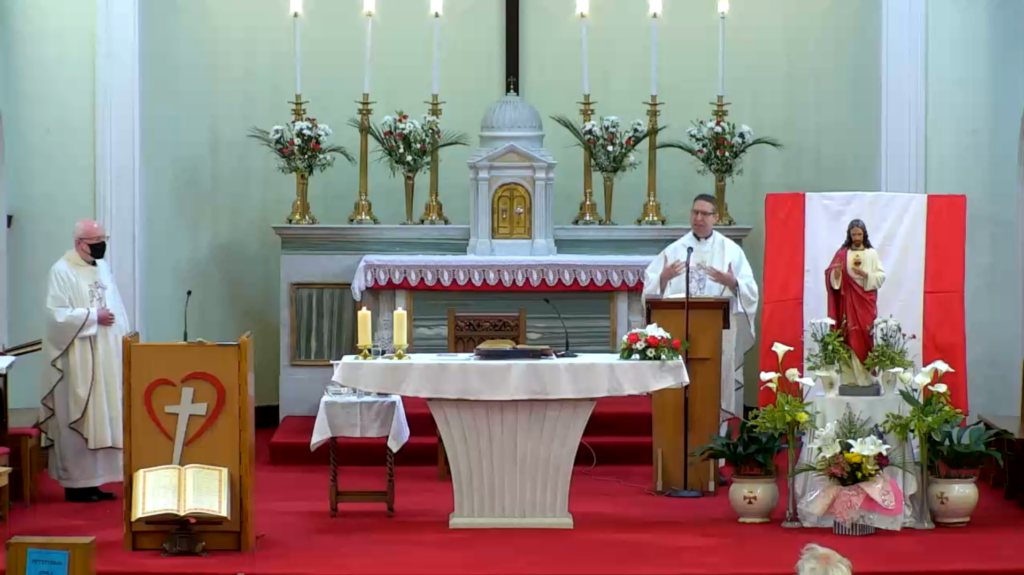
This year, ongoing COVID restrictions meant that our Sacred Heart Novena once again had to take place online; while our doors may have been closed, our hearts were open, and it is with sincere joy and gratitude that we welcomed members of our great family of faith from all over the world. Well over 1,000 people joined us daily to participate in our online Masses on each of the nine days of the Novena, close to home and in far-flung corners of the world. Together, we prayed with mission friends from Ireland, the UK, and America, as well as Australia, Belgium, Canada, France, Germany, India, Italy, Jamaica, the Netherlands, Norway, the Philippines, Romania, Spain, and many more.
“The Way of the Heart”
Irish Provincial Fr Carl Tranter MSC opened the Novena on June 3rd, reminding us that “this year’s Novena has a special character for us as we begin to emerge from the long lockdown of the last months, and these long 15 months of living with COVID.”
“We’re conscious that we’ve all been changed by this experience,” reflected Fr Carl. “We have experienced an enormous disruption to our lives – loss, sickness, grief. People have felt isolated and lonely. People have been afraid and have had financial worries and business worries. We’ve been disconnected from each other, from friends and family. We’ve had so many hard and tough experiences this past year.”
“The theme for the Novena this year is ‘The Way of the Heart’,” he continued. “It invites us into the language of journey, a process, a way living, a way of praying, a way of walking our path in life: the way of the heart. So over these coming nine days we’ll be inviting you to embrace this time, this space that we’re given to allow our wounded hearts, our pained hearts, our grieving hearts, our confused hearts, but also our longing hearts and our hopeful hearts, to go on a journey, to be taken on a journey deep into the heart of Christ, that unique place where we discover the intimacy of God’s love, of God’s gentleness, of God’s embrace, of God’s care for each of us.”
Living as God’s creation
Fr Michael O’Connell MSC, Director of the Missions Office, celebrated the second Novena Mass, on the theme of Mission, where he spoke about “The Way of the Heart” and how it “it opens us up to a whole way of being, of really living as God’s creation”. “If you are living according to questions like, how can I make money, or how can I get a bigger house, or even how can I get my children to be the biggest earners or get the best qualifications – that’s really very narrow, and it’s very finite”, he said. “But when it’s the heart, when it’s the way of the heart – wow, that can go anywhere. COVID has shown us that questions like, when can I go on my next holiday, when can I buy my next car, or when can I go out for dinner… Living for those things that are just so finite, they can all be taken away at the stroke of a regulation. At a cough or an infection, they’re gone. But the way of the heart, that’s something inside us, that inner strength we have, that inner way of being – nobody can take that from us.”
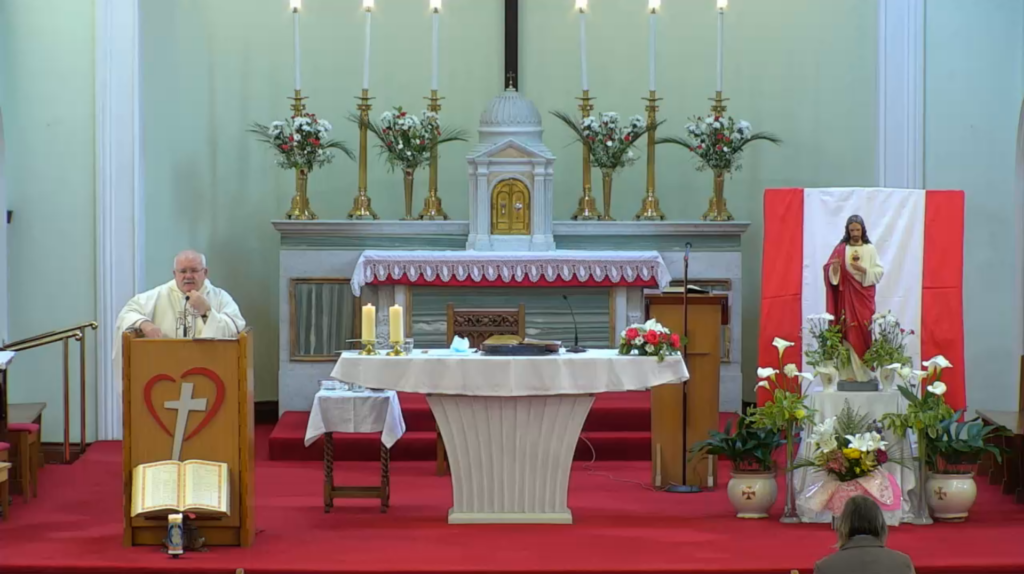
Day three of the Novena, on the theme of Reconciliation, was celebrated by Fr Tom Mulcahy MSC, who spoke of the power of grace and love: of loving a person “exactly as they are, with all their rubbish and brokenness and all the rest… Not a pretended love, not an act put on, but an absolute giving.” Fr Seamus Kelly MSC also spoke of love on the fourth day of the Novena, which celebrated Corpus Christi, calling on the grace of the Holy Spirit “to be able to bring God’s love to people throughout the world”.
The fifth day of the Novena was celebrated by Fr John Finn MSC, who spoke at length about caring for our planet, and planets beyond. Bringing us from outer space back to our own earth, he reminded us that, “The earth is given to us by God as a gift, life is given to us by God as a gift, and we are called to a deeper appreciation, to a gratitude of heart for that gift that God has given to us, his blessing.”
“A love that’s beyond our knowledge, more than our minds can grasp.”
On day six of our Novena to the Sacred Heart, Fr John Fitzgerald MSC led us in prayer for our dearly departed – “a special day,” Fr John observed, “because the dead visit us so many times in our memories.” Reading from a selection of beautiful poems, Fr John reminded us not to worry about those we have lost: “Our loved ones are at peace; that is the promise, and we need have no fear of them or for them.”
Day seven saw Fr Michael return to celebrate the theme of Healing, emphasising the power of compassion, of active compassion, not just passive pity, for others and for ourselves. The idea of compassion carried through to the following day’s Masses, where Fr John Fitzgerald led a service of thanksgiving for our front-line workers, and all who have worked behind the scenes during the COVID pandemic. Showing us an ornament of an open hand, sculpted from timber, he said, “If there ever was an apt ornament for today, it is this, in thanksgiving for the people who opened their hands freely to offer what they had freely for us and for the people around them, and we are very, very privileged to devote a day of the Novena in thanksgiving.”
“This is the time to pray a massive thanksgiving, lest we forget and take for granted.”
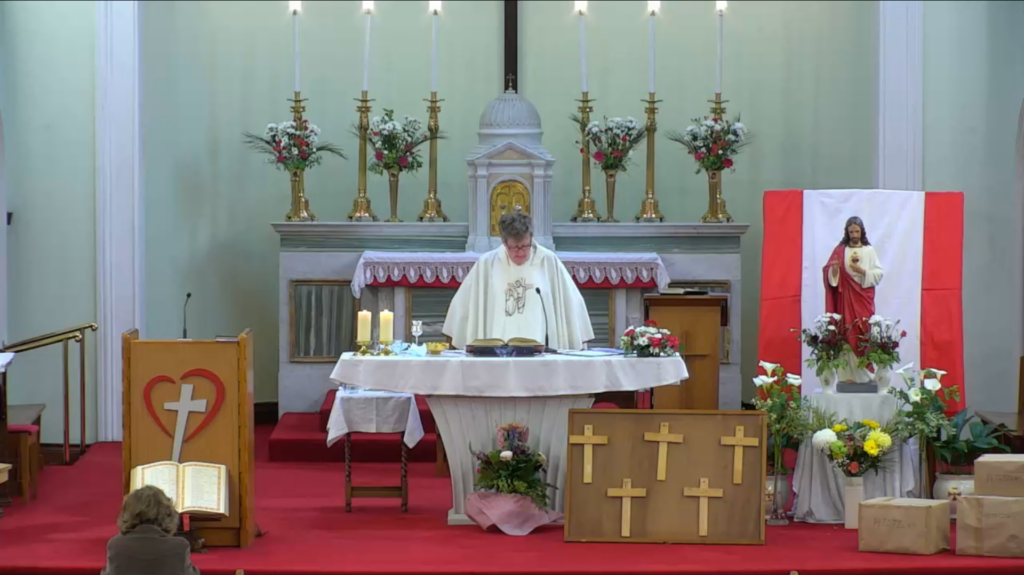
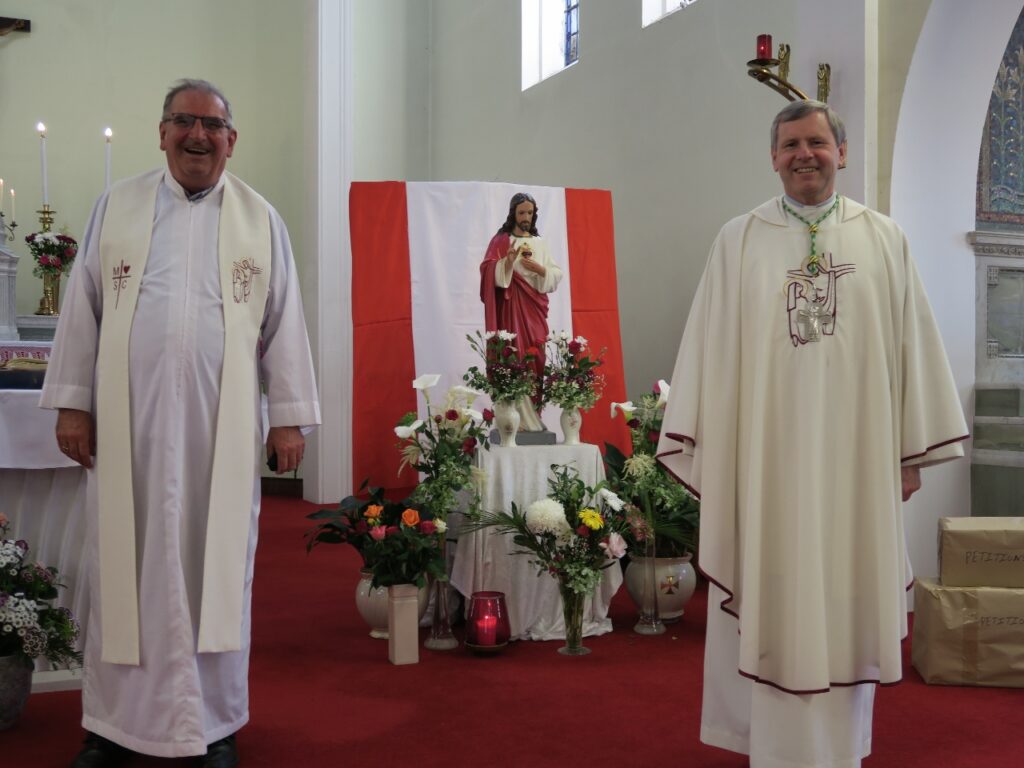
On the final day of our Novena, the Feast of the Sacred Heart, Fr John Finn was joined by Bishop Fintan Gavin to celebrate the closing Mass. Reflecting on “The Way of the Heart”, Bishop Fintan spoke of Christ’s love, a “love that’s beyond our knowledge, more than our minds can grasp.”
“All we can do,” he said, “is place ourselves in love and in faith. And if we can do that, then Christ’s love begins to grow in our hearts, and so through faith our hearts will reflect something of the Sacred Heart, something of his love will flow into our human hearts, to bring life to us so that we can bring life to our world.”
“Our faith is a missionary faith,” Bishop Fintan continued, “and so our faith is never turned in on itself, it is always reaching out to others, always selflessly self-emptying so that we can share that love and that encounter with others – that’s the Christ we’re called to follow, that’s the Christ we hear about in this evening’s Gospel, that’s the Christ I invite you to take deeper into your lives, so that others, through our witness, may come to know the love of Christ.”
“Love begins to work its changes…”
At a time when we are beginning to slowly emerge from the fear, stress, sorrow, and uncertainty of the last 15 months, this year’s Novena to the Sacred Heart was a wonderful way to pause and to give thanks for the daily blessings that have meant so much, and continue to do so. “COVID has changed so much of our lives,” Fr Carl reflected. “It has had such an enormous impact on us, but as Pope Francis has wisely observed, it’s not just what COVID has done to us, but it’s also what COVID has revealed to us, about ourselves, about our lives, about our world.”
In the different ways the pandemic has impacted us, Fr Carl reassured us, “we bring that to the heart of Christ, and let him know how we are feeling and what it is we want and we need. And in that space, maybe if we just stop talking for a while, and allow him to hold us and embrace us and love us, and that love begins to work its changes. And as it works its change, we find ourselves opening that little bit more.”
As Fr John Finn closed our 2021 Novena, he said “I thank you, from our community house here at the Sacred Heart Church on the Western Road, for joining us in this Novena. I thank you for praying for us, for praying with us, as we pray for and with you, and I pray that you will come to know ever deeper the love that God has for you, revealed in the heart of Christ.”
Our heartfelt thanks to all who took part in this year’s Novena celebrations. May the Sacred Heart bless you and your loved ones, now and always.
Watch our 2021 MSC Novena to the Sacred Heart:
June 3rd: Opening Mass by Irish Provincial Leader Fr Carl Tranter MSC
June 4th: Mission, celebrated by Fr Michael O’Connell MSC
June 5th: Reconciliation, celebrated by Fr Tom Mulcahy MSC
June 6th: Corpus Christie, celebrated by Fr Seamus Kelly MSC
June 7th: Care of Our Earth, celebrated by Fr John Finn MSC
June 8th: Pray for Our Dead, celebrated by Fr John Fitzgerald MSC
June 9th: Healing, celebrated by Fr Michael O’Connell MSC
June 10th: Thanksgiving for front-line workers, celebrated by Fr John Fitzgerald MSC
June 11th: Feast of the Sacred Heart, celebrated by Fr John Finn MSC (Morning Mass)
June 11th: Feast of the Sacred Heart, celebrated by Fr John Finn MSC and Bishop Fintan Gavin (Evening Mass)
Jun 10, 2021
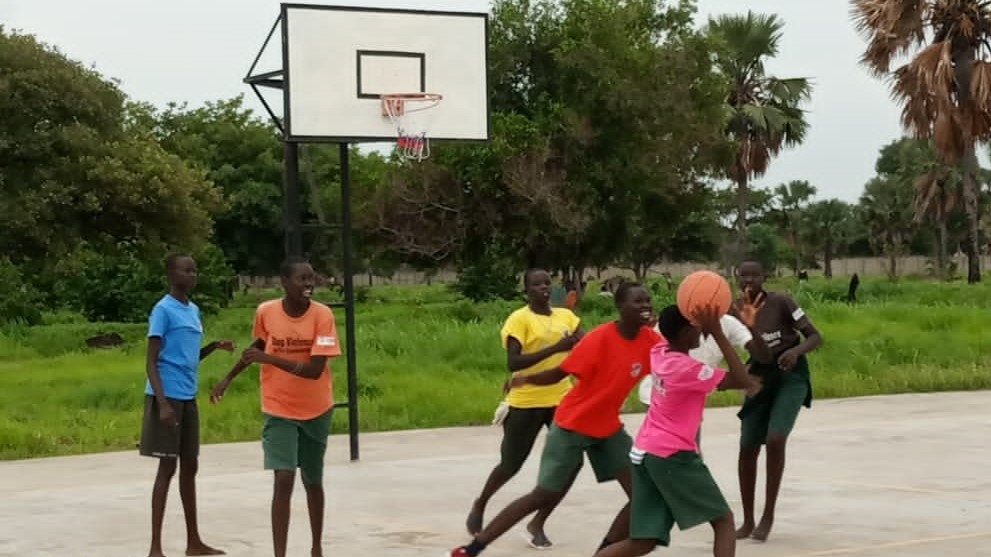
Like Ireland, South Sudan has a rich tradition of farming. Whether it is the cattle they tend or the small vegetable gardens they plant, the people here survive on the land. We have just begun rainy season and when it rains in Rumbek it pours. So far, I have experienced only a few storms and while they are short lived, they are Biblical in scale. It is not uncommon to have an hour of high winds and heavy rain, with thunder and lightning, before the blue skies and gentle breezes return like nothing happened. A decent pair of wellingtons is a must!
Self-sufficiency and valuable life lessons
This year, though, the rain has been sporadic. The people are not worried just yet, but they are certainly concerned. A bad season can mean the difference between having one meal a day or having no food at all. Women with young families are most especially vulnerable, because they use the proceeds of what they can sell in the market to support their families. With poor rains, they have to water their small fields by hand. Only last week on a drive back from town, we saw a family carrying water from a local well, including two preschool children each bringing a full two-litre container.
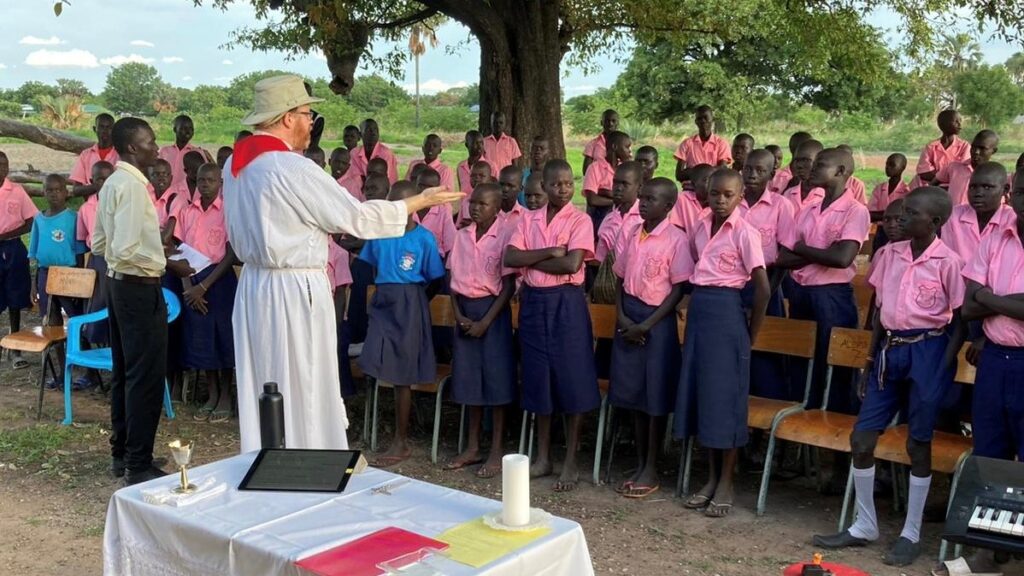
In the school, we are working away as we begin a new term, and we too are busy planting. The Loreto compound includes land that we can use for farming. Agriculture is one of the courses on the secondary curriculum and the girls enjoy the experience to get out from behind the desks every now and then. They have planted maize and ground nuts, which are staples that we will use in the school kitchen. This self-sufficiency allows us to reduce our expenditure, while teaching the students valuable life lessons.
Beginning to reap a great harvest
However, other types of seeds are now coming into fruition. At the moment, one of our graduates is back with us during a break in her studies in Kenya. She is working with the child protection team to help educate our students about children’s rights, as well as the importance of healthy and appropriate relationships. In the next week, another graduate will be here teaching English literature in the secondary school. After thirteen years of careful tending, we are seeing the first generation of our students return from further studies abroad. They are among the first, but they won’t be the last. These are bright, confident young women who are committed to their community. They are the pioneers of education for girls and they are determined to support those who follow after them.
This coming Sunday for our Gospel, we have the parable of the mustard seed, something tiny and unremarkable that can grow into a mighty tree, where people can shelter and birds can make a home. The same is true for what happens here in Loreto. Thanks to a team of gifted teachers who journey with the girls, to their parents who value education for the daughters, and to a student who commits herself whole heartedly to her studies, we are beginning to reap a great harvest. It is the fruit of tremendous work; it is a wonder to behold; and it is an absolute good to give thanks to God for.
Fr Alan
Read more from Fr Alan’s missionary journey in South Sudan:
PLEASE HELP US TO TRANSFORM LIVES IN SOUTH SUDAN
Jun 2, 2021
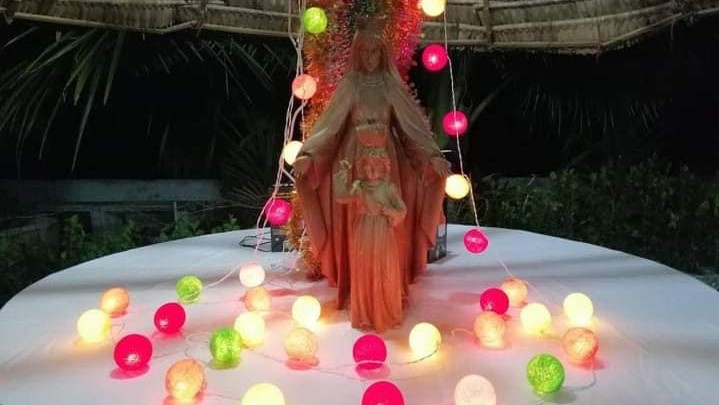
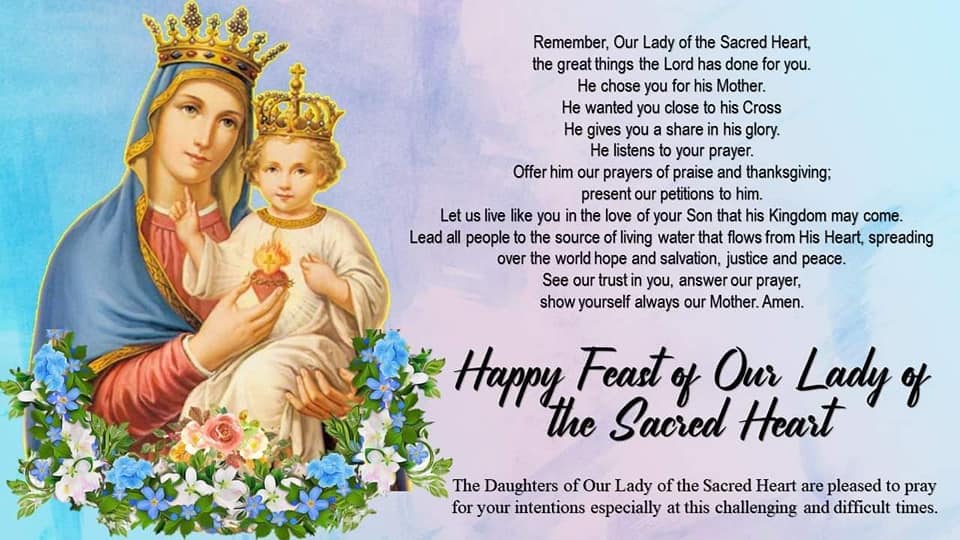
It is with great joy that we celebrate with our Sacred Heart Sisters, the Daughters of Our Lady of the Sacred Heart, on the feast day of Our Lady of the Sacred Heart, which took place on May 30th.
The official Facebook page for the Kiribati Province of the Daughters of Our Lady of the Sacred Heart shared photos of the celebrations from across Kiribati, Samoa, and Fiji. Marking the day in style, the OLSH communities in the Pacific Ocean rejoiced with prayer, song, floral tributes – and even a slice of cake or two!
The Daughters of Our Lady of the Sacred Heart continue in their mission of faith and love all over the world, bringing hope to those who suffer innumerable hardships including poverty, illness, hunger, isolation, and fear. The OLSH Sisters do invaluable work on a global scale, from education projects in the Philippines, South Africa, Venezuela, Brazil, and South Sudan, to the provision of emergency aid to the survivors of domestic abuse in Kiribati. The OLSH Sisters also founded the Holy Family Care Centre in South Africa, where they currently care for 70 children who have been abandoned, abused, or are suffering the effects of serious illness such as HIV/AIDS and TB.
Over the past year, as the COVID-19 pandemic has wreaked havoc around the world, their ministry has been more valuable than ever before. Acknowledging the effects of the coronavirus across the globe, the Kiribati Sisters wrote, “May this pandemic bring new hope, trust, and love as Daughters of Our Lady of the Sacred Heart, today and tomorrow.”
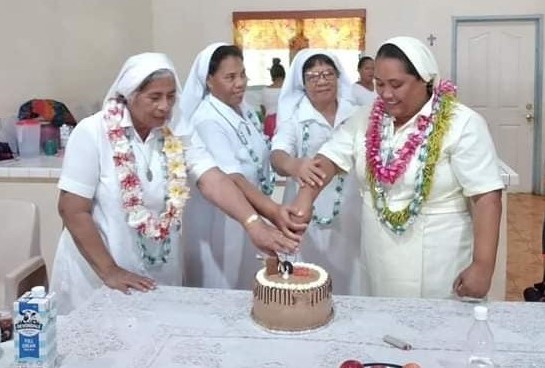
The Irish Province of the Missionaries of the Sacred Heart adds their prayers to those of the Kiribati Sisters, with every grace and blessing of our extended Sacred Heart family.
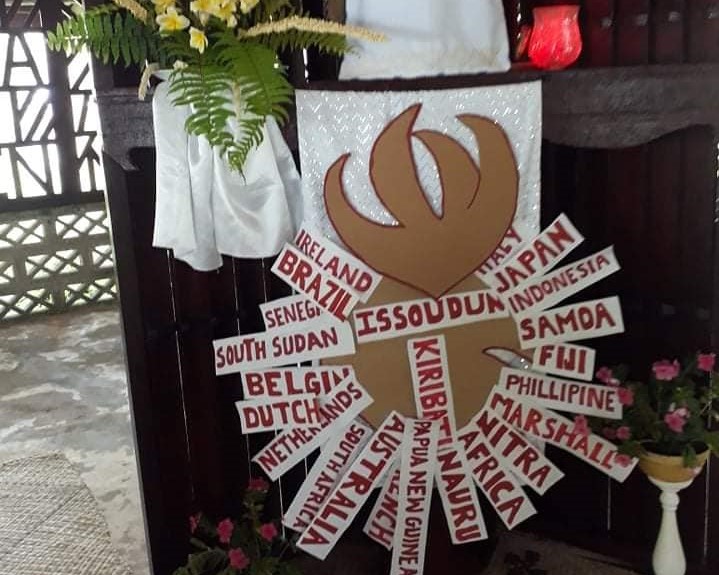
Images via the Daughters of Our Lady of the Sacred Heart, Kiribati Province on Facebook.
PLEASE SUPPORT OLSH GLOBAL OUTREACH
May 27, 2021
The MSC community in the Philippines have been working tirelessly in recent times to help families whose lives are being quite literally swept away in an instant by ravaging typhoons.
Super-Typhoon Rolly, the world’s most powerful tropical typhoon in 2020, struck the island of Luzon, the largest island in the Philippines, on November 1st. The Bicol region was the worst hit, with more than 800,000 people left in urgent need of emergency aid as the super-typhoon wrecked untold devastation on its relentless path. While Super-Typhoon Rolly raged, volcanic mudflow from the active Mount Mayon buried over 300 houses in the areas surrounding the volcano.
The MSC Mission Office in the Philippines immediately mounted an emergency response, raising 321,721 Philippine pesos, or approximately €5,500, over a period of 15 days. Working with local volunteers and mission partners the Dominican Daughters of the Immaculate Mother Sisters (OP-DDIM), the Mission Response team distributed desperately needed emergency relief packs to more than 800 families spread across six communities in the Albay province. “The beneficiaries were so grateful for the support of the generous people had given to them,” writes the official website for the Missionaries of the Sacred Heart in the Philippines.
On November 16th 2020, Typhoon Ulysses tore through the main island of Luzon, following in the footsteps of the earlier super-typhoon that had already caused unimaginable damage at the beginning of the month. More than one million families were left devastated by the typhoon, as homes, farms, and entire livelihoods were reduced to ruin by torrential rain, mudslides, and ferocious winds.
The areas most badly affected included the Metro Manila (Marikina area), Rizal, and the Cagayan Valley, where homes were demolished by raging floods.
The Missionaries of the Sacred Heart Philippines Province immediately mounted a campaign to provide emergency aid to those whose lives had been shattered, and to help affected families and communities rebuild their lives in the aftermath of the typhoon.
Through donations collected by the MSC Mission Office Philippines, Inc., the MSC community in the Philippines were able to send care packages of essential items to people in the most badly-hit regions. Boxes of groceries, essential items of clothing, and over 400 sacks of rice were included in these emergency care packages, which were distributed to MSC mission partners, the Office of the Vice-President (OVP) and the Association of Major Religious Superiors of the Philippines (AMRSP). With the help of these mission partners, these aid items were sent in relief distributions to the most affected areas of the country.
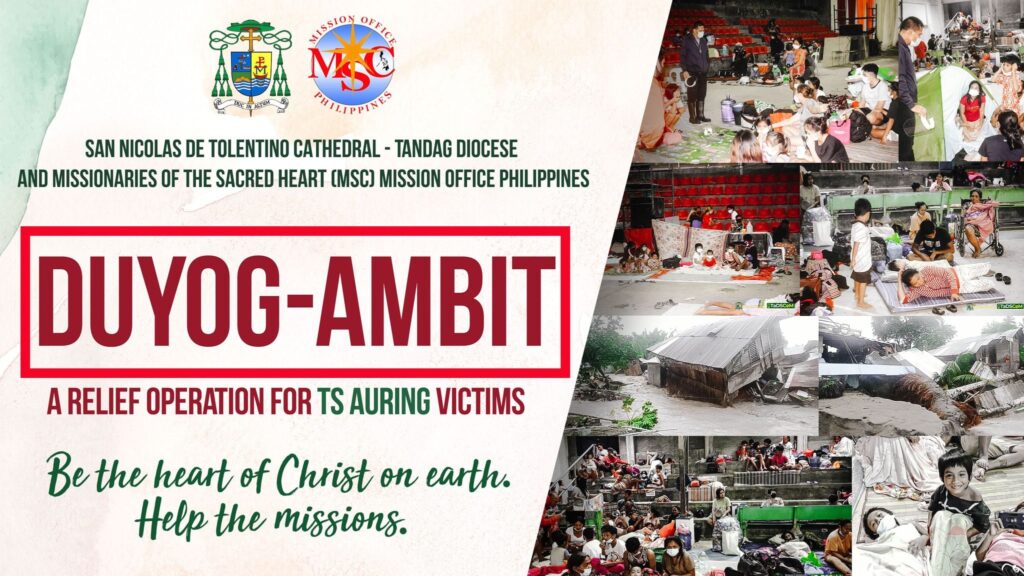
In February 2021, the country was battered by violent weather conditions once again, as Typhoon Auring hit. The MSC missionary community in the Philippines continues in its work to bring relief to those who find themselves in severe difficulty as a result of the typhoons, with the Duvog-Ambit Project in Tandag, Surigao del Sur, currently bringing MSCs and the Diocese of Tandag together to help those in need.
The official website for the Missionaries of the Sacred Heart in the Philippines posted a message of gratitude to all who contributed to their recent fundraising endeavours for victims of Typhoon Ulysses:
“We would like to thank all the people who took part of this mission especially to all the donors and generous people who helped us raise funds for the project. And to our mission partners, the OVP and AMRSP, thank you for organizing and facilitating the relief distribution activity. In behalf of the MSC Mission Office and all the beneficiaries, ‘Maraming Salamat Po!’”
Images via the MSC Mission Office Philippines website and the MSC Mission Office Philippines, Inc. on Facebook.
PLEASE SUPPORT OUR MSC MISSIONS IN THE PHILIPPINES
May 20, 2021
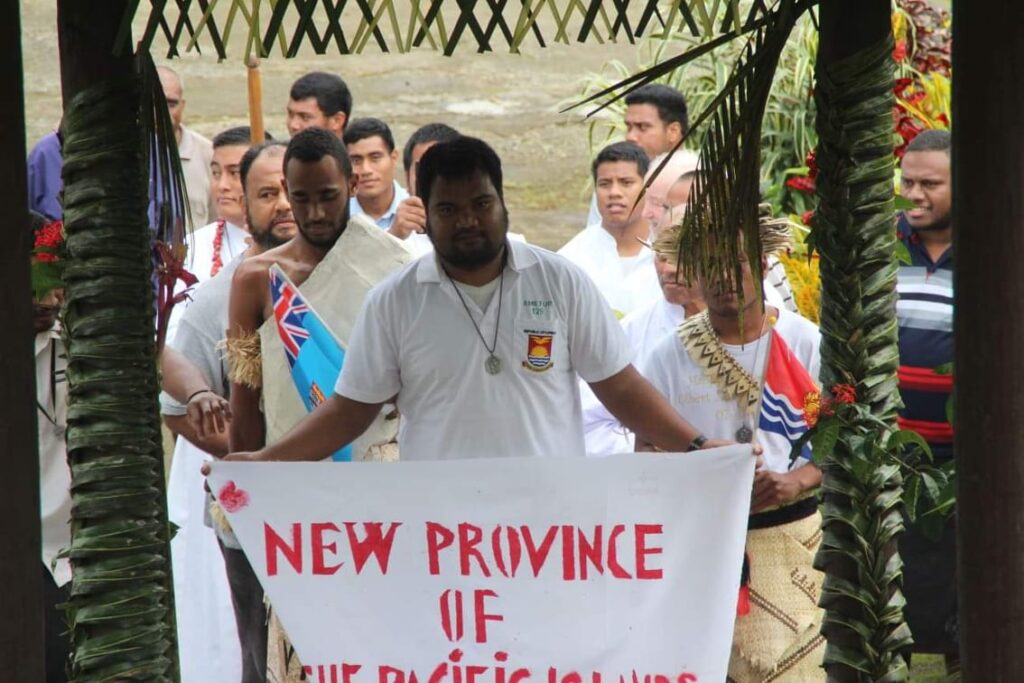
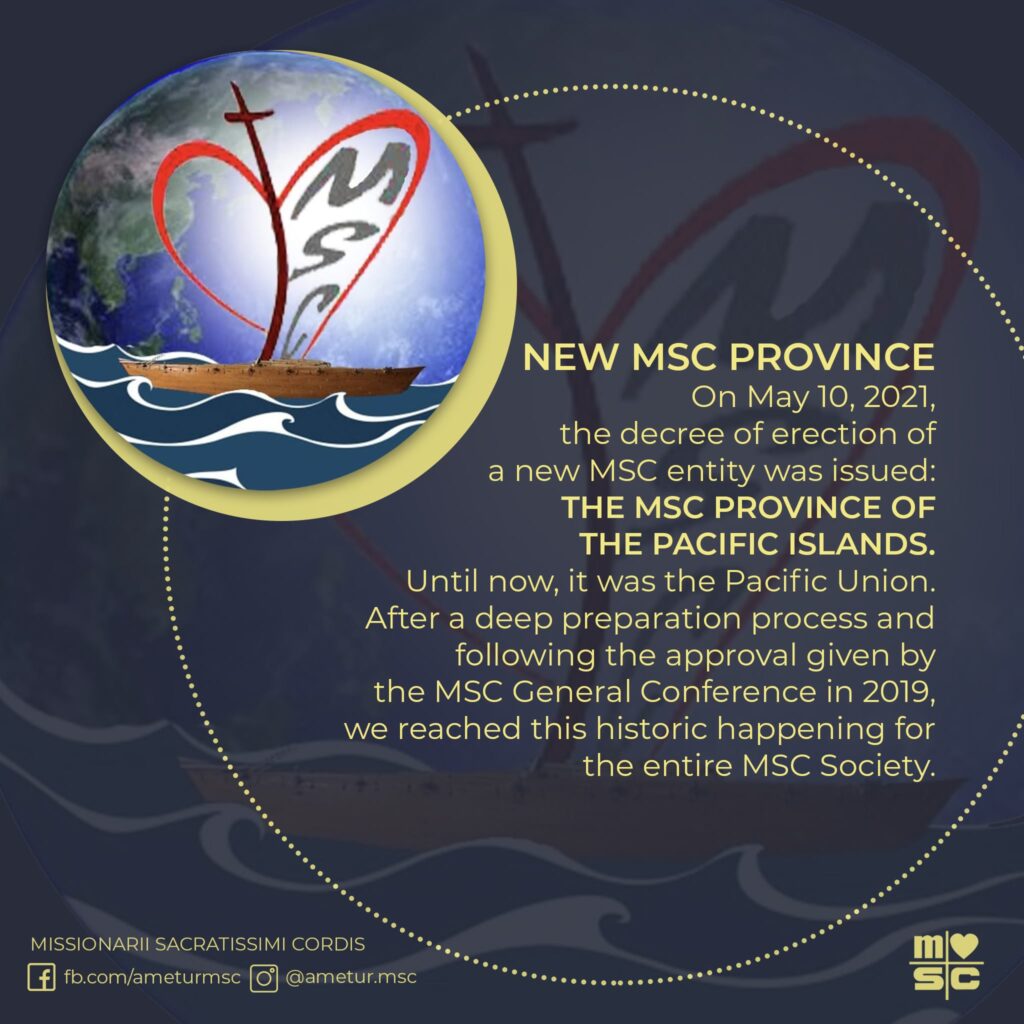
 Heartfelt congratulations to the MSC community in the Pacific Islands!
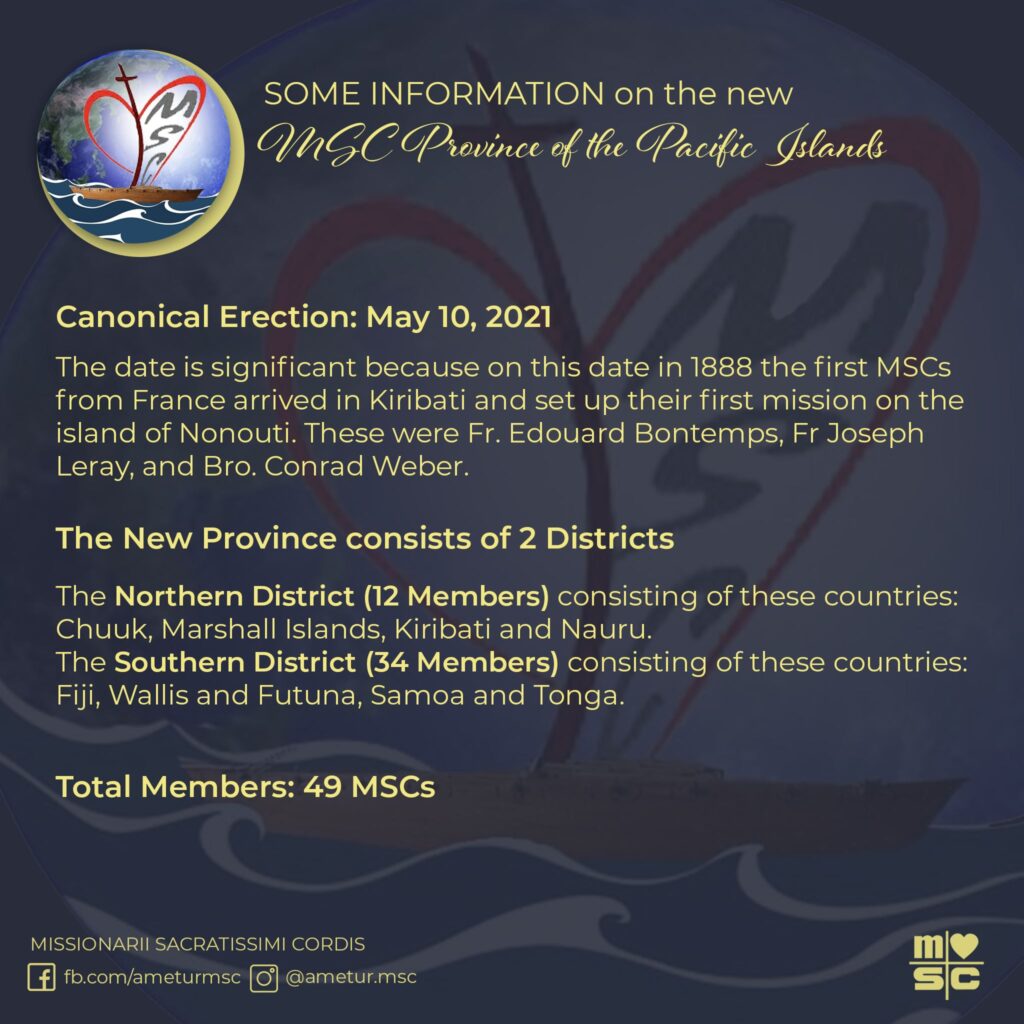
On May 10th 2021, a new MSC province was born: The MSC Province of the Pacific Islands.
Previously the Pacific Union, approval for the new province was given by the MSC General Conference in 2019, and in May, the degree of erection was issued.
The preparation process was a long and complicated one, and it is with great joy and optimism that we congratulate Provincial Superior Fr Tamati Sefo MSC and the missionary community there.
In a celebratory video message, Fr Tamati says, “Today, the 10th of May 2021, is a historical day for all of us. It is a day for us to celebrate with gratitude and joy. Today marks the official erection of the Province of the Pacific Islands.”
May 10th is of special significance to the community, as it was on this date in 1888 that MSCs Fr Edouard Bontemps, Fr Joseph Leray, and Bro. Conrad Weber arrived in Kiribati from France, setting up their first MSC mission on the island of Nonouti.
Carrying on the mission of Our Lord with compassion and faithfulness
Fr Tamati went on to thank all those who contributed to the success of the province, from the first missionaries in the region, who began ministry there in 1888, to the “contributions of our benefactors, lay MSC members, staff, and parishioners over the years”.
“Today is a celebration of their hard work over the years, preparing us to become a province,” notes Fr Tamati, giving thanks to all who made it “possible for us to continue the mission that has been entrusted to us.”
The new province is now preparing for their first Provincial Chapter, where the Provincial and his Council will be elected. “The future of the Province of the Pacific Islands looks very bright,” assures Fr Tamati. “I am very confident that we will continue to grow in faith… I am also optimistic that the new Provincial and his council will continue to bring us together as brothers, in order to carry on the mission of Our Lord with compassion and faithfulness.”
The new province is made up of two districts: The Northern District (12 members), which consists of Chuuk, the Marshall Islands, Kiribati, and Nauru, and the Southern District (34 members), which consists of Fiji, Wallis and Futuna, Samoa, and Tonga.
“We want to be a sign of hope and love to everyone.”
Fr Tamati casts us back to the origins of the Missionaries of the Sacred Heart, founded by Fr Jules Chevalier in 1854, during the French Revolution – a time of great conflict, fear, and upheaval. “It was then that our founder Jules Chevalier saw in the heart of Christ the remedy for our trouble,” recalls Fr Tamati. “Likewise, today, amidst the fear, suffering, and horror of the pandemic that is ravaging the world, our new province is emerging. We want to be a sign of hope and love to everyone.”
Standing in “solidarity and prayer”, Fr Tamati reminds us that “it is in the compassionate heart of Jesus that we can find peace and comfort in this challenging time.”
May God bless all in the new MSC Province of the Pacific Islands, as they begin a new chapter in our shared journey of spreading God’s light and the love of the Sacred Heart across the world.
Images via the MSC Province of the Pacific Islands and Ametur MSC on Facebook.
PLEASE SUPPORT OUR MSC MISSIONS AROUND THE WORLD