May 16, 2019
Sincere congratulations to the Rev Fr Toussaint Iluku Bolumbu MSC, who has been appointed by Pope Francis as bishop of the diocese of Bokungu-Ikela, Democratic Republic of the Congo.
Currently acting as superior of the Missionaries of the Sacred Heart for the French-speaking African region, Bishop-Elect Toussaint is the first MSC African bishop.
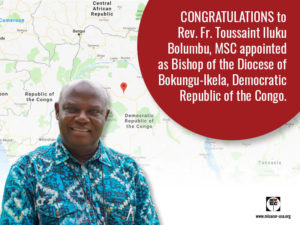
The bishop-elect was born in Monieka, Zaire (now the Democratic Republic of Congo), in November 1964, the seventh in a family of eleven children. He entered the novitiate of the Missionaries of the Sacred Heart, and was ordained a priest in 1995, having professed his religious vows the previous year. He holds bachelor’s degrees in both philosophy and theology, and has served in a wide range of pastoral roles including parish priest, vice rector, bursar, and later superior and director of formation of the MSC School in Yaoundé, teacher of philosophy and theology, vice president of the Association of Major Superiors of the ecclesiastical province of Mbandaka-Bikoro, assistant to the secretariat general of the General Chapter of the Missionaries of the Sacred Heart in Rome, and moderator of the General Conference of Missionaries of the Sacred Heart in Yaoundé.
In April, Rev Fr Toussaint was appointed fourth bishop of the diocese of Bokungu-Ikela. His ordination will take place on July 21st in Bokungo, by Bishop Fridolin Ambongo Besungo, Archbishop of Kinshasa and Apostolic Administrator of Mbandaka Bikoro.
We send our very best wishes to Bishop-Elect Toussaint
from the Irish Province of the Missionaries of the Sacred Heart!
May 9, 2019
We are delighted to have received a letter from Br Jean Manga MSC with an update from our MSC community in Righini, Congo.
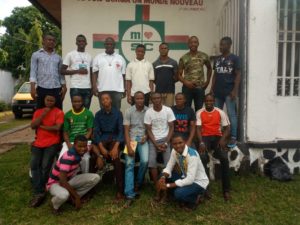
Earlier this year, we reached out to our mission friends to help the MSC community in Righini as part of our 2019 World Projects Appeal. 15 MSC pre-novitiate students live in the Formation House in Righini, along with their two formators. Here, they work, study, and pray together as they contemplate the missionary journey. The residents of the formation house live primarily on a grant provided by the MSC French African Union – a grant which allows each person a sum equivalent to €11 per day.
As part of their daily routine, the pre-novitiate students travel to the local university to attend classes. They also travel around the surrounding areas, visiting parishioners and undertaking parish ministry. An old minibus served as their only mode of transport, until it broke down beyond repair in April 2018.
For the past year, our MSC students and their formators have had no choice but to travel on public transport, which is unpredictable, undependable, and time-consuming. The community has been unable to travel together, and the lack of transport has made it very difficult for duties around the parish to be undertaken efficiently and effectively. It has also incurred great costs, with $10 per day spent on public transport as opposed to the cost of fuel for the minibus at $30 per week.
The support and generosity of our mission friends here in the Irish Province meant that we have been able to contribute to the cost of a new minibus, and Br Jean has sent a message of thanks from Righini.
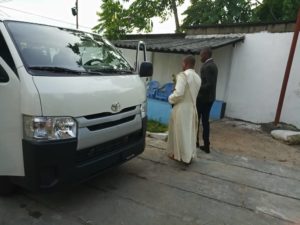
“We thank the Lord for you and your great generosity,” he writes. “You have made it possible for our pre-novitiate students to have a brand new school bus. After many months of hope, the bus is now with us.”
“You have our sincere gratitude,” he continues. “God bless you fully!”
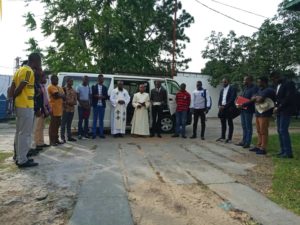
We would like to join with Br Jean in extending our heartfelt thanks to all who have contributed to our ongoing 2019 World Projects Appeal. Every contribution, no matter how small, helps us to change lives for the better across the world.
PLEASE SUPPORT OUR MSC MISSIONS
May 2, 2019
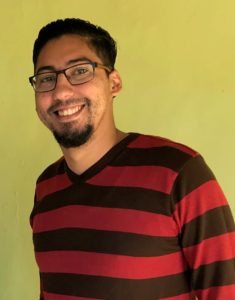 We have great joy in announcing that on Saturday, May 4th, Luis Gonzalez MSC will be ordained a Deacon in Caracas, Venezuela.
At a time when the country is going through such a difficult period politically, socially, and economically, it is a sign of great hope that a young man such as Luis commits himself to the service of the people of Venezuela with the deep desire to be for all a living, tangible presence of God’s heart for his people. We pray for Luis on this significant step in his vocational journey, that he may serve the Lord, the Church, and all of society with love and generosity. Congratulations to Luis, his brother MSCs in Venezuela, and his family.
As we keep Luis especially in our prayers these days, we also continue to pray for the whole country of Venezuela.
– Fr Carl Tranter MSC
Irish Provincial Leader
Find out more about our missionary outreach in Venezuela
Apr 25, 2019
Rita D. Grace Calvary is a student at Siwa Lima St Joseph’s Technical School in Langgur, Indonesia. Built in 1970, the school is run by the Missionaries of the Sacred Heart with the aim of educating young people in the region so “they can do something good for themselves and for their families”. In a region where poverty is a pressing issue, St Joseph’s provides the youth of the community with hope for the future. Here is Rita’s story:
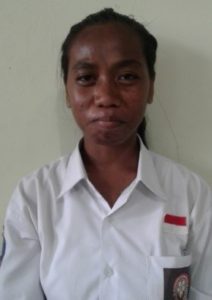 “My name is Rita D. Grace Calvary. I am 15 years old.
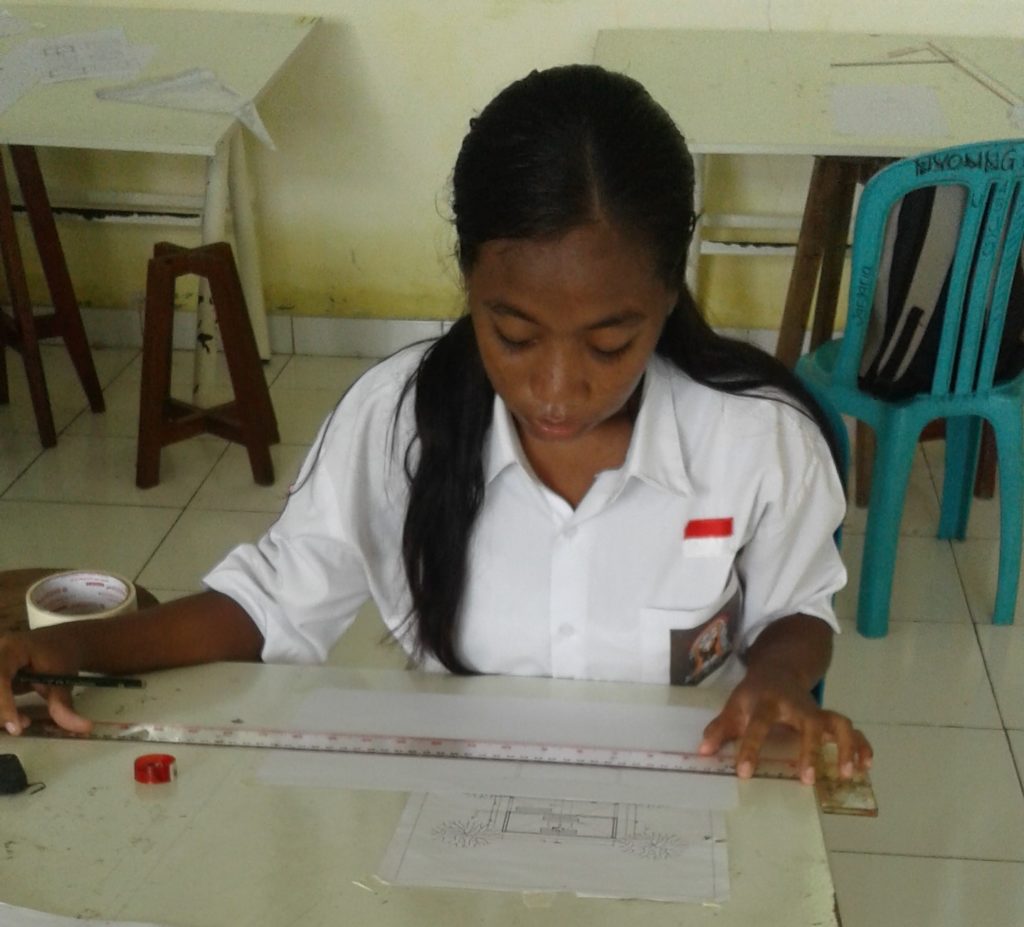
My father is an employee in a private company. I wished to attend St Joseph’s Technical School as I have a great desire to become an architect. To help me along this career path, I chose to study technical drawing.
Through my studies in this area, I am learning how to master the basic skills of architecture. I wish to continue my studies at university, to further develop my ability and skills in architecture. This will be very useful to me as I try to find a job when I have finished studying.
I am very happy to be a student at St Joseph’s. I encourage my fellow students to be diligent, to work hard, to take responsibility, to have self-discipline, to have esteem for our teachers, and to love our school.
I am very grateful to all of my teachers and those who help me to develop my knowledge, skills, and abilities, especially in the architectural department. I believe that St Joseph’s is the best school in the Malucu Province. Viva my school, St Joseph’s!”
PLEASE HELP US TO TRANSFORM LIVES IN INDONESIA
Apr 18, 2019
In January 2019, MSC Missions Office Director Fr Michael O’Connell spent three weeks in Venezuela, visiting MSC parishes in the cities of Maracaibo and Caracas. Here, he shares his experiences and his thoughts on a country in crisis.
“Water is now becoming a problem, especially in Propatria, Caracas. They pump water into Caracas around three days a week. Fr John Jennings says that you know when water is coming, because there are leaks in the street – then you know that the municipality is directing water into the area. The locals are very proud; I saw people out sweeping the streets during my visit. Even though it was mucky and the sewage smelled terrible, they still wanted to keep it clean.
This year, more than ever, I noticed more blue tanks on the roofs of houses and buildings. These are containers to conserve water, and there are far more in place now because of the water shortages. People often come to the MSC house to shower and wash their clothes. People are bringing water to their houses, like bringing water to a home from a well in rural Ireland.”
“The current climate is taking its toll.”
“Venezuelan people are very clean; they shower and wash their clothes a lot. They are very proud, and very image conscious. You won’t see them out and about with rollers in their hair! Our MSCs know if water hasn’t been sent to the district for a while – people won’t come to the church, as they wouldn’t be clean. The lack of water affects their social life, and church is a social occasion where they meet up and chat together. I did notice that many people weren’t able to keep themselves as well this year – there was a lot more grey hair showing and people are a lot thinner. The current climate is taking its toll.
I brought with me a suitcase full of toiletries kindly donated by parishioners of the Sacred Heart Church in Cork, and they were given out after Mass, while some were kept back for people who called to the door. The poorest people call to the door of the MSC house for help. When we gave out toiletries after Mass, the smell of soap lingered around the church – and from the pictures, you can see the sheer joy it brought people. There was a queue for the toiletries, and they would have taken more if we had it.”
“Living spaces are small and cramped; there is no privacy.”
“Back in Maracaibo, I noticed that there are a lot of houses for sale – more houses than the last time I was here, certainly. Over three million people have now emigrated. They have left Venezuela for Panama, Chile, Peru, Columbia, Brazil… Nearby countries where people might be able to find work.
Once again, theft is a real problem. In the church, fans are chained to the wall because of theft, and speakers are kept in metal cages. There are railings on balconies, even when they are many storeys high – people will attempt to break in, no matter how high up you are.
Living spaces are small and cramped in the barrios (slums); there is no privacy. If you breathe in one room, somebody will hear you in the next room. Space is at a premium – one of my photographs shows a house extension in progress. There had been a landslide, which cleared the ground, so people then had room to extend.
We visited one house located up a hill so steep that Fr John wouldn’t bring his car up the final run, in case he couldn’t get it back down again. We took the last leg of the journey on foot, to give Holy Communion to a lady who was very ill. One of her family members who had come to Mass that day brought us to see her.”
“Our MSCs do their best to make life more tolerable for parishioners.”
“In Maracaibo, there are a lot of little markets popping up, selling bits and pieces. Houses are selling food, and little ice-creams called Coffey. People are now selling their clothes. Tyre repairs and replacements are on the go 24 hours a day. Tyres for a Ford Fiesta would cost about 20 million bolívars – around USD $76.
Fr Vincent Screene has given out water cooler boxes to parishioners in Maracaibo, so they can make and sell fruit juice using local fruits, particularly mangoes. These coolers have a tap on then, and they can hold about 44 litres of liquid. They cost around USD $30, but people can sell juice and make some money in the long term. Fr Vincent has also provided coffee grinders and vacuum flasks to parishioners, so they can make their own coffee and sell it. All of these things help people to gain back a little bit of independence and self-sufficiency, and help to make life more tolerable for families. Fr Vincent has also bought beds and mattresses where he could, especially for children.”
“Our parishioners are wonderful, warm people who are simply doing their best in the face of an impossible situation.”
“The Irish Department of Foreign Affairs recommends that you don’t go to Venezuela unless you have to, and if you do go, stay away from certain areas – such as Maracaibo. The people of Caracas seem to be treated better by the government. Caracas is the capital, and the government appear to be more keen to keep people there happy, for fear of rebellion. Caracas contains more barrios, and more people who live there immigrated from other countries when the standard of living was better. People who were not born in Caracas are living in severe poverty, and there’s a fear they might rebel, so the government keep the system rolling. In Maracaibo, I noticed far more issues with electricity outages and with problematic internet – and the food boxes that the government are supposed to issue to every household each month are very rarely, if ever, seen there.
Despite hardship, poverty, and hunger, our parishioners are very generous, and are a very patient people. They give what they can. We have had extremely poor people bringing gifts of food to one of our MSCs who was ill. They are also extremely enthusiastic in their faith. Our parishioners are wonderful, warm people who are simply doing their best in the face of an impossible situation.”
PLEASE SUPPORT OUR MSC MISSIONS
Find out more about our missionary outreach in Venezuela
Read more about Fr Michael’s visit to Venezuela:
Visiting Caracas
An Economy in Crisis
Food for Thought
On the Road
In the Classroom
Apr 17, 2019
MSC Easter Draw 2019
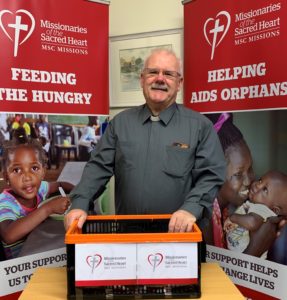
Congratulations to the winners of this year’s MSC Easter Draw!
Prize Winners:
1st Prize: €2,000 Cruise Travel Voucher
A. Jelliffe
Schull, Co. Cork
2nd Prize: €1,500 Sun Holiday Voucher
T. Kelly
Fenit, Co. Kerry
3rd Prize: €1,000 City Break Voucher
N. Greene
Ennis, Co. Clare
4th Prize: €1,000 TV/Audio Voucher
A. Grennan
Loughrea, Co. Galway
5th Prize: €1,000 TV/Audio Voucher
M. Conway
Cobh, Co. Cork
6th Prize: €1,000 Home Furniture Voucher
G. Drummond
Sneem, Co. Kerry
7th Prize: €1,000 Home Furniture Voucher
I. Finlay
Greystones, Co. Wicklow
8th Prize: €500 Weekend Break Voucher
C. Norris
Tullow Road, Co. Carlow
9th Prize: €500 Weekend Break Voucher
M. Flynn
Dublin Rd., Galway
10th Prize: €500 Computer/Tablet Voucher
J. Mannion
Ballinasloe, Co. Galway
11th Prize: €500 Computer/Tablet Voucher
M. Cunniffe
Strokestown, Co. Roscommon
12th Prize: €500 Home Decor Voucher
K. Carroll
Arklow, Co. Wicklow
13th Prize: €500 Home Decor Voucher
D. McConnell (Jnr.)
Ardrahan, Co. Galway
14th Prize: €500 Garden / Outdoor Voucher
J. Lennon
Kilnamanagh, Dublin 24
15th Prize: €500 Garden / Outdoor Voucher
M. Foster
Dundalk, Co. Louth
16th Prize: €500 Home Appliances Voucher
J. O’Leary
Ennis, Co. Clare
17th Prize: €500 Home Appliances Voucher
C. A. O’Neill
Omagh, Co. Tyrone
18th Prize: €500 Hot Air Balloon Voucher
K. Hubbard
Kilkee, Co. Clare
19th Prize: €500 Driving Lessons Voucher
S. Gillespie
Boyle, Co. Roscommon
20th Prize: €500 Cookery Class Voucher
M. Cashman
Rocklands, Co. Wexford
All winners will be notified individually.
We would like to extend our sincere thanks to everyone who took part in this year’s draw.
This year’s MSC Easter Draw took place on Wednesday, April 17th 2019.