Feb 22, 2021
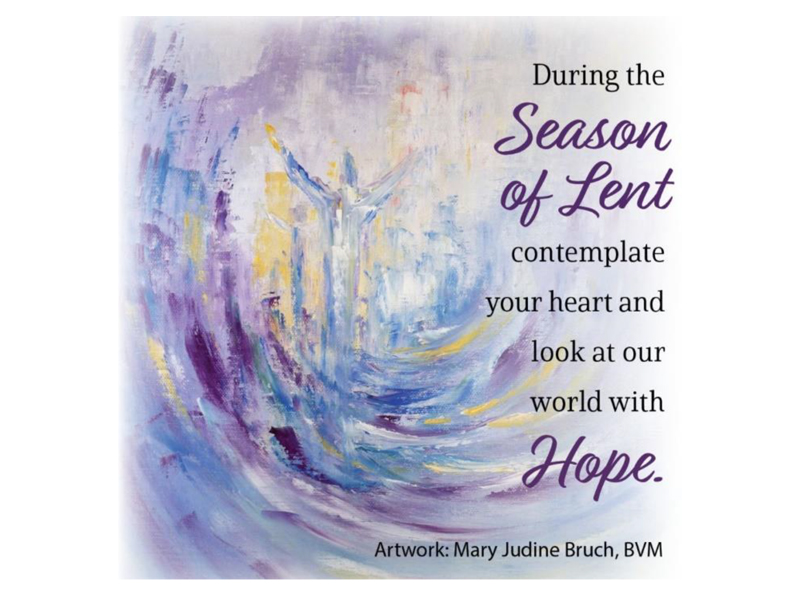
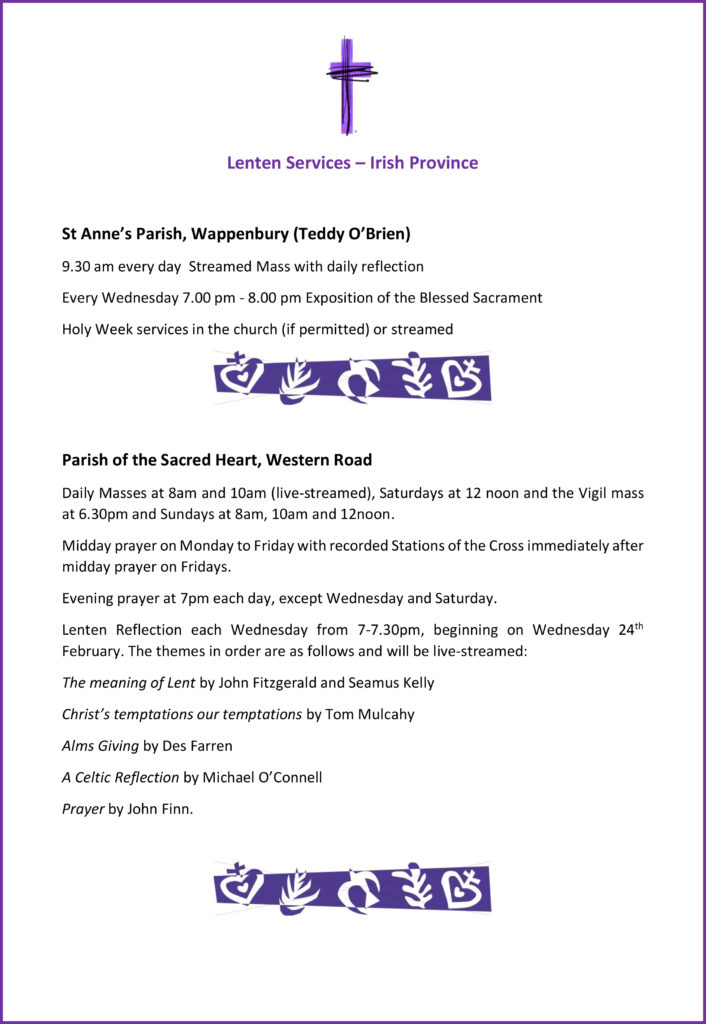
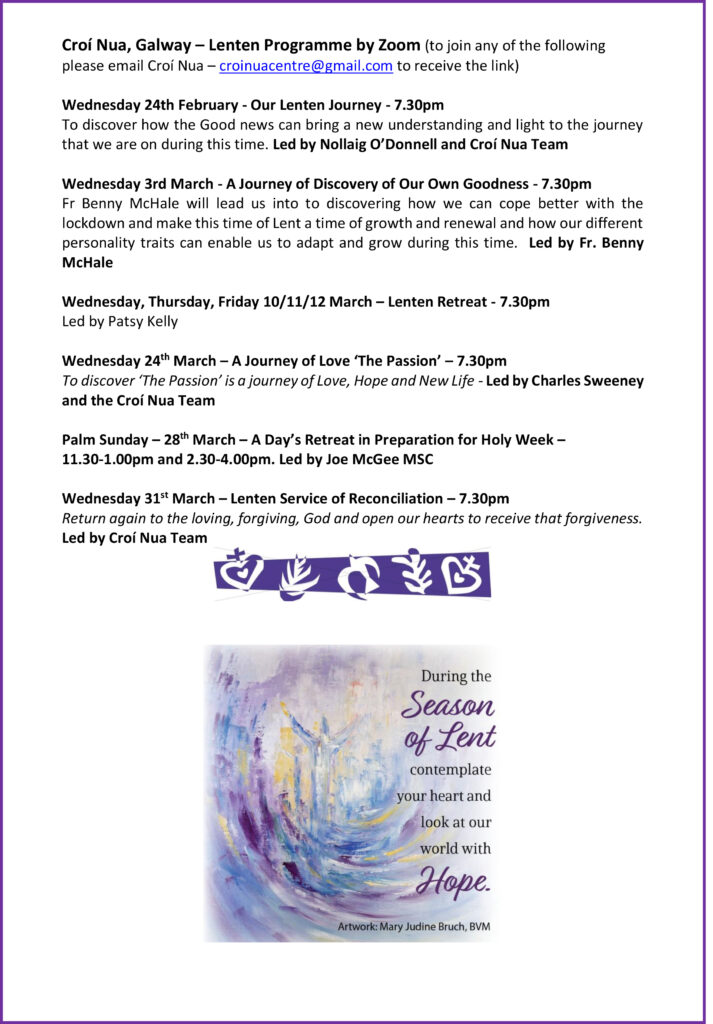
As we begin our Lenten season and journey this year, we do so after already a long year of limitations and lockdowns. It feels like we have already given up so much. It has been hard. Yet these coming weeks can be a precious time to open our hearts to the Lord who loves us intimately and has compassion on his people; to be renewed, restored, healed and converted. In opening our hearts to Him, so also we open our hearts to one another and to our world. We pray, we fast, we reach out in selfless giving.
Despite our continued physical isolation from one another, may this Lent be a graced time for us; that we each may yield fruit in due season (Communion antiphon for Ash Wednesday). For these 40 days we journey together.
Have a blessed journey.
Fr Carl Tranter
MSC Provincial Leader.
Feb 9, 2021
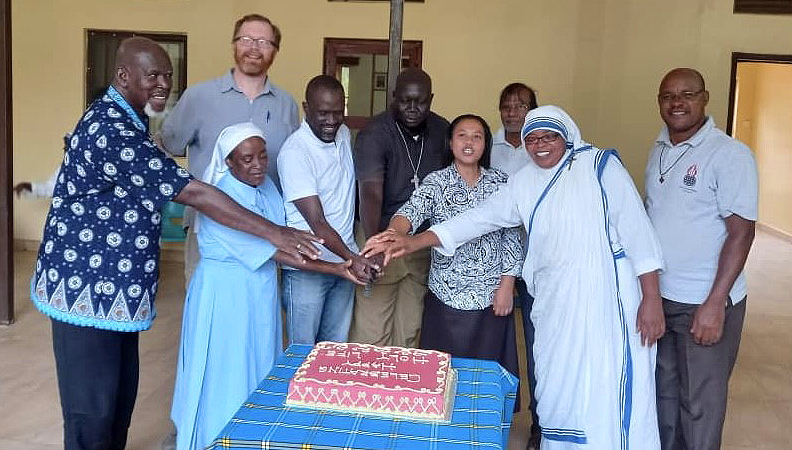
The biggest dilemma at the start of the month was figuring how to fit the words ‘Celebrating Religious Life’ across a cake. It was for the second of February, the World Day of Prayer for Consecrated Life, when the Church acknowledges in a special the contribution of sisters, brothers, and religious priests in the building up of the Kingdom of God.
In the Diocese of Rumbek, we are a broad church with missionaries from around the world working alongside local diocesan clergy and our lay teams. There are sisters from the Missionaries of Charity and the Evangelising Sisters in Cathedral parish, as well as our own Loreto Sisters, along with the brothers from De La Salle community just up the road in their new school for boys. You also have the Jesuits, the Spiritans, and of course one Missionary of the Sacred Heart who wandered in a few months ago and everyone has been too polite to ask what he is actually doing there in the first place.
In all we have over thirty religious sisters, brothers and priests from all across Africa, Asia, Australia and Europe. The ministry that they are involved in includes the usual schools and clinics that are usual in name only. The issues they face and the challenges they meet are well outside the norm of what we typically deal with in the West. This morning the Missionaries of Charity are going to a leper colony an hour outside of town. The Jesuits are setting up an English language course for their adult education programme and are trying to encourage as many women as possible to enrol to improve their future employment prospects. The Loreto sisters and the team in our clinic are getting ready for a possible surge in Covid cases, even though we have no testing kits and there are only four ventilators in the whole country of 11 million people. None are in Rumbek.
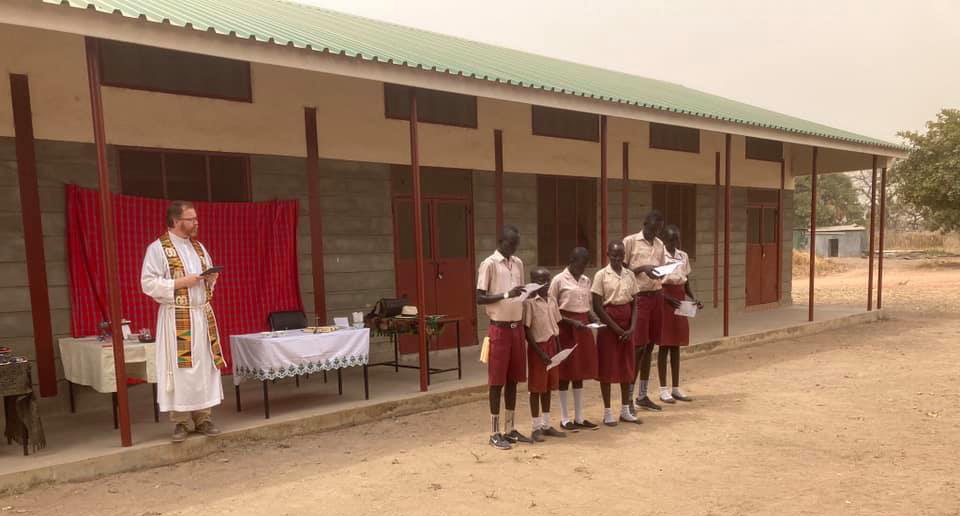
As for myself, I’m still working away on the local language. We had our first Children’s Liturgy last Sunday morning and when I enthusiastically greeted the kids in Dinka there was stony silence. Not a single word. Nothing. Then when one of the students said 100% exactly what I said they were beside themselves with excitement. When I said it again, I got nothing! Afterwards the student said I was doing well, but politely recommended that my accent needs a bit of work. I suspect she is going to be an excellent, if somewhat demanding, teacher one day!
Last Friday we had another wonderful celebration. The children from Year 8 graduated from Loreto Primary School and this very week they will sit the national exams. They are another group you will need to add to your prayers. Seventy-two boys and girls successfully completed their studies. When I spoke with them during Mass, they talked about how their first lessons took place under a large tree in junior infants. It has been a long road and a tumultuous few years, but they persevered. Despite the school’s best efforts many students dropped out along the way due early enforced marriage or the need to go and work to support their family. Still the number of those who persevere continues to grow and education is increasingly seen as the key pathway out of poverty to a better life.
At the graduation Sr. Orla, the Director of Loreto, and Mr. Yuga, the Compound Manager, presented the children with some stationery supplies for their exams and a Bible. In the homily of the Mass, I explained that in life they could go anywhere and do anything as long as they remembered that their education was their passport and their Bible was their guide for the journey. It was day of real thanksgiving for all that was achieved and touched by sorrow as the students will now go on to different schools.
We hope that most of the girls will continue into Senior 1 in Loreto Secondary School. Many of the boys will join the De la Salle Brothers in their school or go to the Comboni school in town run by the Evangelising Sisters and the Diocese. Education is a foundational ministry and one of a number that the sisters, brothers, and priests carry out. As for the cake, well the decorator ran out of space and decided that Celebrating Holy Life was grand. On reflection we all agreed.
“Ben Nhialic areer keg a way!”,
Fr. Alan
Read more of Fr Alan’s journey:
– Looking for a Sign on the Way to South Sudan
– Building a Better Future in South Sudan
– Chirstmas greetings from Fr Alan in South Sudan
– A Cup of Sugar and Maybe a Goat
Images via Fr Alan & Loreto Rumbeck on Facebook
HELP US TO TRANSFORM LIVES IN SOUTH SUDAN
Feb 4, 2021
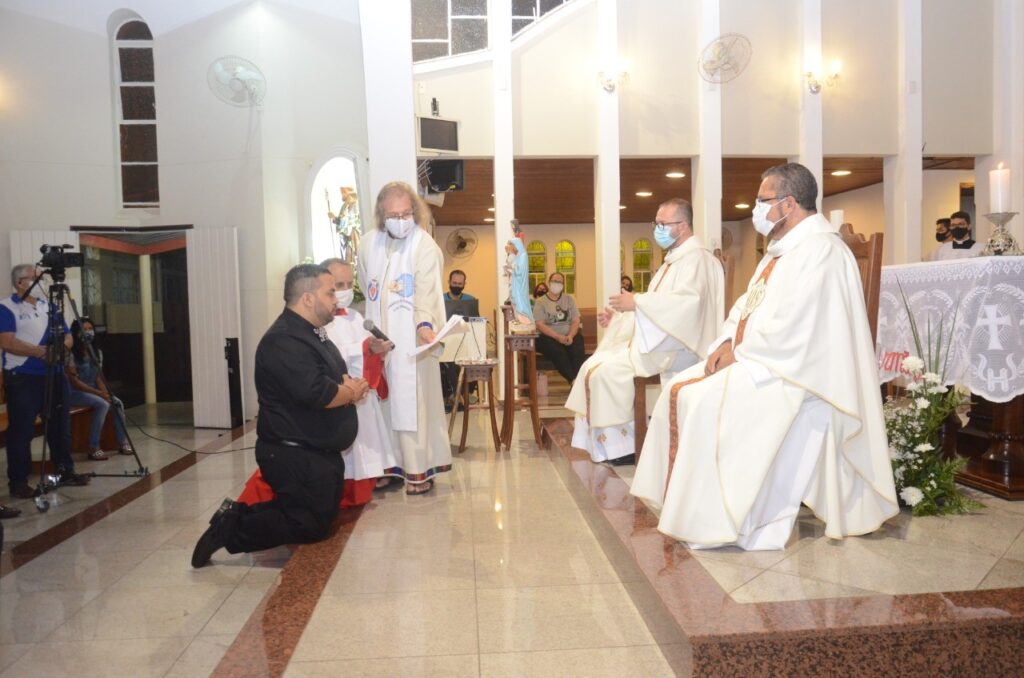
We extend our heartfelt congratulations to Miguel Ibarra MSC and his fellow novices, Erik Bryan de Mattos MSC and Witalo Souza de Jesus MSC on their First Profession on Tuesday night.
Miguel is a member of our MSC Region in Venezuela and has just completed his noviciate in Itajubá, Brazil. He began his formation in Maracaibo with Vicente Buitrago and then Tom Mulcahy before transferring to the Pre-Novitiate in Sao Luis, Brazil. We are particularly grateful to his formators in Brazil, Everton da Silva MSC (Pre-Novitiate) and Getulio Saggin MSC (Novice Master) for their welcome and close accompaniment of Miguel.
Miguel will now move to the MSC Scholasticate in Sao Paulo to continue with his theology studies. We had hoped that he would be able to go the MSC International Scholasticate in El Salvador but because Venezuela has closed consular services during the Covid-19 Pandemic it has not been possible for him to obtain the necessary documentation.
For those of you who may wish to watch the celebration you can do so on YouTube here
We welcome Miguel as a professed member of the Province and assure him our support and prayers as he continues his formation journey.
Feb 1, 2021
Life is filled with key moments that help shape us into the person we are today. Many are unique to our story and depend on our different circumstances, but some are shared and have become part of our culture. I would argue that in Ireland one of the biggest, most profoundly impactful events we have is the Leaving Cert. Even mentioning the words brings back memories of feverish late night study, wild prayers for inspiration, and the occasion desperate gamble on what part of each subject you choose to focus your time on.
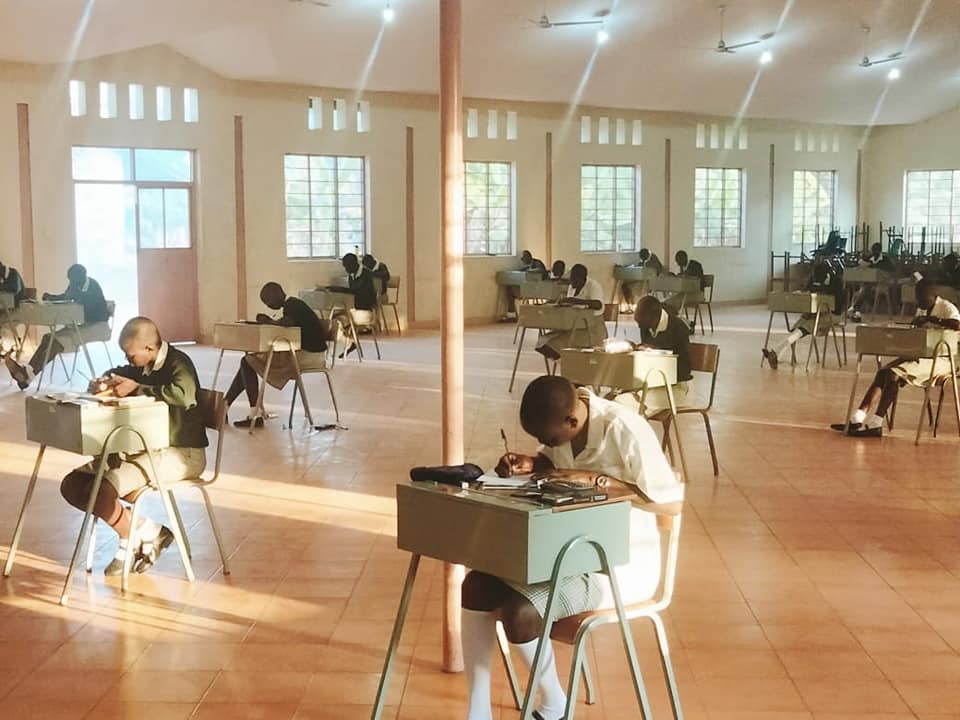
Last week, Loreto Rumbek held the South Sudanese version of the mock Leaving Cert. Students had a week and a half of tests on English, maths, the sciences, geography, history, religious education, and business. Each day I would drop by the exam hall to see how they were doing, give a word of encouragement where needed, and say a prayer for them all. That said, I wouldn’t swap places with them for all the tea in China!
The importance of studies cannot be overemphasised. The girls have made real sacrifices to be here, going against societal expectations and cultural pressures. It is still an unfortunate reality that teenage girls here are more likely to die in childbirth than they are to graduate secondary school. Let that sink in for a second. It sounds unbelievable, but it is true. It gives you an idea of what these girls are fighting for – a better future for themselves and for future generations of young women in South Sudan. The change that needs to happen begins in earnest in that large, dusty exam hall in a place you would struggle to find on a map.
My part in this societal and cultural revolution is tiny, but enthusiastically carried out. The Religious Education teacher finished in the school at the end of 2020, so I naively volunteered to correct and give feedback on the exam papers. I have always been told it is good to help out where you can. In my middle age what I had forgotten was that mocks are always traditionally marked a lot harder than normal. The idea is that it highlights what the students need to focus on and encourages them to study more before the real exams. I was lucky to get out alive after the feedback class. The girls fought and argued for every percentage point, disputing the finer questions of theology, sociology, and moral philosophy with the wit and wisdom of a St. Thomas Aquinas or a St. Catherine of Siena. Here exams really count!
Life has now returned to normal, at least for the time being. In a normal school year, the students would sit their state exams in December. Of course, last year was anything but normal. Now we hope that they will be held in March, but we are still waiting for confirmation. As it stands only exams classes are allowed back in school, but there are signs of a gradual return to education. Most of the children will have been out of class for a year and in a country with no national power grid, let alone internet and computers, home schooling was never an option. So, it’s a new beginning and it will take time, but we will get there. In the meantime, do keep the girls in your prayers. There is a lot riding on how well they do.
God bless or as they say here Ben Nhialic areer keg a way,
Fr. Alan
Read more of Fr Alan’s journey:
– Looking for a Sign on the Way to South Sudan
– Building a Better Future in South Sudan
Images via Loreto Rumbeck on Facebook
HELP US TO TRANSFORM LIVES IN SOUTH SUDAN
Jan 26, 2021
In the middle of November 2020, the Philippines was hit by Typhoon Vamco (known locally as Typhoon Ulysses), which left in its wake loss of life, severe flooding and damage amounting to millions of euro.
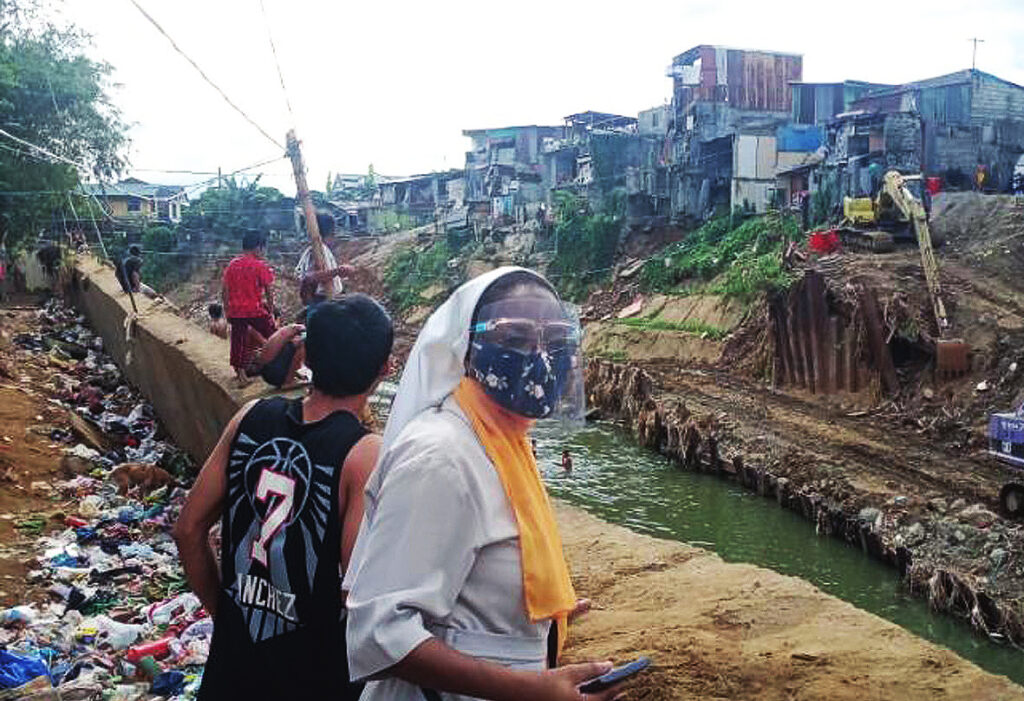
Typhoon Vamco was the most powerful typhoon to hit the country in seven years and the community of 25 OLSH Sisters have been ministering to badly affected families in two very poor areas of Manila.
“In the face of such damage, it is hard to know how to help and what to do,”
writes Sr Ruth S. Yburan FDNSC, Regional Leader of the Daughters of Our Lady
of the Sacred Heart in the Philippines.
The initial focus was on providing emergency aid such as food and water to families who have been left destitute and displaced by the typhoon, and now, the Sisters are helping people to rebuild their lives, starting with purchasing the necessary materials to help people to restore homes that were demolished by the storm.
“This is a long-term task, and we would be very grateful for any assistance you can give us.Please be assured of the prayers and gratitude of the Sisters and the people to whom we minister.”
– Sr Ruth S. Yburan FDNSC
PLEASE SUPPORT TYPHOON VICTIMS IN THE PHILIPPINES
Jan 25, 2021
Last year, our World Projects Appeal introduced you to the children of the Yetsi region in the Democratic Republic of Congo, where Bishop Toussaint Iluku MSC was raising funds to build a school in an area of extreme poverty and hardship.
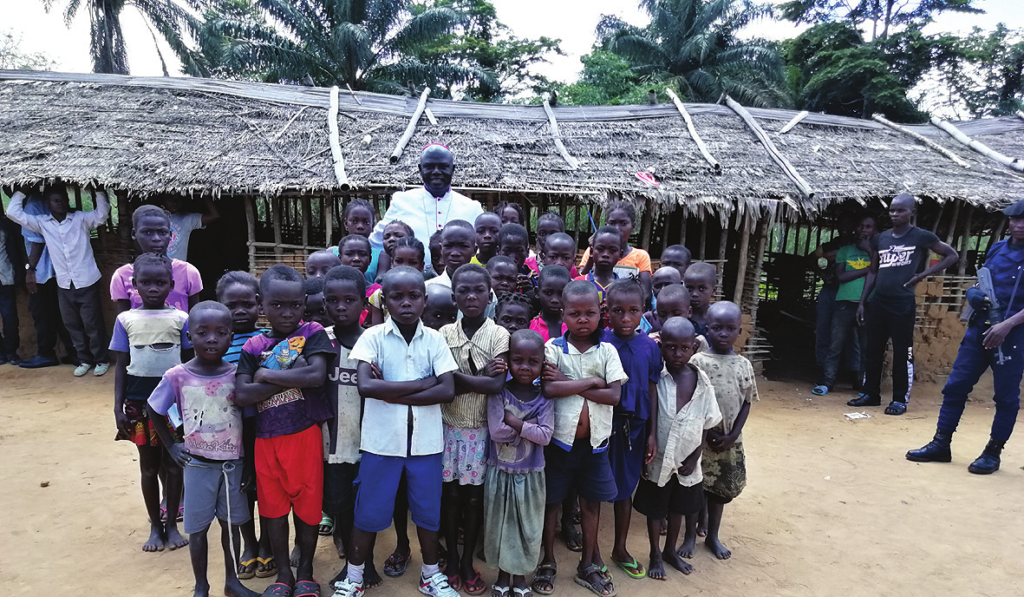
The Democratic Republic of Congo is ranked as one of the poorest countries in Africa. The diocese of Bokungu-Ikela, located in the north-west of the Democratic Republic of Congo, was founded by the Missionaries of the Sacred Heart in 1961 and is an area of real and pressing need.
The population depends on agriculture and livestock for their livelihoods, and on a day-to-day basis, they live hand-to-mouth in precarious conditions.With the diocese coming up to its 60th anniversary, Bishop Toussaint and MSCs in the region are shining the spotlight on the lack of educational facilities in the region.
The Catholic Church is one of the main sources of hope for struggling families in the area, particularly when it comes to education, and our MSCs are doing their best to lay the groundwork to give local children,and generations to come, hope for the future.
Thanks to the generosity of our mission friends here in the Irish Province following last year’s appeal,Bishop Toussaint and his team were able to fund the construction of a school building in Yetsi.
Work is ongoing on the project; however, the school is sorely lacking in equipment as essential as benches and tables. The children can often be seen studying on the floor due to the lack of the most basic facilities,creating additional challenges for students who already have very little, and who are desperately trying to make the best of what they have in order to build a more hopeful future.
Some of the pupils bring their own chairs from their homes. However, many of these children are from homes that have so little, they don’t even have a chair to bring to school.Those children who don’t have them, they have the
floor, where they sit down and follow the teacher.”
– Bishop Toussaint MSC
Even the smallest contribution will help Bishop Toussaint and MSCs in the diocese of Bokungu-Ikela to continue to educate needy children in the region, providing something as simple as a bench and chair where pupils can study and gain a fighting chance for a brighter tomorrow.
CAN YOU HELP OUR MISSIONS IN THE CONGO?