Aug 25, 2022
Our most recent update from the Philippines comes from Fr Richie Gomez MSC, community leader at the MSC Centre for the Poor. The Provincial Conference for the Philippines took place in August, in person for the first time since the coronavirus pandemic struck, and Fr Richie writes with the highlights of a report on the latest progress of the MSC Centre for the Poor.
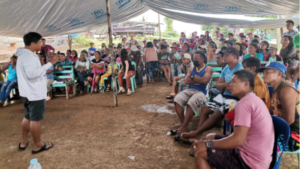
“What has happened at the Centre for the Poor since it was established four years ago, up to this moment, is beyond expectation!” writes Fr Richie. “It has given birth to an agricultural cooperative movement among farmers that expresses our concerns, especially regarding the poor and the marginalised in our society. Our Centre is a grass-roots, non-profit organisation dedicated to taking care of the environment and well-being of the people by providing services to the community in terms of spiritual, pastoral, and socio-economic needs.”
“A working arm of the Missionaries of the Sacred Heart.”
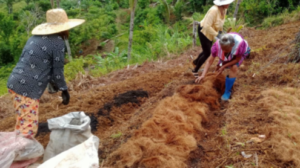
“The MSC Centre for the Poor Agricultural Cooperative (MSC-CEPAGCO) is a working arm of the Missionaries of the Sacred Heart, responding the many difficulties that arose during the COVID-19 pandemic and beyond, by organising the farmers’ sector to ensure food sustainability and care of our common home,” Fr Richie continues.
The Centre for the Poor Agricultural Cooperative has been recognised by the Cooperative Development Authority in the Philippines, and in June received an award from the Department of Agriculture naming them one of the most outstanding Civil Society Organisations (CSOs) in the country, and running one of the most successful agri-farms in the Caraga region. “This is a great honour for the Centre,” writes Fr Richie, “reinforcing our unique position as we help and better improve livelihoods and the quality of life of the community.”
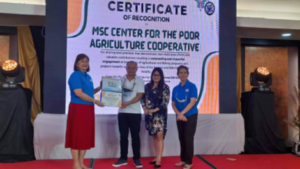
Empowering the disadvantaged and marginalised
The cooperative currently has 30 young college students, all from disadvantaged backgrounds, working with them in their shared mission to “produce affordable, healthy food for all”. Not only is the cooperative focused on taking care of our earth, and creating sustainable food sources for local communities, it also prioritises development opportunities for young people, or marginalised individuals, who struggle to go beyond backgrounds that may be rooted in severe poverty, hardship, and social issues. “We want to empower the small-scale farmers, youths who are out of school, indigenous cultural communities, those who are working to overcome addiction, and repatriated OFWs (people from the Philippines who have been living and working abroad),” Fr Richie explains. Teaching these young or marginalised people invaluable skills, the cooperative allows them to find a place for themselves, playing valuable roles and being an important part of a bigger picture, while also learning useful skills that will help them to find employment opportunities as they move forward in life.
In essence, “The Centre for the Poor aims to help rural and urban poor communities to develop sustainable livelihoods that will benefit them and will support their daily lives”. Two centres are currently in operation, one in Butuan City and the other in Del Monte, Talacogon, Agusan del Sur, which is also home to the cooperative’s demonstration farm.
From “me to we.”
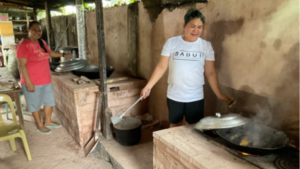
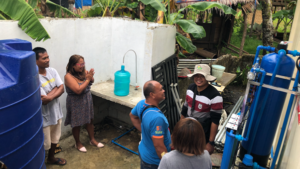
Responding to the “wake-up calls” that our earth is giving us, the MSC Centre for the Poor Agricultural Cooperative are promoting the shift from “me to we”, from “monoculture to diversity”, and from “competing with nature to partnering with nature”. From the construction of brick cooking stoves in several locations, to the installation of rainwater filtration systems, along with a host of further developments and partnerships, the Centre for the Poor Agricultural Cooperative has been going from strength to strength. We send our heartfelt congratulations to Fr Richie, his MSC brothers, and the MSC-CEPAGCO community on their tremendous achievements to date, with every blessing and good wish as they continue in their vital work.
IF YOU CAN, PLEASE SUPPORT OUR MISSIONARY WORK
Aug 4, 2022
As the people of the Philippines continue to rebuild their homes, lives, and livelihoods following the devastation caused by Typhoon Odette in December 2021, the Missionaries of the Sacred Heart and the Daughters of Our Lady of the Sacred Heart are ongoing in efforts to help with repair and restoration.
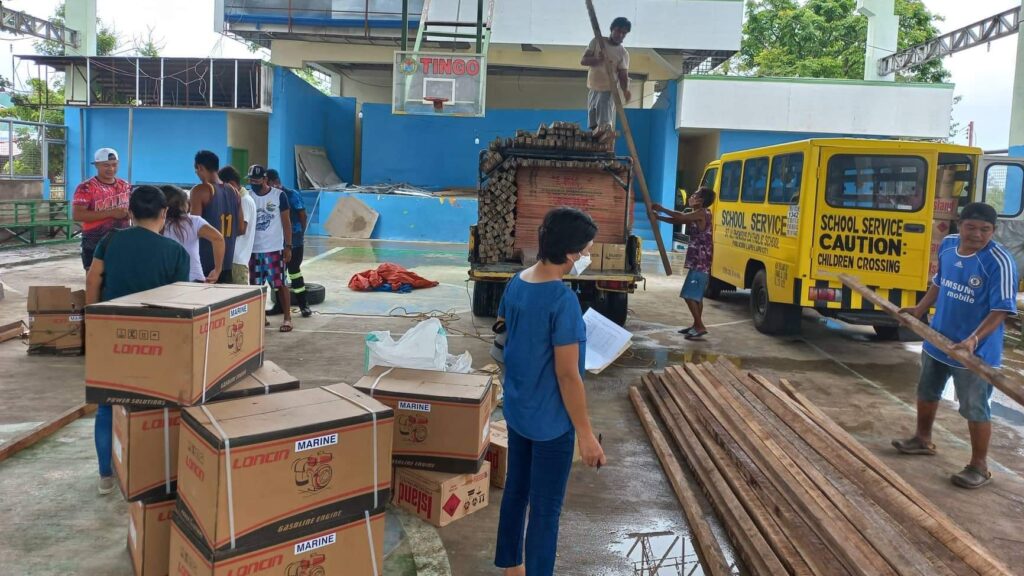
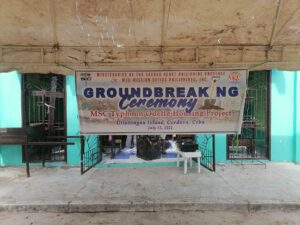
In the middle of July, the Facebook page for the MSC Mission Office in the Philippines reported that the MSC Task Force Odette had held a ground-breaking ceremony in Gilutongan Island, located in Cordova, Cebu, to mark the beginning of the housing project here.
The MSC Typhoon Odette Housing Project has been in force throughout the first half of this year, with construction beginning in Bayagnan Island in Surigao City in March, and now, with the next phase of the project underway, more than 160 families in Gilutongan Island will be able to live safely and comfortably once again in secure homes.
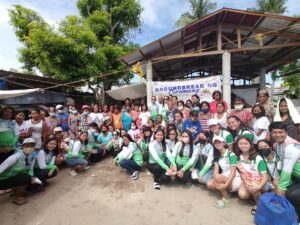
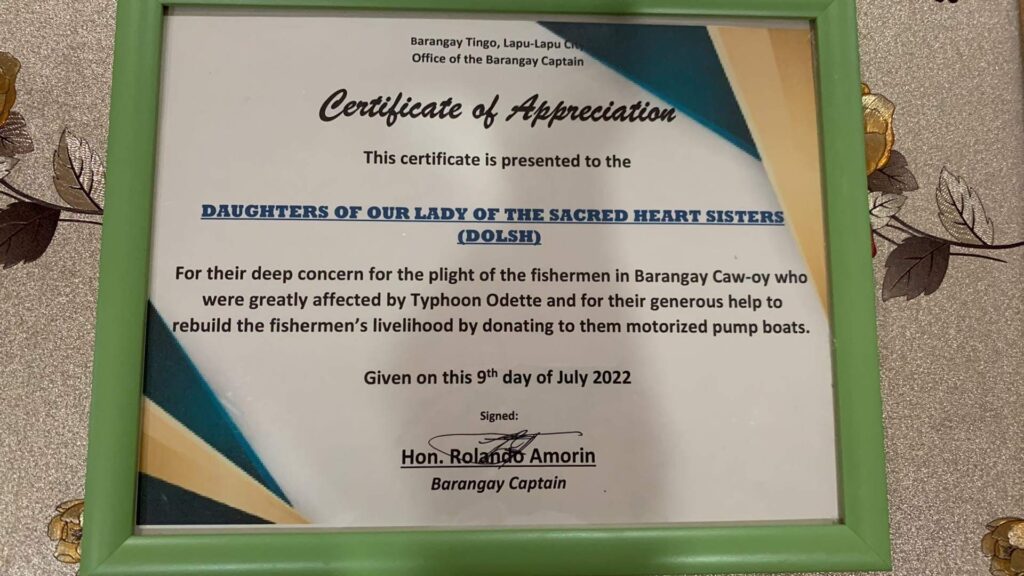
Our Sacred Heart Sisters, the Daughters of Our Lady of the Sacred Heart, are also facilitating the rebuilding of homes, and the restoration of livelihoods in the Philippines – most recently, for fishermen in Barangay. The OLSH community in the Philippines donated motorised fishing boats to the fishing community of Barangay Caw-oy, and these boats were named in honour of Our Lady of the Sacred Heart.
Together, we pray for the continued success of these relief programmes, for all of our MSC brothers and OLSH Sisters in the Philippines, and for the families and communities they serve.
Gilutongan Island images via the Facebook page for the MSC Mission Office Philippines, Inc.
PLEASE HELP OUR SACRED HEART FAMILY IN THE PHILIPPINES
Jun 23, 2022
In the latest update from our MSC brothers in the Philippines, we learn of their ongoing commitment to helping survivors of Typhoon Odette to regain security and quality of life.
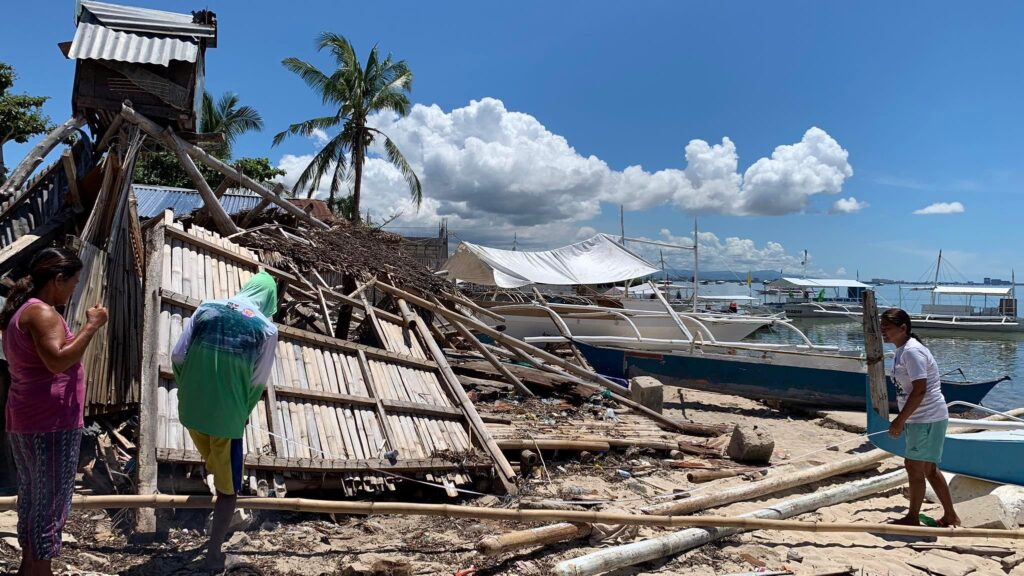
On June 10th, the MSC Task Force Typhoon Odette travelled to Guilotungan Island in Cordova, Cebu, to assess the needs of the local community who are suffering the ongoing effects of the damage caused by the typhoon. The assessment took place in order to identify those households who are still in need of help in the reconstruction of safe, secure homes. According to initial reports in the aftermath of the typhoon, 90% of the houses in this community had been completely destroyed. Following their review, the team were able to identify more than 170 households in this island community who are still living in “temporary shelters and makeshift houses”.
The MSC Typhoon Odette Housing Project has already made tremendous strides in rehoming families who were left with nothing when the typhoon struck in December 2021. Construction work has been ongoing across Bayagnan Island in Surigao City since March, with recent blessing ceremonies taking place across the district as MSCs prayed for families beginning a new chapter in their new homes.
The relief work continues as our MSCs, along with a superb team of volunteers and helpers, begin preparations for further aid efforts to assist vulnerable families in the Guilotungan Island region. Please keep our MSC brothers, and the families and communities in their care, in your prayers as they work together on Guilotungan Island and beyond to rebuild for a hopeful future.
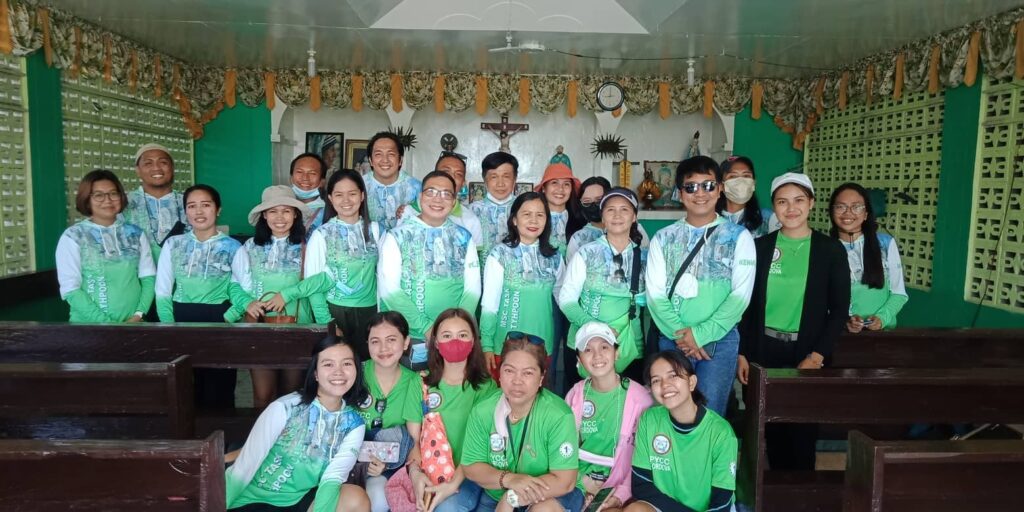
Images via the Facebook page for the MSC Mission Office Philippines, Inc.
PLEASE HELP OUR MSCS IN THE PHILIPPINES
Jun 2, 2022
At the end of May, the MSC community of Bayagnan Island in Surigao City came together to give their blessing to the new homes constructed by the MSC Typhoon Odette Housing Project, and to pray for the families who will live in them.
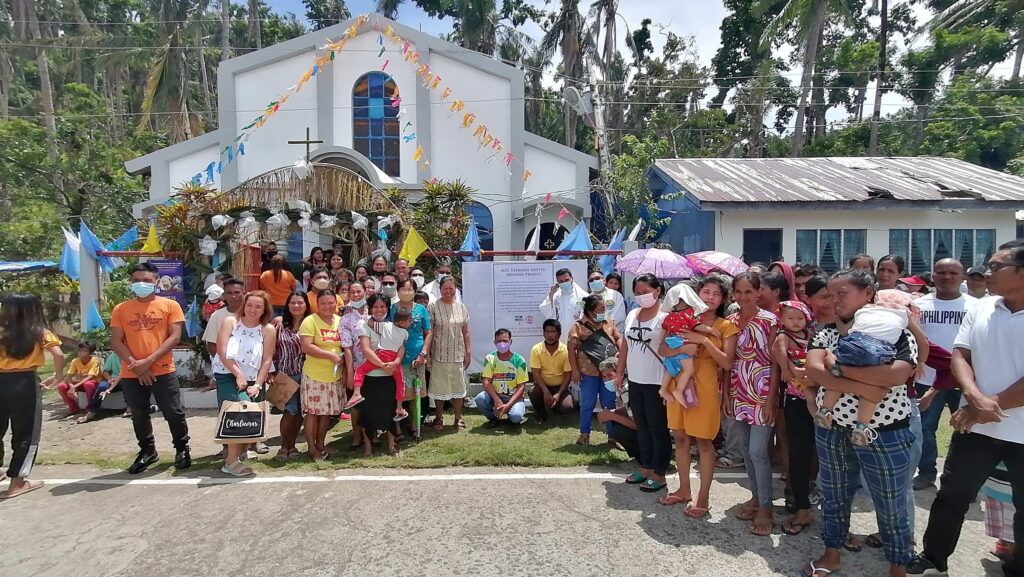
Hundreds of thousands of families were displaced from their homes last December, when Typhoon Odette hit the Philippines to devastating effect. The strongest storm of the year, the super-typhoon killed hundreds, injured many more, and laid waste to hundreds of thousands of homes, many of which were completely destroyed.
In March, the Missionaries of the Sacred Heart in the Philippines began distribution of housing materials to five districts across Bayagnan Island, and with true community spirit, everyone involved contributed to making the project a great success. The materials provided have allowed for the repair and construction of safe, secure residences for over 330 households who had been left homeless by the typhoon.
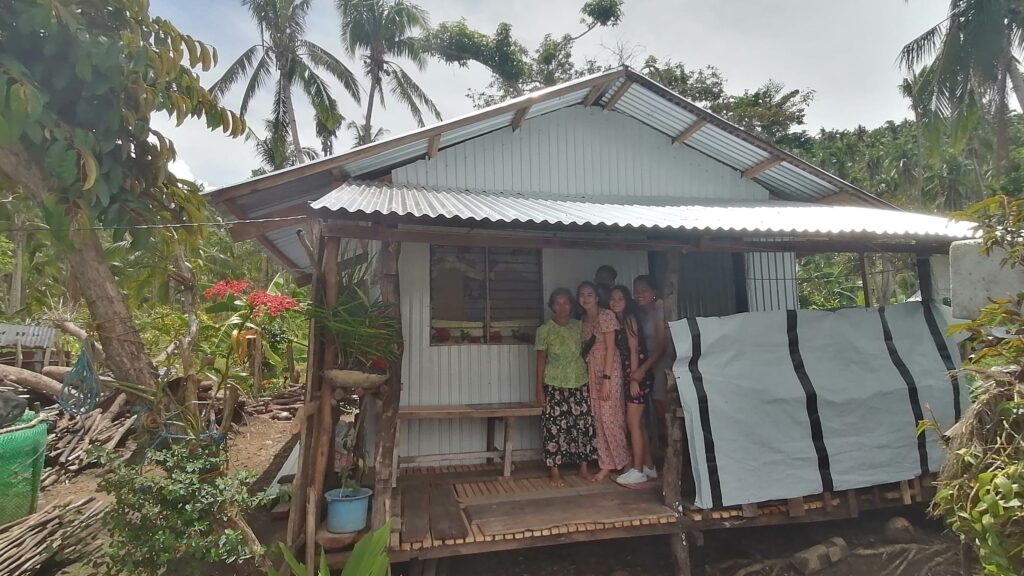
The end of May saw MSCs from the Surigao District, together with Msgr. Edito Alcala DCS, lead a beautiful blessing ceremony for all of the families involved in the housing project.
“This housing project was established to help the families who were greatly devastated by Typhoon Odette in 2021,” read a placard mounted at the blessing ceremony. “It is made possible through the support of MSC mission partners, friends, and Missionaries of the Sacred Heart (MSC) all over the world.”
Earlier in the year, Irish Provincial Superior Fr Carl Tranter MSC received a letter from Fr Richie Gomez MSC, community leader at the MSC Centre for the Poor in the Philippines, with deep gratitude for the support of our mission friends in the Irish Province at a time of real and urgent need. “I would like to thank you for your untiring support to the Philippine Province,” he wrote. “We are your extended arms, feet, mind, and heart in reaching the poor, and now with our typhoon survivors.”
Following weeks and months of grief and suffering, and an enormous struggle to rebuild lives that had been shattered by the effects of the typhoon, it is a true blessing to see the hope, joy, and spirit of togetherness and unity that shone through on this special day. We offer up our prayers with those of our MSC brothers in the Philippines, and we wish every blessing of the Sacred Heart upon them, and upon all of the families beginning a fresh new chapter in their new homes.
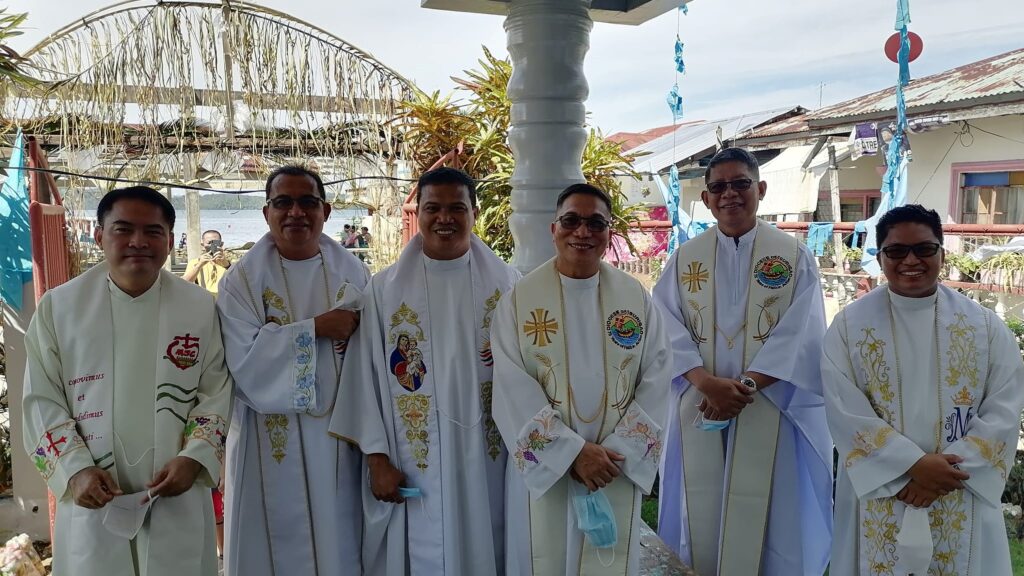
Images via the Facebook page for the MSC Mission Office Philippines, Inc.
Please click here to watch a video of the blessing of the MSC Typhoon Odette Housing Project,
via the MSC Mission Office Facebook page.
PLEASE SUPPORT OUR MSC MINISTRY IN THE PHILIPPINES
May 26, 2022
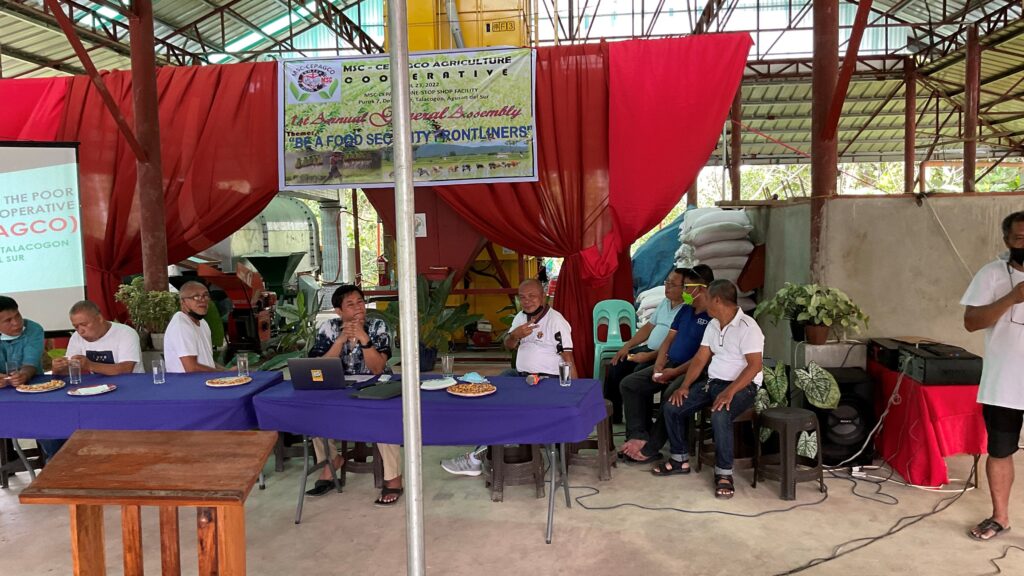
At the end of April, the MSC Centre for the Poor in the Philippines marked their first General Assembly, where 270 members of the co-operative committed themselves to the Centre, to its ethos, and to being “Food Security Frontliners” in the ongoing struggle to feed the hungry while protecting the earth and its natural resources.
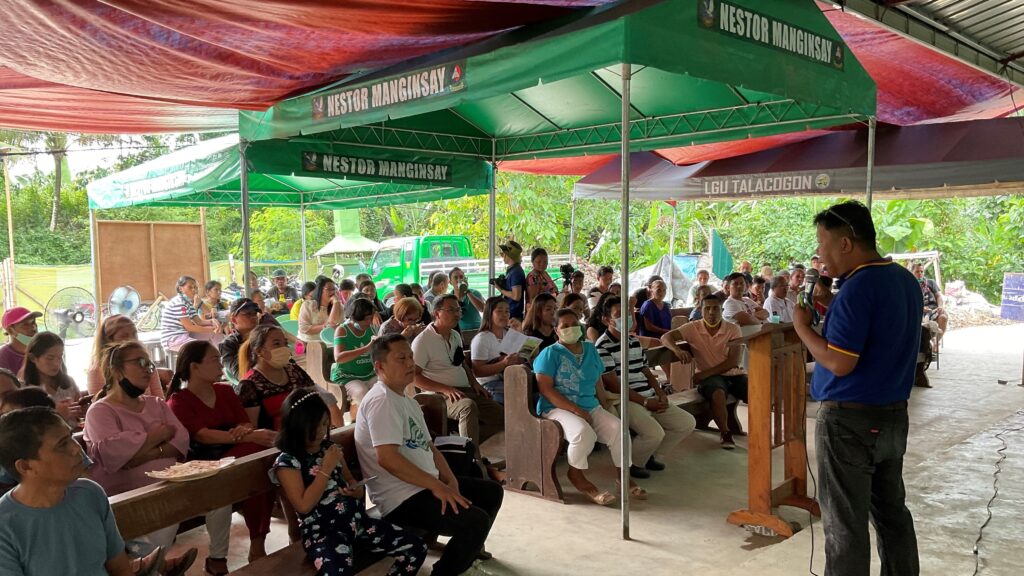
At the MSC Centre for the Poor in Butuan, the MSC community use natural resources to give struggling families the chance to build a life of self-sufficiency and dignity, while protecting and nurturing the local ecosystem. Their core values focus on sustainable farming, environmental advocacy, zero-waste management, fair trade, and promoting a simple lifestyle, with emphasis on the value of sharing and spirituality of the heart.
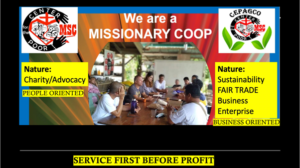
The MSC Centre for the Poor Agriculture Cooperative (MSC-CEPAGCO) “is bound by the spirit of generosity and resilience, working towards a healthy, sustainable, and empowered society,” according to the centre’s vision and mission. “Together, we are building communities that care for the environment and look towards a better, more holistic growth of society as stewards of God’s creation.”
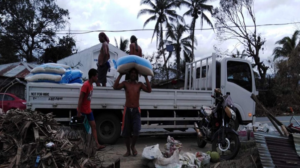
With current projects including a rainwater filtration system, their “Be a Food Security Frontliner” programme, livestock and vegetable farming, a Living Museum, their Farm to Table system, a scholarship programme for local youths, and several Typhoon Odette relief projects, the community at the Centre are going from strength to strength in their mission. Their most recent developmental plan encompasses several expansion programmes, incorporating the establishment of three greenhouses, an organic farm supplies store, an eco lab, a co-op office, a classroom for students, an organic fertilizer production scheme, and improved post-harvest facilities. Their current goals include:
- Caring for the earth, as our common home.
- Continuing in the development of farming systems that use sustainable practices.
- Transforming and inspiring lives.
- Encouraging participation through community engagement.
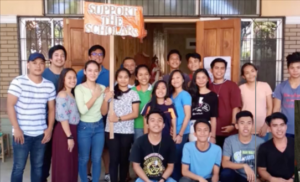
A total of 23 local youths are currently availing of the Centre’s scholarship programme, with studies in a wide variety of subjects including Accounting, Education, Environmental Science, Psychology, Business Administration & Marketing, Tourism Management, Computer Science, Civil Engineering, Information Technology, Agriculture, Mathematics, and Nursing. In addition, the Centre’s “Farm to Table” scheme is providing local employment and encouraging small businesses in the establishment of a fair-trade system based on an inclusive economy, whereby nobody will be left out through “farm to table connections” that bypass large commercial traders.
Established in 2018, our MSC community at the Centre for the Poor have since been working in harmony with nature to bring hope to vulnerable families and individuals living in areas rife with poverty and unemployment.
“As long as there are people who believe and trust us and regaining one’s relationship with the environment, this work will sustain,” reports Fr Richie Gomez, community leader at the MSC Centre for the Poor. “We are an emerging social enterprise that allows individuals to create regenerative livelihoods that nourish the soul and take care of the planet.”
PLEASE SUPPORT OUR MSC MINISTRY IN THE PHILIPPINES