May 4, 2017
As we celebrate Vocations Sunday, Fr Con O’Connell reflects on his calling as a Missionary of the Sacred Heart:
“For me, my vocations call follows the double path of Religious Life and Ordained Priesthood within the Missionaries of the Sacred Heart (MSC). Somehow, I felt drawn to the MSC emphasis on the compassion of Jesus and His commitment to justice for the underprivileged.
Indeed, this emphasis is to be seen in Jesus the Good Shepherd. He cares for the sheep – especially the hungry, thirsty, and wounded sheep.
It is 28 years since I took my vows as a religious brother, and 24 years since I was ordained a priest. I remember lonely days, sad days, and confused days. There were times when I asked myself what on earth I was doing. However, the happy days, the exciting days, and the days when I felt that I was exactly where God wanted me to be outweigh the darker days.
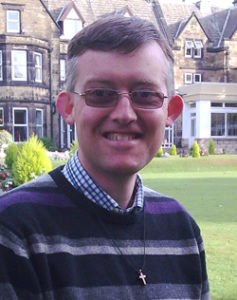
Fr Con O’Connell MSC
Serving my fellow humanity as an MSC priest and brother has been a joy and a privilege. It is a cliché, but I have received more than I have given. Each year, I ask God and myself, ‘Is this still my path?’ So far, the answer each year is yes. ‘Trust in the Good Shepherd and take another step.’
Trusting means risking. Jesus teaches us that true happiness on lies the other side of our fears. I believe that when I die, I won’t regret the risks taken that ended in failure. My biggest regrets will be the risks that I did not take.”
If you want to know more about a vocation as a brother or a priest, you’re welcome to click here.
You can also call Fr Alan Neville MSC, our Vocations Director,
on (086) 785 7955.
May 2, 2017
Meet Mark Quinn, one of two pre-novitiate students who began his studies in our MSC formation house in Dublin in autumn 2016.
By spending time in personal reflection, and living and working as members of a larger group, MSC pre-novitiate students gain a rich and varied experience of the community, its works, and its mission within our world.
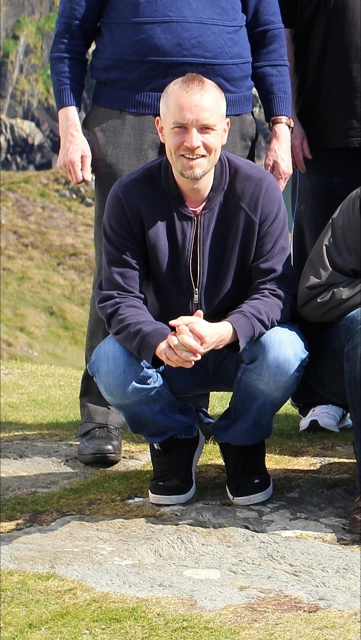 Mark is from Castlebar, Co. Mayo and is a chef by profession. A number of volunteering experiences in Africa led him to consider missionary life, and he has now come to explore his vocation with the Missionaries of the Sacred Heart. Here, he shares his reason for choosing to study with the MSC.
“In the midst of a deep discernment process, I found myself on a volunteer trip in the coastal city of Dar es Salam, Tanzania. One evening, while travelling home from our daily trip to the orphanages, my gaze was drawn to a small girl standing outside a makeshift hut as we sped along the dusty road. While her impoverished surroundings were heart-breaking, it was the expression on her motionless face that captured my attention. Her eyes transfixed on mine, I felt as if Christ himself was looking at me, calling me, or asking something of me that I was yet to fully understand.
A couple of days later, home in Ireland and with East Africa still fresh in my mind, I began to look deeper into religious missionary orders in Ireland. If I am to be honest (and maybe a bit superficial), I was initially attracted by the MSC’s online presence. It showed that the congregation was very much contemporary, and alive and kicking. I contacted Fr Alan, who came to my home to meet with me for a relaxed chat. He was genuinely interested in my story and was honest and informative about the MSC.
A few weeks later, I was invited to stay with the MSCs at their formation house in Dublin. It was great to see and talk to more young men in formation, and I was able to meet a number of priests who are working in a wide variety of roles for a question and answer session. It was a revelation for me to learn about the diversity and internationality of the congregation, and how I could bring my skills to them as well as being formed by their unique charism.
Then, in July, I was also able to take part in their fantastic annual volunteer programme. I travelled to the Holy Family Care Centre for children orphaned by HIV/AIDs or TB in South Africa, where I could see first-hand the heart of Jesus being brought to life. It confirmed for me that God was indeed calling me to be a missionary. But not just any missionary, a missionary of his Sacred Heart!”
Apr 12, 2017
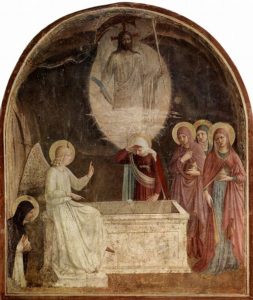 Fr Martin writes…
“In the First Reading, Peter stresses that the apostles are attested witnesses to Jesus’ Resurrection, with the task of proclaiming to all what Jesus’ saving mission meant. The message of the Second Reading is that all followers of Christ should be witnesses to the new life in Christ in a world that often has a contrary message. There is fruit for reflection in this for us this Easter.
Belief in the Resurrection of Christ and of Christ at God’s right hand is, in a sense, revolutionary. It calls for Christian living and Christian witness in an indifferent or unbelieving world. By union with Christ in baptism, Christians in a sense have died to one form of living, and now have a new life, in the words of today’s reading, ‘hidden with Christ in God’. (more…)
Apr 4, 2017
Together on the Way to the Lord
Giacomo Gelardi, from Italy, is one of five novices who are working and studying with the community of the Missionaries of the Sacred Heart in Myross Wood House, Co. Cork. Here, Giacomo reflects on his experience to date.
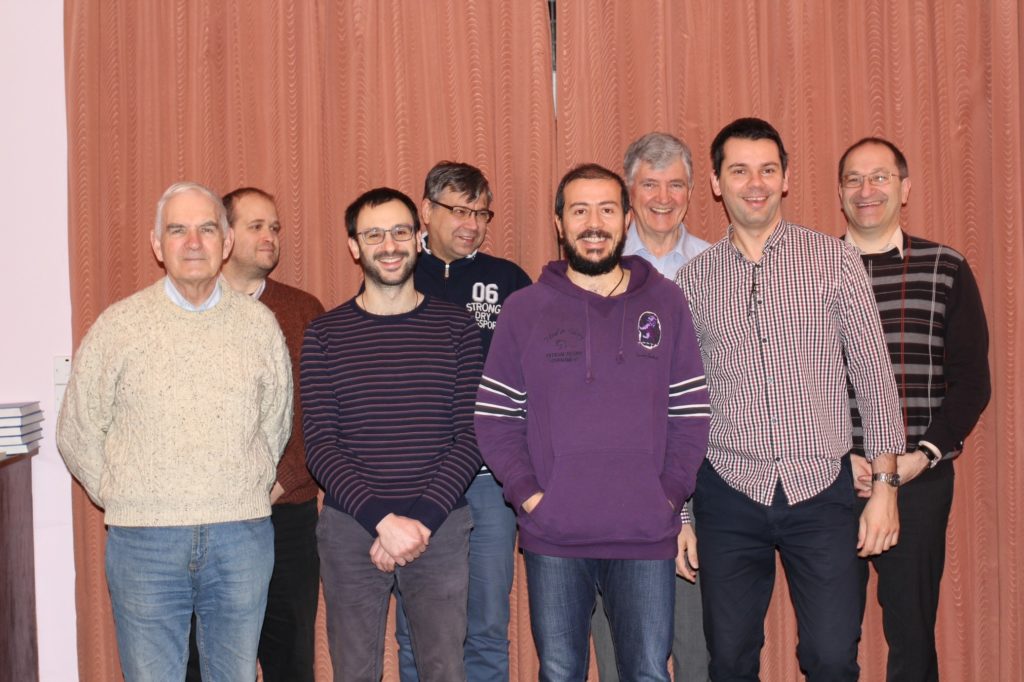
The MSC novices with their group leaders (L-R): Fr Nicholas Harnan MSC, Jaime Rosique Mardones, Giacomo Gelardi, Piotr Zlobinski, Domenico Roza, Fr Michael Curran MSC, Daniel Filipek, and Fr Michael Huber MSC.
“It only seems like yesterday, but it has already been seven months since I, along with four other novices, embarked on an experience that, with the help of God, will take us to consecrate our lives to Him.
Each of us travelled from a different part of Europe in August 2016, arriving in a quiet corner of Ireland to begin our novitiate with the Missionaries of the Sacred Heart of Jesus at Myross Wood House in Leap, West Cork. The novitiate year is devoted to deepening our knowledge of ourselves, of the divine within us, and of our relationship with God – and our response is a resounding ‘Yes!’, declared with complete freedom and awareness.
During these months, under the wise guidance of the Novice Master, Fr Michael Huber MSC, we have been expanding our knowledge of the MSC congregation, beginning with the spirit that inspired the MSC founder, Fr Jules Chevalier. At the same time, we have also been developing a prayer life that is the foundation of human and spiritual growth towards a profound understanding of Jesus being present in each instant of our lives. This whole experience is enhanced by a wonderful natural setting in West Cork, where calm and solitude induce reflection and contemplation.
The Lord has granted our community the grace of getting on well together – within the limits of our humanity, obviously!
People may be curious to know what encouraged a Polish theologian, an Italian journalist, a Spanish lawyer, a Slovak computer scientist, and an Italian chemist to join the Missionaries of the Sacred Heart. Although the familiar answer is ‘because God called us’, each one of us had a personal reason that drew us to this religious congregation.
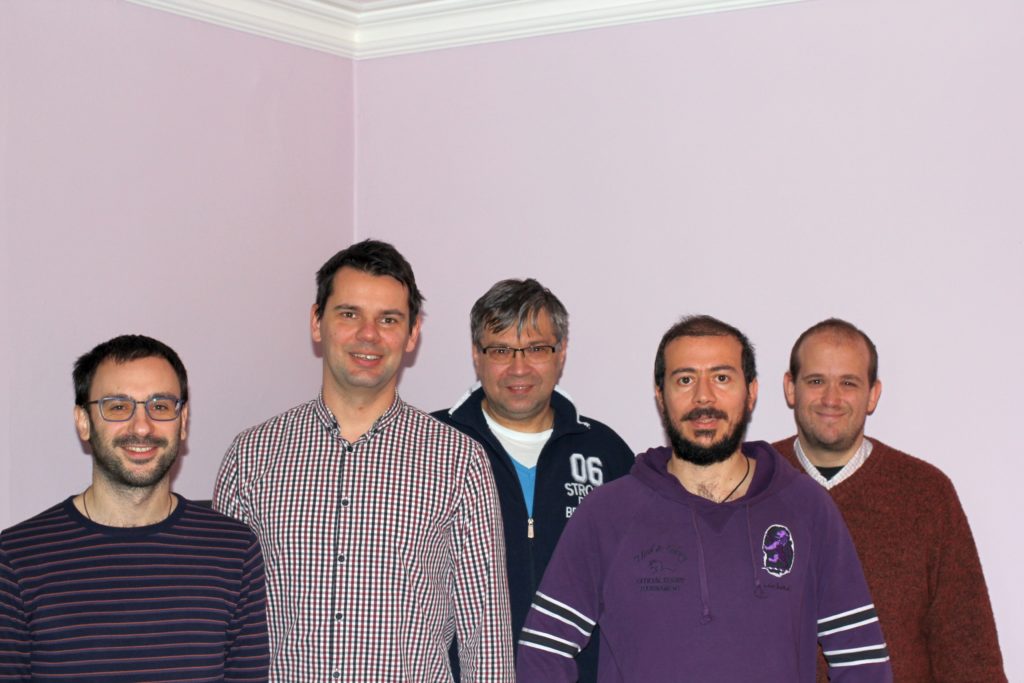
Piotr, who hails from Poland, tells us that he was inspired by reading a book written by Fr Emilien Tardif MSC. Piotr was particularly impressed by the idea that we should be bold in prayer, and ask for the complete healing of soul and body – not just for small things. This brought him to believe in and place his trust in God.
Domenico’s experience was somewhat different, as he began his career studying journalism in Italy. Having moved away from the Lord for a number of years, he began to understand the longing to dedicate his life to Him when living in the MSC college institute in Florence, which was led by Fr Carmine Pace. Domenico decided to read the MSC Constitution, and he was struck by a particular passage from Fr Chevalier: ‘Knowledge becomes dangerous without piety. They will learn far more at the foot of the Cross than in books’.
For Jaime, it was the example of the priests in the MSC school in Barcelona, Spain, that had an impact on him. He had studied there since he was a child, and the spirituality of the Sacred Heart still fascinates him, particularly as a model by which he can live his favourite Gospel passages: ‘the good thief’ (Lk 23:40-43) and the giving of oneself in the manner of Simon of Cyrene (Mk 15:21-22).
Daniel’s initial interest came about as a result of the spiritual retreats organised by the MSC community in Nitra, Slovakia, which focused on spiritual and psychological development. During these retreats, Daniel gained a greater knowledge of community life, with the understanding that he could fulfil his own broad concept of mission within the MSC congregation.
As for me? I was a bit like Jonah – I ran away ignoring the Lord’s voice (Jon 1:1-3). Then, one day, I met Fr Alan Neville MSC, who showed me the friendly and humorous face of God. After visiting several communities in Ireland, I recognised that with the Missionaries of the Sacred Heart, I can be at home, and I can realise my desire to love and be loved completely.”
Apr 3, 2017
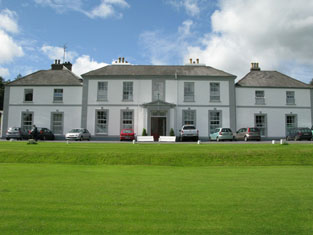
The Missionaries of the Sacred Heart in Myross Wood Retreat Centre have offered to open their doors to those in need and house a family of refugees at Myross Wood House in Leap, County Cork.
Fr Michael Curran MSC, leader of the Myross Wood community, is currently working alongside the Irish Red Cross to put the suggested relief plan in action. Myross Wood House has already been inspected by an Irish Red Cross representative, and it has been confirmed that the house will be suitable to accommodate a family as soon as some slight modifications have been put in place.
Fr Curran has spoken about the current plans for assistance, saying: “The rooms we have are adequate enough, but we will need to create family space, such as a kitchen and a living room.”
“We could take a family group of about 10 people,” he continues, “but the next step is to wait for the representative to come back to us to let us know if our offer is acceptable to the Irish Red Cross, and to receive their recommendations about the adaptations that will have to be carried out.”
With the refugee crisis becoming a growing concern in today’s troubled times, Fr Curran is insistent about the fact that something needs to be done. He says, “It is of enormous importance that Europe as a whole responds to the needs of the hundreds of thousands who are displaced, homeless, and fleeing from persecution.”
“The community of the Missionaries of the Sacred Heart are glad to be able to help in any way,” says Fr Curran. “We can accommodate about 40 guests in the house, but we have space for 10 refugees, because we will also need room to accommodate the people who come here on retreat.”
Pope Francis recently stated: “The lifeboat that you have to lower is a welcoming embrace to migrants: they flee intolerance, persecution, lack of a future. May no one turn his gaze elsewhere.” This year, the MSC community at Myross Wood are opening their doors and their arms to those desperately searching for a safe haven on Irish shores.
Read more about the Myross Wood aid endeavour from The Southern Star and The Irish Catholic.
Mar 30, 2017
The details of a letter from Pope Francis regarding the ninth World Meeting of Families were released by Cardinal Kevin Farrell, Prefect of the Holy See’s new office for Laity, Family, and Life, and the Archbishop of Dublin, Diarmuid Martin.
The ninth World Meeting of Families will take place in Dublin from August 21st to August 26th, 2018.
Pope Francis’ Letter for World Meeting of Families 2018
To the Venerable Brother Cardinal KEVIN FARRELL, Prefect of the Dicastery for the Laity, the Family and Life,
At the end of the Eighth World Meeting of Families, held in Philadelphia in September 2015, I announced that the subsequent meeting with Catholic families of the world would take place in Dublin. I now wish to initiate preparations, and am pleased to confirm that it will be held from 21st to 26th August 2018, on the theme “The Gospel of the Family: joy for the world”. Indeed, it is my wish for families to have a way of deepening their reflection and their sharing of the content of the post-Synodal Apostolic Exhortation Amoris Laetitia.
One might ask: does the Gospel continue to be a joy for the world? And also: does the family continue to be good news for today’s world?
I am sure the answer is yes! And this “yes” is firmly based on God’s plan. The love of God is His “yes” to all creation and at the heart of this latter is man. It is God’s “yes” to the union between man and woman, in openness and service to life in all its phases; it is God’s “yes” and His commitment to a humanity that is often wounded, mistreated and dominated by a lack of love. The family, therefore, is the “yes” of God as Love. Only starting from love can the family manifest, spread and regenerate God’s love in the world. Without love, we cannot live as children of God, as couples, parents and brothers.
I wish to underline how important it is for families to ask themselves often if they live based on love, for love and in love. In practice, this means giving oneself, forgiving, not losing patience, anticipating the other, respecting. How much better family life would be if every day we lived according to the words, “please”, “thank you” and “I’m sorry”. Every day we have the experience of fragility and weakness, and therefore we all, families and pastors, are in need of renewed humility that forms the desire to form ourselves, to educate and be educated, to help and be helped, to accompany, discern and integrate all men of good will. I dream of an outbound Church, not a self-referential one, a Church that does not pass by far from man’s wounds, a merciful Church that proclaims the heart of the revelation of God as Love, which is Mercy. It is this very mercy that makes us new in love; and we know how much Christian families are a place of mercy and witnesses of mercy, and even more so after the extraordinary Jubilee. The Dublin meeting will be able to offer concrete signs of this.
I therefore invite all the Church to keep these indications in mind in the pastoral preparation for the next World Meeting.
You, dear Brother, along with your collaborators, have the task of translating in a special way the teaching of Amoris Laetitia, with which the Church wishes families always to be in step, in that inner pilgrimage that is the manifestation of authentic life.
My thoughts go in a special way to the archdiocese of Dublin and to all the dear Irish nation for the generous welcome and commitment involved in hosting such an important event. May the Lord recompense you as of now, granting you abundant heavenly favours.
May the Holy Family of Nazareth guide, accompany and bless your service, and all the families involved in the preparation of the great World Meeting in Dublin.
From the Vatican, 25th March 2017
FRANCIS