Jun 14, 2017
 Fr Martin writes…
“The words of Christ given as heading to today’s Gospel call for reflection at two levels: the message of Christ’s presence in the Eucharist in our own lives and in the society in which we live, and the problems encountered by the young people and others today regarding belief in Christ’s presence in the Eucharist under the symbols, or the species, of bread and wine. Many find it hard to believe this, and fail to understand it. We can reflect on both points for a while.
The Eucharist has been at the source and centre of Christianity down through the ages, and still remains so. Reflection on it brings to mind many demands of Christian living, as many as belief in the living Christ himself does. Instituted at the Last Supper, the last of his meals with followers, it recalls the many meals during his life and the significance of these, eating with the marginalized and the outcast.
In Mark’s Gospel, after the multiplications of the loaves, in a journey across the Sea of Galilee the evangelist notes that the apostles had forgotten to bring bread with them, having only one loaf. Jesus warns of the danger of certain leaven (yeast). The apostles think that he is referring to their lack of bread. Jesus reminds them of his multiplication of the loaves, and of their lack of understanding of the significance of the miracle (Mark 8:14-21). It is a curious text, but the point seems to be that Jesus is calling on his apostles (and the church) to reflect on the miracle of the loaves, his meals; eventually, the bread and wine become Eucharist, and we reflect on their significance as a sign and pledge of his saving and encouraging presence with the church, in times of need and always. There are so many aspects of the Eucharistic mystery that call for reflection.
The real presence of Christ under the species of bread and wine is a mystery, to be understood by faith. Already in Christ’s day, as represented in John’s Gospel, his Jewish listeners objected: ‘How can this man give us his flesh to eat?’ Jesus replies, insisting on his teaching. Many of his disciples said, ‘This is a hard teaching; who can listen to it?’, and Jesus replied, ‘What if you were to see the Sin of Man ascending where he was before?’ (John 6:52-65).
We grasp the mystery of his Eucharistic presence better when we consider it in the context of Jesus, true man and true God, his ascent into heaven, and enthronement at God’s right hand. Down through the centuries, the Church has taken Jesus’ words on the bread and wine as his body and blood literally and lived with the mystery, a mystery as ever hard to put in human words. She has refused the view that the bread and wine only represent the body and blood of Christ. At the consecration, there is a transformation, in some way, of the elements involved – the bread and the wine. Her belief was incarnated in the respect for the bread and wine after the consecration, in the reservation of the Blessed Sacrament and in Eucharistic devotion. These were the manners in which the faithful expressed, and continue to express, their faith in Christ’s Eucharistic presence.
When the belief was challenged by Berengarius, the Church formally responded in 1079 that at the consecration the bread and wine were substantially changed into the body and blood of Christ. In the Fourth Lateran Council (1215), this change was referred to as transubstantiation. The Council of Trent (1551) took up the question once again at the Reformation, affirming that this change at the consecration the ‘holy Catholic Church properly and appropriately calls transubstantiation’, words repeated in the more recent (1994) Catechism of the Catholic Church (Paragraph 1376). Such Christian and Catholic beliefs as ‘consubstantial’ and ‘transubstantiation’, not being words current in ordinary discourse, should not be the subjects of popular opinion polls. They are terms chosen by the Church to make clear her position on certain mysteries.”
For more articles written by Fr Martin, please visit the Sunday Scripture Online.
Jun 12, 2017
We are delighted to announce that the MSC Plant, Book & Cake Sale run by the Sacred Heart Parish in Cork has raised a grand total of €3,821.82 in aid of the Holy Family Care Centre in South Africa.
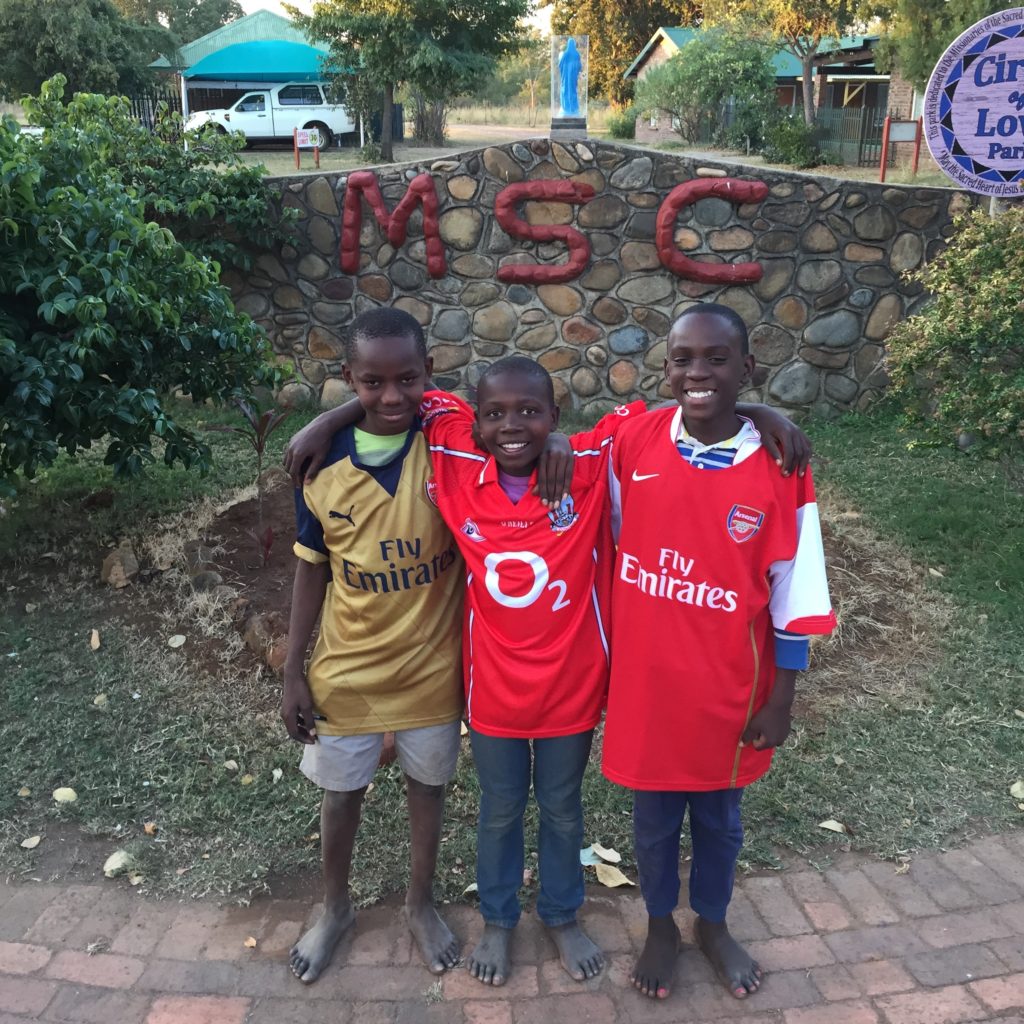
The Bring & Buy Sales ran after Saturday and Sunday Masses at the Sacred Heart Parish Centre on the Western Road, Cork, on 27th and 28th May 2017 – and it seems like the summer sunshine brought the parish out in force!
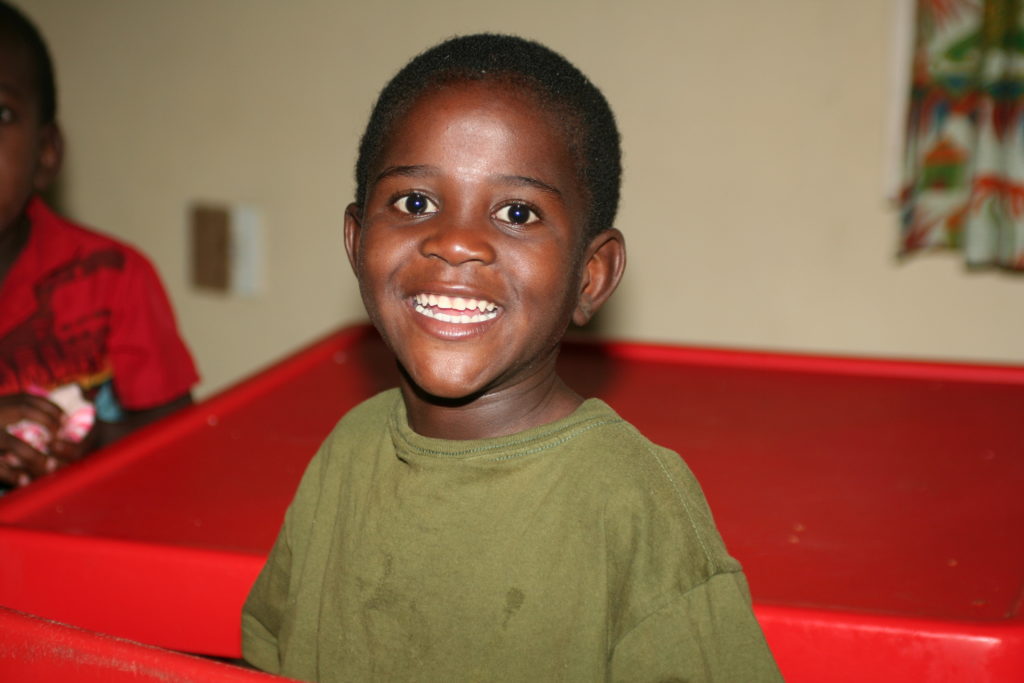
We would like to sincerely thank everybody who contributed so generously and with such goodwill. All funds raised will go to the Holy Family Care Centre in South Africa, where the Sacred Heart Family provide essential medical care and educational facilities to children who have been orphaned or are otherwise suffering as a result of HIV/AIDS and TB. The staff and volunteers at Holy Family are giving hope to children who have nowhere else to turn, and the generosity of our mission friends in Cork will be a great boost to the entire community.
Thank you!
 “Although we are halfway across the world, kindness knows no boundaries. The generosity of our parishioners and mission friends in Cork will give great encouragement to the Holy Family community in South Africa. Thank you to everybody who attended our Bring & Buy Sales for your enthusiasm and your contribution.”
Fr Michael O’Connell MSC
Missions Office Director
PLEASE HELP US TO CONTINUE OUR GOOD WORK IN SOUTH AFRICA
Jun 8, 2017
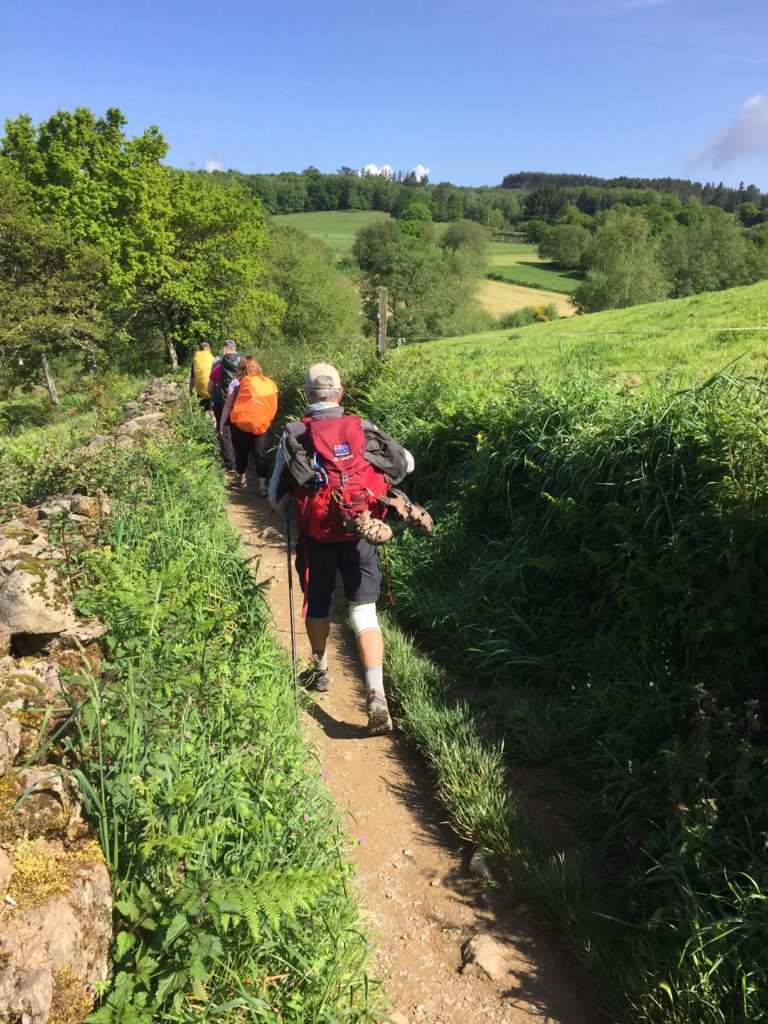 There’s something special about getting up before dawn each morning, finding your boots (or runners – we’ll get to that later), and heading off with fellow pilgrims in a gentle procession across the Spanish countryside. This is the daily rhythm of those who walk the Camino de Santiago, as we walk from horizon to horizon to the resting place of St James the Apostle.
This is the fifth year that the MSC Vocations team have organised the pilgrimage on the Way. It is the sort of experience that attracts people from a variety of backgrounds. Each day, we’re out walking with the sun rising behind us. We stop for breakfast after a couple of hours, and then take a café con leche mid-morning. There’s no great rush. In fact, when you’re walking about 25km each day, you have to go gently.
“On the Way, you take time – for yourself and for others.”
This is perhaps the greatest challenge of the Camino, that of slowing down. Our world today is fast-paced and constantly moving. Being under pressure is seen as a virtue for some strange reason. On the Way, you take time – for yourself and for others. You speak with absolute strangers. People come from all over the world, drawn by something they find difficult to put into words. One of our group this year hit it on the head when he said that we were walking in the  footsteps of millions of people, along pilgrim pathways that stretch back over a thousand years and that will continue into the future.
While it’s a reflective, meditative experience, it’s also good fun. When we arrived into these old towns, we would take a siesta and spend most of the day exploring, before gathering for a shared meal in the evening. We met a navy chaplain who keeps bees, a part-time Mr and Mrs Santa Claus who spend their summers caring for pilgrims, and plenty of people from South Korea, who couldn’t speak English but who were ace at sign language.
A small aside for future pilgrims – while runners look great, they’re not really ideal footwear for a walk like this. One statement from someone in this year’s group summed it up beautifully. Following a torrential rain shower, she told me, in what has to be the most positive interpretation of an uncomfortable situation ever, “Fr. Alan, my soaked trainers make it much easier to walk on my blistered feet!”
Buen Camino,
Fr. Alan
If you’d like to know more about our Camino trips, you can contact Fr. Alan at camino@mscmissions.ie, or call +353 (0) 86 785 7955 (Ireland) or +44 (0) 75 2676 4236 (UK).
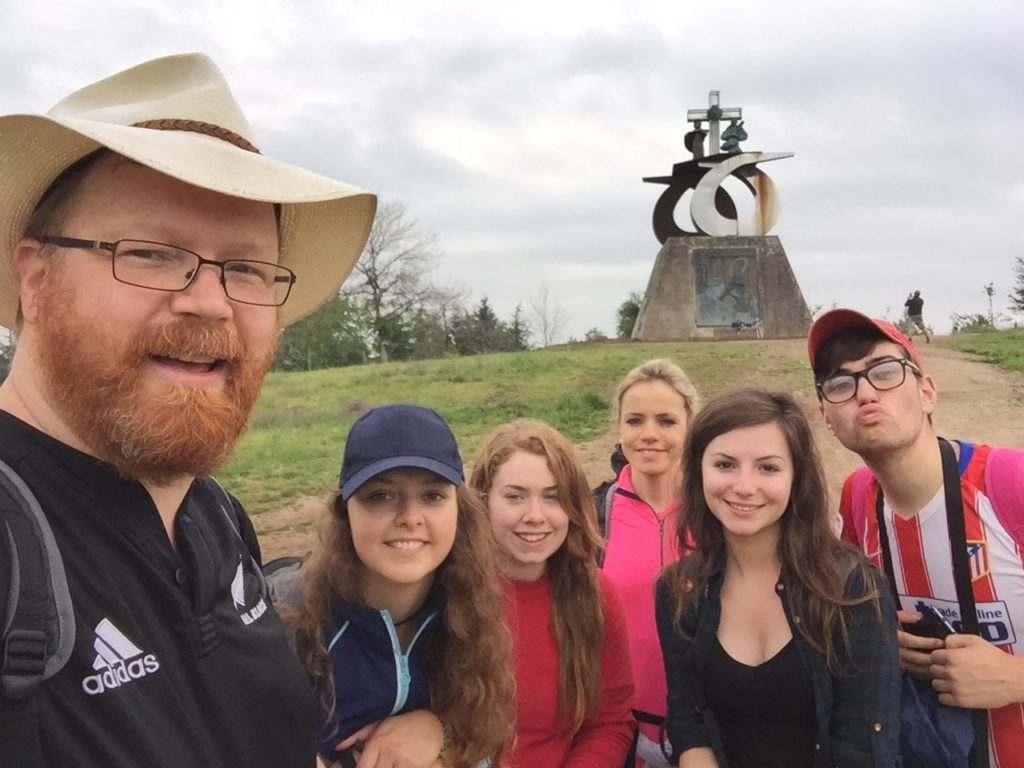
On the Camino, we began each day with a moment of reflection. This was one of a number of pieces from the poet Mary Oliver, titled “Invitation”, which we used to inspire us for the day ahead:
Oh do you have time
to linger
for just a little while
out of your busy
and very important day
for the goldfinches
that have gathered
in a field of thistles
for a musical battle,
to see who can sing
the highest note,
or the lowest,
or the most expressive of mirth,
or the most tender?
Their strong, blunt beaks
drink the air
as they strive
melodiously
not for your sake
and not for mine
and not for the sake of winning
but for sheer delight and gratitude –
believe us, they say,
it is a serious thing
just to be alive
on this fresh morning
in the broken world.
I beg of you,
do not walk by
without pausing
to attend to this
rather ridiculous performance.
It could mean something.
It could mean everything.
It could be what Rilke meant, when he wrote:
You must change your life.
Jun 7, 2017
In honour of the anniversary of the 2014 prayer meeting for peace, a minute of prayer for peace will take place worldwide on Thursday, 08th June 2017 at 1.00pm.
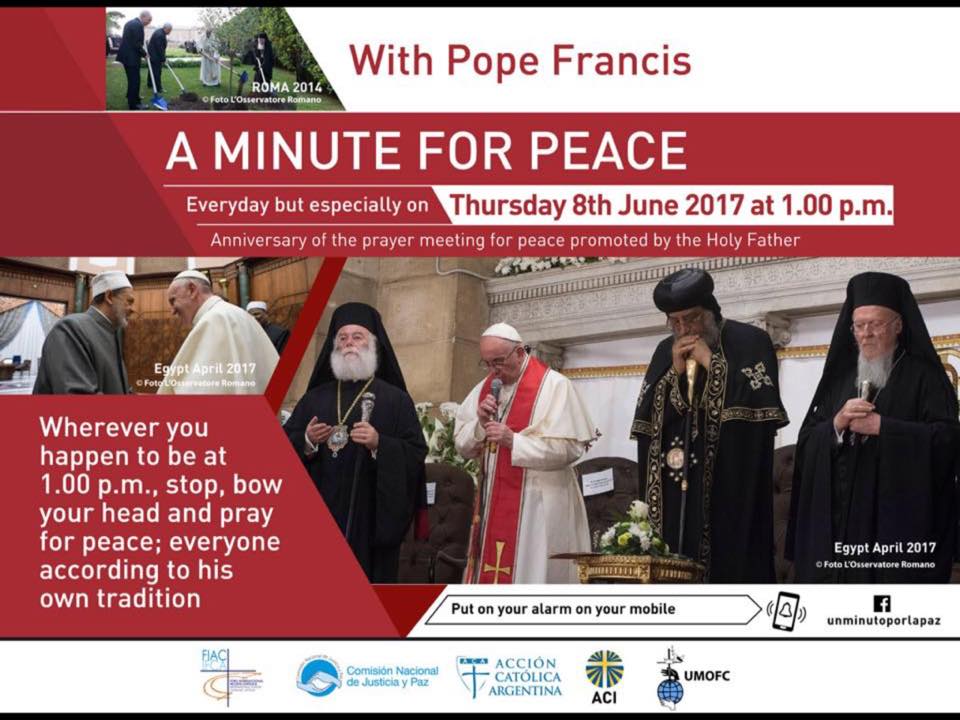
June 8th, 2017 marks the third anniversary of the historic meeting that took place in the Vatican Gardens between Pope Francis and the Israeli and Palestinian presidents. This year, we are once again called to join in the “One Minute for Peace” initiative, where the world comes together to pray for peace according to people’s own religious traditions and beliefs. Wherever we are and whatever we’re doing, we’re invited to stop for just one minute, and join with Pope Francis in praying for peace in our own tradition.
At the end of his General Audience in St Peter’s Square on June 7th, Pope Francis highlighted the importance of this initiative, which, he says, represents “a short moment of prayer on the recurrence of the meeting in the Vatican between me, the mourned Israeli President Peres, and the Palestinian President Abbas”.
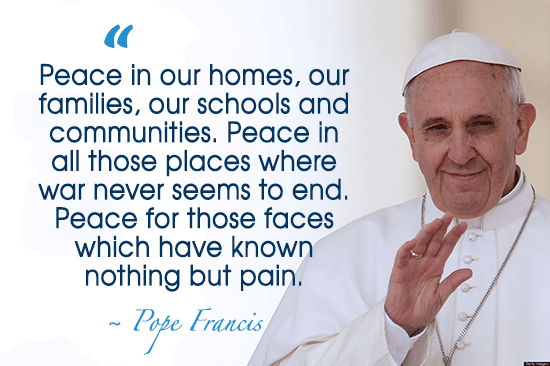
“In our days, there is a great need to pray – Christians, Jews, and Muslims – for peace.”
In these turbulent and troubling times, with millions of people suffering from the effects of war, violence, and hunger, the appeal for peace in the world is more powerful than ever. The Holy Father reflects, “In our days, there is a great need to pray – Christians, Jews, and Muslims – for peace”.
The official Vatican network writes:
“Everyone is invited to stop their daily activities and dedicate a minute to reflect, pray according to one’s own religious tradition, and to commit themselves to peace around the world. This ‘minute’ can be lived alone or together with others, on the street or in church, in the family, at school, [or] at work.”
“‘One Minute for Peace’ is a simple proposal that everyone can accomplish.”
Jun 2, 2017
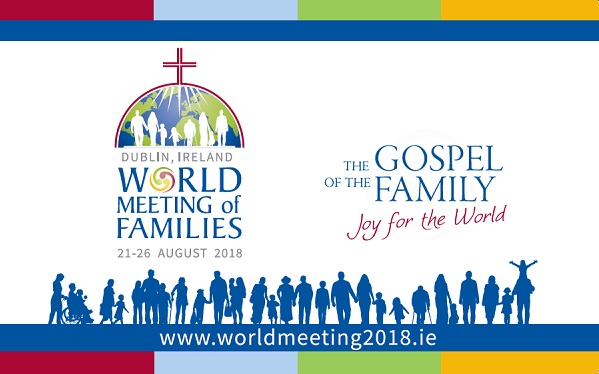
The official hymn for the World Meeting of Families 2018, “A Joy of Love for all the World”, has been released ahead of next summer’s event.
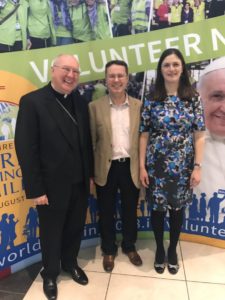
Composer Ephrem Feeley (centre) with wife Giovanna and Cardinal Kevin Farrell at the launch of the official hymn for the World Meeting of Families 2018
Irish composer Ephrem Feeley found inspiration for the hymn in Amoris Laetitia, or The Joy of Love, a document written by Pope Francis in 2016 reflecting on the challenges facing families in today’s world.
“The experience of love in families is a perennial source of strength for the life of the Church,” writes Pope Francis, and Mr Feeley draws on that unique and marvellous experience of love in this beautiful hymn.
Preparations are currently in place for the celebrations in August 2018, as Ireland looks ahead to the much-anticipated visit of Pope Francis. The theme of the World Meeting of Families is “The Gospel of the Family: Joy for the World”, and it is with this in mind that we remember Pope Francis’ encouraging words:
“Young love needs to keep dancing towards the future with immense hope.”
Listen to “A Joy of Love for all the World” and watch the official video on the World Meeting of Families 2018 website.
Jun 1, 2017
Locals in the community of Waterval, in the Limpopo Province of South Africa, have been working together with the Missionaries of the Sacred Heart to raise funds for a new church in their parish of Louis Trichardt.
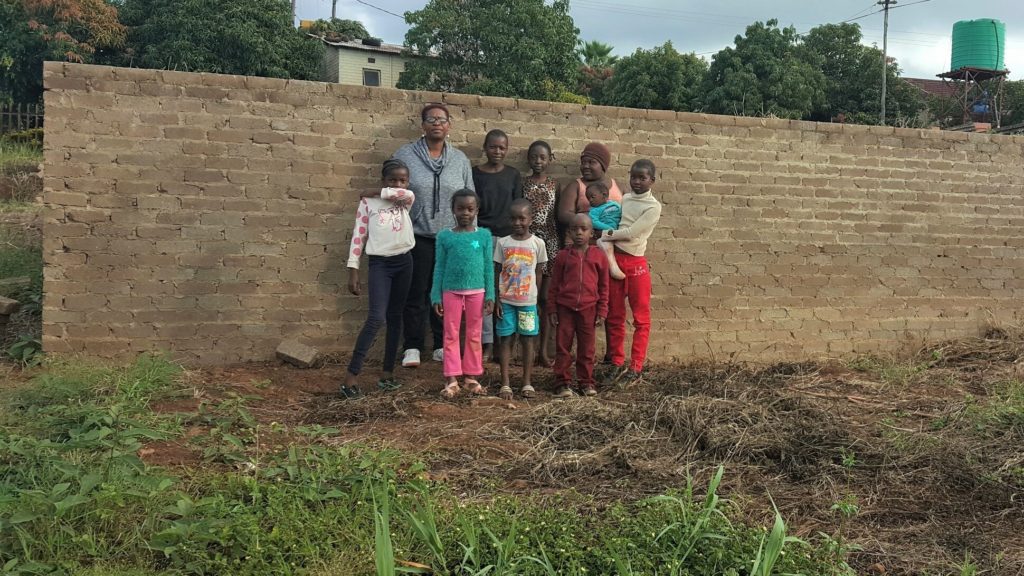
Waterval residents at the site of the new Sacred Heart Church
The Missionaries of the Sacred Heart have been working to make positive changes in the region since their arrival in 1950, with a primary focus on medical care, education, AIDS awareness and prevention, and care programmes for orphans and vulnerable youths. MSC missions in the area have made a real difference in the quality of life enjoyed by the local community, and today, our MSCs work with the people of Louis Trichardt to promote self-sufficiency with the prospect of a better and brighter future.
In Waterval, the local community began their own fundraising drive and were able to raise enough money to buy building materials and lay the foundations of their new church. The Missionaries of the Sacred Heart will provide the balance of funds needed to complete the building, and the new church will be named the Sacred Heart Church.
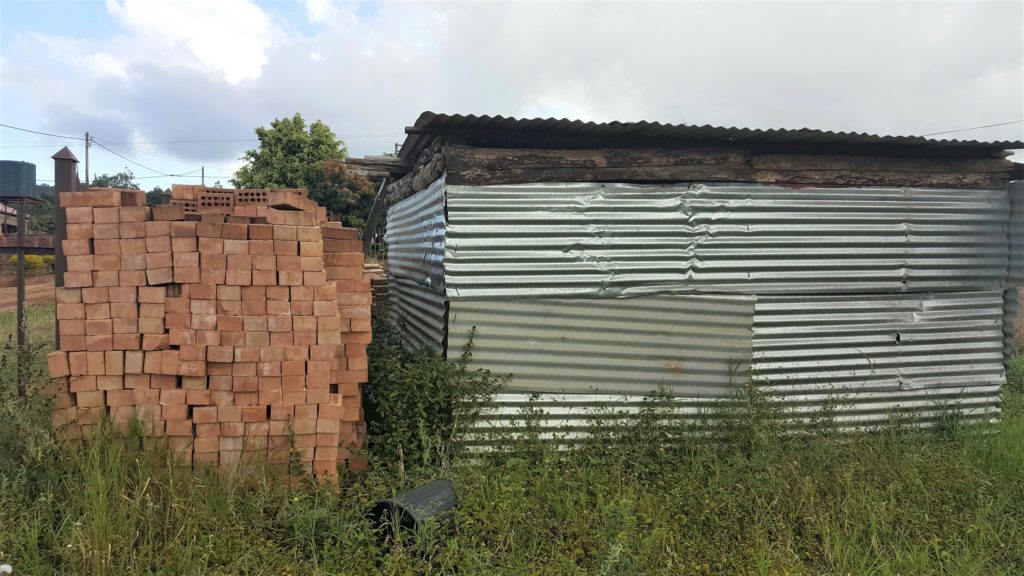
The tin shack where Waterval residents have celebrated Mass to date, alongside some of the building materials that will be used to construct the new Sacred Heart Church.
As construction begins, MSCs in the region are documenting the progress made with photographs of the build. In this small and close community, the promise of a new church is an encouraging one. Locals are extremely dedicated to their faith, and the significance of having a special place of worship is huge. To date, locals have been celebrating Mass in the tin shack pictured above; now, thanks to the combined efforts of the community and MSCs in the area, the population of Waterval can look forward to having a dedicated place of worship to call their own.
With local enthusiasm matched by the goodwill and generosity of mission friends and benefactors around the world, it’s clear to see the power that comes of unity – together, we can make a real and lasting difference.
PLEASE SUPPORT OUR MISSION PROJECTS IN SOUTH AFRICA