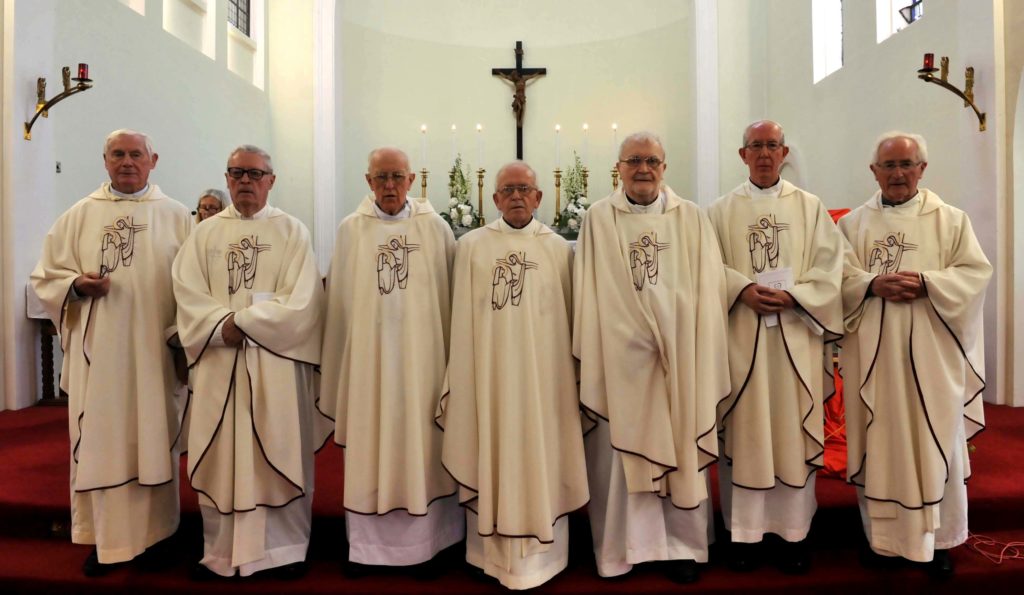
Congratulations are in order for eight of our MSC priests, who celebrated their Jubilees of Ordination at the Sacred Heart Church, Cork, on June 30th, 2017.
L-R: Jubilarians Fr Jerry Daly (Kilcrohane), Fr Seán Horgan (Kilshannig), Fr John McCarthy RIP (Kilfinane), Fr Tim Gleeson (Glenfesk), Fr Bill Collins (Kerry), Fr Charles Conroy (Cork City), and Fr Pat O’Sullivan (Glengarriff). (Image: Mike English)
Between them, Fr Charles Conroy, Fr Pat O’Sullivan, Fr John McCarthy (RIP), Fr Seán Horgan, Fr Bill Collins, Fr Jerry Daly, Fr Tim Gleeson, and Fr Kevin Blade have devoted 395 years of ministry to the Missionaries of the Sacred Heart.
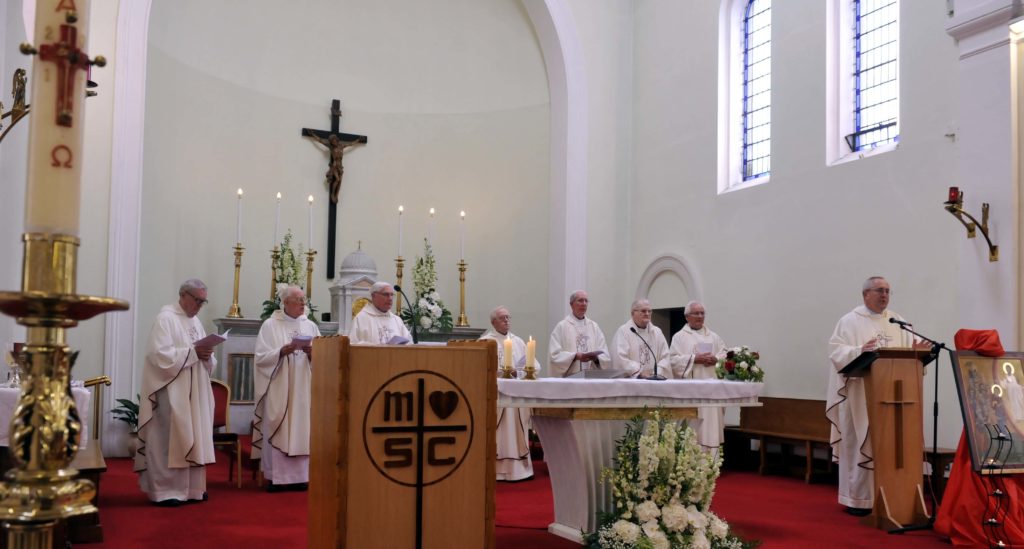
On a sunny June afternoon, these MSCs joined together with their families, friends, and the MSC community to celebrate what was, in the words of the then Provincial Leader Fr Joseph McGee, “a great occasion”.
“These men, having heard the call of God, recognised it as a precious gift. They have dedicated their lives in His service and in the service of the people of God,” said Fr Joseph at the opening of the Jubilee Mass. “This year is a favourable and blessed year for each of them – a time to remember, a time to rejoice, and a time to give thanks.”
Provincial Leader Fr Joseph McGee MSC leads the celebrations for the MSC Jubilarians at the Sacred Heart Church, Cork. (Image: Mike English)
The Fr Joseph McGee MSC went on to say:
“Today, we salute each of them, and we thank them for their outstanding commitment to Christ and for their dedicated ministry in many different countries. Between them, they have proclaimed the Good News of the love and compassion of the Heart of Christ to people throughout the world, particularly in different areas of the Irish Province – Ireland, England, Southern Africa, the United States, Venezuela, Russia, and Rome.”
We wish the Jubilarians all the very best as they continue their work across the world, sharing the love of the Sacred Heart that is so alive and active in their own hearts and lives.
Congratulations to the Jubilarians…
25 years:
Fr Kevin Blade MSC
50 years:
Fr Charles Conroy MSC
Fr Pat O’Sullivan MSC
Fr John McCarthy MSC (RIP)
Fr Seán Horgan MSC
Fr Bill Collins MSC
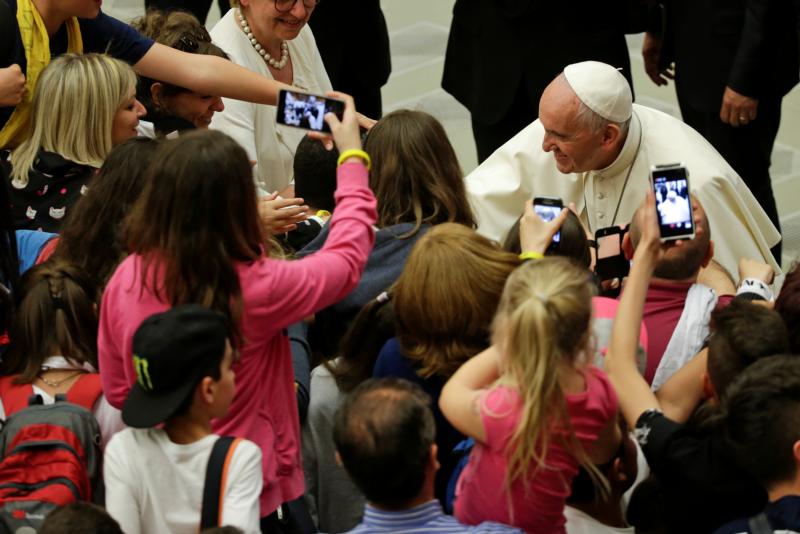
This June, as children all over the world prepare to put away their pencil cases and pack up their bags at the end of another school year, Pope Francis held a special audience at the Vatican with a group of school-going children from Communion and Liberation’s “The Knights of the Grail” educational initiative. Here, he gave some sound words of advice on the difficult business of growing up.
“Life is a long series of hellos and goodbyes, so don’t be afraid to let go of the past; remember old friends, but keep moving and be open to the new,” he said. Over the course of the 45-minute question and answer session, the Holy Father addressed questions about leaving school and moving on, like “Why do I have to change everything?” and “Why does growing up make me so afraid?”
Pope Francis’ responses were encouraging:
“Life is a constant ‘good morning’ and ‘farewell’,” the Pope said – with the goodbyes something being forever. “You grow by encountering and by taking your leave,” he continued. “If you don’t learn to say goodbye well, you will never learn how to encounter new people.”
Any moments of change in life are “a challenge”, he empathised, but “in life, we have to get used to this journey of leaving something behind and encountering something new”.
“There is no magic wand, but there are little things we can learn to do every day.”
Speaking to a teenage girl who shared her fear about moving forward to secondary school, the Pope said:
“Look at that wall. What’s behind it?”
“I don’t know,” replied the girl.
“But if you go outside, to the countryside, what do you see?” Pope Francis responded.
“I see everything,” she said.
“Everything! You see the horizon. We have to learn to see life by looking at the horizons. Look at the wall and think about the horizon that lies in the countryside.”
The Holy Father encouraged the thousands of youths gathered to avoid words like “fear” or “afraid”, and instead to focus on the “challenges”, urging them to remember the phrase: “I will win this challenge or I will let this challenge defeat me”.
Finally, Pope Francis shared his thoughts on the best way to approach life:
“You can begin to change the world with an open heart,” he said. We should never wish ill on others, no matter how badly they may have treated you: “Never return evil with evil. That’s how you can change the world. There is no magic wand, but there are little things we can learn to do every day.”
For more information about the religious and educational philosophy of the Missionaries of the Sacred Heart, please visit CEIST.
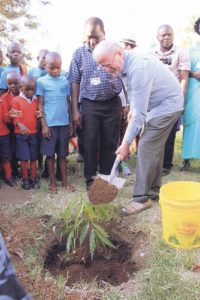
Matt Moran, formerly of the Missionaries of the Sacred Heart and Misean Cara, plants a tree on a mission project in Africa.
Matt Moran, former fundraising manager at the MSC Missions Office in Cork, recently spoke to The Irish World about the ongoing importance of missionary work in today’s world.
Speaking about the fact that Irish missionaries are still making a real difference in the lives of some of the world’s poorest people, Matt states: “We need to debunk the notion that the missionary era is over. Done. History.” He goes to say, “The work is being continued by local and indigenous missionaries that the Irish trained and recruited. Across Africa, Asia, and South America, the people of the communities are following the work that the Irish started.”
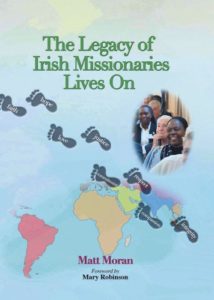
Matt spent a decade working the with Missionaries of the Sacred Heart in Cork, before taking up the post of director and chairman of Misean Cara. Now retired, Matt has since written a book highlighting the huge impact that Irish missionaries have had across the world. His book, The Legacy of Irish Missionaries Lives On, was released in 2016, with a foreword by former Irish President Mary Robinson.
In his book, Matt studies the changing role of Irish missionaries abroad, and analyses the effects of their lasting influence. “The overriding consideration of missionary work is the alleviation of poverty by creating sustainable livelihoods,” he says. “Education is key. If someone is educated, they are more equipped to pull themselves out of the cycle of poverty.”
“Give a man a fish, you feed him for a day. Teach a man to fish and you feed him for life.”
Self-sufficiency is a major element of the ethos that drives missionary work, where both religious and lay missionaries work to empower local people and help them to help themselves. “Their whole rationale is empowerment,” Matt emphasises. “You can’t keep providing services. ‘Give a man a fish, you feed him for a day. Teach a man to fish and you feed him for life.’ That is the basic principle missionaries operate on.”
“It’s now about sustainability, it’s not just about feeding the hungry. That’s today’s work. Tomorrow’s work and next year’s work is making those people sustainable to be able to feed themselves.”
The Missionaries of the Sacred Heart have been working to promote positive change in the KKSV9 district in Pinugay, a resettlement area for families who have been displaced from their homes in the Philippines. Poverty is a serious issue in this isolated region, and many families struggle with hunger, unemployment, and illness as a result.
In 2016, the Irish Province of the MSC donated funds to help the establishment of a number of different self-sufficiency programmes in the area, including a local consumer store, a beekeeping project, and a sewing and tailoring programme.
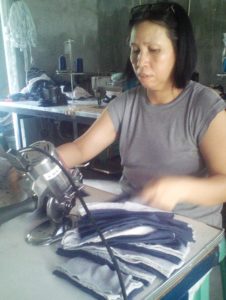
The KKSV9 Sewing Livelihood Project is now up and running, with great success to date. Phase One of the project involved training locals in sewing and tailoring skills, and the group now have regular clients who order items such as shirts, shorts, and aprons. The project has been such a success to date that the group are now looking to broaden their reach by welcoming new members, so that they can take on new clients and bigger orders.
Life Sharing Programme: Growing together in faith
At the beginning of June 2017, the MSC group in the Philippines visited the sewing project to assess their progress and establish what needs to be done to allow for further growth. In the course of the visit, a new project was proposed: a Life Sharing Programme, which will allow local people to share and explore their life experiences and their faith.
Fr Richie Gomez MSC meets with members of the Sewing Livelihood Programme in Pinugay
“Somehow, the discussion became very inspiring and motivating,” says Jahms Morga, one of the organisers of the sewing project. “For the people here, this is a real need. Everybody involved in this programme will be able to grow as a person, and more importantly, as a community. We will invite lay missionaries to visit the group, and we hope that this will be a great opportunity for the people of KKSV9 to share their stories and grow in faith with their neighbours.”
As the Missionaries of the Sacred Heart work to create security and self-sufficiency for the people of KKSV9, the community is clearly growing in strength and spirit. With the help of mission friends in the Irish Province and around the world, residents of KKSV9 are already enjoying the advantages of both social and personal development that will benefit the area for generations to come.
A gathering in the Scottish Highlands celebrating the Catholic faith
A Youth 2000 Retreat is always going to be special, but the last regional gathering in Craig Lodge in the Scottish Highlands was wonderful. This is the home of Mary’s Meals, the dynamic charity that provides over a million meals every day to children living in poverty around the world. This time we had almost 200 young people from around Scotland and beyond. Some even bussed it up from London. It didn’t matter where you came from. It was just fantastic to be there. We had those who have been at the last twenty Youth 2000 Retreats and others for whom it was their first time. All were equally welcome.
The music ministry is always great, but this time is was extraordinary
We were blessed to have some of the most amazing music ministry, led by Kate and the team. Throughout the whole weekend we had Adoration of the Blessed Sacrament. It was the perfect opportunity to raise hearts and minds to God, while putting up with the midges. I had heard about them, but honestly anything I was told didn’t do them justice. They were relentless, as was the rain, but plagues of insects and floods of water couldn’t dampen the spirits of all the people there. In fact it kind of made it better. In the River is now officially one of my top five favourite hymns, along with Kate Curran’s Pentecost Sequence that she sang for the first time that weekend.
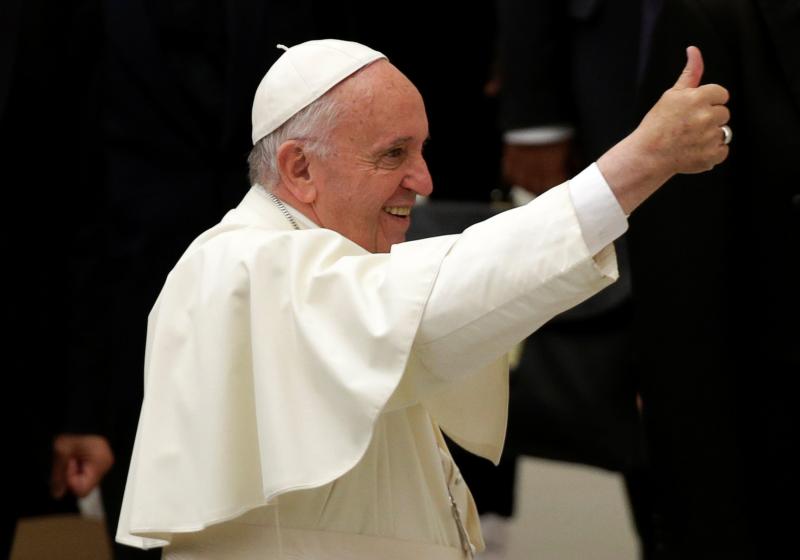
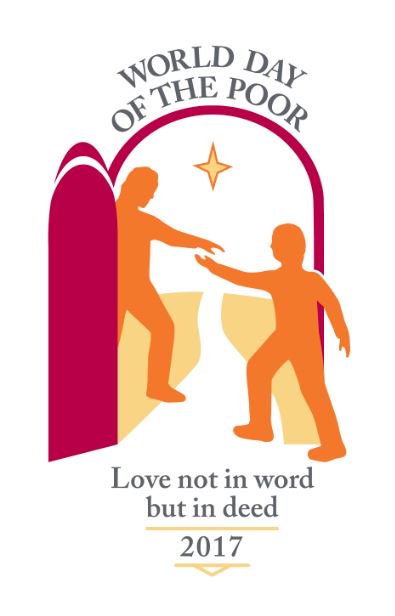
Pope Francis has announced that the first World Day of the Poor will be observed this coming winter, on Sunday, 19th November 2017.
The Holy Father published a special message on Tuesday, June 13th, explaining that at the conclusion of the Jubilee of Mercy, he wished to launch a World Day of the Poor, “so that throughout the world, Christian communities can become an ever greater sign of Christ’s charity for the least and those most in need”.
The Jubilee of Mercy ended in November 2016, when Pope Francis celebrated a special Mass for the socially marginalised in St Peter’s Basilica. In the days leading up to this Mass, the Pope had heard many stories of people struggling with hardship and daily difficulties, and now he calls on us to “bring forth compassion and works of mercy for the benefit of our brothers and sisters in need”.
“I invite the whole Church,” said Pope Francis, “and men and women of good will everywhere, to turn their gaze on this day to all those who stretch out their hands and plead for our help and solidarity. They are our brothers and sisters, created and loved by the one Heavenly Father”.
“Let us love, not with words but with deeds.”
The message for the first World Day of the Poor is “Let us love, not with words but with deeds”. In this message, Pope Francis invites “the whole Church, and men and women of good will everywhere, to turn their gaze on this day to all those who stretch out their hands and plead for our help and solidarity”.
Pope Francis’ message, which can be read in full on the official Vatican website, draws from the life of St Francis. The Holy Father speaks of St Francis in his message, nothing that “precisely because he kept his gaze fixed on Christ, Francis was able to see and serve him in the poor”.
The Pope went on to say that “if we want to help change history and promote real development, we need to hear the cry of the poor and commit ourselves to ending their marginalization”.
Poverty challenges us daily, writes the Pope, “in faces marked by suffering, marginalisation, oppression, violence, torture and imprisonment, war, deprivation of freedom and dignity, ignorance and illiteracy, medical emergencies and shortage of work, trafficking and slavery, exile, extreme poverty and forced migration.”
“Poverty has the face of women, men and children exploited by base interests, crushed by the machinations of power and money.”
Poverty also faces us in other ways, a poverty that “stifles the spirit of initiative of so many young people by keeping them from finding work”, and one which “dulls the sense of personal responsibility and leaves others to do the work while we go looking for favours”. In today’s world, Pope Francis says, “we cannot remain passive, much less resigned”.
The Holy Father concluded by stating: “The poor are not a problem: they are a resource from which to draw as we strive to accept and practise in our lives the essence of the Gospel”. With this in mind, we must now respond “with a new vision of life and society”.
As the Missionaries of the Sacred Heart work to alleviate the hardship brought about in some of the world’s most impoverished areas, we look with Pope Francis to a brighter future. Working alongside other missionary orders in the Misean Cara and AMRI groups, we’re glad to be part of a bigger picture as we work together for positive change.
 Self-sufficiency is a major element of the ethos that drives missionary work, where both religious and lay missionaries work to empower local people and help them to help themselves. “Their whole rationale is empowerment,” Matt emphasises. “You can’t keep providing services. ‘Give a man a fish, you feed him for a day. Teach a man to fish and you feed him for life.’ That is the basic principle missionaries operate on.”
 hunger, unemployment, and illness as a result.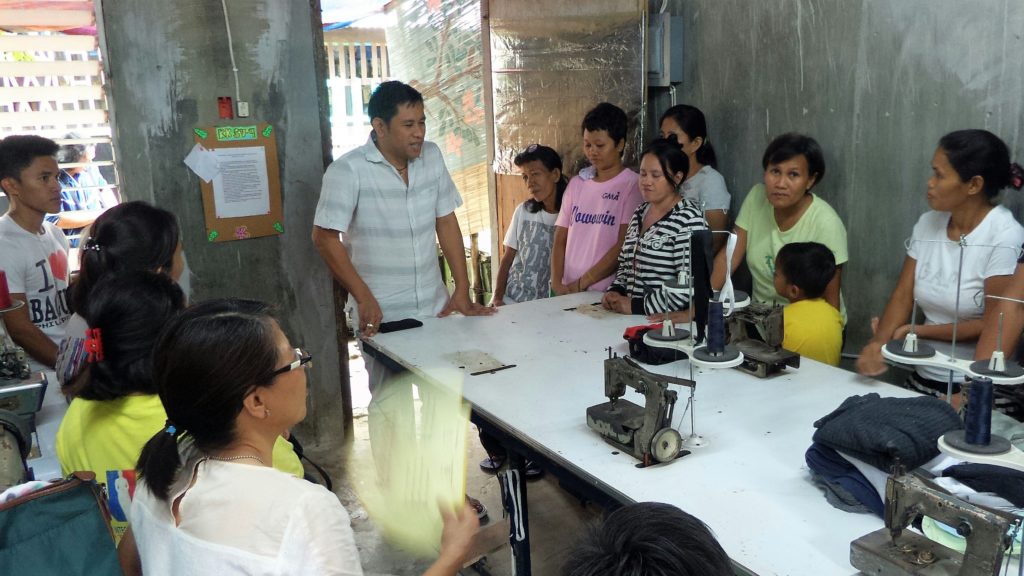
 Pope Francis has announced that the first World Day of the Poor will be observed this coming winter, on Sunday, 19th November 2017.