Apr 8, 2020

This is a testing time for all of us and our missionaries let us know that it is yet another hurdle on the other sides of the world where life is already challenging enough. Here are a few messages from our priests:
From Cameroun:
Dear Fr Carl,
Know that we are together in prayer with you particularly for our old confreres of your Province. We think of them and the Benefactors, we do pray for them. From today on and every Thursday evening, we will be having our HOLY HOUR combined with the evening prayer. We would like to do that for this whole difficult period. Thank God that we are still able to celebrate the mass with the whole community. We are really trying ourselves to be aware, to be well and to stay safe.
With our love and prayers,
Jean Manga MSC
From India:
Dear Fr. Carl,
Greetings of the day.
The outbreak of COVID-19 has shaken the whole world. Yesterday our Indian Prime Minister ordered a nationwide lockdown for 21 days and we are not allowed to go out of our houses, all our states and district borders are closed down. I’ve heard on the news that the whole of Europe is also experiencing a similar ‘lockdown’. We are in this together and we will be coming out from within this crisis enriched and full of even more awe and wonder for the God who is ever present – with us wherever we go. I hope and pray all our MSC confreres in England and Ireland are fine and safe. My thoughts and prayers are with you, the MSC community, our friends and Benefactors. Please know that I will remember you all daily in my prayer.
Your brother in Christ,
Darwin Thaddeus MSC (Union Superior).
From Fiji:
Hi Carl!
I hope you are all safe and well at this difficult time. Yesterday, the Prime minister of Fiji has confirmed 4 COVID 19 cases in Fiji. This creates fear and panic to many people. But we are also advised to remain calm and look after ourselves at this time. There has been a ban to all gatherings in the country and people are very much aware of what coronavirus will bring to the islands if we are not careful. We will continue to pray for our supporters, benefactors, all the victims and families affected by coronavirus around the world.
Peace and prayers for you,
Tamati Sefo MSC (Pacific Union Superior)
HELP SUPPORT OUR MSC MISSIONS
Mar 31, 2020
“Pandemic Novel Corona Virus (COVID-19) has paralized all human activities. The world’s longing to rest indeed happen, unfortunately great crisis on the part of humanity. This alarming rate of change is too difficult to pinpoint the cause and effect, we may not have seen the worst of it. But one thing is clear, this WORLD WILL NEVER BE THE SAME AGAIN. It has hurt most human pride and reminds us again that we need to care for one another.
Before the lockdown so the postponement of our on-going renovations and activities at the Center – we’re able to gave some food provisions to at least 25 construction workers and after a week there are already clamoring for food subsidy from our neighbors or urban poor community. The situation really is challenging since most of our brothers and sisters are just meeting both ends or enduring a hand to mouth existence.
Because of COVID-19 something invisible came and put everything in its place. Suddenly the cost of gasoline went down, pollution went down, people started to have more time – so much time that they do not know what to do with it – parents are spending time with their kids as a family, work is no longer a priority, or traveling or social life either. Suddenly we silently see within ourselves and understand the value of the words “solidarity”, “love”, “strength”, “empathy” and “faith”. In an instant we realized that we are all in the same boat; rich and poor. That the supermarket shelves are empty and the hospitals are full.
New cars and old cars also stand in the garages, simply because nobody can get out.
Empty streets, less pollution, clean air, the land also breathes. The human returns to his origins, realizing that with or without money, the important thing is to survive.
Today, health is the main thing, even in spite of wanting to have or possessing.
It took 6 days for the universe to establish the social equality that was said to be impossible. Fear invaded everyone. At least this happened to realize the vulnerability of the human being. Nature is forcing us to clean up the mess made by ourselves.
What the coronavirus is teaching us:
– Our best protection: GOD
– Our best refuge: HOME
– Our best company: FAMILY
– Our real time: TODAY
– Nature’s call: STOP US
– Its message: WAIT, RESPECT
We do not have the power of controlling everything. The situation is simply telling us to go back to the basics, to the essentials, that the peace of your soul guide you towards what you are: a CREATION.”
Fr Richie MSN
PLEASE SUPPORT OUR MSC MISSIONS IN THE PHILIPPINES
Mar 27, 2020

Yes there is fear.
Yes there is isolation.
Yes there is panic buying.
Yes there is sickness.
Yes there is even death.
But,
They say that in Wuhan after so many years of noise
You can hear the birds again.
They say that after just a few weeks of quiet
The sky is no longer thick with fumes
But blue and grey and clear.
They say that in the streets of Assisi
People are singing to each other
across the empty squares,
keeping their windows open
so that those who are alone
may hear the sounds of family around them.
They say that a hotel in the West of Ireland
Is offering free meals and delivery to the housebound.
Today a young woman I know
is busy spreading fliers with her number
through the neighbourhood
So that the elders may have someone to call on.
Today Churches, Synagogues, Mosques and Temples
are preparing to welcome
and shelter the homeless, the sick, the weary
All over the world people are slowing down and reflecting
All over the world people are looking at their neighbours in a new way
All over the world people are waking up to a new reality
To how big we really are.
To how little control we really have.
To what really matters.
To Love.
So we pray and we remember that
Yes there is fear.
But there does not have to be hate.
Yes there is isolation.
But there does not have to be loneliness.
Yes there is panic buying.
But there does not have to be meanness.
Yes there is sickness.
But there does not have to be disease of the soul
Yes there is even death.
But there can always be a rebirth of love.
Wake to the choices you make as to how to live now.
Today, breathe.
Listen, behind the factory noises of your panic
The birds are singing again
The sky is clearing,
Spring is coming,
And we are always encompassed by Love.
Open the windows of your soul
And though you may not be able
to touch across the empty square,
Sing.
Brother Richard Hendrick, 13 March 2020
Source: Catholic Bishops
Mar 19, 2020
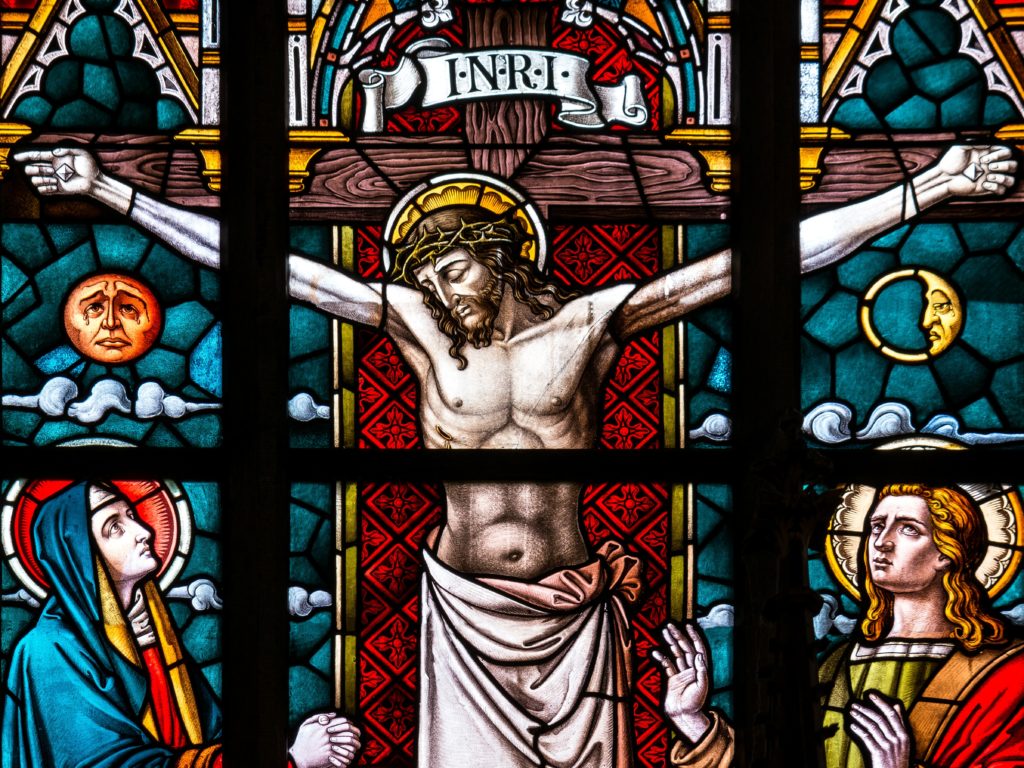
Like others in society, our parishes have been introducing restrictions to help keep people safe, especially those who are most vulnerable. I invite you to join me today in praying the beautiful prayer of Saint Patrick, known as his “breastplate” prayer, in which he invited Christ to surround him with love and protection:
Christ with me, Christ before me,
Christ behind me, Christ within me,
Christ beneath me, Christ above me,
Christ at my right, Christ at my left,
Christ in the heart of everyone who thinks of me,
Christ in the mouth of everyone who speaks to me,
Christ in every eye that sees me,
Christ in every ear that hears me.
The coming weeks and months are going to bring challenges and uncertainty for all of us, as we are reminded of the fragility of human life and of our dependence on one another and on God.
This is a time for an outpouring of the works of mercy towards the sick and vulnerable, and for a spirit of generosity and self-sacrifice, compassion and charity in Ireland, and across the world. It’s hard for people not to be alarmed, but it’s worth remembering that we are never completely isolated or alone.
This is also a time for prayer. Pray for the virtues of patience and perseverance and for the composure to overcome any temptation to despair. Do your best to spread calmness – not panic; serenity – not turbulence; solidarity – not selfishness. Reach out to neighbours and relatives who may feel troubled or alone. Even a simple phone call can make a huge difference. Work to ensure that hope and compassion will prevail.
In turning towards God for protection, as Saint Patrick did, I ask for your prayers in particular for our brave and selfless health workers and for the medical scientists who are searching for a vaccine and better treatments. Pray that government and public health authorities can make wise judgements and decisions about how to limit the impact of the virus, especially on the most vulnerable.
In Ireland we have a strong tradition that God is at our side in time of trouble. It remains important to keep reminding ourselves and others in the coming days that we are never completely isolated: Christ is beside us, before us, behind us, on our right and on our left, beneath us and above us.
Saint Patrick, apostle of Ireland, pray for us.
Dia idir sinn agus an t-olc. – “God between us and all harm”.
Archbishop Eamon Martin
Mar 10, 2020
Gospel Reflection
A spring of water welling up to eternal life.
The Gospel (John 4:5-42).

The theme of water is central to the first reading and the Gospel reading today. Water slakes thirst in the present life and can point to water of another order that looks forward to future fulfilment. In this journey through life and history, faith in the source of living water is a requirement. Our reflection on the reading can combine a little of historical background to the Gospel text, leading into reflection on the central role of faith.
This Gospel text is a rather lengthy reading containing different themes. Central ones are the Samaritan woman, the well and water. In Jesus’ day there was deep enmity between Jews and the Samaritans, who were regarded by the Jews as heretics and not part of the Jewish people at all. The Samaritans, however, regarded themselves as part of the family of the patriarch Jacob, and were awaiting the advent of a messiah, whose nature and mission remain unclear. A noted well in the area was connected with the patriarch Jacob. In the text as John presents it, the episodes in this reading function at two levels – this earthly one, and at a spiritual level, to which the earthly ones point. Thus, the water from the well is a symbol of the water that Jesus will give his followers, welling up to eternal life, that is the gift of the Holy Spirit. The Samaritans worshipped at their own sacred site and the Jews at their Temple in Jerusalem, which led Jesus to speak of the coming age when both these would be irrelevant, and God would be worshipped in Spirit and in truth — everywhere.. His own hunger gives Jesus an opportunity to speak of his intense desire, his hunger, to complete the work the Father had given him, with the sowing of the Gospel seed and the ensuing harvest.
Reflection & Dialogue with today’s world: Christian hope brings certainty.
A common feature of the world in which we live is doubt in matters relating to faith, doubt about elements of moral teaching, about truths of faith, even at times about the very existence of God. An assertion of a certain philosophy, prevalent today, is that there is no certainty on anything. All we can have is speculation, guesswork, rather than certainty, opinions that vary from age to age.
An atmosphere of this sort adds to the difficulties on religious observance. Such doubt on fundamental matters is completely contrary to the teaching of the faith in matters relating to truths concerning this life and the life to come. Christian faith is thus described in the Epistle to the Hebrews (11:1): “Faith is the assurance of things hoped for, the conviction of things unseen” (NRSV). Two of the terms used there call for our reflection: assurance, conviction.
The assurance and conviction spoken of in this verse are not psychological attitudes of souls rooted in the human mind or soul. They refer instead to the divine, theological, virtue of hope, a gift from God that gives conviction which is beyond that which human nature can provide. This assurance and certainty bring with them a peace of soul, the peace which Jesus has granted to believers, and a peace that no one can take from them.
Fr Martin McNamara MSC
Mar 6, 2020
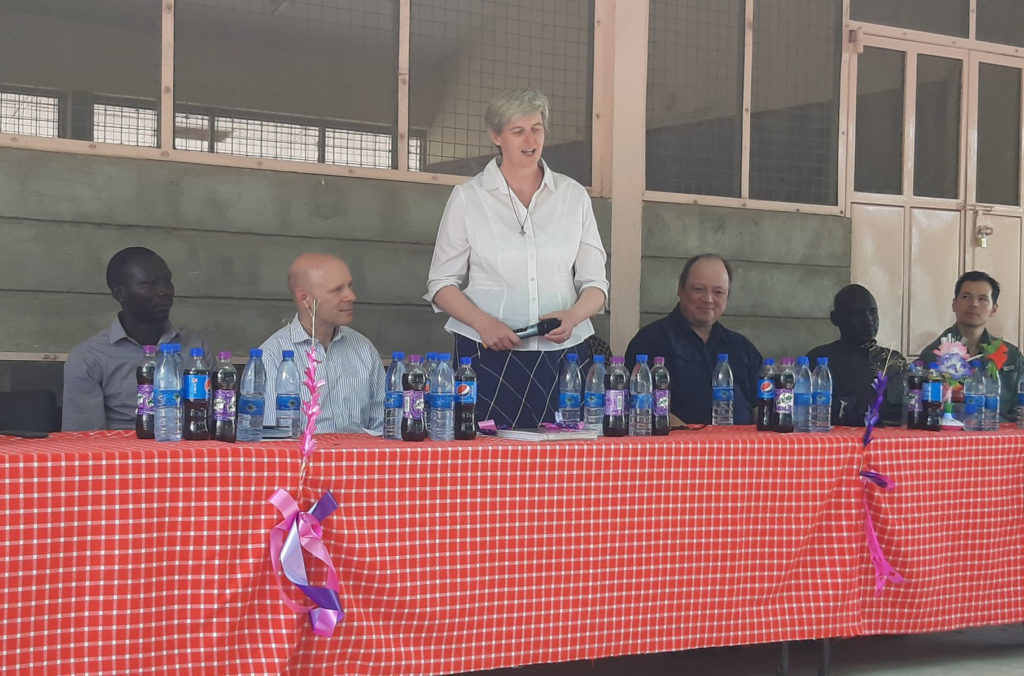
On February 19th, the American Ambassador to South Sudan, Mr. Thomas Hushek visited the Loreto school in Rombeck that is run by the Loreto sisters and commended them for their efforts in keeping the young Sudanese girls in school. The school has been giving support to the young girls by providing a secure learning environment without the threat of child marriage. The drop out rate for girls and young women in school is very high in Sudan and the director Sr Orla Tracey has done magnificent work in her efforts to provide education and support for the people of South Sudan.
The US department of state awarded Sr. Orla Tracey, Loreto Rumbeck’s director an international women of courage award for her work in in March last year, an annual honor that recognizes women who have shown exceptional courage and leadership in advocating for peace, justice, human rights, gender equality and women’s empowerment.
During his visit the American ambassador was shown all the various projects run by the Loreto Sisters including the recently launched clinic and malnutrition programme established for mothers and babies, a primary school school and a girls’ secondary school with boarding facilities in the country’s Catholic Diocese of Rumbek.
In Mr Hushek speech, he encouraged the girls to be courageous in the face of discrimination against women in their country and revealed that Loreto has a nice model for young girls in South Sudan because the girls are taught to be united from various communities and that their main benefit from the school as the freedom to access education. “A year ago, Sr. Orla was nominated for an award and won on behalf of the entire school. I have been wanting to come up here ever since because of the work that is going on here especially focusing on girls’ education,” the U.S. national said, “Going forward, this is the key to development and peace for the country.”
An intern from the The Mary Ward Primary Health Care Clinic that was lauched in February said “In South Sudan, healthcare providers continue to deal with the challenge of health care versus traditional doctors. Having been enlightened through my internship at this clinic, I feel there is a need for more people in South Sudan to access health education”.
Other students spoke about the challenge of girl child education and how school has given them the chance to grow and to become people who can help their respective families ,more spoke about the issue of inter clan conflicts and how boarding in Loreto has allowed them build bridges between fellow students of different tribes in the classroom regardless of ethnic differences.
Addressing the audience that included the U.S. diplomat, teachers and students, Sr. Orla acknowledged the struggles that South Sudanese girls who choose to go to school face and the odds they have overcome saying, “We have great hopes and I know the girls are very ambitious for the country of South Sudan.”
“It is not easy for the girls in this country to be in school , but they are strong, courageous, ambitious and peaceful women who are looking for a better South Sudan,” she added.
The Missionaries of the Sacred Heart are always proud to support the wonderful work done by the Loreto Sisters for the young women of South Sudan.
For more photographs and further information about Loreto Rumbek, visit their website or visit their Facebook page.
You can also find out more about how MSC Missions work with Loreto Rumbek – and how you can help to make a difference to the young women of South Sudan.
PLEASE HELP US TO TRANSFORM LIVES IN SOUTH SUDAN