Aug 12, 2021
The Missionaries of the Sacred Heart Australia website has reported on the current COVID-19 situation in Vietnam, where our missionaries are responding “with an inspiring MSC spirit”.
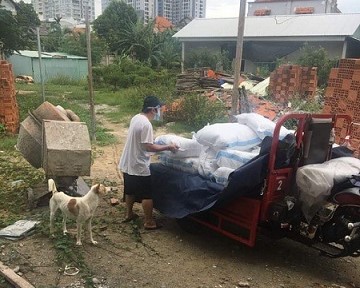
The people of Vietnam are currently under a martial law curfew between 6.00pm and 6.00am since the beginning of August, with approximately 80,000 cases at the beginning of the month.
With one of our MSCs in Vietnam referring to the virus as “a roaring lion”, we read that “many people are poor, homeless, and hungry”. The hospitals are full beyond capacity, with temporary hospitals being built as quickly as possible to accommodate the overflow of patients in need.
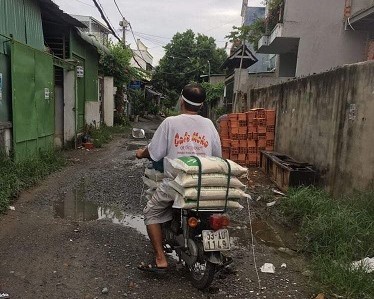
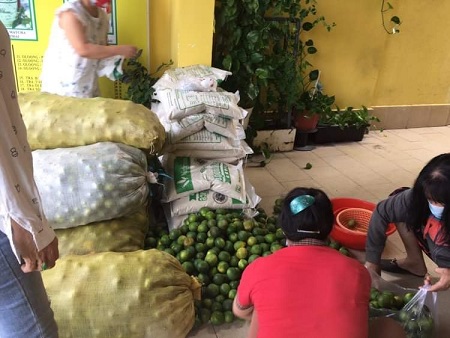
MSC communities in Vietnam are doing all they can for those who need their help. As well as sourcing food from wherever they can, they are also sharing their own rations of rice and vegetables with the poor and hungry, obtaining travel permits so that they can move around their local regions distributing food and necessities.
While the final professions of several of MSCs waiting to take their vows in Vietnam will have to be postponed due to the current restrictions, MSC Fr Chung writes that the ministry of MSC communities in the region “keeps our heart burning for our mission of spreading love of God for others”.
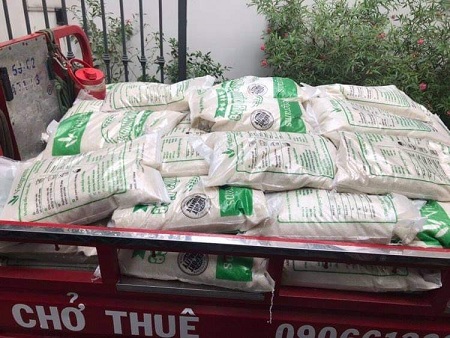
We join our voices with our Australian brothers as they say: “Thank you to all our Vietnamese MSC brothers in Vietnam, the Philippines, and Australia, for spreading the compassionate love of God by how you live your lives, wherever you are.”
PLEASE SUPPORT OUR GLOBAL MSC COVID-19 RELIEF MINISTRY
Images via the Missionaries of the Sacred Heart Australia website.
Aug 5, 2021
We were delighted to received recent communication from our OLSH Sisters in South Sudan, where a project funded by generous donations from our mission friends here in the Irish Province will see a new vegetable garden, with its own solar-powered irrigation system, established in Aluakluak, Mapuordit.
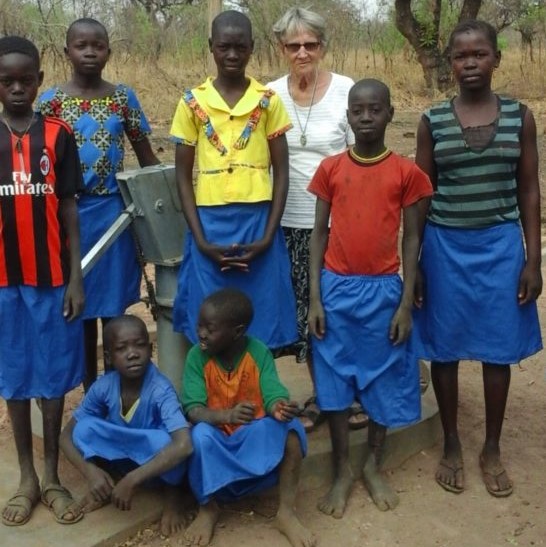
The Daughters of Our Lady of the Sacred Heart recently marked 25 years of service in South Sudan, where they have been involved in everything from education and nursing to general pastoral work. The region of Mapuordit is currently home to a small community of OLSH Sisters who minister to the needs of families in the area, facilitating the care and education of over 700 children at nursery and primary level.
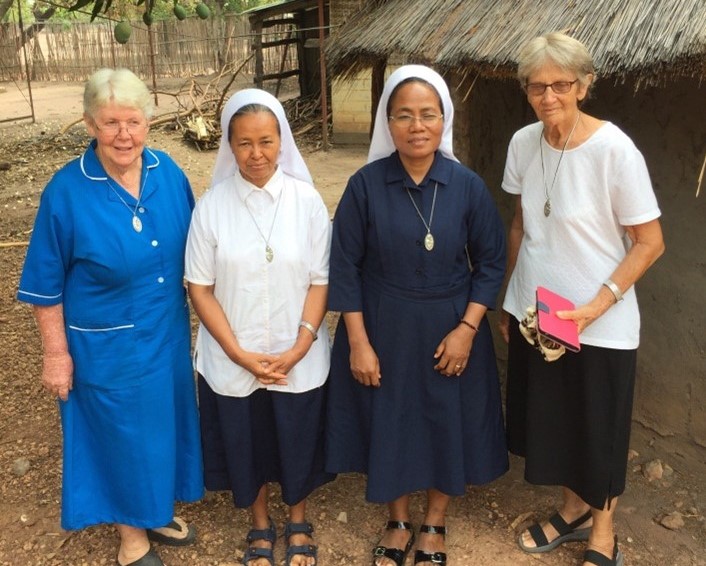
Since 2020, the Irish Province of the Missionaries of the Sacred Heart have been helping our OLSH family in South Sudan, by raising funds to build gardens around the OLSH schools in Mapuordit, which will help to provide a stable and sustainable source of food and water to families in the region who have very little. Further fundraising took place in 2021 as part of our annual MSC World Projects Appeal, with a wonderfully generous response from our mission friends here in the Irish Province.
The Sisters grow vegetables such as sweet potatoes and green vegetables for consumption by local families, using the natural resources available to provide a much-needed food source. The land in the region is extremely fertile, but with six months of regular rain and a six-month dry season, the gardens need a simple irrigation system, made up of bores which are drilled and fitted with a pump, a tank, and a watering system, to allow them to be used on a year-round basis.
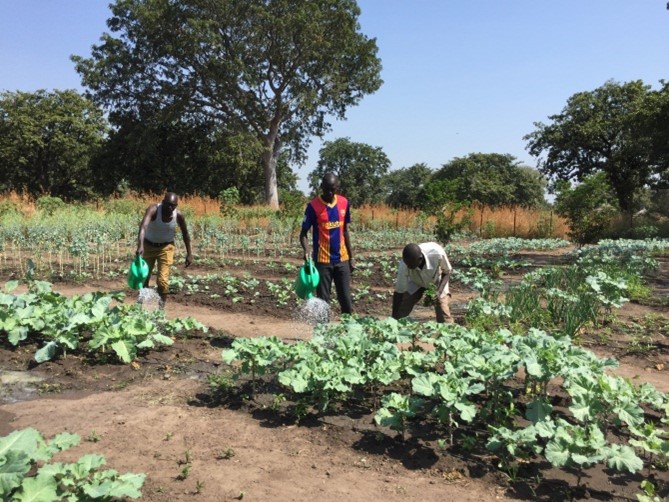
These gardens are used to grow a variety of vegetables, and, when cultivated to their full potential, will be hugely beneficial in the long-term provision of nutritious food supplies to local families, who are up against a daily struggle to afford to feed their children. The gardens are an investment which will provide years upon years of profit to local communities, from being a source of nutritious food to providing local students who tend to the crops with the physical and mental benefits of gardening.
A place to grow in Aluakluak
The current project aims to provide a fully solar-powered irrigation system for a garden that will assist in supplementing a food supply for at least 30 families in the region of Mapuordit, especially during the six-month dry season in the area.
The initial plans placed the project in the Jur area of South Sudan, with preliminary meetings taking place at state level, at regional level, and at a local level, with the local Jur chiefs involved in the decision-making process as a location was chosen. However, project supervisor Sr Rita Grunke FDNSC reports that an “intense disunity” and “instability” among the Jur chiefs meant that it was “impossible to proceed” in the proposed location at this time.
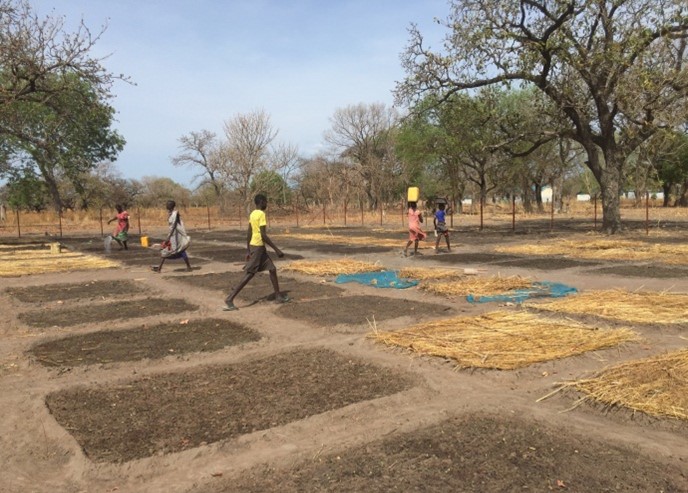
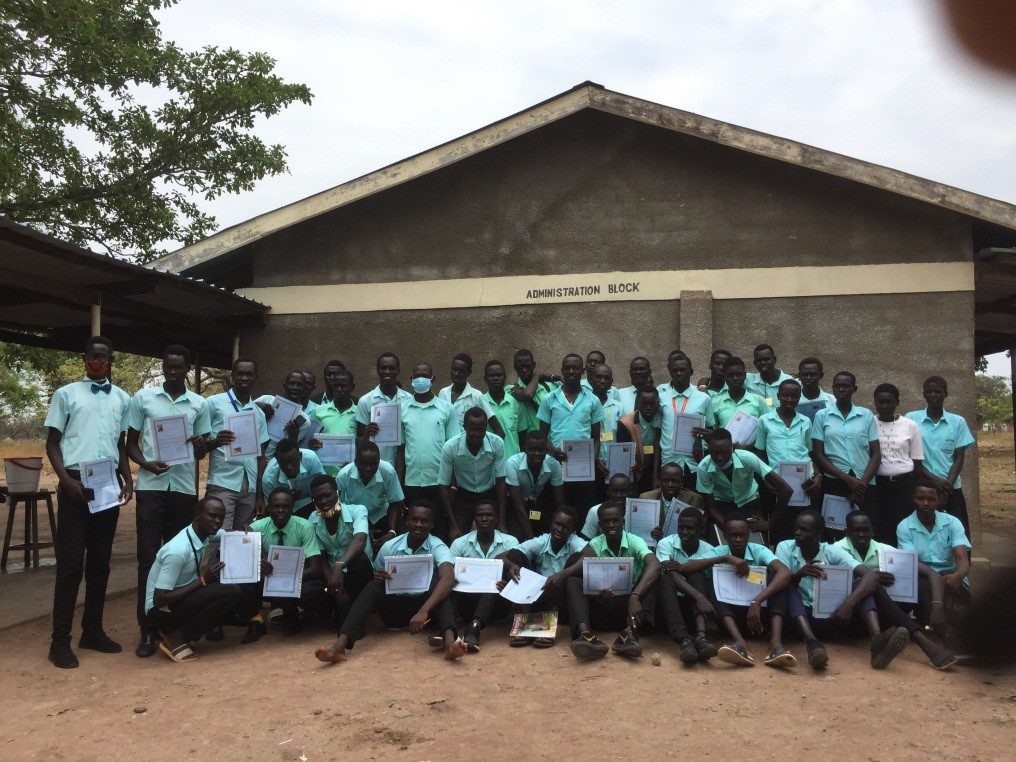
The decision was then made for the project to go ahead in Aluakluak, an extremely active area of the parish where “a strong, dedicated women’s group” had been applying for funding for a development such as this one for several years. Here, the garden will be located between the primary school, which currently has approximately 560 students enrolled, and the nursery, which last year catered to 160 registered students. Both the primary school and nursery are run by the parish at a very high standard, with older Primary 8 students having won places at the Loreto Girls’ Secondary School and the De La Salle Boys’ School, both located in Rumbek.
Families of the primary and nursery students in Aluakluak will all benefit greatly from the project; the students themselves will have vegetables to supplement their school meals, and parents will be able to take away vegetables for evening meals for their families.
“A community willing to help itself.”
In February of this year, a well was installed to provide a source of water for the garden in Aluakluak. “Things move slowly in the region,” explains Sr Jenny Christie FDNSC, International Development Office for the Daughters of Our Lady of the Sacred Heart. “All of the materials have to be brought in from elsewhere, and then the workmen have to be available” – and naturally, COVID restrictions and lockdowns have made progress even more challenging in recent times.
Despite the challenges, the local community has been working together to ensure progress moves as efficiently as possible, where 25 ladies from the area each dug four holes for the metal fence posts.
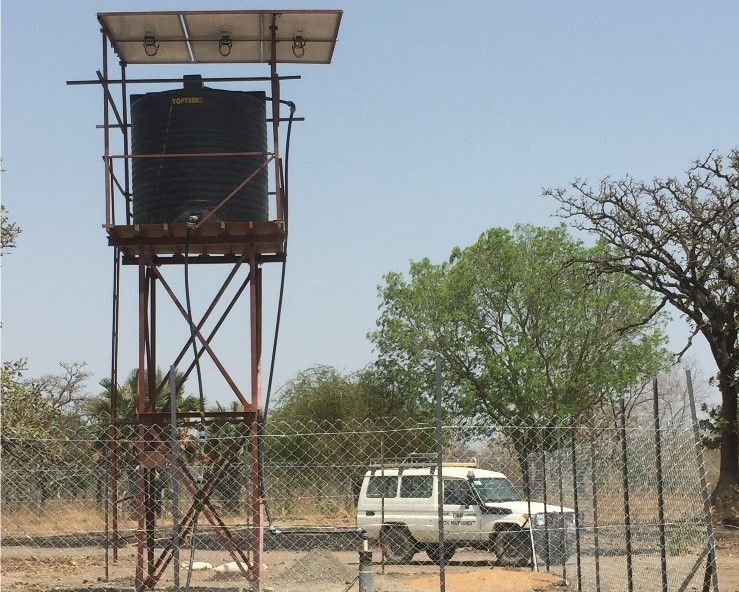
Project supervisor Sr Rita Grunke FDNSC expresses her “deep gratitude and blessings abundant” for the €25,000 funding sent by our MSC Missions Office here in the Irish Province, as without irrigation, crops cannot be grown, and local people will be unable to become more self-sufficient and develop their own food security.
“Deep gratitude for your generous involvement in this project,” writes Sr Rita. “Be assured it will serve very needy families, as well as a community that is willing to help itself.”
“Thank you for keeping Mapuordit alive.”
LEARN MORE ABOUT OLSH GLOBAL OUTREACH
Aug 4, 2021
Novena to Our Lady of the Sacred Heart 2021
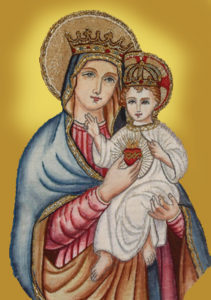
Our annual Novena to Our Lady of the Sacred Heart is a beautiful time of reflection and thanksgiving, when we bring our prayers and petitions before Our Lady.
Our Novena of Masses runs for nine days and will take place from Tuesday, August 31st to Wednesday, September 8th.
All are welcome to join in the Novena by watching our daily Masses live from the Sacred Heart Church in Cork. These Novena Masses will take place daily at 10.00am and 7.30pm.
Please note that this year’s Novena to Our Lady of the Sacred Heart will be streamed online only, due to ongoing COVID-19 government restrictions.
Be part of this year’s Novena to the Sacred Heart
At this special time of year, you can help us to help others by supporting our ongoing mission projects, and in gratitude for your contribution, we will be glad to remember your intentions at our daily Novena Masses. You can then submit your personal prayers and intentions online, and our MSC priests will remember your petitions specially throughout the course of the Novena.
The theme of year’s Novena to Our Lady of the Sacred Heart will be “Hope of the Hopeless”, and it will be celebrated by Fr Paul Clayton-Lea.
Fr Paul is a priest of the Archdiocese of Armagh, who has enjoyed a wide and varied ministry to date and is currently the priest in residence in the parish of Termonfeckin, Co. Louth. Having studied Education and Family Ministry at Fordham University in New York in 1988, he also ministered in the Riverdale area of the Bronx at the time, and has since served as a teacher of politics and religion, a college chaplain at DKIT, a Diocesan Advisor for Religious Education, and a parish priest. Author of In The Light Of The Word: Family Life Through The Lens Of Scripture, which was published by Veritas in 2018, Fr Paul is also about to resume his position as editor of Intercom, the monthly magazine of the Irish Catholic Bishops’ Conference. We very much look forward to welcoming Fr Paul to the Sacred Heart Church as we celebrate this year’s Novena together.
Each year, the Novena to Our Lady of the Sacred Heart offers great solace and comfort, as we bring our intentions before our Holy Mother. The past year and a half has brought with it enormous challenges, and now, we look to the future with renewed hope; all are very welcome to join us online for our Novena Masses as we come together to reflect and give thanks in the grace and love of Our Lady.
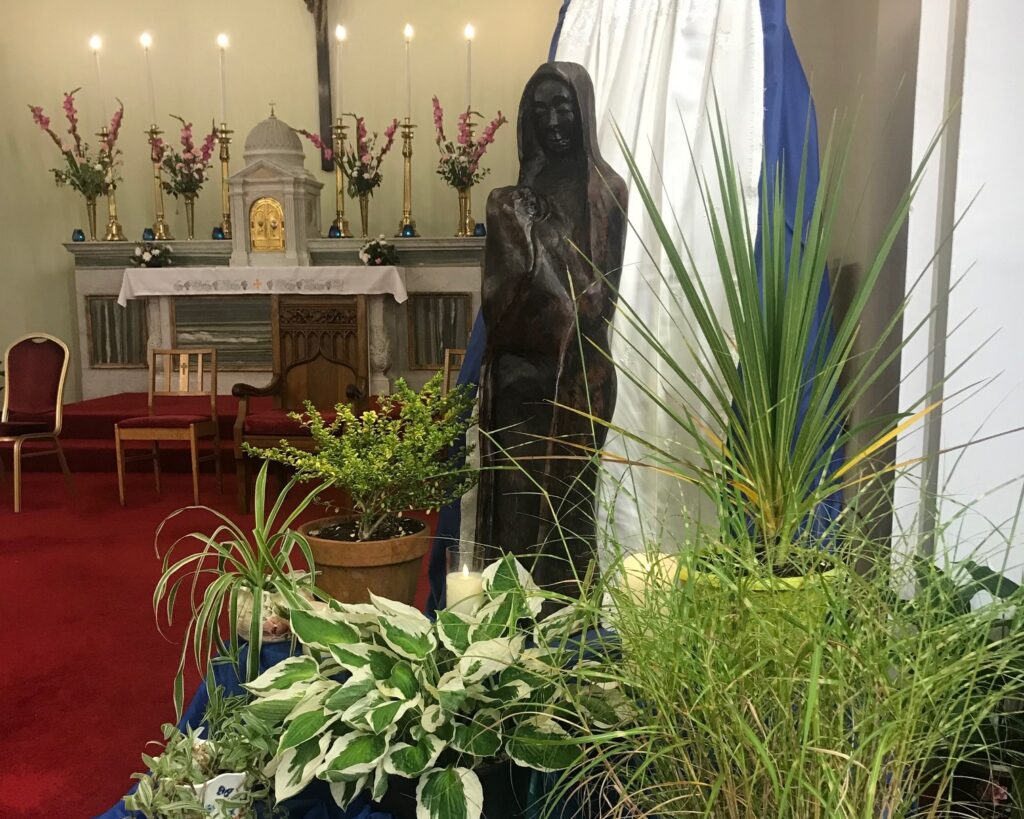
OLSH Novena at the Sacred Heart Church, Western Road, Cork
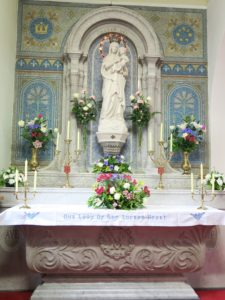 Daily Novena Masses: 10.00am & 7.30pm
Day of Reconciliation: Friday, September 3rd
Day for the Dead: Monday, September 6th
Day of Healing: Tuesday, September 7th
Adoration of the Blessed Sacrament: Thursday, September 9th (10.00am – 2.00pm)
All are very welcome to join us for our daily online Novena Masses on our live stream. While we continue to be restricted in our ability to pray together in person, we remain ever united in spirit as part of our great family of faith.
We welcome each and every one of you to this year’s Novena to Our Lady of the Sacred Heart.
We hope and pray that these nine days of prayer will be a grace-filled and blessed time for all of us.
TAKE PART IN OUR 2021 OLSH NOVENA
Jul 29, 2021
Welcome to the Summer 2021 edition of the MSC Message!
This summer’s edition of the MSC Message is a slightly different one, as we share just some of the ways in which our MSCs have been working to provide COVID relief aid around the world.
• Read a special message from Fr Michael O’Connell MSC, Director of the MSC Missions Office.
• Find out more about the ways in which MSCs are protecting lives from COVID-19 in India, with reports from Fr Darwin Thatheus MSC, Regional Superior in Bangalore.
• Read about MSC COVID outreach in Brazil, from the distribution of basic care packages to the provision of safe and secure housing for families who have lost their homes.
• Learn more about MSC COVID relief aid in the Philippines, where communities are struggling desperately to fight the pandemic in the wake of appalling typhoons.
• Meet the new MSC Vocations team.
• Read a message from Bro Giacomo Gelardi MSC, who has been ministering throughout the pandemic in Killinarden, Dublin, an area already plagued by issues such as violence and drug and alcohol abuse.
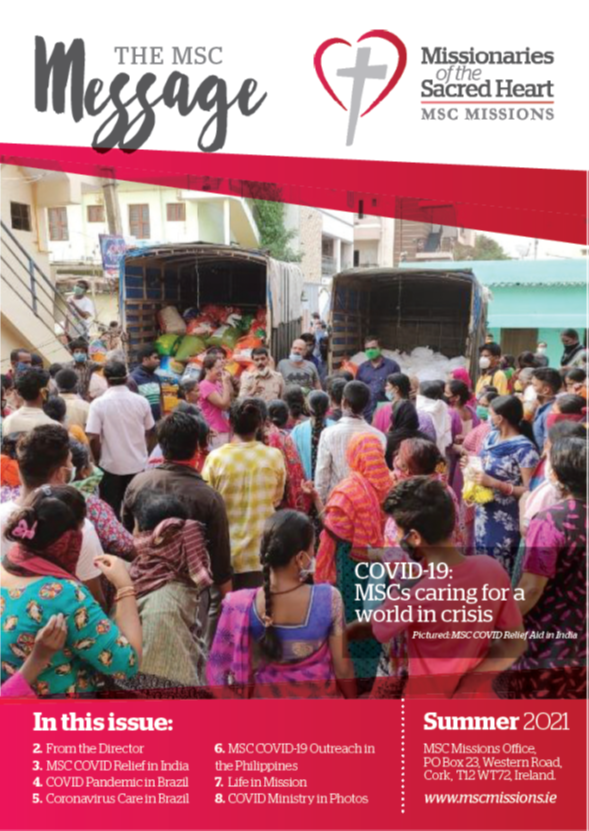
Read the MSC Message Summer 2021
Jul 29, 2021
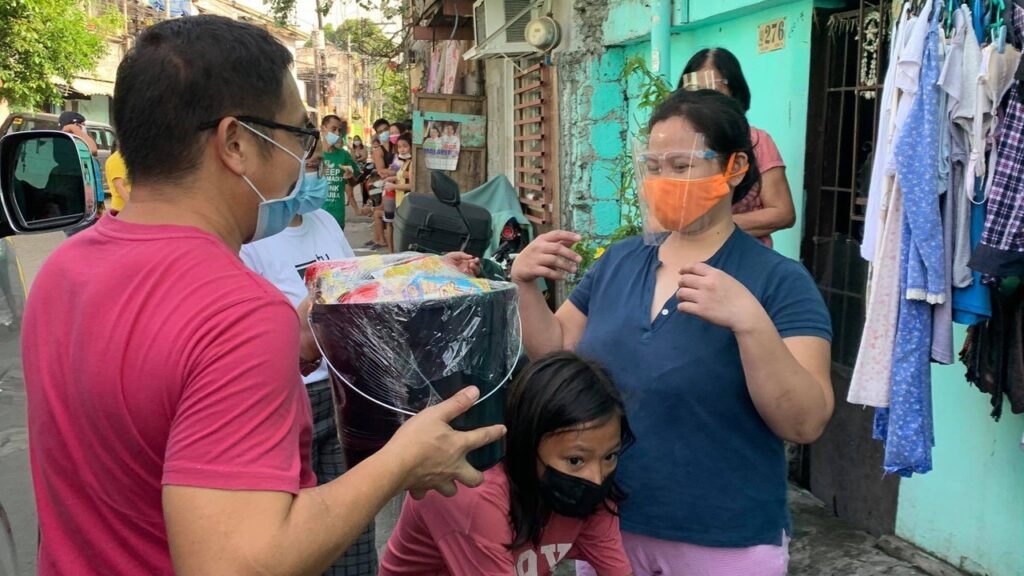
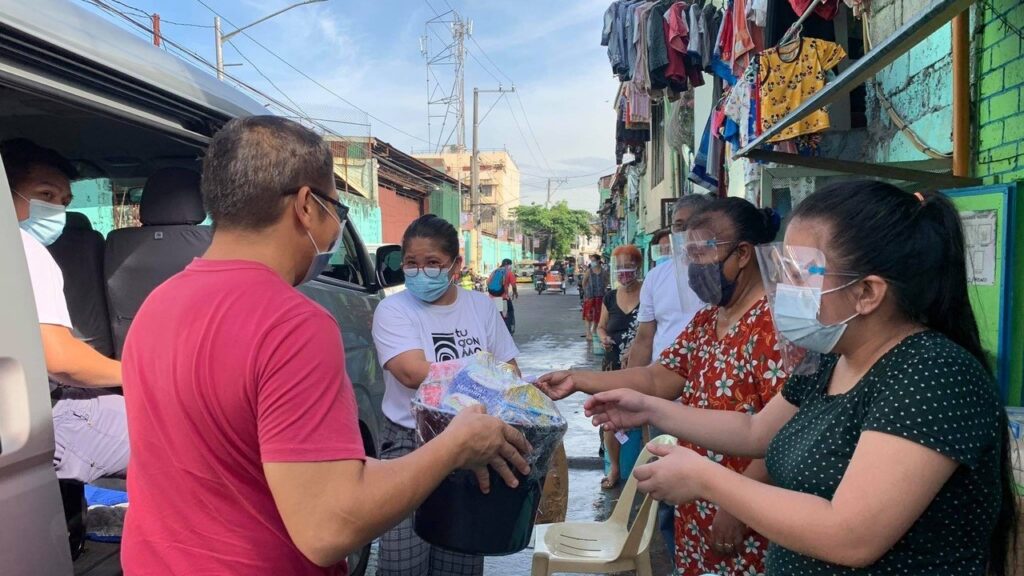
The MSC Mission Office in the Philippines is currently raising funds to coordinate a mission outreach programme for families who have been severely affected by the COVID-19 pandemic.
Since the onset of the pandemic in early 2020, millions of people in the Philippines have lost their jobs and livelihoods, and have been relying on government assistance and charitable donations. This is of particular concern in areas where poverty has long been a pressing issue, where families were already living hand-to-mouth and were struggling to put food on the table. Now, with a second wave of COVID-19 wreaking further havoc across the Philippines, many families have the very real worry of how they are going to feed their children, as well as the overwhelming fear and uncertainty surrounding the coronavirus threat.
“The COVID-19 pandemic has affected so many lives of Filipino people,” writes Fr Samuel Patriarca MSC. “Millions have lost their jobs and businesses, which lead to a great impact in the livelihood and food system of the country. Food security is one of the main adversities that every Filipino has been dealing since the start of the pandemic. As the country is on verge of the second wave of COVID-19, more and more people become hungry and most of them rely on relief drives organised by the government and other civic organisations.”
The MSC Mission Office in the Philippines has been providing relief assistance where possible since the pandemic took hold, providing food and essential items to families in need. Their next mission outreach programme, which they aim to run this summer, will see relief distributions to 3,000 families across three of the most badly affected areas in the country: Luzon (Sta. Quiteria and Caloocan), Visayas (Camotes Island and Cebu), and Mindanao (Butuan and Agusan del Norte).
Each relief pack will provide food and basic items that will act as a lifeline to these families, at a cost of 500 Philippine pesos – approximately €8.50 – per pack.
Just €8.50 will provide an emergency relief pack
for a family in the Philippines. Can you help?
“We hope that through this project, we will be able to help the most vulnerable sectors of the society, the poor.”
– Fr Samuel Patriarca MSC
Director of the MSC Mission Office in the Philippines
PLEASE SUPPORT MSC COVID-19 RELIEF IN THE PHILIPPINES
Jul 29, 2021
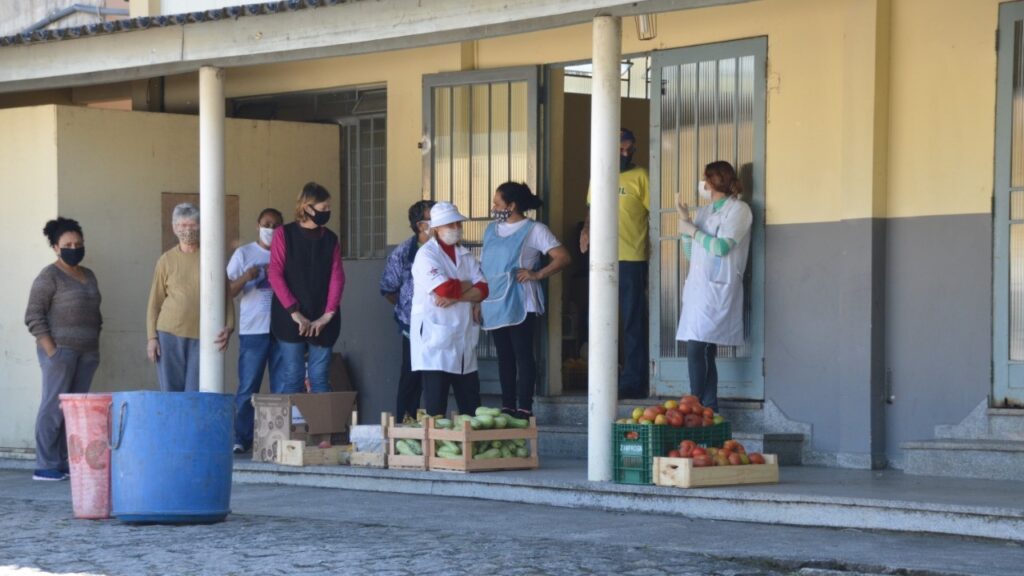
The coronavirus has torn through Brazil, where the death toll of half a million people was the second-highest in the world in June 2021. With the situation labelled as “critical”, the pandemic continues to have a devastating effect on health, employment, and social and financial security – and our MSCs across Brazil are doing their best to help those who need it most.
Distributing care packages in Muriaé
The São Paulo Social Work Project is based in the city of Muriaé, in Minas Gerais, Brazil, where MSC missionaries help the poorest people every day. The project works daily on two main purposes: The provision of essential medicines which are expensive, or unavailable via public health services, and the distribution of food baskets, containing basic necessities.
In addition to food and medicine, the project also provides families in need with nappies for young children, and hygiene and cleaning products, which are more crucial than ever in the current pandemic.
The São Paulo Social Work Project is funded by donations from local people, and additional resources made available by the parish. The distribution of food, hygiene products, and medicine takes place from the project’s head office, or care packs are sent by volunteers to the homes of those who are unable to collect them in person.
The monthly cost of the project is estimated at approximately €770. This currently provides food baskets for around 80 families every month, along with the distribution of over 200 medicines monthly.
As a result of the COVID-19 pandemic, requests for help from the São Paulo Social Work Project have increased significantly, as many people in the region find themselves unemployed and without the means to support their families. MSCs in the region are currently trying to raise funds for a year’s worth of relief aid, amounting to €9,240 in total.
Just €9.60 will provide food, medication, and cleaning products for a family in Muriaé for a month.
A donation of €115.50 will give that family these necessities for a year.
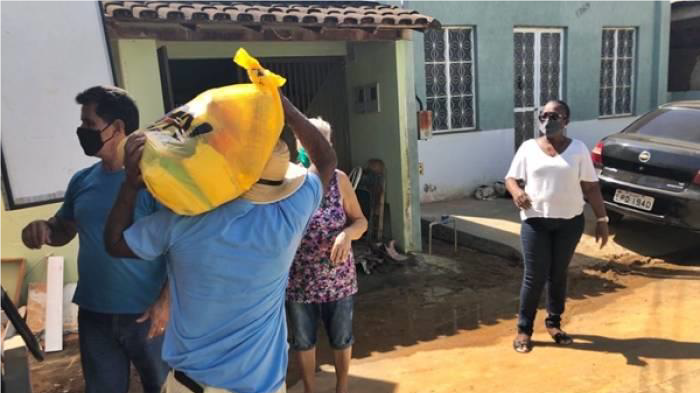
A contribution of €9.60 will provide food, medication & cleaning products for a family in Muriaé for a month.
Sowing seeds for the future in Rio de Janeiro
The São Francisco de Assis Social Work Project was founded by MSCs in São Gonçalo-RJ, Brazil, in March 1988. The project originally began with the establishment of a community crèche to help single mothers and their children, before the implemention of a larger-scale project in 2005, which aimed to support disadvantaged parents and children in the area, providing opportunities for personal development and professional qualifications. With the help of this programme, single parents and vulnerable families have been able to work towards gaining education, qualifications, and paid work, all with the aim of providing independence, dignity, and an improved quality of life.
The São Francisco de Assis Project are now raising funds to help vulnerable families in Rio de Janeiro in the wake of the coronavirus pandemic. Their latest project, named The Desert Also Produces Flowers, will focus on:
- Promoting health and wellbeing following the pandemic, with specific attention on women’s health.
- Working with the local community employment centre to run workshops for people who are lacking in the necessary skills to find employment. These workshops will include computer skills, caregiving for the elderly and infirm, sewing and clothing production, and beauty courses.
- Developing and running educational courses to help people in financial difficulty to gain qualifications, prepare for the world of work, and improve their quality of life in the aftermath of the COVID pandemic.
The Obra Comunitária São Francisco de Assis are working to raise a total of €2,900 in order to be able to fund this new community programme, which will run for a period of 10 months.
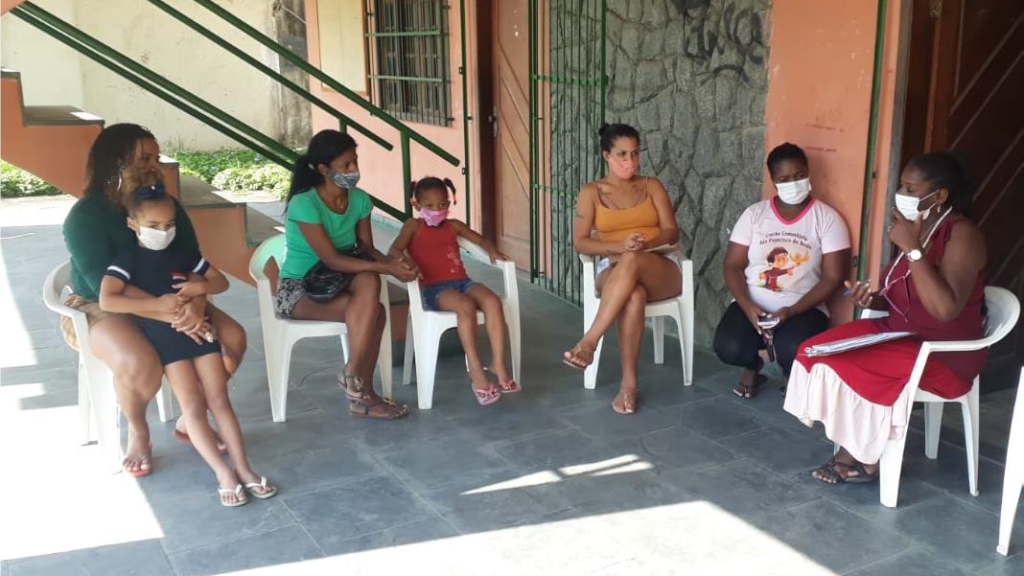
Can you help to give a family in Brazil a second chance?
A focus on family in Pinheirinho
The ongoing plague of the coronavirus pandemic has exacerbated existing problems of violence, marginalisation, and poverty in the area of Pinheirinho, in the city of Curitiba, and MSCs in the region are working to help vulnerable families who are struggling with a lack of facilities, a lack of support, and often, a lack of the most basic necessities.
The Projeto Família Viva, or the Living Family Project, hosts weekly meetings for 120 families in the area, with talks on themes such as addiction, health, family values, and spirituality. Monthly meetings also promote self-help, with particular emphasis on support for those struggling with alcoholism, or with family members who are dependent on alcohol.
Home visits are carried out by volunteers, who provide help and offer much-needed social interaction to those who are alone. Workshops are also held, teaching skills including knitting, embroidery, painting, and making clothes and rugs. Monthly bazaars are held to sell the products made during craft workshops, with all funds raised diverted back into the project.
The ministry provided by the Projeto Família Viva is invaluable; in addition, the group supply essential care packages to families in need every month, containing food, medicine, and basic necessities. MSCs in Pinheirinho are working to raise funds to continue the work of the Projeto Família Viva, and the provision of essential items to families who have been left without the means to support themselves as a result of the coronavirus pandemic.
A donation of just €19 will provide a monthly care package for a family in need in Pinheirinho.
Can you provide a Brazilian family with this lifeline?
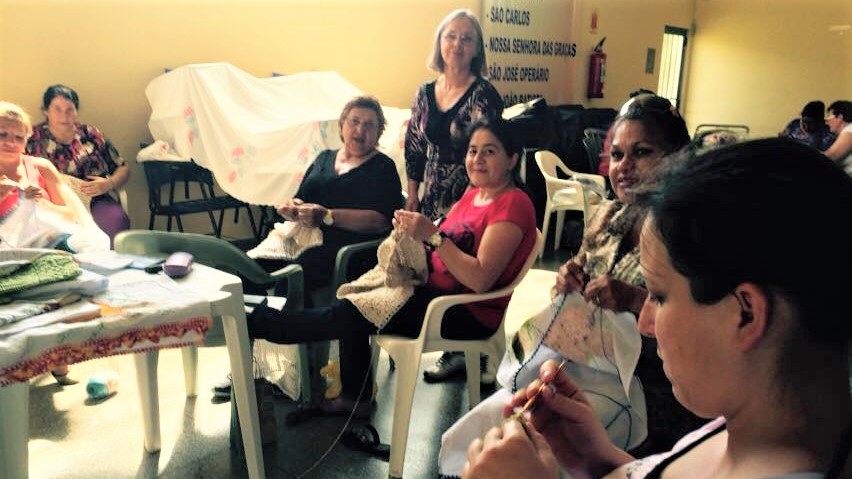
Just €19 will provide a monthly care package
for a family in need in Pinheirinho.
Providing a safe haven in Minas Gerais
The Pró-Moradia Housing Project was founded by Fr Tiago Prins MSC in 1992, in Muriaé, Minas Gerais, a region of Rio de Janeiro that is significantly affected by poverty. Fr Tiago developed this project with the aim of being able to give low-income families access to safe, secure, and comfortable housing.
Sadly, the number of people living on the streets in Rio de Janeiro is increasing rapidly due to the harsh rise in unemployment brought about by the COVID-19 pandemic, exacerbated by the lack of support from the Brazilian government.
Each house costs approximately €1,600 to build, and the houses themselves are built on a volunteer basis by their future residents. MSCs in Muriaé are appealing for the funds to build 10 new houses, to help those families who have lost their livelihoods and their homes due to the coronavirus pandemic.
For €1,600, a displaced family in Brazil will have a new home. Can you help?
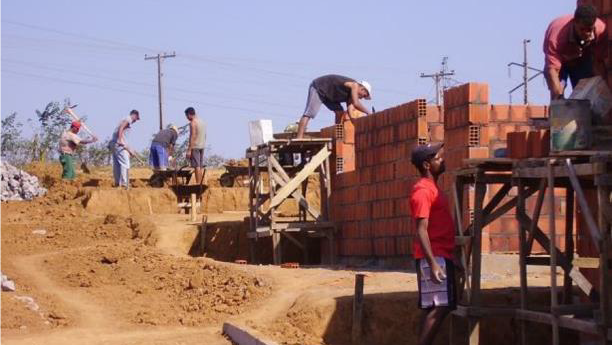
For €1,600, a family in Brazil will have a safe home.
Can you make a difference?
PLEASE SUPPORT MSC COVID AID IN BRAZIL