Oct 22, 2026
Br Deiby Fuenmayor MSC shares the latest update from the Venezuelan earthquake relief programme, following the double earthquake that shook the city of Caracas on June 24th. Aid efforts are ongoing following the disaster, and the Missionaries of the Sacred Heart in Venezuela are working in conjunction with Caritas Caracas to bring vital support to survivors of the quakes.
Today, we share recent updates from Br Deiby, following news on relief efforts in the wake of the disaster.
The Work Does Not Stop: Accompanying, Listening, and Remaining
«Let us not grow weary of doing good. Behind every box of supplies and every bag delivered lies a human story in need of being heard, a heart seeking comfort, and the firm certainty that they are not alone.»
In the midst of challenging times and the complexities that continue to define the daily life of our communities, the work of love and service in La Guaira State remains steadfast, unwavering, and constant. The reality facing this coastal region continues to be deeply complex and harsh—a reality that every single Venezuelan understands and witnesses firsthand. We are fully aware that aid has diminished significantly in recent times. Yet, in the face of scarcity and fatigue, the Gospel’s response is not withdrawal, but perseverance.
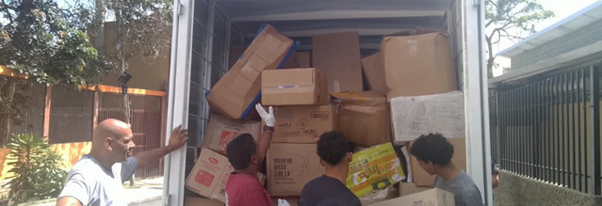
Volunteer Strength and Arduous Work. Young men and volunteers dedicate their physical efforts to loading the relief truck with essential supplies. Thanks to donors and the willingness shared across platforms and communities, we bring hope to the most vulnerable areas of La Guaira.
The work does not stop. It continues day by day through the coordinated efforts of the Catholic Church, parish Caritas teams, non-profit organizations, and, in a very special way, through the infinite generosity of donors and people of goodwill who share their resources so that aid reaches those most in need.
BEYOND MATERIAL AID: THE ART OF ACCOMPANIMENT
Even though streams of external support have decreased, the power of solidarity is not measured by the abundance of excess, but by the willingness to share whatever we have. Every truck loaded and every package prepared represents a daily miracle of faith in action.
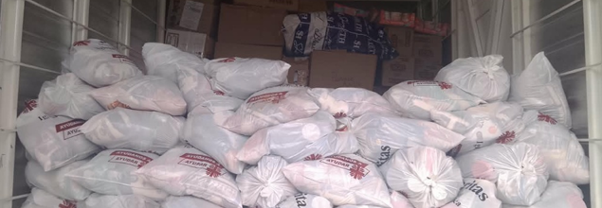
Logistics of Love and Hope. Bags of relief provisions organized meticulously by parish Caritas networks. Each package stands as a direct testimony to our unconditional commitment to affected families.
Behind every donation and delivery made to a family, what truly matters is the ability to listen, to be present, and to belong to one another. We are all beloved children of God, who loves us, knows us, and desires that everyone returns to stability.
- TOUCHING HEARTS Continuing in prayer to inspire hearts to share resources with those in need.
- COMPASSIONATE PRESENCE Listening to and welcoming each family within their unique life situation.
- UNCONDITIONAL WORK Persevering effort by the Church and parish Caritas teams without faltering.
- PATH TO STABILITY Walking together toward the integral well-being that God envisions for Venezuela.
Let us continue moving forward. The work carries on, support continues to flow, and we keep walking alongside our brothers and sisters. May solidarity remain our guiding light.
CHARITY AND SUPPORT FOR OUR BROTHERS AND SISTERS CONTINUES
PROVINCIAL UNITY AND MISSION IN MARACAIBO
Within the framework of fraternity and pastoral discernment of our congregation, the Community of the Missionaries of the Sacred Heart of Jesus is gathered in the city of Maracaibo. This meeting benefits from the guiding presence of the Provincial Superior, Reverend Father Joe McGee MSC, and specially incorporates the fraternal participation of Reverend Father Humberto Henriques MSC, Provincial Elect of Rio de Janeiro.
While the leadership and the MSC community are gathered in the city of Maracaibo, all pastoral, social, and charitable action of Cáritas remains fully active and providing its services without stopping for a single moment. Charity takes no breaks: thanks to the commitment of the team of volunteers and laity of the Chevalier Family, our work continues to give daily responses to our brothers and sisters.
“Urged by the love of Christ, we testify that charity does not stop: faith is transformed into concrete service towards the most vulnerable.”
– Community of the Missionaries of the Sacred Heart of Jesus
KEY OPERATIONAL FRONT
- Organization of Donations: Systematic classification and inventory management of incoming assistance.
- Delivery of Supplies and Food: Direct distribution of essential sustenance to prioritized families.
THE ACTIVE SERVICE OF CHEVALIER VOLUNTEERS
The operational backbone of this work relies on the tireless dedication of the team of volunteers and laity of the Chevalier Family. Closely connected with the MSC community of Propatria, these brothers and sisters have taken on the responsibility of keeping humanitarian assistance operations active.
The work of Cáritas continues to provide comprehensive assistance thanks to this solidarity network. Attention channels via social media and telephone lines remain open daily to respond to requests for medicines, food, and general support.
- Storage and Sorting: Continuous processing and safe storage of donated goods.
- Maternal Care and Supplies: Dedicated attention and provision of essential goods for mothers and infants.
Thanks to the close coordination of this volunteer team, a rapid response to priority cases is achieved, proving that lay fraternity is the pillar that energizes our mission.
GRATITUDE TO BENEFACTORS AND HEALTHCARE ASSISTANCE
We give thanks to God for the generosity of all benefactors—men and women of deep faith and goodwill. Their donations make possible the timely delivery of essential medical supplies, chronic condition treatments, and crucial pediatric materials.
The pharmaceutical and health management of Cáritas Propatria continuously serves patients with joint, hypertensive, and respiratory conditions, channeling each medication with equity and care.
- Specific Medications: Distribution of specialized pharmaceuticals like Glucon Plus, anti-inflammatories, and chronic care treatments.
- Pediatric Supplies and Equipment: Focused delivery of nutritional supplements and child health items.
DIRECT AND SPECIALIZED HUMANITARIAN RESPONSE
Our work extends deeply into cases of critical vulnerability. Through articulation with partners and donors, Cáritas provides complete medical treatments to diagnosed patients, as well as adult diapers, anatomical protectors, and specialized pediatric medication.
Each delivery represents tangible comfort. The faces of the children served and the relief of families are the greatest motivation for our volunteers. We maintain an open channel for incoming requests to ensure aid reaches where it is needed most, quickly and effectively.
COMPREHENSIVE SUPPORT FOR SENIOR CITIZENS & VULNERABLE CASES
Within our social care program, we identify specific requirements that extend beyond medication supply. Thanks to Divine Providence and received donations, we successfully deliver home rest equipment and supplies to elderly individuals living in extreme vulnerability.
These distributions directly transform the quality of life of our elderly, providing dignity, comfort, and the certainty that their parish community accompanies and protects them.
“Every gesture of love directed toward our elders reminds us of God’s tenderness toward the most vulnerable.”
PARISH REOPENING AND EXPANSION TO LA GUAIRA STATE
As we fully resume the pace of parish activities and standard Cáritas services starting next Monday, October 12th, we firmly renew our commitment to the most vulnerable. We extend our dedication to listen, welcome, and actively support the communities of La Guaira state, projecting the extension of our social outreach programs.
UNITED IN PRAYER AND FAITH
We continue to count on the prayers, affection, and support of the entire ecclesial community. We ask the God of Life to bless the MSC Community gathered in Maracaibo, strengthen Provincial Superior Rev. Fr. Joe McGee MSC, Rev. Fr. Humberto Henriques MSC (Provincial Elect of Rio de Janeiro accompanying us in this time of discernment), and bestow abundant blessings upon all our laity and benefactors.
Bro. Deiby Fuenmayor MSC
Read Br Deiby’s last letter from Caracas
Read more about ongoing relief operations in Venezuela
Oct 21, 2026
Welcome to the Winter 2026 edition of the MSC Message!
- Read a special seasonal greeting from Fr John Fitzgerald MSC, Director of the MSC Missions Office.
- Catch up on the latest news from the mission fields, including updates from our MSC brothers in Venezuela and the Philippines.
- Enjoy the latest updates from the Irish Province, with news of our fundraising pilgrimage along St Declan’s Way, and our annual Novenas to the Sacred Heart and Our Lady of the Sacred Heart.
- Celebrate a Jubilee year with four of our Irish MSCs.
- Discover more about the missionary journey of our MSC scholars in Rio de Janeiro, Brazil.
- Join us as we take a walk down Memory Lane, in celebration of the 60th anniversary of the MSC Missions Office on the Western Road, Cork.
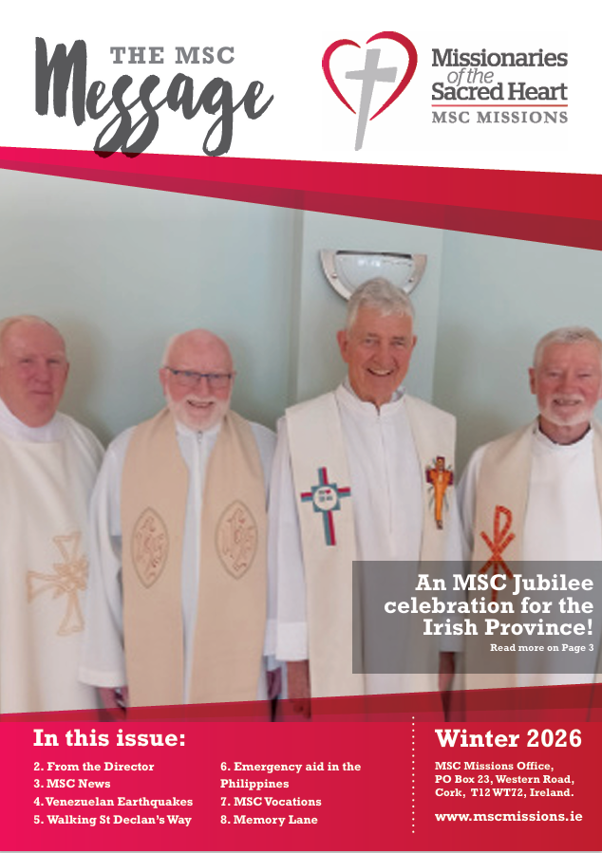
Please click here to read the Winter 2026 edition of the MSC Message
Oct 16, 2026
The end of September saw Team MSC journey to Fatima on our annual pilgrimage, led by Spiritual Director Fr Joe McGee MSC, and accompanied by fellow MSCs Fr Giacomo Gelardi and Fr Gerry Thornton.
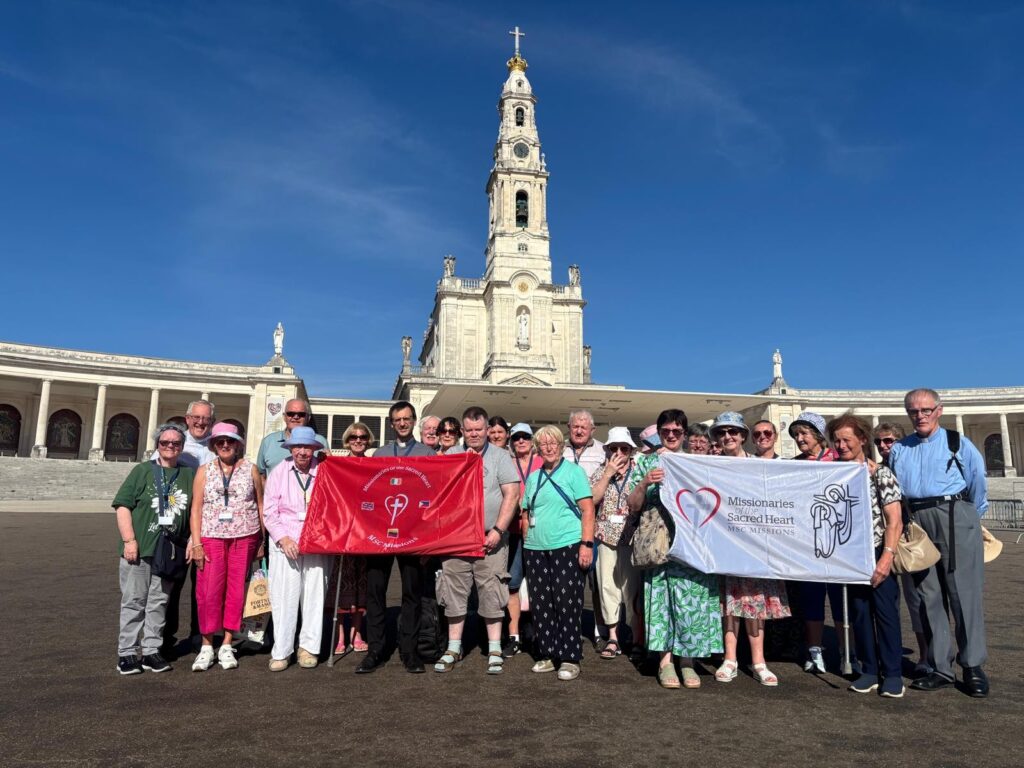
More than 30 pilgrims journeyed from all over Ireland, on a pilgrimage of prayer, contemplation, and reflection from September 22nd to 26th. New friendships blossomed and flourished over the five days, and a group that met as strangers went home as friends, sharing a very unique bond and memories to last a lifetime.
This year’s pilgrimage was a truly special journey for all involved, all the more so for the beautiful music provided throughout the trip by Phil and Elaine, founders of the Island of Ireland Peace Choir. “Honoured to lead the music on our pilgrimage to Fatima with the Missionaries of the Sacred Heart,” they wrote on their Facebook page for Celtic Ways Ireland. “A journey of a difference for us that gave us more than we could have ever imagined”.
With ample opportunity for prayer and spiritual renewal in this blessed space, the pilgrimage also offered plenty of chances to explore local pathways, enjoy fresh food, and make the most of fun, sunshine, and song with like-minded pilgrims and friends.
The stunning local landscape provided a perfect backdrop to prayer, reflection, and good conversation, while the group took in several sacred sites, including the Basilica of the Rosary, the Basilica of the Holy Trinity, the Way of the Cross, and Valinhos, where Our Lady appeared to the Children of Fatima, the three little shepherds, in August 1917. The candlelight procession was also a highlight of the trip, as was a special Mass led by our MSCs at the Shrine of Fatima, where our group prayed for their personal intentions and our mission friends across the world.
Our pilgrims returned home replenished in body and spirit after a truly wonderful trip where new friendships were made, and old and enduring bonds were strengthened. Heartfelt thanks to all involved for a triumphant pilgrimage journey!
Oct 15, 2026
At the end of September, celebrations took place to commemorate 137 years of the Congregation of the Poor Sisters of Maiquetía in La Guaira State, one of the regions in Caracas that was most severely affected by a double earthquake earlier this year. Br Deiby Fuenmayor MSC writes with news of the event, which took place on September 26th.
HISTORICAL BACKGROUND AND SPIRITUAL INSPIRATION
In celebration of the 137th anniversary of the founding of the Congregation of the Poor Sisters of Maiquetía, the diocesan and local church community gathered to mark this milestone not only through prayer, but with concrete social action. Born from the apostolic zeal and profound charity of the Servant of God Mother Emilia de San José alongside the revered Father Santiago Machado, this congregation continues to serve as a beacon of aid for those most in need.
Embracing this charism of selfless service, on Saturday, September 26, 2026, Cáritas Caracas and Holy Cross Parish joined hands to carry out a comprehensive medical, psychological, and nutritional outreach campaign to assist the people of La Guaira.
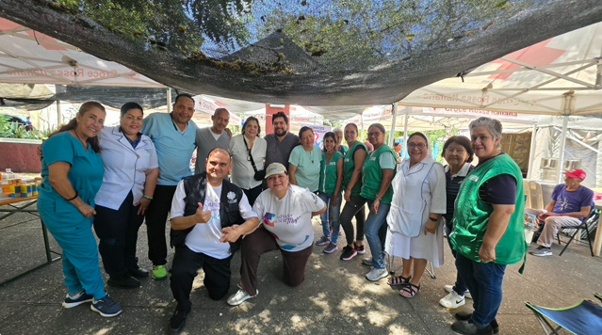
Multidisciplinary team of medical specialists, Cáritas volunteers, religious sisters, and healthcare staff assembled at Padre Machado Square.
STRUCTURAL EMERGENCY AND HUMAN RESPONSE
This initiative was organized as an urgent necessity following severe structural damage to the historic San José Hospital in Maiquetía. Caused by a intense double earthquake, the hospital building sustained critical structural fractures and was officially declared a “red tag” site, prohibiting any use of its interior facilities.
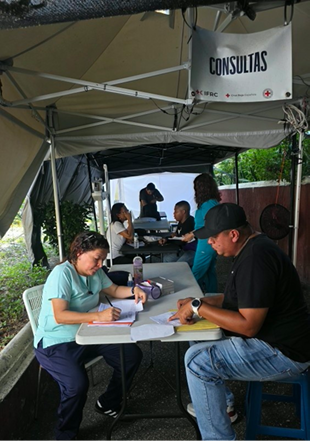
Unwilling to leave the local population without medical care, Holy Cross Parish and Cáritas Caracas established an outdoor field clinic directly in Padre Machado Square, located right in front of the damaged facility.
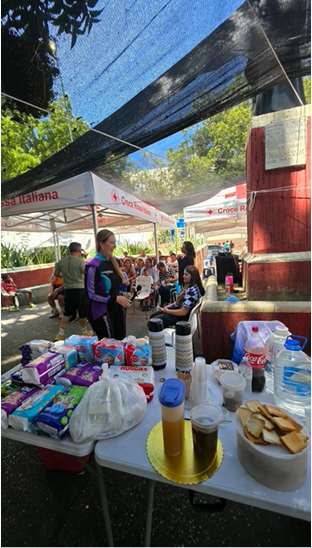
Operational and logistical setup in the square, featuring hygiene kits, diapers, supplies for elderly care, and hydration stations.
COMPREHENSIVE HEALTHCARE & PREVENTION
Early on Saturday, September 26, elderly citizens, children, pregnant women, and whole families attended the healthcare drive. Consultations were structured around three core pillars:
- General Medicine & Pediatrics: Comprehensive clinical assessments and diagnosis of acute and chronic conditions.
- Psychological Support: Guidance addressing post-earthquake traumatic stress and family emotional support.
- Nutritional Evaluation: Anthropometric screenings and distribution of dietary supplements to address child and elderly malnutrition.
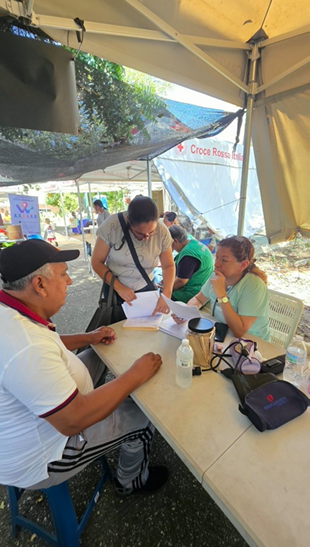
Individualized medical consultations and clinical record registration under shade tents set up in the square.
WOMEN’S HEALTH PROMOTION & PREVENTIVE CARE
A key component of the event was raising awareness regarding women’s health. In partnership with specialized organizations, informative workshops were offered focusing on early detection of gynecological cancers and overall wellness.
In addition to medical advice, beneficiaries received complete prescribed pharmaceutical treatments directly on site, along with personal hygiene kits to support family health and dignity.
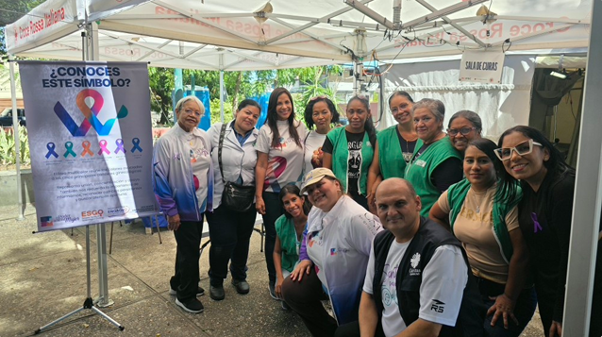
Healthcare professionals and volunteers leading the women’s health awareness and preventative care initiative.
TRIAGE, SCREENING & PHARMACEUTICAL SUPPLY
The community pharmacy station operated continuously throughout the event. Thanks to donations coordinated by Cáritas Caracas, patients were provided with antibiotics, analgesics, gastric care medications, pediatric formulas, and wound-care supplies free of charge.
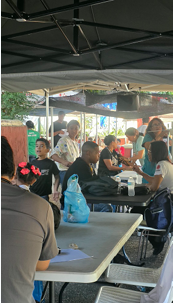
Preliminary screening and blood pressure measurements taken at the initial intake area.
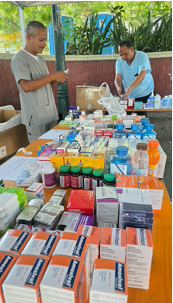
Extensive inventory of medications provided free of charge to attending patients.
PASTORAL CARE & CLINICAL EXAMINATIONS
Each consultation area was arranged to respect privacy and offer compassionate care. General practitioners, internists, and nurses spent dedicated time with every resident, providing dignity alongside medical assistance.
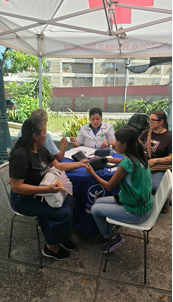
Blood pressure checks and preventative consultations provided to senior citizens.
RECREATION, HOPE & ONGOING COMMITMENT
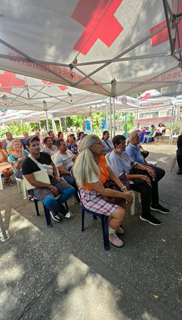
The Maiquetía community participating in group activities while awaiting their health appointments.
Beyond medical treatments, the day became a celebration of community and faith. Attendees enjoyed live music, dancing, and recreational activities. It served as a space for shared learning, active listening, and rekindling hope in Jesus Christ.
“Our work in La Guaira State continues. Our support for the community does not stop; we remain committed to standing alongside vulnerable families with faith, love, and dedication.”
Bro. Deiby Fuenmayor
Missionaries of the Sacred Heart — Cáritas Caracas
Click to read Br Deiby’s latest update from our earthquake relief operation in Caracas.
Oct 13, 2026
This year’s annual Masses for deceased MSCs and Daughters of the Lady of the Sacred Heart will take place around the country in November, as we remember those who have gone before us into God’s loving embrace.
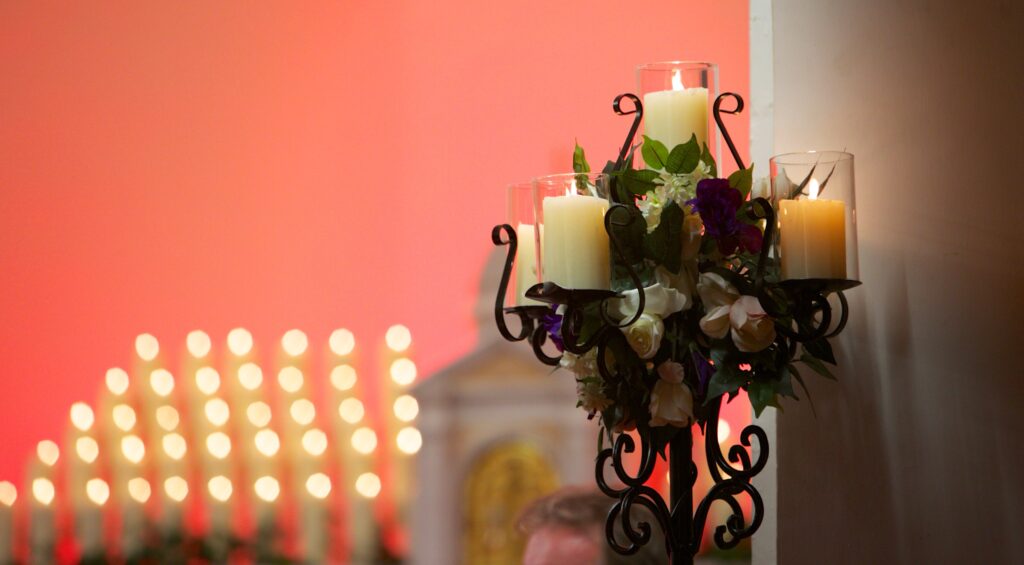
Annual Masses for deceased MSCs and Daughters of Our Lady of the Sacred Heart will take place in the following locations on Sunday, November 1st at 3.00pm:
Mass will also be celebrated on Sunday, November 8th at 2.00pm in St Patrick’s Church, Ballybay, Co. Monaghan.
For those who are unable to attend, the Mass from the Sacred Heart Church, Western Road, Cork, will be live streamed on the internet to allow you to participate. You can access this Mass on a computer, laptop, tablet or smartphone by going to www.mscmissions.ie and clicking on the Live Stream link at the top of the page.
We would like to invite you to pray with us during the month of the Holy Souls as we remember the MSCs and Daughters of Our Lady of the Sacred Heart who dedicated their lives to the Spirituality of the Heart, and who worked so hard to ensure that the Sacred Heart of Jesus is known and loved everywhere, and by everyone.
Oct 8, 2026
The summer season was jam-packed at the Fr Jules Chevalier MSC Mission Centre in Lapu-Lapu City, in the Philippines. Their Facebook page has been keeping us updated with a whole host of wonderful photos that give us a glimpse into the busy and productive ministry and community in this warm and welcoming space.
Corpus Christi was a beautiful occasion on June 10th, presided over by Rev Fr Cirilo Asister Jr. MSC, and with the perfect musical accompaniment from the choir of the Fr Jules Chevalier Mission Center Music Ministry.
The mission centre welcomed Fr Jaime Duero MSC to the fold at the end of June, with great joy and excitement at this new arrival. “The Fr. Jules Chevalier Mission Center Community warmly welcomes you with joyful hearts and prayers,” posted their Facebook page. “May your presence among us bring renewed faith, hope, and inspiration as we continue our mission of serving God and His people.”
MSC scholars at the centre have continued with their Monthly Values Formation Programme throughout the summer, led by Mr Benny Tan. “Through reflection, dialogue, interactive activities, and faith-sharing, the scholars are encouraged to become compassionate, responsible, and mission-oriented leaders in their families, communities, and the Church,” the Facebook page explains.
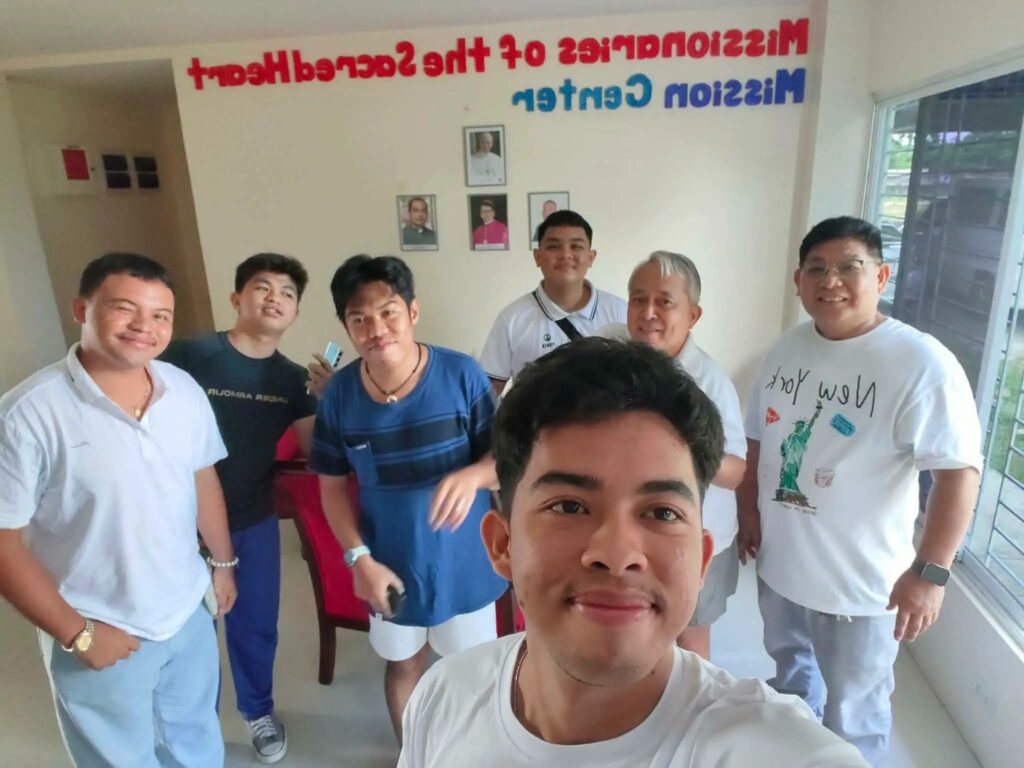
The centre regularly plays host to feeding programmes for vulnerable families in the community, with an outreach programme sponsored by the Saint Egidio Community at the end of June. “Your generosity and compassion brought not only nourishing meals but also joy, hope, and smiles to the children and families in our community,” wrote the Mission Centre team. “Together, we continue to make a meaningful difference—one meal, one act of kindness, and one heart at a time.”
The Patronal Visit of Our Lady of the Sacred Heart took place through the last weeks of July, with the image of Our Lady visiting several chapels in the area, in a beautiful celebration of prayer and thanksgiving. Ceremonies took place at the Our Lady of Fatima Chapel in LEUPA, the Our Lady of All Nation Chapel in BNCA/Kolo, the San Vicente Ferrer Chapel, the San Isidro Labrador – Tangke Chapel, and the Our Lady of Immaculate Conception – Modena Subdivision, all across the region of Barangay Basak in Lapu-Lapu City. Even bad weather on some occasions didn’t deter the faithful, and special Masses were said at each visit, with guided reflection and prayer for the communities gathered.
Preparations abounded for the 2026 General Assembly, which took place on August 9th with the theme of ““Journeying Together as a Listening Church: Building Communities of Hope through the Mission of the Sacred Heart”.
“The assembly provided an opportunity to share updates, present reports, discuss community concerns, and develop recommendations and action plans for the mission center,” reported the Mission Centre’s Facebook page. “The gathering also strengthened collaboration, unity, and shared commitment among the different communities and ministries in serving the people and continuing the mission of the Sacred Heart.”
As the Centre moves ahead into the autumn months, we wish our MSC brothers and the community there every blessing for an equally fruitful autumn and winter season. May God bless and guide them as they continue in their untiring ministry to the most vulnerable and disadvantaged in the region.
Images via the Facebook page for the Fr Jules Chevalier MSC Mission Centre.