Dec 24, 2012
 Just a short blog today to wish everyone a very Merry Christmas and a peaceful New Year.
God bless,
Fr. Alan and all the Missionaries of the Sacred Heart
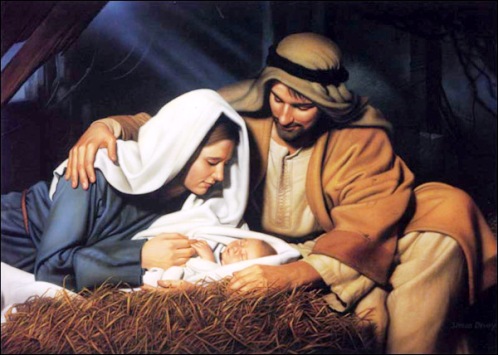
“Dear Brothers and Sisters, let us turn our gaze anew to the grotto of Bethlehem. The Child whom we contemplate is our salvation! He has brought to the world a universal message of reconciliation and peace. Let us open our hearts to him; let us receive him into our lives. Once more let us say to him, with joy and confidence: “Veni ad salvandum nos!”
Pope Benedict XVI
Dec 19, 2012
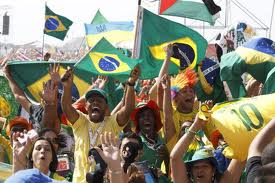 Yes! It’s happening! The MSCs are going to Rio for World Youth Day 2013! We’ll join over 3,000,000 other young people from around the world next for two week this coming July. WYD is a fantastic occasion for people to gather together, to celebrate their faith, and have an unforgettable time.
The MSC group will include five young people from St. Albans, two from Princethorpe College, one from Liverpool and one from Drimoleague, as well as myself. We’re going to join up and travel with the pilgrimage from the Archdiocese of Westminster. During the course of the event we’ll also link in with other MSCs from Venezuela, Indonesia, Canada and of course Brazil itself.
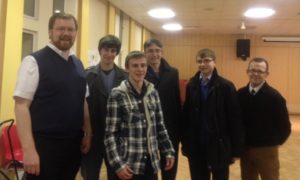
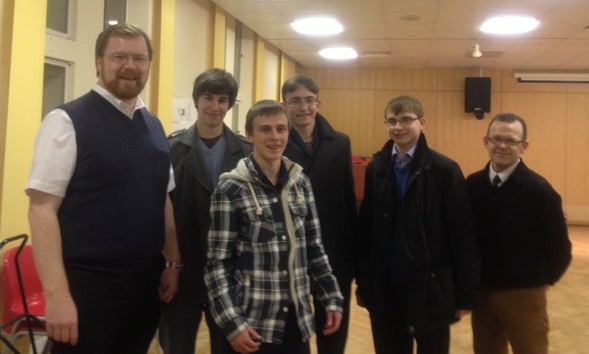
Some of the young people from St. Albans, Phil from Westminster and Fr. Alan
The week is filled with activity and celebration, most of which takes place on the famous Copacabana Beach. There will be afternoons of catechesis, tours of local sights ( including a trip up to Christ the Redeemer ), volley ball on the beach, open mike and concert sessions, as well as creative liturgical celebrations culminating in the final Mass with the Pope.
For more information, as it happens, watch this space
Dec 6, 2012
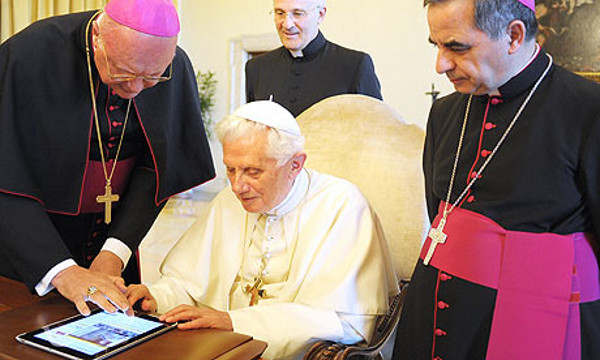
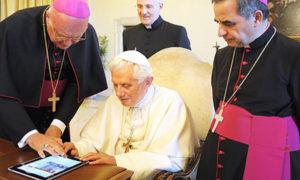 It’s been a long time coming, but there a sense that the Vatican have really begun to explore the importance of social media in our world today. Pope Benedict XVI launched his Twitter account earlier this week and now has well over 500,000 followers, even though he hasn’t started tweeting yet. Tweets will begin on the 12 December to celebrate the Feast of Our Lady of Guadalupe and come every Wednesday thereafter to begin with.
More and more people are engaging with one another online through sites like Facebook, Twitter, Tumblr, Pinterest, Linkedin to name but a few. These present fantastic opportunities for people to discuss, celebrate and explore their faith. They also enable us to share the Good News that we profess through our lives, which is of vital importance during this Year of Faith.
 “Part of the challenge for the Church in the area of new media is to establish a networked or capillary presence that can effectively engage the debates, discussions and dialogues that are facilitated by social media and that invite direct, personal and timely responses of a type that are not so easily achieved by centralized institutions,” the Catholic church has said in a press release detailing the Pope’s decision to join Twitter. “Moreover, such a networked or capillary structure reflects the truth of the Church as a community of communities which is alive both universally and locally. The Pope’s presence in Twitter will represent his voice as a voice of unity and leadership for the Church but it will also be a powerful invitation to all believers to express their ‘voices’, to engage their ‘followers’ and ‘friends’ and to share with them the hope of the Gospel that speaks of God’s unconditional love for all men and women.”
Nov 30, 2012
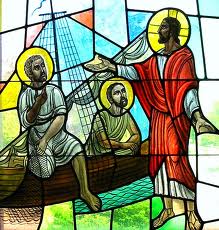 Exciting news! Today marks the beginning of the exploreAway vocation discernment programme. Six people have begun the five weekend course that looks at how God is moving in their lives and inviting them to follow him. It’s a gentle, relfective time that gives space and quiet to share, pray and discern. The course will be facilitated by myself and Sr Gabrielle O’Farrell OLA. There’ll be inputs from members of a number of different congregations on areas like vocation, life journey, prayer, the vows and religious life.
 We’d ask for your prayers for all those taking part in the course and for all those discerning their vocation at this time. We all have a role to play today in promoting vocations to the priesthood and religious life.
Nov 23, 2012
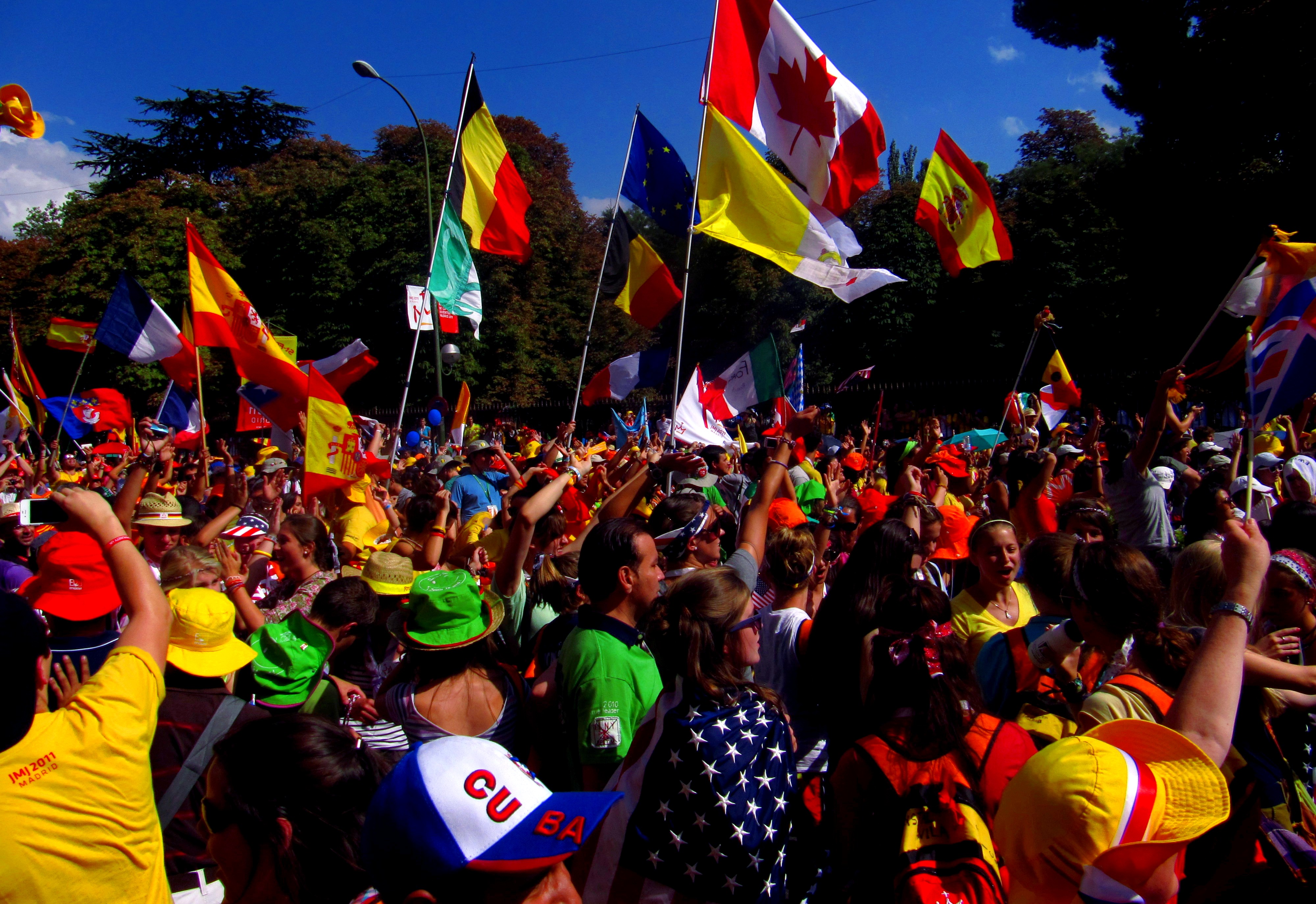
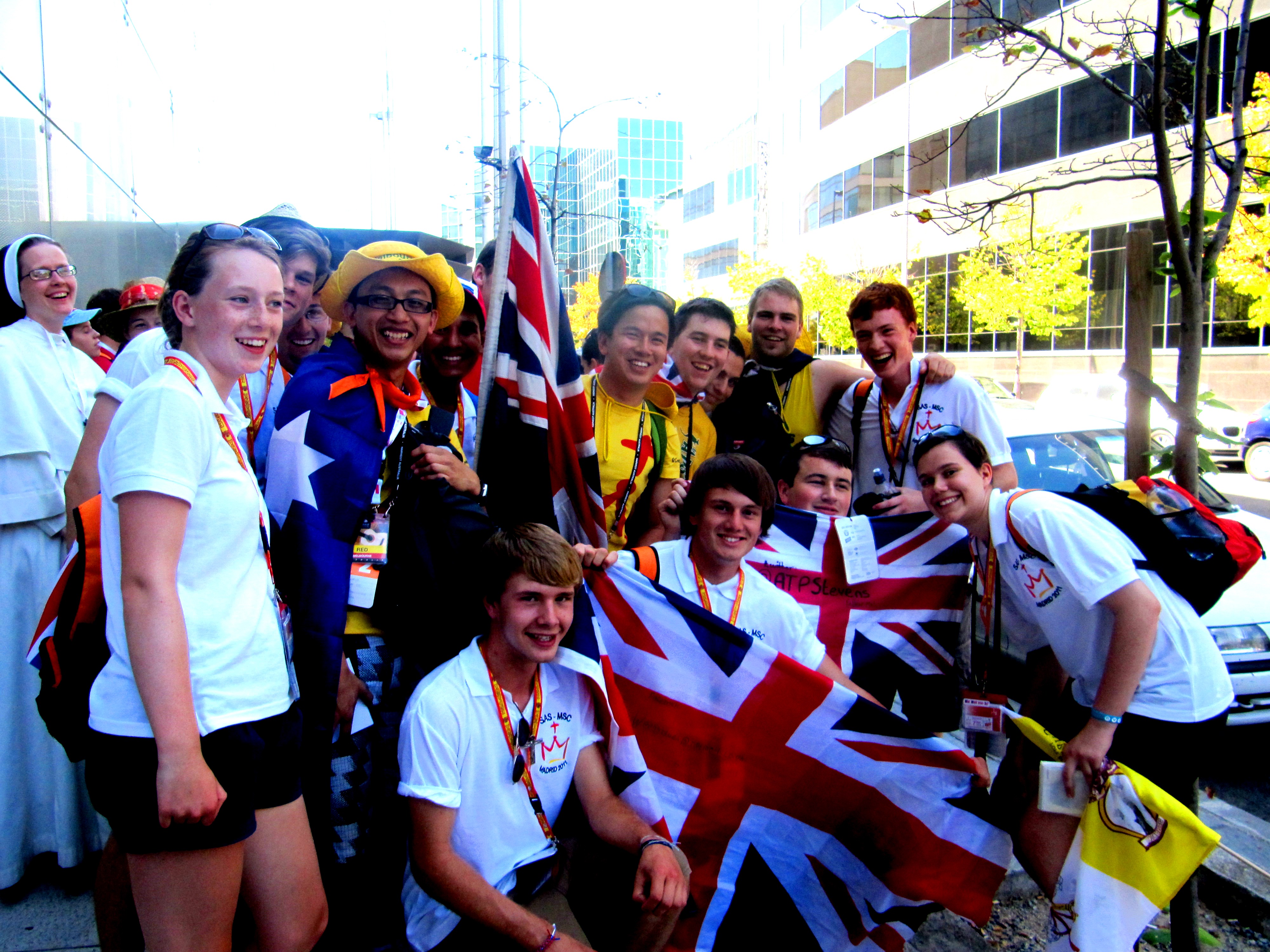
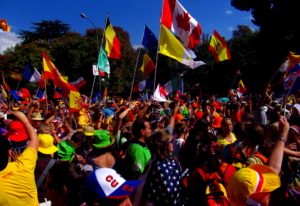 Exciting doesn’t begin to describe it. It doesn’t do it justice. Are there even words to adequately explain what’s it like to have over 3,000,000 young Catholics sharing, exploring and celebrating their faith. A lot of the time people say, “You would have had to have been there.” This is one of those rare occasions when they’re actually right.
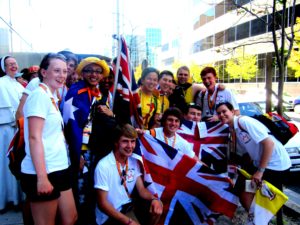 Next year’s celebration of World Youth Day in Rio promises to be one of the biggest youth gatherings in history. But it’s more than just a get together or simply a party. It about being a member of a universal Church, which includes people from all over our planet. It reminds us that, as Catholics, we have something to share and to celebrate. (more…)
Oct 18, 2012
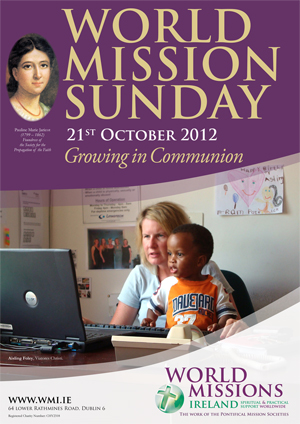
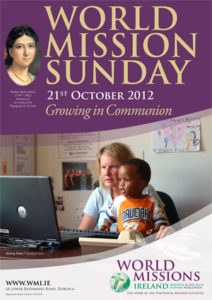 This coming Sunday we celebrate Mission Sunday. It about celebrating the hundreds of years of selflessness, compassion and faith that make up the Mission tradition in Ireland. The theme in Ireland this year is Growing in Communion. We have an example of that growing in communion with Aisling Foley, a member of Viatores Christ. “I felt I had left my heart in Africa,” was Aisling’s response when she returned home from her first visit to South Africa.
She had volunteered to work with Home of Hope, a project that provides accommodation and foster care for children at risk. She took redundancy from her job as a solicitor and returned to South Africa for a year. That year has now become three! “I truly believe that I was guided to work in Home of Hope and that my mission is to stay here until God tells me that my work is done,” wrote Aisling. Every day these amazing children I work with teach me so much about tolerance, patience and love and these lessons will stay with me for life.”
Aisling follows in the spirit of Pauline Marie Jaricot, the young French woman who reached out to the needs of the Missions just after the French Revolution. Pauline’s wisdom was that all should be supported, none neglected, especially the most needy. Among Pauline’s achievements was the founding of the Society for the Propagation of the Faith 190 years ago this year. It is the Society that organises the celebration of Mission Sunday each year.
The poster above shows Aisling Foley, a lay missionary from Co. Cork with Neo in her office in the Western Cape in South Africa. Aisling is a member of Viatores Christi and Neo is one of the children with whom she works in a school called Amathemba (‘Our Hope’) for children with Fetal Alcohol spectrum Disorders.
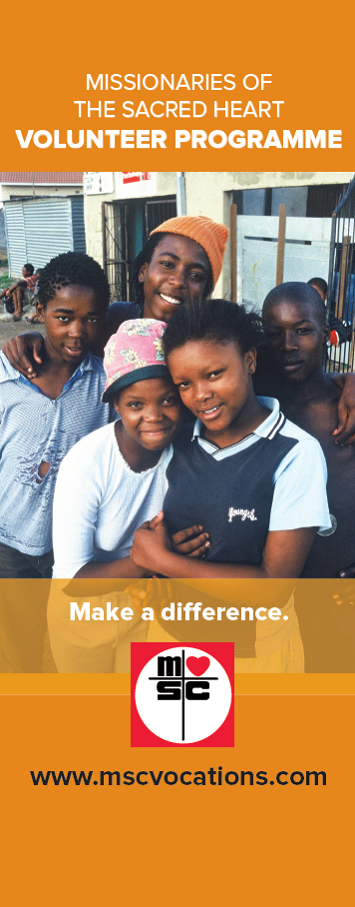
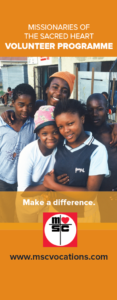 This year the Missionaries of the Sacred Heart are starting their volunteering programme with our sisters in South Africa. It’s an opportunity to make a real difference in our world, while having an unforgettable experience that will change your life. If you would like more information simply click here.
 Just a short blog today to wish everyone a very Merry Christmas and a peaceful New Year.